The Extinguished Flame: How MI6 and the CIA Killed Iranian Democracy
A deep dive into the 1953 CIA-MI6 coup in Iran, which overthrew Prime Minister Mohammad Mosaddegh to protect Western oil interests and installed a brutal dictatorship.
Key takeaways
- In 1953, the US (CIA) and UK (MI6) orchestrated a coup to overthrow Iran's democratically elected Prime Minister Mohammad Mosaddegh.
- The primary motive was to reverse Mosaddegh's nationalization of the Anglo-Iranian Oil Company and restore Western control over Iran's vast oil reserves.
- The coup, codenamed Operation Ajax by the CIA, replaced a popular democratic government with the authoritarian monarchy of Shah Mohammad Reza Pahlavi.
- The Shah's subsequent 26-year rule was marked by severe political repression, executed by his notorious secret police, SAVAK, which was established with CIA help.
- The 1953 coup is widely seen as a root cause of the 1979 Iranian Revolution and the enduring hostility between Iran and the United States.
In August 1953, a flame of democratic sovereignty that had dared to burn in the Middle East was clinically and brutally extinguished. At the behest of the Anglo-Iranian Oil Company, Britain's MI6 and America's CIA executed a coup d'état in Iran, overthrowing the nation's elected leader, Prime Minister Mohammad Mosaddegh. The operation, a squalid fusion of imperial arrogance and corporate greed disguised as Cold War strategy, succeeded. It did not merely replace one government with another; it murdered a democratic experiment, installed a tyrant, and sowed the seeds of a revolutionary backlash whose violent harvest is still being gathered today.
Key facts
- Event: Covert overthrow of the democratically elected government of Iran.
- Dates: August 15–19, 1953.
- Primary Perpetrators: United States (CIA - Operation Ajax) and United Kingdom (MI6 - Operation Boot).
- Immediate Outcome: Reinstallation of Shah Mohammad Reza Pahlavi as an absolute monarch, reversal of oil nationalization.
- Key Motive: To regain Western control over Iran's oil reserves after Prime Minister Mosaddegh nationalized the British-owned Anglo-Iranian Oil Company (AIOC).
- Long-Term Consequence: The establishment of a 26-year dictatorship, leading to the 1979 Iranian Revolution and the foundation of the Islamic Republic.
An Anatomy of Extraction
To comprehend the events of 1953, one must first comprehend the nature of the entity that demanded them. The Anglo-Iranian Oil Company (AIOC), later to become British Petroleum (BP), was not merely a corporation; it was an instrument of the British Empire, a quasi-state that operated with impunity inside the sovereign borders of Iran. Its legal foundation was a 1933 agreement, forced upon Iran, that was breathtaking in its inequity. AIOC was granted exclusive rights over a vast concession, was exempt from most Iranian taxes, and paid Iran a pittance in royalties—a fixed rate per ton of oil, insulated from fluctuations in price or profit.
The financial haemorrhage was staggering. AIOC’s refinery at Abadan was the largest in the world, yet the oil-rich province of Khuzestan remained one of Iran's poorest. Iranian workers were housed in slums without running water, paid subsistence wages, and barred from skilled positions. The company operated as a colonial enclave, a state within a state, with its own security, transport, and segregated facilities for its British managers.
| Year | AIOC Net Profits | Payments to Iranian Gov't | UK Gov't Tax Receipts from AIOC |
|---|---|---|---|
| 1947 | £40 million | £7 million | Not Publicly Disclosed |
| 1948 | £61 million | £9 million | £28 million |
| 1949 | £49 million | £13.5 million | £23 million |
| 1950 | £84 million | £16 million | £50 million |
As the data from the final years before nationalization shows, the arrangement was parasitic. In 1950, the British government, which was a majority shareholder in AIOC, received more than three times as much money in taxes from the company's operations in Iran as the Iranian state received in total royalties. It was a colonial enterprise cloaked in corporate law.
"Our national struggle has a twofold object: first, to terminate the political and economic influence of the oil company and, second, to secure a share of the oil profits… By terminating the oil company’s influence, we shall be able to establish our political and economic independence."
— Mohammad Mosaddegh, speech to the Majlis, 1951
The Democratic Mandate
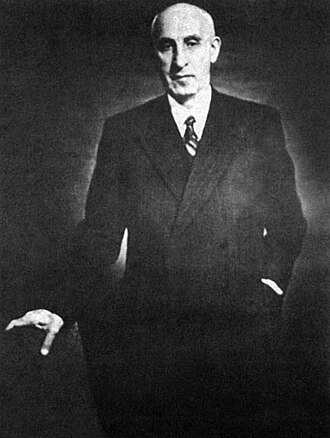
Mohammad Mosaddegh was not a radical firebrand. He was a 70-year-old, Swiss-educated aristocrat and lawyer, a veteran politician who had opposed both Soviet and British encroachment for decades. He was frail, often emotional, and conducted state business from his bed, yet he possessed an unbending conviction in Iranian sovereignty. As chairman of the parliamentary oil committee, he channelled a wave of national fury into a coherent political program.
When negotiations with AIOC for a more equitable 50/50 profit-sharing deal—the standard already established by American companies in Saudi Arabia—were arrogantly rebuffed by the British, Mosaddegh’s National Front coalition moved for a full nationalization of the oil industry. The bill passed unanimously and with overwhelming public celebration in March 1951. A month later, Mosaddegh was appointed Prime Minister by the Majlis (parliament).
His mandate was explicit and democratic: to end the humiliation of the AIOC concession and put Iran’s single greatest resource to work for the Iranian people. The act of nationalization was not the seizure of an asset; it was the repatriation of a nation’s lifeblood.
Operation Boot: British Revenge, American Ambition
London’s reaction was one of sputtering imperial rage. AIOC officials spoke of Mosaddegh as if he had stolen their personal property. The British government, under Labour Prime Minister Clement Attlee, immediately imposed a punishing economic blockade. Royal Navy warships prevented tankers from reaching Iran, choking the nation's economy. Britain took Iran to the International Court of Justice and lost. They appealed to the UN Security Council and were rebuffed, with Mosaddegh famously travelling to New York to plead his country’s case.
Humiliated and failing to break Iran economically, Britain’s MI6 quietly began planning a coup. The initial plan, codenamed "Operation Boot," was developed by agent Christopher Montague Woodhouse. It found a willing partner in the CIA after the 1952 US election brought Dwight D. Eisenhower to power. His administration was staffed by men with deep ties to corporate law and finance, most notably the Dulles brothers: Secretary of State John Foster Dulles and CIA Director Allen Dulles. Both were former partners at Sullivan & Cromwell, a law firm that had represented AIOC.
For the Dulles brothers, the world was a simple binary of pro-American and pro-Soviet. They were easily persuaded by British intelligence that Mosaddegh, despite his anti-communist record, would inevitably lead Iran into the Soviet camp. The threat was not communism; the threat was nationalism. A successful, non-aligned, nationalist government in control of its own oil was a dangerous precedent. The operation was approved, given the CIA designation "TP-AJAX," and its execution was handed to Kermit Roosevelt Jr., grandson of President Theodore Roosevelt and the CIA’s top Middle East operative.
The Mechanics of the Coup: August 15-19, 1953
Roosevelt arrived in Tehran in July 1953 with suitcases full of cash, estimated at around $1 million (over $11 million in today's money). The CIA’s plan was a textbook case of manufactured chaos.
First, they bribed politicians, newspaper editors, and clerics to turn against Mosaddegh. A torrent of propaganda filled the press. Second, they hired mobsters and street gangs to stage violent pro-communist rallies—complete with attacks on mosques—to terrify the conservative establishment and create a pretext for a military takeover. Third, they secured a pliable military candidate, the retired and ambitious General Fazlollah Zahedi, as Mosaddegh’s replacement. The final piece was to convince the young, indecisive monarch, Mohammad Reza Pahlavi, to sign royal decrees (firmans) dismissing Mosaddegh and appointing Zahedi.
The first attempt on the night of August 15-16 failed. A loyalist army unit intercepted the colonel sent to arrest Mosaddegh. The plot was exposed. General Zahedi went into hiding in a CIA safe house, and the Shah, panicking, fled the country, first to Baghdad and then to Rome. For a moment, it seemed the coup had failed.
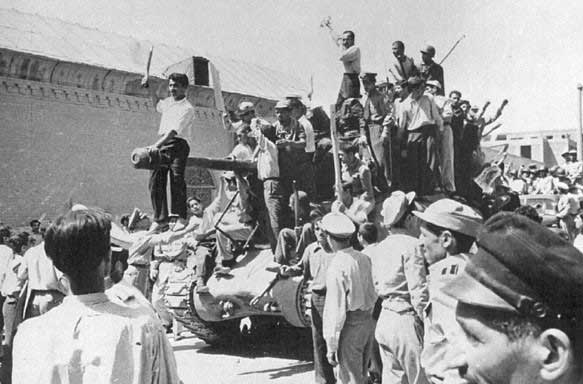
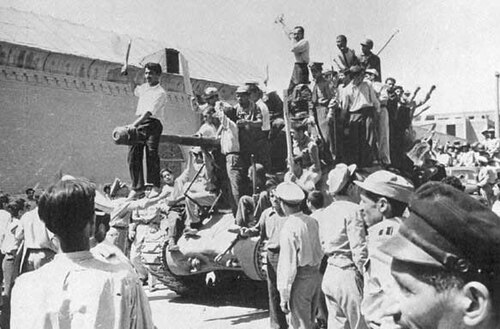
It was here that Mosaddegh made his fatal error. Believing the crisis over and respecting the rule of law, he did not call his supporters into the street or purge the military. Roosevelt, defying an order from CIA headquarters to abort, saw an opportunity. He ramped up the propaganda, portraying Mosaddegh as having attempted a coup against the Shah. On August 19th, he unleashed his paid mobs. This time, they were disguised as pro-Shah royalists. They stormed through Tehran, joined by military and police units whose commanders had been bought. They seized the radio station, broadcasting Zahedi's name. The final assault was on Mosaddegh's home, which was shelled by tanks. After hours of fighting that left some 300 people dead, his guard was overwhelmed. Mosaddegh escaped over a garden wall but surrendered the next day to prevent further bloodshed.
| Figure | Role / Affiliation | Fate |
|---|---|---|
| Mohammad Mosaddegh | Prime Minister of Iran | Overthrown; tried for treason, 3 years in prison, house arrest until death in 1967. |
| Mohammad Reza Pahlavi | Shah of Iran | Fled during the coup, returned as absolute ruler; overthrown in 1979, died in exile. |
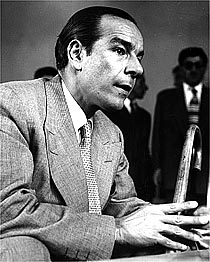
| Hossein Fatemi | Foreign Minister | A fierce nationalist who first proposed oil nationalization. Captured, tortured, and executed by firing squad on November 10, 1954. |
| Kermit Roosevelt Jr. | CIA Station Chief | Orchestrated the coup on the ground; celebrated as a hero within the agency. |
| Gen. Fazlollah Zahedi | Pro-Shah Military Officer | CIA's chosen replacement; became Prime Minister after the coup. |
| Christopher Woodhouse | MI6 Agent | Principal architect of the British plan, 'Operation Boot'. |
Reign of the Shah: The Price of Compliance
The Shah returned to Iran not as a constitutional monarch, but as a dictator installed by foreign powers. He owed his throne entirely to the CIA and MI6, and he spent the next 26 years paying them back. His gratitude was immediate. The nationalization was reversed.
On the political front, the Shah’s rule became progressively more autocratic and brutal. In 1957, with assistance from the CIA and later Israel's Mossad, he established the SAVAK (Sāzemān-e Ettelā'āt va Amniyat-e Keshvar), a secret police force that became a byword for terror. SAVAK's network of spies and informers penetrated every level of Iranian society. Dissent was ruthlessly crushed. Political parties were banned, the press was censored, and thousands of dissidents—liberals, nationalists, leftists, and Islamists—were rounded up. Torture was systematic and horrific. Estimates of those killed by the Shah's regime vary, but the number of political prisoners numbered in the tens of thousands over his reign.
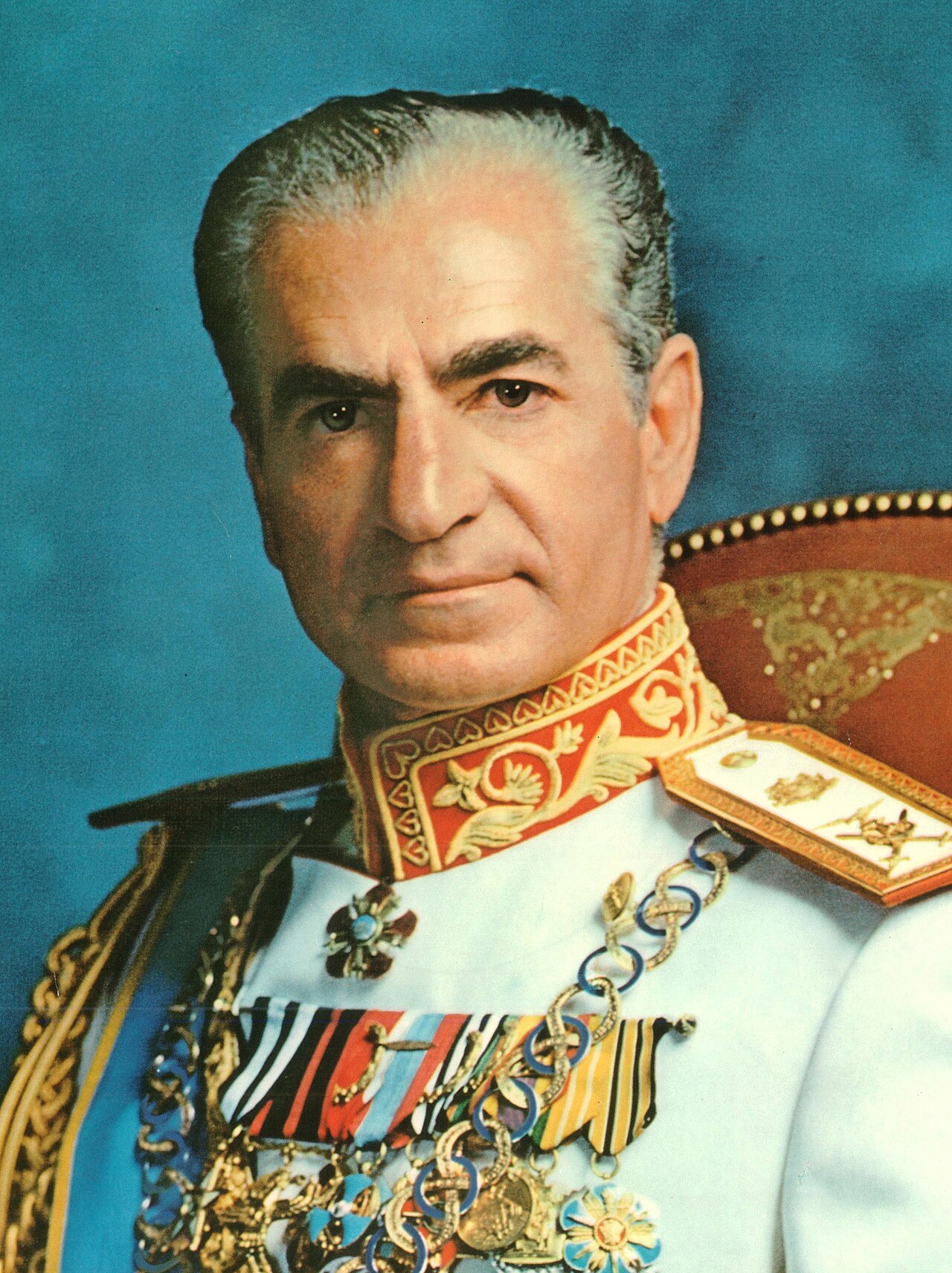
This new arrangement—with oil profits flowing out and weapons and security expertise flowing in—was celebrated in Washington and London as a triumph of stability. Iran was the West's 'policeman' in the Gulf.
A Long and Bloody Inheritance
The stability was an illusion. By destroying the secular, democratic, nationalist alternative represented by Mosaddegh, the United States and Britain created a political vacuum. Into that vacuum stepped the only opposition force with a national network the SAVAK could not entirely dismantle: the clergy. For the next quarter-century, resentment against the Shah, his corruption, his subservience to America, and the brutality of his regime festered.
When the revolution finally came in 1979, it was not led by liberals or social democrats. Their movements had been decapitated in 1953 and systematically persecuted thereafter. It was led by a stern, exiled cleric, Ayatollah Ruhollah Khomeini, who harnessed the deep wellspring of popular anger. The central grievances of the 1979 revolution were the direct consequences of the 1953 coup: the restoration of dictatorship and the surrender of national sovereignty to foreign interests.
The seizure of the US Embassy in Tehran in November 1979 by student revolutionaries was not a random act of madness. For them, the embassy was not a diplomatic mission; it was a crime scene—the very place where Kermit Roosevelt Jr. had orchestrated the death of their democracy.
For many Iranians, the coup was a national tragedy that aborted their country's modern political development. For the CIA it was a success, a blueprint for future operations in Guatemala (1954), Congo (1960), Chile (1973), and elsewhere. The coup's legacy has been bitterness, mistrust, and an international crisis that has yet to be resolved.
— Ervand Abrahamian, The Coup: 1953, the CIA, and the Roots of Modern U.S.-Iranian Relations (2013)
For decades, the US and UK governments maintained a policy of official silence or outright denial of their roles. Only in 2000 did Secretary of State Madeleine Albright offer a qualified admission of a "setback for democratic government." It was not until 2013, the coup's 60th anniversary, that the CIA formally acknowledged its role with the declassification of further documents. No apology has ever been issued. No reparations have been considered. The action remains an open wound, a foundational event in the modern Middle East that demonstrates, with clinical precision, the willingness of Western powers to sacrifice democracy at the altar of corporate profit.
Sources & further reading
- The National Security Archive: CIA Confirms Role in 1953 Iran Coup
- Kinzer, Stephen. All the Shah's Men: An American Coup and the Roots of Middle East Terror. Wiley, 2003.
- Abrahamian, Ervand. The Coup: 1953, the CIA, and the Roots of Modern U.S.-Iranian Relations. The New Press, 2013.
- The Guardian: MI6 and CIA coup in Iran 60 years ago still affects relations, says expert
- Gasiorowski, Mark J. “The 1953 Coup d’État in Iran.” International Journal of Middle East Studies, vol. 19, no. 3, 1987, pp. 261–86.
- Foreign Policy: 64 Years Later, CIA Finally Releases Details of Iranian Coup
Frequently asked questions
- Who was Mohammad Mosaddegh and why was he overthrown?
- Mohammad Mosaddegh was the democratically elected Prime Minister of Iran from 1951 to 1953. He was overthrown in a CIA-MI6 coup after he nationalized the Anglo-Iranian Oil Company (AIOC), which had been exploiting Iran's oil reserves for immense British profit while giving Iran a pittance. The coup aimed to reverse this nationalization and install a leader favourable to Western oil interests.
- Who was responsible for the 1953 coup in Iran?
- The coup was jointly planned and executed by the British Secret Intelligence Service (MI6) under the code name 'Operation Boot' and the US Central Intelligence Agency (CIA) under 'Operation Ajax'. Key architects included CIA director Allen Dulles, his brother Secretary of State John Foster Dulles, MI6 agent Christopher Woodhouse, and the CIA's man on the ground, Kermit Roosevelt Jr. They collaborated with pro-Shah Iranian military figures like General Fazlollah Zahedi.
- How many people died in the 1953 Iranian coup?
- Precise casualty figures for the coup itself are difficult to establish, but on the climactic day of August 19, 1953, street fighting in Tehran resulted in an estimated 300 to 800 deaths. However, the true human cost is far greater, as the coup installed a brutal 26-year dictatorship under the Shah, whose secret police, SAVAK, systematically tortured and executed thousands of political opponents, with estimates of political prisoners killed ranging from hundreds to several thousand.
- Why is the US and UK involvement in the 1953 coup still controversial?
- For decades, both the US and UK officially denied their involvement. This official denial, a blatant historical falsehood, fueled deep mistrust. Although declassified documents have since proven their central role—with the CIA formally acknowledging it in 2013—no formal apology or reparations have been offered. This lack of accountability for overthrowing a democracy for corporate gain remains a profound source of contention and a cornerstone of Iranian anti-Western sentiment.
- What were the long-term consequences of the 1953 Iran coup?
- The long-term consequences were catastrophic. The coup destroyed Iran's secular democratic movement, creating a political vacuum. The subsequent 26 years of the Shah's repressive, US-backed rule led directly to the 1979 Islamic Revolution, which replaced the monarchy with an anti-Western theocracy. It established the deep-seated hostility that has defined US-Iran relations ever since and served as a template for future CIA covert interventions in other countries.