Racism in the Present Tense
It did not end with the empires. It did not end with the civil rights movement. It changed its clothes, learned the right vocabulary, and kept its hand on the same levers.
The visible racism of the colonial era — the lynching photograph, the "Whites Only" sign, the human zoo — has not disappeared, but it has been pushed to the edges of official respectability. What remains in the center is something more durable, more plausibly deniable, and in some ways more powerful: a set of assumptions about who gets to be considered modern, competent, civilized, trustworthy, and equal.
These assumptions are not held only by overt racists. They are held — usually without self-awareness — by liberals, by progressives, by the entire bureaucratic machinery of immigration, finance, journalism, academic publishing, and international development. They are the working software of the post-colonial world.
§ 01
The Two Passports
An American or French passport opens roughly 180 countries without a visa. A passport from Afghanistan, Iraq, Syria, Somalia or Sudan opens fewer than thirty. This is not a neutral administrative fact. It is the inheritance of the colonial map — the same powers that drew the borders now decide who is allowed to cross them.
A European tourist photographing a fishing village in West Africa is a traveler. A West African trying to reach Europe by the same sea is a 'migrant crisis.' The same human movement, in opposite directions, is described in opposite moral languages.

From the Archive
Wikimedia-sourced photographs and documents related to this page.


Last updated 23 June 2026Submit a correctionMethodology
References
Sources & Further Reading
- [1]Henley & Partners, Henley Passport Index, annual.
- [2]UNHCR, Refugee Data Finder.
- [3]Frontex, Risk Analysis annual reports; ECRE / IOM Missing Migrants Project.
- [4]Michelle Alexander, The New Jim Crow: Mass Incarceration in the Age of Colorblindness (The New Press, 2010).
- [5]Devah Pager, "The Mark of a Criminal Record", American Journal of Sociology 108:5 (2003); Marianne Bertrand & Sendhil Mullainathan, "Are Emily and Greg More Employable Than Lakisha and Jamal?", AER 94:4 (2004).
- [6]Isabel Wilkerson, Caste: The Origins of Our Discontents (Random House, 2020).
- [7]Reni Eddo-Lodge, Why I'm No Longer Talking to White People About Race (Bloomsbury, 2017).
- [8]UN Office of the High Commissioner for Human Rights, reports on systemic racism in law enforcement (A/HRC/47/53, 2021).
All works cited in good faith for documentary, educational and critical use. Errors and omissions: contact the archive.
§ 02
The Color of Competence
When a country in the Global South builds a high-speed rail network, designs a successful vaccine, lands a probe on the moon, or produces a globally dominant technology company, the response in the Western press is almost always disbelief, suspicion, or condescending surprise. The default assumption — quietly, persistently — is that modernity is something that happens elsewhere and is borrowed.
When an Indian, Iranian, Nigerian or Brazilian professional is genuinely brilliant in their field, the most generous frame available is often 'a credit to their country.' The frame is never applied in reverse. No one calls a Norwegian software engineer 'a credit to Norway.' They are simply a software engineer.
This is not about individual prejudice. It is about a hierarchy of expected competence baked into the global imagination of who counts as 'world-class' and who counts as 'impressive for where they're from.'

From the Archive
Wikimedia-sourced photographs and documents related to this page.
Last updated 23 June 2026Submit a correctionMethodology
References
Sources & Further Reading
- [1]Henley & Partners, Henley Passport Index, annual.
- [2]UNHCR, Refugee Data Finder.
- [3]Frontex, Risk Analysis annual reports; ECRE / IOM Missing Migrants Project.
- [4]Michelle Alexander, The New Jim Crow: Mass Incarceration in the Age of Colorblindness (The New Press, 2010).
- [5]Devah Pager, "The Mark of a Criminal Record", American Journal of Sociology 108:5 (2003); Marianne Bertrand & Sendhil Mullainathan, "Are Emily and Greg More Employable Than Lakisha and Jamal?", AER 94:4 (2004).
- [6]Isabel Wilkerson, Caste: The Origins of Our Discontents (Random House, 2020).
- [7]Reni Eddo-Lodge, Why I'm No Longer Talking to White People About Race (Bloomsbury, 2017).
- [8]UN Office of the High Commissioner for Human Rights, reports on systemic racism in law enforcement (A/HRC/47/53, 2021).
All works cited in good faith for documentary, educational and critical use. Errors and omissions: contact the archive.
§ 03
The Word 'Developing'
'Developing country' is a remarkable phrase. It quietly implies that the destination of development is the country doing the naming. It treats centuries of plunder as a head start that the plundered are slowly catching up on, under benevolent supervision. It would be more accurate to use Walter Rodney's phrase: over-exploited countries.
The financial architecture that maintains this — the IMF's structural adjustment programs, the World Bank's lending conditions, the rating agencies of New York, the CFA franc tying fourteen African economies to the French Treasury — is not a meritocracy. It is the legal continuation of empire by other instruments.

From the Archive
Wikimedia-sourced photographs and documents related to this page.
Last updated 23 June 2026Submit a correctionMethodology
References
Sources & Further Reading
- [1]Henley & Partners, Henley Passport Index, annual.
- [2]UNHCR, Refugee Data Finder.
- [3]Frontex, Risk Analysis annual reports; ECRE / IOM Missing Migrants Project.
- [4]Michelle Alexander, The New Jim Crow: Mass Incarceration in the Age of Colorblindness (The New Press, 2010).
- [5]Devah Pager, "The Mark of a Criminal Record", American Journal of Sociology 108:5 (2003); Marianne Bertrand & Sendhil Mullainathan, "Are Emily and Greg More Employable Than Lakisha and Jamal?", AER 94:4 (2004).
- [6]Isabel Wilkerson, Caste: The Origins of Our Discontents (Random House, 2020).
- [7]Reni Eddo-Lodge, Why I'm No Longer Talking to White People About Race (Bloomsbury, 2017).
- [8]UN Office of the High Commissioner for Human Rights, reports on systemic racism in law enforcement (A/HRC/47/53, 2021).
All works cited in good faith for documentary, educational and critical use. Errors and omissions: contact the archive.
§ 04
The Approved Victim
The post-colonial Western imagination has a strong preference for a particular type of person from a formerly colonized country: poor, grateful, suffering, in need of rescue, photogenically powerless. Charity campaigns, NGO posters, prestige cinema and humanitarian journalism are organized around this figure.
The same imagination has enormous difficulty processing the formerly colonized person who is none of these things — who is wealthy, educated, confident, technically advanced, unimpressed by Western institutions, and uninterested in being rescued. That person is read as suspicious, arrogant, probably corrupt, or somehow inauthentic. 'Where did you really learn English?' is, at heart, the same question as 'Are you sure you belong here?'

From the Archive
Wikimedia-sourced photographs and documents related to this page.
Last updated 23 June 2026Submit a correctionMethodology
References
Sources & Further Reading
- [1]Henley & Partners, Henley Passport Index, annual.
- [2]UNHCR, Refugee Data Finder.
- [3]Frontex, Risk Analysis annual reports; ECRE / IOM Missing Migrants Project.
- [4]Michelle Alexander, The New Jim Crow: Mass Incarceration in the Age of Colorblindness (The New Press, 2010).
- [5]Devah Pager, "The Mark of a Criminal Record", American Journal of Sociology 108:5 (2003); Marianne Bertrand & Sendhil Mullainathan, "Are Emily and Greg More Employable Than Lakisha and Jamal?", AER 94:4 (2004).
- [6]Isabel Wilkerson, Caste: The Origins of Our Discontents (Random House, 2020).
- [7]Reni Eddo-Lodge, Why I'm No Longer Talking to White People About Race (Bloomsbury, 2017).
- [8]UN Office of the High Commissioner for Human Rights, reports on systemic racism in law enforcement (A/HRC/47/53, 2021).
All works cited in good faith for documentary, educational and critical use. Errors and omissions: contact the archive.
§ 05
When 'They' Become 'Us'
The clearest test of how a society really thinks about race is what happens when the supposed inferior reaches parity. A Black neighbor on welfare is, in racist eyes, an object of complaint. A Black neighbor with a higher-paying job, a better house, and children at a better school is, often, an object of fury. The first can be patronized. The second cannot.
This is the racism that hides inside many polite societies: comfortable with the dependent foreigner, viciously hostile to the flourishing one. The migrant is welcome as a cleaner, tolerated as a doctor, suspected as a CEO, and treated as a threat as a head of state.
From the Archive
Wikimedia-sourced photographs and documents related to this page.
Last updated 23 June 2026Submit a correctionMethodology
References
Sources & Further Reading
- [1]Henley & Partners, Henley Passport Index, annual.
- [2]UNHCR, Refugee Data Finder.
- [3]Frontex, Risk Analysis annual reports; ECRE / IOM Missing Migrants Project.
- [4]Michelle Alexander, The New Jim Crow: Mass Incarceration in the Age of Colorblindness (The New Press, 2010).
- [5]Devah Pager, "The Mark of a Criminal Record", American Journal of Sociology 108:5 (2003); Marianne Bertrand & Sendhil Mullainathan, "Are Emily and Greg More Employable Than Lakisha and Jamal?", AER 94:4 (2004).
- [6]Isabel Wilkerson, Caste: The Origins of Our Discontents (Random House, 2020).
- [7]Reni Eddo-Lodge, Why I'm No Longer Talking to White People About Race (Bloomsbury, 2017).
- [8]UN Office of the High Commissioner for Human Rights, reports on systemic racism in law enforcement (A/HRC/47/53, 2021).
All works cited in good faith for documentary, educational and critical use. Errors and omissions: contact the archive.
§ 06
The Algorithm Inherits the Hierarchy
When facial-recognition systems sold by Microsoft, IBM, Amazon and the major Chinese vendors were audited by Joy Buolamwini and Timnit Gebru at MIT in 2018, error rates on darker-skinned women ran above 34%, against under 1% on lighter-skinned men. Predictive-policing tools deployed in Chicago, New Orleans and London have been shown to reproduce the racial geography of the arrest records they were trained on, then to rebrand the bias as data. Apple Card and several large U.S. mortgage algorithms have been investigated for giving women and Black applicants worse terms after controlling for income.
The point is not that machines are racist. It is that they are extremely loyal to whoever wrote them. They inherit the prejudices of the data and the priorities of the engineers, then perform them at a scale and speed no human bureaucracy could match — while wearing the cultural costume of objectivity. Discrimination by spreadsheet is harder to sue than discrimination by sentence.
From the Archive
Wikimedia-sourced photographs and documents related to this page.
Last updated 23 June 2026Submit a correctionMethodology
References
Sources & Further Reading
- [1]Henley & Partners, Henley Passport Index, annual.
- [2]UNHCR, Refugee Data Finder.
- [3]Frontex, Risk Analysis annual reports; ECRE / IOM Missing Migrants Project.
- [4]Michelle Alexander, The New Jim Crow: Mass Incarceration in the Age of Colorblindness (The New Press, 2010).
- [5]Devah Pager, "The Mark of a Criminal Record", American Journal of Sociology 108:5 (2003); Marianne Bertrand & Sendhil Mullainathan, "Are Emily and Greg More Employable Than Lakisha and Jamal?", AER 94:4 (2004).
- [6]Isabel Wilkerson, Caste: The Origins of Our Discontents (Random House, 2020).
- [7]Reni Eddo-Lodge, Why I'm No Longer Talking to White People About Race (Bloomsbury, 2017).
- [8]UN Office of the High Commissioner for Human Rights, reports on systemic racism in law enforcement (A/HRC/47/53, 2021).
All works cited in good faith for documentary, educational and critical use. Errors and omissions: contact the archive.
§ 07
The Geography of Grief
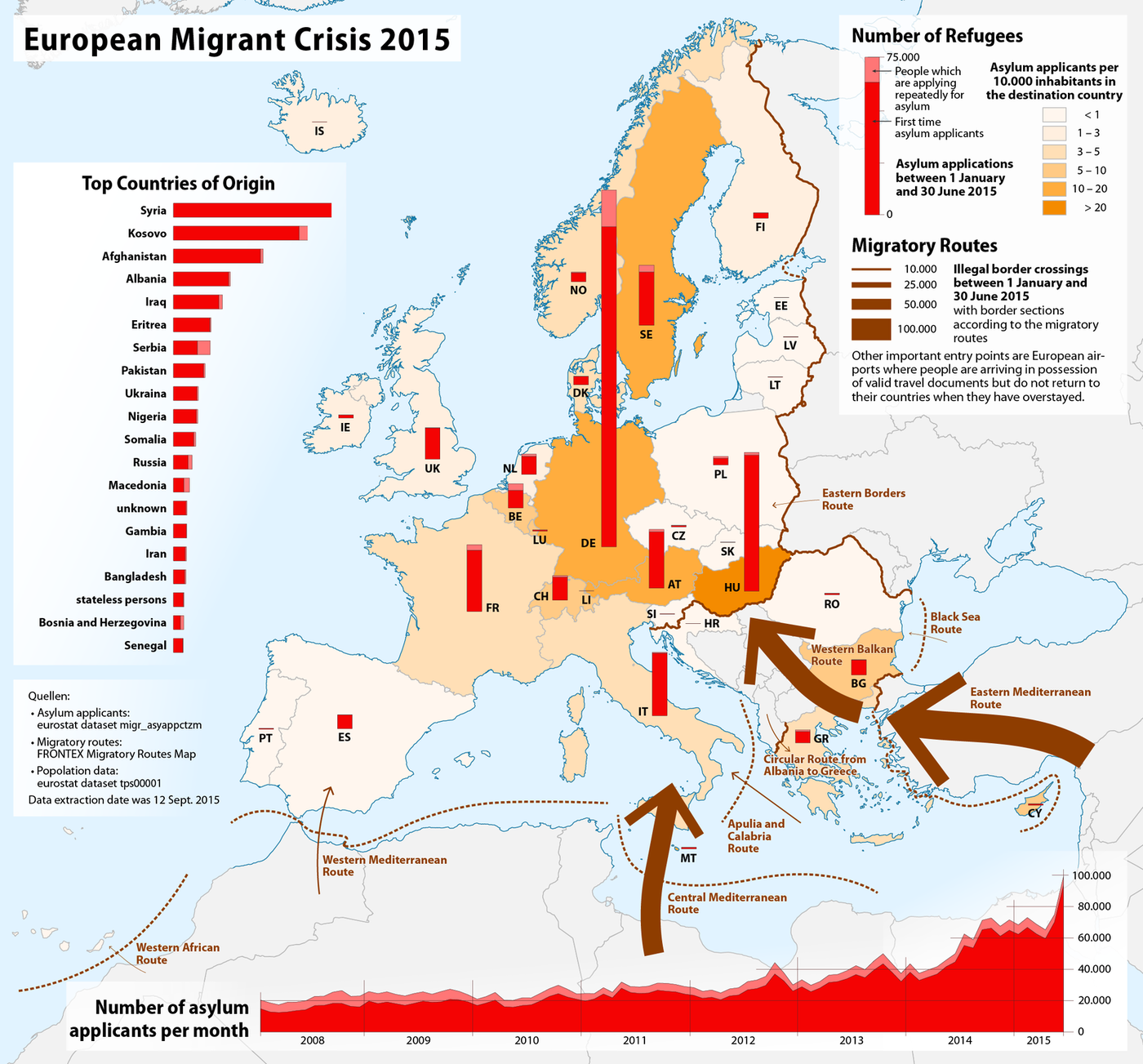
Compare the front-page treatment of 130 dead in Paris (November 2015) with 147 dead at Garissa University in Kenya (April 2015), or with the average week in eastern Congo, Sudan, Yemen or Tigray. Compare the front-page treatment of Ukrainian refugees in 2022 with that of Syrian, Afghan, Sudanese or Rohingya refugees fleeing comparable wars in the decade before. The discrepancy is not a coincidence. It is the residue of a hierarchy of grievability.
Journalists openly said the quiet part on air after the invasion of Ukraine — refugees who 'look like us', who are 'civilised', who are 'European'. The correspondents who used those words later apologised. The frame did not. It still organises what is treated as a tragedy and what is treated as a weather report.
From the Archive
Wikimedia-sourced photographs and documents related to this page.
Last updated 23 June 2026Submit a correctionMethodology
References
Sources & Further Reading
- [1]Henley & Partners, Henley Passport Index, annual.
- [2]UNHCR, Refugee Data Finder.
- [3]Frontex, Risk Analysis annual reports; ECRE / IOM Missing Migrants Project.
- [4]Michelle Alexander, The New Jim Crow: Mass Incarceration in the Age of Colorblindness (The New Press, 2010).
- [5]Devah Pager, "The Mark of a Criminal Record", American Journal of Sociology 108:5 (2003); Marianne Bertrand & Sendhil Mullainathan, "Are Emily and Greg More Employable Than Lakisha and Jamal?", AER 94:4 (2004).
- [6]Isabel Wilkerson, Caste: The Origins of Our Discontents (Random House, 2020).
- [7]Reni Eddo-Lodge, Why I'm No Longer Talking to White People About Race (Bloomsbury, 2017).
- [8]UN Office of the High Commissioner for Human Rights, reports on systemic racism in law enforcement (A/HRC/47/53, 2021).
All works cited in good faith for documentary, educational and critical use. Errors and omissions: contact the archive.
§ 08
The Anti-Trafficking State
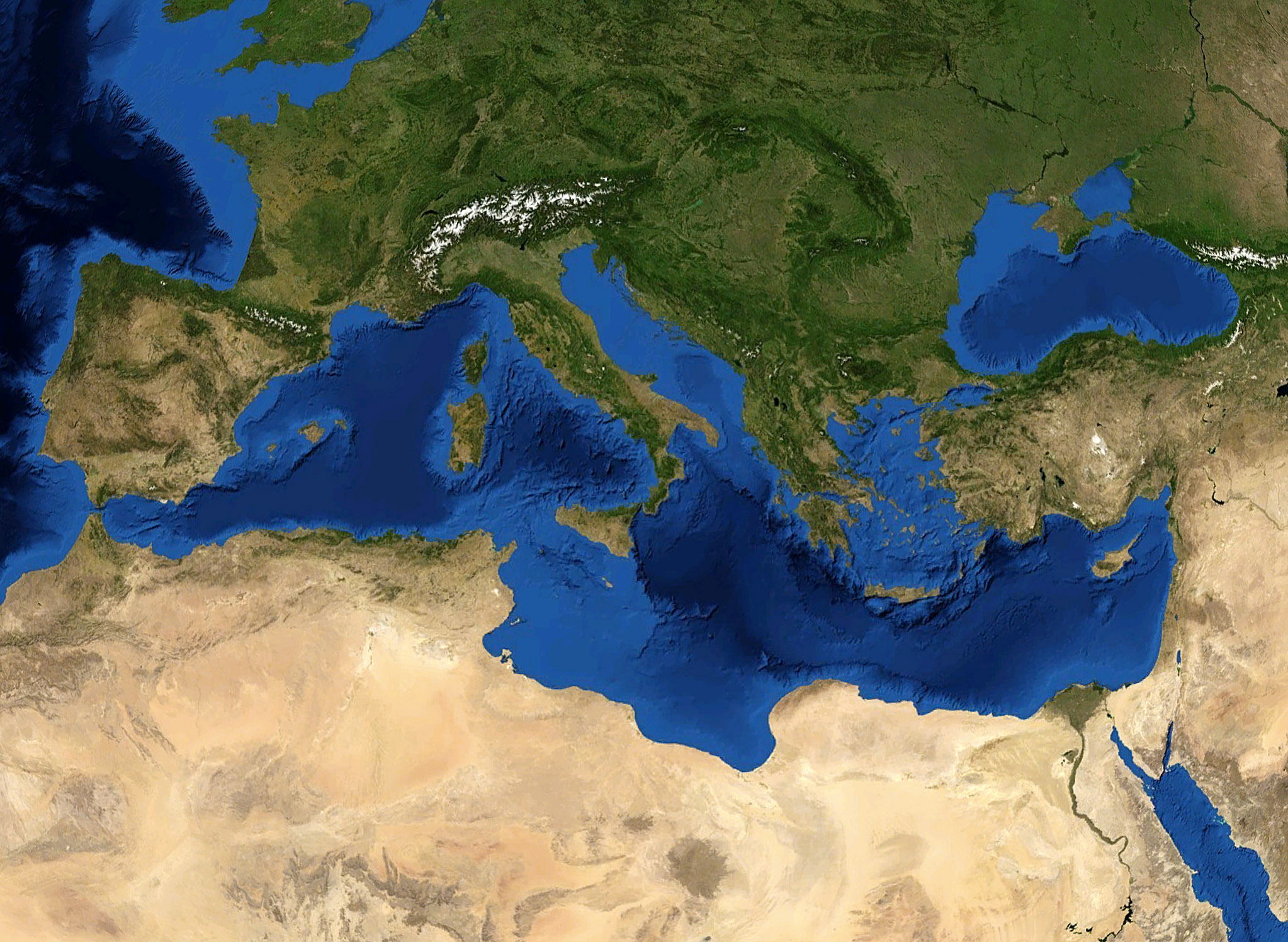
Border regimes that present themselves as humanitarian — 'we are protecting migrants from smugglers, women from traffickers' — are, in practice, the largest single cause of migrant death and exploitation. The Mediterranean has killed more than 30,000 people since 2014, in conditions European coastguards repeatedly chose not to prevent. Australia's offshore detention regime on Nauru and Manus Island documented the sexual assault of children. The U.S. southern border separated thousands of children from their parents and lost track of where it put many of them.
The colonial pattern is exact: violence performed in the name of protecting the very people it harms. The 'civilising mission' of the nineteenth century and the 'anti-trafficking framework' of the twenty-first are operationally indistinguishable — both produce the suffering they then propose to manage.
From the Archive
Wikimedia-sourced photographs and documents related to this page.
Last updated 23 June 2026Submit a correctionMethodology
References
Sources & Further Reading
- [1]Henley & Partners, Henley Passport Index, annual.
- [2]UNHCR, Refugee Data Finder.
- [3]Frontex, Risk Analysis annual reports; ECRE / IOM Missing Migrants Project.
- [4]Michelle Alexander, The New Jim Crow: Mass Incarceration in the Age of Colorblindness (The New Press, 2010).
- [5]Devah Pager, "The Mark of a Criminal Record", American Journal of Sociology 108:5 (2003); Marianne Bertrand & Sendhil Mullainathan, "Are Emily and Greg More Employable Than Lakisha and Jamal?", AER 94:4 (2004).
- [6]Isabel Wilkerson, Caste: The Origins of Our Discontents (Random House, 2020).
- [7]Reni Eddo-Lodge, Why I'm No Longer Talking to White People About Race (Bloomsbury, 2017).
- [8]UN Office of the High Commissioner for Human Rights, reports on systemic racism in law enforcement (A/HRC/47/53, 2021).
All works cited in good faith for documentary, educational and critical use. Errors and omissions: contact the archive.
§ 09
Diversity as a Brand-Safety Measure
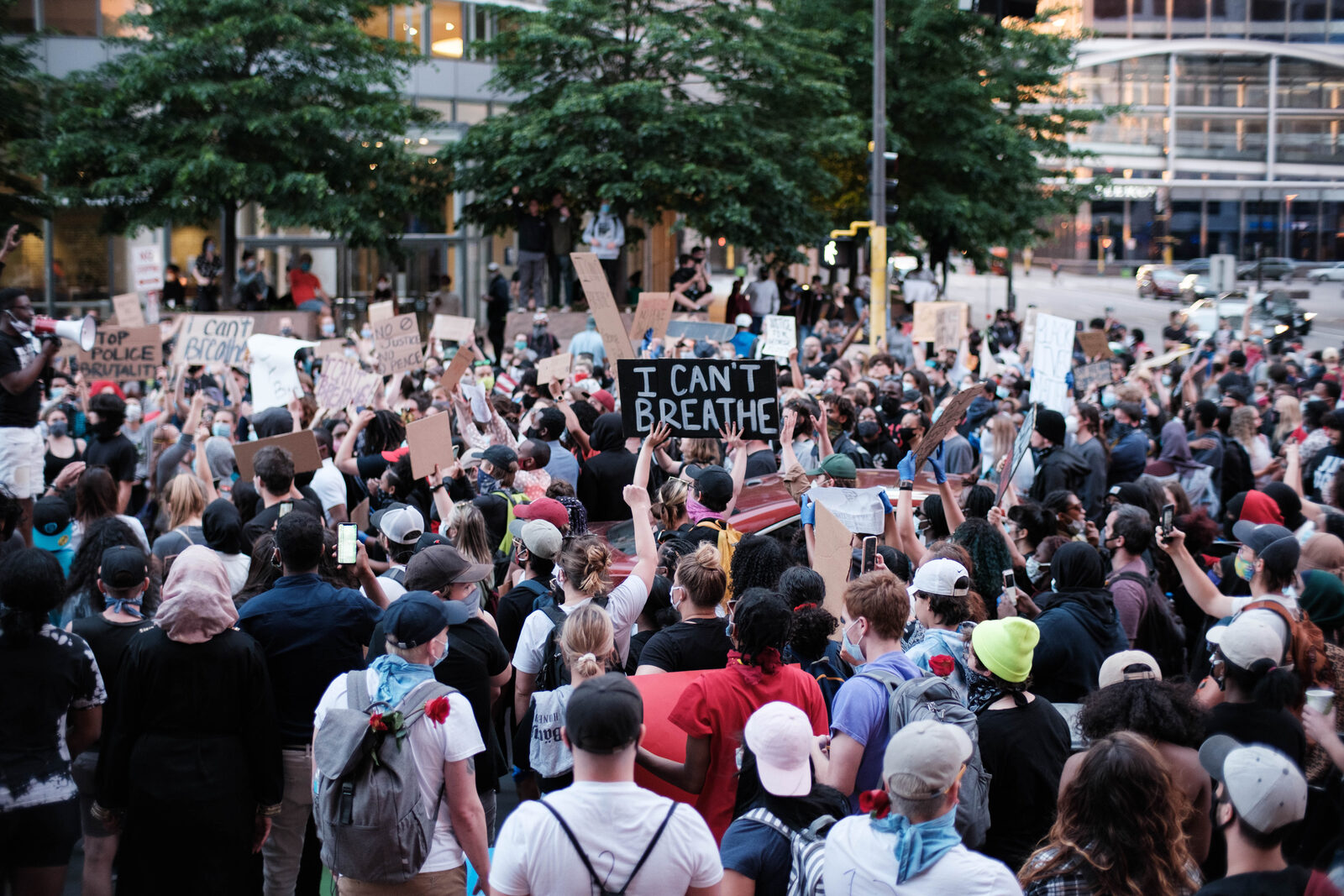
Diversity, equity and inclusion in its corporate form has, in many institutions, become a brand-safety measure rather than a redistribution. The strategy deck is bought, the optical changes happen — the board adds a face, the lobby adds a portrait, the website adds a statement — while pay, equity, board votes, supplier contracts and political donations move barely at all. After the murder of George Floyd in 2020, U.S. corporations publicly pledged roughly $50 billion to racial equity; by 2023 independent audits could account for under $250 million actually disbursed.
When the political weather changed in 2024–2025, many of the same firms dismantled their DEI offices in a single news cycle on the explicit logic that diversity had been a cost rather than a value. That is the test that exposes the original commitment. A justice you abandon when it stops paying was a marketing campaign.
From the Archive
Wikimedia-sourced photographs and documents related to this page.
Last updated 23 June 2026Submit a correctionMethodology
References
Sources & Further Reading
- [1]Henley & Partners, Henley Passport Index, annual.
- [2]UNHCR, Refugee Data Finder.
- [3]Frontex, Risk Analysis annual reports; ECRE / IOM Missing Migrants Project.
- [4]Michelle Alexander, The New Jim Crow: Mass Incarceration in the Age of Colorblindness (The New Press, 2010).
- [5]Devah Pager, "The Mark of a Criminal Record", American Journal of Sociology 108:5 (2003); Marianne Bertrand & Sendhil Mullainathan, "Are Emily and Greg More Employable Than Lakisha and Jamal?", AER 94:4 (2004).
- [6]Isabel Wilkerson, Caste: The Origins of Our Discontents (Random House, 2020).
- [7]Reni Eddo-Lodge, Why I'm No Longer Talking to White People About Race (Bloomsbury, 2017).
- [8]UN Office of the High Commissioner for Human Rights, reports on systemic racism in law enforcement (A/HRC/47/53, 2021).
All works cited in good faith for documentary, educational and critical use. Errors and omissions: contact the archive.
§ 10
The Sanctioned and the Sanctioner
Western governments routinely impose sanctions on Cuba, Iran, Venezuela, Syria, Zimbabwe and others on stated grounds of human rights — while arming Saudi Arabia, Egypt, the UAE, Israel, and previously Suharto's Indonesia and Pinochet's Chile under indistinguishable governance records. The variable predicting sanction is not human-rights performance; it is alignment with U.S. and EU foreign-policy preferences. The variable predicting weapons sales is the same.
The intellectual class that produces the moral framing for this — think tanks, op-ed pages, certain NGOs — performs the rhetorical heavy lifting that allows a foreign policy of selective outrage to look like a foreign policy of principle. The selectivity is the point. A universal standard would cost too much.
From the Archive
Wikimedia-sourced photographs and documents related to this page.
Last updated 23 June 2026Submit a correctionMethodology
References
Sources & Further Reading
- [1]Henley & Partners, Henley Passport Index, annual.
- [2]UNHCR, Refugee Data Finder.
- [3]Frontex, Risk Analysis annual reports; ECRE / IOM Missing Migrants Project.
- [4]Michelle Alexander, The New Jim Crow: Mass Incarceration in the Age of Colorblindness (The New Press, 2010).
- [5]Devah Pager, "The Mark of a Criminal Record", American Journal of Sociology 108:5 (2003); Marianne Bertrand & Sendhil Mullainathan, "Are Emily and Greg More Employable Than Lakisha and Jamal?", AER 94:4 (2004).
- [6]Isabel Wilkerson, Caste: The Origins of Our Discontents (Random House, 2020).
- [7]Reni Eddo-Lodge, Why I'm No Longer Talking to White People About Race (Bloomsbury, 2017).
- [8]UN Office of the High Commissioner for Human Rights, reports on systemic racism in law enforcement (A/HRC/47/53, 2021).
All works cited in good faith for documentary, educational and critical use. Errors and omissions: contact the archive.
Everyday Architecture
Bank loans
Black and Latino applicants in the U.S. are denied mortgages at roughly twice the rate of equally-qualified white applicants. (Federal Reserve, 2022.)
Policing
Black Americans are roughly three times more likely than white Americans to be killed by police, controlling for population. (Mapping Police Violence, 2023.)
Healthcare
Black mothers in the U.S. die in childbirth at roughly three times the rate of white mothers, controlling for income and education. (CDC.)
Stop-and-search
Black people in England and Wales are searched at more than seven times the rate of white people. (UK Home Office.)
Asylum
European countries that opened their doors to Ukrainian refugees in 2022 spent the previous decade fortifying borders against Syrians, Afghans and Sudanese fleeing comparable wars.
Academic citation
Scholars based at universities in the Global South are systematically under-cited relative to colleagues at Northern institutions working on the same material — including material from the South.
Medical pain
U.S. medical students in a 2016 PNAS study endorsed false beliefs about Black biology (thicker skin, less sensitive nerves); Black patients receive less analgesia for the same injuries.
Hiring callbacks
Identical CVs with traditionally Black or Arab names receive ~30–50% fewer callbacks than ones with white-coded names across France, the UK, Germany and the U.S. (Bertrand & Mullainathan; Adida; CNRS.)
Air pollution
Black and Latino Americans breathe roughly 56% and 63% more particulate matter than is generated by their own consumption — pollution is exported to their neighbourhoods. (PNAS, 2019.)
School discipline
U.S. Black preschoolers — 4-year-olds — are suspended at 3.6× the rate of white preschoolers. (Department of Education OCR.)
Sentencing
Black men in the U.S. federal system receive sentences ~20% longer than white men for the same crimes. (U.S. Sentencing Commission, 2017.)
Maternal mortality (UK)
Black women in the UK are four times more likely to die in pregnancy or childbirth than white women. Asian women, twice as likely. (MBRRACE-UK.)
Climate finance
Wealthy nations pledged $100 billion/year to climate adaptation in the Global South by 2020. They missed the target every year until 2022 — while spending many multiples on fossil-fuel subsidies at home.
Visa hierarchy
Schengen visa rejection rates for African applicants run 30–60%; for North American or East Asian applicants, under 5%. Application fees of those rejected are non-refundable, generating hundreds of millions in EU revenue annually.
How it works
How a racial hierarchy is maintained without racial language
After the open vocabulary of empire became socially costly, the same outcomes were achieved through a more durable apparatus. Each step launders the previous one through a neutral-sounding term.
Replace 'race' with 'risk'
Credit risk, security risk, immigration risk, terrorism risk, flight risk. Risk is a quantitative-sounding word that lets institutions act on the same populations using historical data that already encodes the discrimination.
Replace 'colony' with 'market'
Resource extraction continues, but now under WTO rules, investor-state dispute clauses, and IMF programmes. The flag changes; the trade balance does not.
Replace 'savage' with 'fragile state'
The Failed States Index, the Fragile States Index, the Governance Indicators of the World Bank — categorisations that justify intervention, asset freezes and conditionality without ever invoking biological hierarchy.
Replace 'civilising mission' with 'humanitarian intervention'
Same boots, same airframes, same cratered cities, new vocabulary. The 2011 Libya intervention, conducted under R2P, produced a slave market visible on CNN by 2017.
Replace 'lynching' with 'algorithmic risk score'
Predictive policing, no-fly lists, immigration-priority scoring, child-welfare risk models, fraud-detection systems — the outcomes track race, the inputs are 'neutral', the appeal process is mostly absent.
Replace 'segregation' with 'school catchment / postcode lottery'
Housing covenants ended in 1968 in the US, but redlining maps still predict 2024 school quality, life expectancy, broadband access and air pollution to within a few blocks of the original lines.
Receipts
Same act, different headline
| 01Act | 02White / Western perpetrator framing | 03Non-white / non-Western framing |
|---|---|---|
| Mass shooting | 'Mentally ill', 'lone wolf', 'troubled past', biography of the perpetrator | 'Terrorist', community-wide suspicion, calls for surveillance of the perpetrator's faith |
| Looting during a crisis | 'Finding food' | 'Looting' |
| Migration toward a richer country | 'Expat' | 'Migrant', 'illegal', 'asylum-seeker' |
| Invading another country | 'Stabilisation operation', 'liberation', 'mission' | 'Aggression', 'invasion', subject of ICC referral |
| Religious extremism | Treated as a fringe of a normal religion | Treated as the essence of an abnormal religion |
| Civilian casualties | 'Tragic but unavoidable collateral damage' | 'Human shields', 'their fault for staying' |
| Recovery of past wealth | 'Restoring the legitimate order' | 'Revanchism', 'irredentism' |
A diagnostic exercise. Read each row aloud and ask whether the framing would survive a swap of the perpetrator's identity.
In medicine
The body is not 'neutral' data either
The pulse oximeter — the small clip placed on a patient's finger to measure blood oxygen — over-estimates oxygen saturation in patients with darker skin. The 2020 New England Journal of Medicine study that demonstrated this used data from 2014–2020; the device design fault has been known since the 1990s. During the first wave of Covid in 2020, this single device routinely under-triaged Black patients into less intensive care. The FDA convened a panel only in late 2022.
Until 2021 the standard US equation for kidney function (eGFR) included a 'race coefficient' that automatically inflated reported kidney health in Black patients by ~16% — pushing thousands off transplant waiting lists. The Albert Einstein College of Medicine estimated 30,000+ Black patients were denied earlier specialist referral as a direct result, over the decades the equation was used.
A 2016 PNAS paper found that 40% of US medical students sampled believed at least one false biological claim about Black bodies — thicker skin, less sensitive nerves, denser bones. Pain prescription gaps follow. The teaching is downstream of nineteenth-century race science the curriculum never quite scrubbed.
Spirometry — the lung-function test — still defaults in many machines to a 'race correction' that mechanically reads Black and Asian lungs as smaller. Coronary-risk calculators behaved similarly until very recently. The body the textbook calls 'normal' is overwhelmingly the white male body of the 1950s anatomy class.
The permitted racism
Islamophobia as the socially-licensed exception
In every European country where the question has been polled since 2015, hostility to Muslims is higher and more openly expressed than hostility to any other group. It is, uniquely, the prejudice that respectable centrist newspapers will print as opinion, that mainstream parties will campaign on, and that high-court judges will rationalise in dress-code rulings.
The vocabulary — 'integration', 'British values', 'laïcité', 'parallel societies' — was developed in the colonial encounter with the Maghreb, the Levant and South Asia. It was suspended for thirty post-war years and revived around the year 2000. The arguments are not new; the dictionary is the same one used about Algerians in 1950s France, Muslims in 1857 British India, and Moriscos in 1609 Spain.
The empirical test is asymmetry. A Catholic bishop who opposes same-sex marriage is described as theologically conservative. A Muslim imam who says the same thing is described as a threat to liberal democracy. A Hasidic community with strict dress codes is described as eccentric. A Muslim community with strict dress codes is described as un-French. The double standard is the point of the system.
Pre-empted
Objections answered
#01The strongest version
"Talking about race constantly is what keeps racism alive. Stop noticing it and it will fade."
Reply
The 'colour-blind' experiment has been run for sixty years in the United States, fifty in the United Kingdom, thirty in continental Europe. In every measurable domain — wealth, incarceration, maternal mortality, mortgage denial, hiring callbacks — the gaps either widened or held. Refusing to measure does not make a phenomenon disappear; it makes it harder to address. Doctors who refuse to diagnose do not improve survival rates.
#02The strongest version
"Bringing up race in every issue is itself racist; it reduces people to their skin colour."
Reply
The people first reduced to a skin colour were the ones legally classified by it for four centuries of slavery, segregation and immigration law. Tracking the legacy of that classification is the opposite of imposing it — it is the only way to undo it. The originators of the category should not get to declare it over.
#03The strongest version
"The real division is class, not race."
Reply
Treat them as orthogonal. The poorest white quintile in the US still has more household wealth than the median Black quintile (Federal Reserve, 2022). UK Bangladeshi households earning over £50,000 still face higher mortgage rejection rates than white households earning under £20,000 (FCA, 2023). Class is real and structural; it does not absorb race. A movement that refuses to see one of the two axes will lose on both.
#04The strongest version
"Reverse racism / anti-white racism is the bigger problem now."
Reply
Racism in its operational sense — the capacity to convert prejudice into systemic disadvantage via policy, hiring, lending, policing, incarceration and the curriculum — has, since the 16th century, run in one direction. Individual hostility can run in any direction; the structural amplifier does not. A useful test: name the country where being legally classified as white has, on average, lowered life expectancy.
#05The strongest version
"This list of statistics is depressing and changes nothing."
Reply
Every single one of the policy reversals on this page — eGFR race correction, race-conscious admissions, redlining, sentencing reform, stop-and-search ratios — moved only after sustained public pressure following sustained public documentation. Statistics are not the cure. They are the diagnostic without which the cure cannot begin.
"Racism is a structure, not an event."
— Patrick Wolfe, on settler colonialism, 2006
Take it further
What to do with this page
01 —
Apply the swap test
Next time you read a headline, mentally swap the identity of the perpetrator and victim and see whether the verb, the adjective and the framing survive the swap. Share the result.
02 —
Audit one institution
Your employer, university, council or local press: what percentage of senior staff, board members and bylined journalists are non-white? What percentage of the area's population? Calculate the ratio.
03 —
Read one Black or Brown thinker
Pick one and finish a whole book — Stuart Hall, Sylvia Wynter, Edward Said, Saidiya Hartman, Hazel Carby, Ruha Benjamin, Kehinde Andrews. Cite them by name when you talk about racism, instead of citing white commentators on racism.