A History of Conquest
Eight empires. Five centuries. One pattern. This is the abbreviated map of how a small corner of Europe came to own most of the planet — and what it cost the people who already lived there.
Colonialism is not a metaphor and it is not ancient history. It is the organized, continuous, deliberately profitable seizure of other peoples' land, labor and lives by a handful of European states and their settler offshoots over a period of roughly five hundred years. The wealth it produced built the cities we now call beautiful. The borders it drew are the borders we now call countries. The hierarchies it invented — between "civilized" and "primitive," between "white" and the rest — are the hierarchies we now call common sense.
What follows is a short account, empire by empire. It is not complete. No site could be. It is meant as a starting point, a refusal of the polite shrug that treats this history as too "complicated" to summarize. It is not complicated. It is uncomfortable.
01. Spain
1492 — 1898
When Columbus made landfall in the Bahamas in October 1492, the Caribbean was home to millions of Taíno, Kalinago, Lucayan and other peoples. Within fifty years, the Taíno of Hispaniola were effectively extinct — worked to death in gold mines, butchered for sport, killed by smallpox and measles introduced by the conquistadors. Bartolomé de las Casas, a Spanish friar who lived through it, wrote that he had seen children fed to dogs.
The conquest of the Aztec Empire (1519–1521) and the Inca Empire (1532–1572) destroyed two of the most sophisticated political and architectural civilizations on the planet. The libraries of Tenochtitlán were burned. The terraced cities of the Andes were stripped. The silver mines of Potosí, in modern Bolivia, swallowed an estimated eight million Indigenous and African enslaved workers between 1545 and 1825. The bullion that came out of that mountain financed the Habsburg empire and, eventually, the European banking system.
Spain's American empire was not an accident or a misunderstanding. It was an organized, theologically justified, century-long extraction operation. Today Spanish school curricula still routinely describe it as the encuentro — the 'encounter.'
02. Portugal
1444 — 1975
Portugal pioneered the European slave trade. The first cargo of enslaved West Africans was unloaded at Lagos, Portugal, in 1444. Over the next four centuries, Portuguese ships would carry roughly 5.8 million human beings across the Atlantic — more than any other European nation. The sugar plantations of Brazil, the gold and diamond mines of Minas Gerais, and the wealth of Lisbon were built on this trade.
In Africa itself, Portugal held Angola, Mozambique, Guinea-Bissau, Cape Verde and São Tomé until the 1970s — long after most of Europe had been forced out. Its colonial wars in the 1960s and 1970s killed tens of thousands and displaced millions. The dictatorship of Salazar called this the 'civilizing mission.'
03. United Kingdom
1600 — 1997
At its height in 1920, the British Empire ruled roughly a quarter of the world's land surface and a quarter of its population. The wealth that built London — its squares, its museums, its banks, its insurance industry, its universities — was extracted from India, the Caribbean, West Africa, East Africa, Ireland, Malaya, Egypt, Palestine, Iraq, Hong Kong and beyond.
The economist Utsa Patnaik has calculated that Britain drained roughly $45 trillion from India alone between 1765 and 1938. India entered the British orbit producing roughly 25% of global GDP. It left it producing 4%. Between two and four million Bengalis died in the 1943 famine — a famine Churchill engineered by diverting food to British troops and then blamed on Indians for 'breeding like rabbits.'
In Kenya, the Mau Mau uprising of the 1950s was suppressed in concentration camps where torture, castration and rape were systematic. The British government destroyed the records when it left. In 2013 it finally paid £19.9 million in compensation to surviving victims — without admitting liability.
04. France
1534 — 1962
The French empire stretched from the Caribbean to West Africa to Indochina to the Pacific. Saint-Domingue (modern Haiti) was, in the eighteenth century, the most profitable colony in the world — producing 40% of Europe's sugar and 60% of its coffee with the labor of half a million enslaved Africans worked to death on an industrial schedule. When Haiti freed itself in 1804, France responded in 1825 with gunboats and demanded 150 million gold francs as 'compensation' for the loss of its slaves. Haiti finished paying this ransom in 1947. It is the principal reason Haiti is poor today.
In Algeria, the French colonization that began in 1830 killed an estimated 825,000 Algerians in its first three decades alone. The Algerian War of Independence (1954–1962) killed several hundred thousand more. French paratroopers in the Battle of Algiers used systematic torture — electrodes, waterboarding, rape. The French Republic only officially acknowledged this in 2018.
Across French West Africa, the colonial franc — the CFA — still ties fourteen African countries' monetary policy to the French Treasury today.
05. Belgium
1885 — 1960
King Leopold II of Belgium personally owned the Congo from 1885 to 1908. It was not a Belgian colony. It was his private property — a country eighty times the size of Belgium, ruled as a forced-labor camp for rubber and ivory. Quotas were enforced by the Force Publique, who were required to bring back a severed hand for every cartridge they fired.
Estimates of the death toll range from eight to fifteen million people. Roger Casement's 1904 report and E.D. Morel's campaign forced Leopold to hand the territory over to the Belgian state in 1908. The state continued the system, more quietly, until 1960. When the Congo finally became independent, its first elected prime minister, Patrice Lumumba, was assassinated within months in a plot involving Belgian and CIA operatives.
Leopold's statues still stand in parts of Belgium. The Royal Museum for Central Africa in Tervuren — built with Congolese wealth — was, until recently, an unironic temple to the 'civilizing mission.'
06. Netherlands
1602 — 1949
The Dutch East India Company (VOC), founded in 1602, was the world's first multinational corporation and one of its most violent. It ran the spice trade from Indonesia for two hundred years, depopulating the Banda Islands in 1621 — the VOC governor Jan Pieterszoon Coen massacred or deported almost the entire population of about 15,000 to monopolize the nutmeg crop.
Dutch rule of the East Indies (modern Indonesia) ended in 1949, but only after a brutal four-year war in which Dutch forces committed massacres at Rawagede and South Sulawesi that the Dutch state acknowledged and apologized for only in the 2010s. The Atlantic operations of the Dutch West India Company carried roughly 600,000 enslaved Africans, primarily to Suriname and the Caribbean.
07. Germany
1884 — 1919
Germany's colonial period was shorter, but it produced the first genocide of the twentieth century. Between 1904 and 1908 in German South West Africa (modern Namibia), General Lothar von Trotha issued an extermination order against the Herero and Nama peoples. The Herero were driven into the Omaheke desert and prevented from reaching water. Survivors were imprisoned in concentration camps where roughly half died. About 80% of the Herero and 50% of the Nama were killed.
The techniques developed in Namibia — racial classification, concentration camps, eugenic experiments, the medical 'study' of skulls of murdered people — would, three decades later, return to Europe. The German government formally recognized the Herero and Nama genocide only in 2021.
08. United States
1776 — present
The United States is the largest and most successful settler-colonial project in modern history. The Indigenous population of what is now the contiguous United States fell from roughly 10 million in 1492 to about 250,000 by 1900 — through war, forced removal, broken treaties, deliberate destruction of the buffalo, and the residential school system in which Indigenous children were taken from their parents to be 'killed as Indians and saved as men.'
American chattel slavery — the basis of the cotton economy that fueled the Industrial Revolution on both sides of the Atlantic — was the most racially codified and intergenerational system of slavery in human history. It ended in 1865. The wealth gap it created has not closed. The system that replaced it — sharecropping, convict leasing, Jim Crow, redlining, mass incarceration — has not been dismantled either.
Outside its own borders, the United States overthrew governments in Iran (1953), Guatemala (1954), Congo (1961), Brazil (1964), Indonesia (1965), Chile (1973) and dozens of other countries, generally on behalf of corporations and against democratically elected leaders. It calls this 'foreign policy.'
09. Italy
1882 — 1947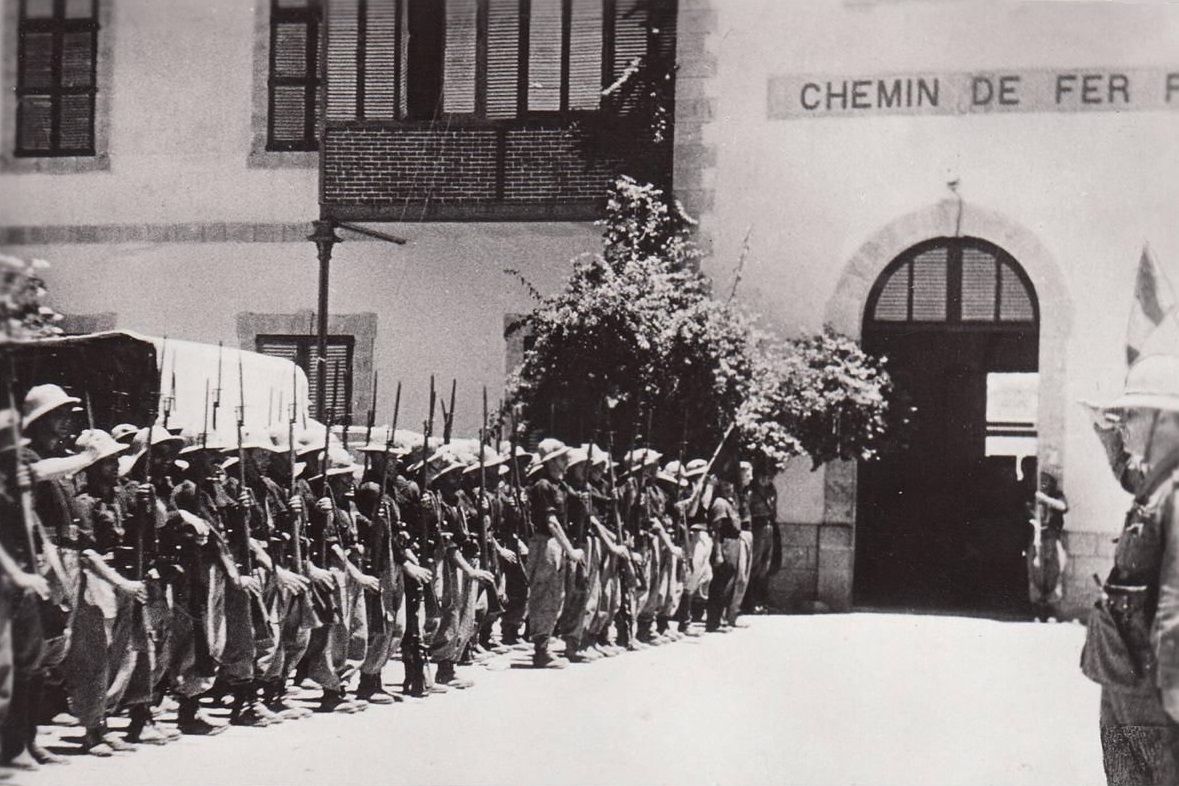
Italian colonialism is the empire most successfully hidden inside Europe. Beginning with the seizure of Eritrea in 1882, Italy went on to invade Libya in 1911, Somalia, and twice — in 1896 and 1935 — Ethiopia. The first invasion ended at Adwa, where an African army humiliated a European one; the second ended with mustard gas. Mussolini's air force, commanded by his sons Vittorio and Bruno, dropped tens of thousands of chemical bombs on Ethiopian villages between 1935 and 1936 in open violation of the Geneva Protocol, then bayoneted survivors and bulldozed monasteries.
In Libya, General Rodolfo Graziani — the 'Butcher of Fezzan' — herded between 80,000 and 100,000 Cyrenaicans into concentration camps in the Sirte desert between 1929 and 1934; roughly half died. No Italian was ever tried; Graziani served briefly as a defence minister of Mussolini's puppet republic and lived peacefully until 1955. The popular Italian self-image of italiani brava gente — 'Italians, the good people' — is one of the most durable national myths in Europe.
10. Russia and the Soviet Union
1552 — 1991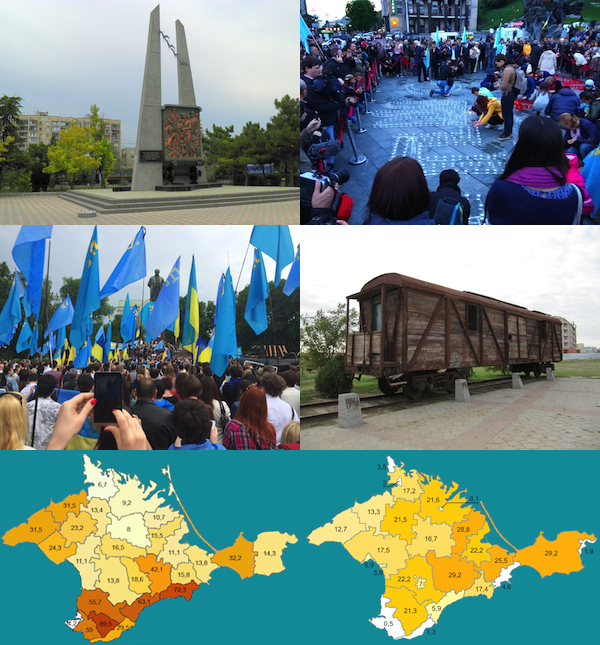
The Russian Empire is the colonial project Western histories most consistently leave out of the European story, on the grounds that the conquests happened by land rather than by sea. Beginning with Ivan IV's destruction of the Kazan Khanate in 1552, Moscow expanded continuously eastwards across Siberia, southwards into the Caucasus and Central Asia, and northwards over the Indigenous peoples of the Arctic. The conquest of the Caucasus alone (1817–1864) ended with the Circassian genocide: roughly 1.5 million Circassians killed or deported to the Ottoman Empire, with population losses of 90–95% in some districts.
Under the Soviet Union the imperial form survived, dressed in the vocabulary of internationalism. Stalin deported entire nations — Crimean Tatars, Chechens, Ingush, Volga Germans, Kalmyks, Karachay, Balkars, Meskhetian Turks, Koreans — in cattle wagons, killing between a third and half of each. Central Asian republics were locked into cotton monocultures and Russian was the language of all advancement. The fact that the Soviet Union also funded anti-colonial movements abroad does not change what it was at home.
11. Japan
1895 — 1945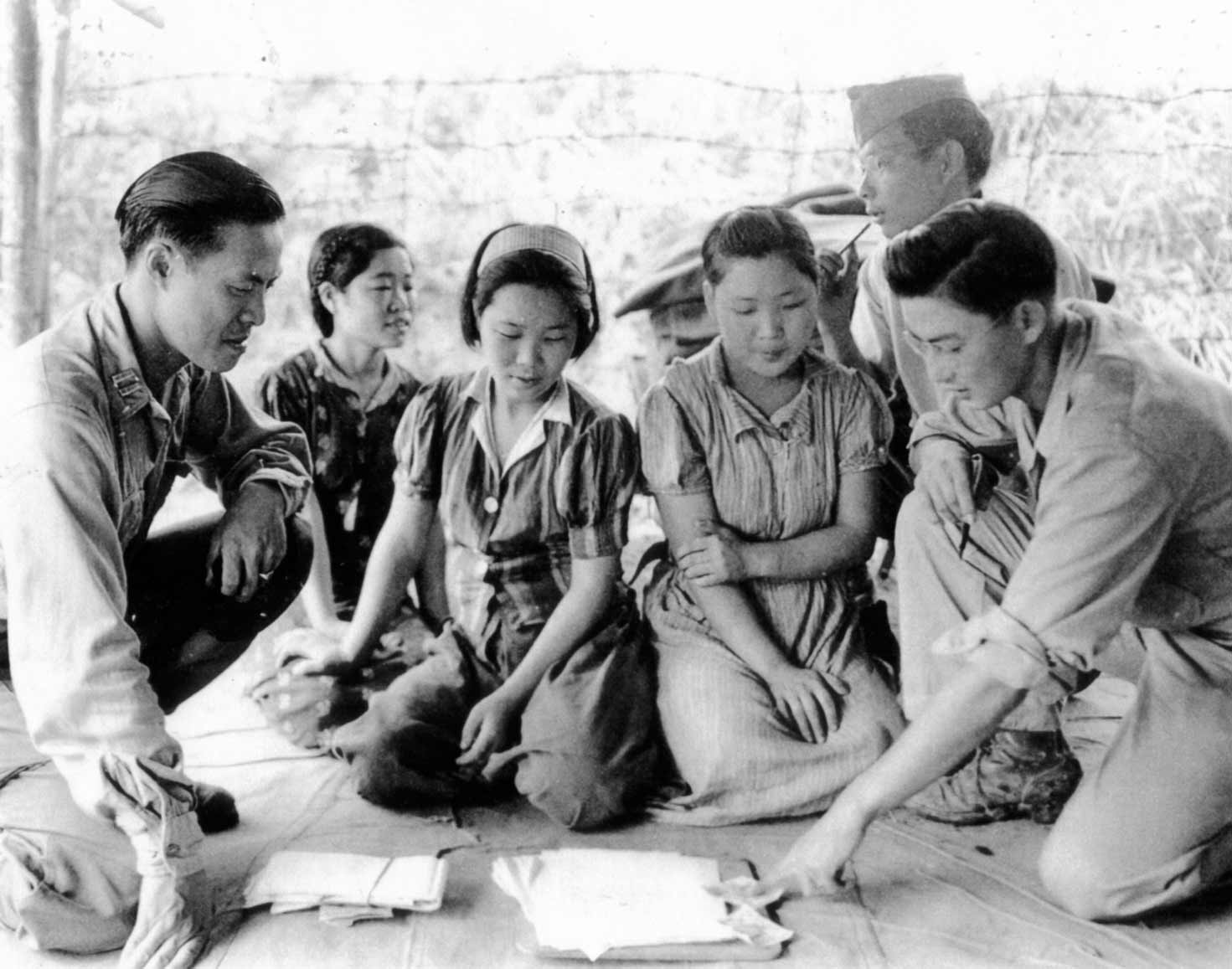
Japan is the one non-European empire that successfully adopted the entire European colonial playbook in a single generation. Following its industrial revolution in the late 19th century, it annexed Taiwan (1895), Korea (1910), Manchuria (1931) and large portions of China and Southeast Asia, ruling 100 million people at its 1942 peak. Unit 731 conducted live human vivisections on Chinese, Korean and Allied prisoners in Harbin; the Nanjing massacre of 1937 killed between 200,000 and 300,000 civilians in six weeks. Up to 200,000 'comfort women', mostly Korean, were enslaved in military brothels.
Japan's place in this archive is not whataboutism: the point is that empire was a technology, not a race. When Japan adopted it, Japan produced the same atrocities the European powers produced. Japan has paid limited reparations and has yet to issue an unequivocal apology for the comfort women system, while Western Cold War priorities — anti-communism, basing rights — actively shielded Japanese war criminals from prosecution after 1945.
Interactive · Empire reach
How much of the world was being held — and by whom
Scrub the year
- SpainCaribbean & Hispaniola
- SpainMexico (New Spain)
- SpainPeru & the Andes
- SpainPhilippines
- SpainCuba
- SpainSpanish Sahara
- PortugalBrazil
- PortugalAngola
- PortugalMozambique
- PortugalGoa (India)
- PortugalMacau
- PortugalEast Timor
- BritainThirteen Colonies
- BritainJamaica & West Indies
- BritainCanada
- BritainIndia (Raj)
- BritainAustralia
- BritainNew Zealand
- BritainSouth Africa
- BritainEgypt & Sudan
- BritainNigeria
- BritainKenya
- BritainGhana (Gold Coast)
- BritainHong Kong
- BritainMalaya & Singapore
- BritainBurma
- BritainPalestine Mandate
- BritainIreland
- FranceNew France (Canada)
- FranceSaint-Domingue (Haiti)
- FranceSenegal
- FranceAlgeria
- FranceFrench West Africa
- FranceFrench Equatorial Africa
- FranceTunisia
- FranceMorocco (protectorate)
- FranceIndochina
- FranceMadagascar
- FranceSyria & Lebanon (mandate)
- FranceOverseas DOM-TOM (current)
- NetherlandsDutch East Indies (Indonesia)
- NetherlandsSuriname
- NetherlandsCape Colony
- NetherlandsDutch Caribbean (current)
- BelgiumCongo Free State
- BelgiumBelgian Congo
- BelgiumRuanda-Urundi
- GermanyGerman South-West Africa
- GermanyGerman East Africa
- GermanyCameroon
- GermanyTogoland
- GermanyGerman New Guinea
- ItalyEritrea
- ItalyLibya
- ItalySomalia
- ItalyEthiopia (occupation)
- United StatesIndigenous nations (continental)
- United StatesPhilippines
- United StatesHawaii
- United StatesPuerto Rico (current)
- United StatesGuam (current)
- United StatesAmerican Samoa (current)
- United StatesU.S. Virgin Islands
- United StatesPanama Canal Zone
- United StatesOverseas military bases (≈750)
Dates rounded to event years (annexation, mandate, independence). Sources: Pakenham, Hochschild, Davis, Tharoor; Maddison/Headrick for world-land percentages.
Receipts
The eight empires at a glance
| 01Empire | 02Peak extent | 03Signature atrocity | 04Estimated deaths | 05Wealth extracted |
|---|---|---|---|---|
| Spain | Americas, Philippines | Potosí silver mines, Caribbean depopulation | ~8M Indigenous (Americas) | 180,000 tonnes silver from Potosí alone |
| Portugal | Brazil, Angola, Mozambique, Goa | Atlantic slave trade (5.8M deported) | ~2M in transit; millions in plantations | Brazilian gold underwrote Lisbon for 200 years |
| Britain | 1/4 of land surface, 1920 | Bengal famines (1770, 1943) | 30–60M in policy-driven famines, India alone | $45 trillion drained from India (Patnaik) |
| France | West/North Africa, Indochina, Caribbean | Haiti indemnity; Algeria 1830–1962 | ~1.5M Algerians; ~half a million Vietnamese | Haiti paid €21B in modern francs; CFA continues |
| Belgium | Congo (80× Belgium's size) | Rubber regime, severed hands | 8–15M Congolese under Leopold | Rubber profits funded Brussels' Cinquantenaire |
| Netherlands | Indonesia, Suriname, Cape | Banda nutmeg genocide; 1945–49 war | ~15,000 Bandanese (90%); 100k+ Indonesians | VOC was the world's richest corporation |
| Germany | Namibia, Cameroon, Tanganyika | Herero & Nama genocide 1904–08 | ~65,000 Herero (80%), ~10,000 Nama (50%) | Rehearsed the methods used in Europe in the 1940s |
| United States | Continental + Pacific + global bases | Indigenous removal; chattel slavery | Indigenous population fell 10M → 250k | Plantation cotton fuelled the industrial revolution |
Compiled from peer-reviewed colonial economic history and demographic estimates. Death tolls are conservative midpoints.
Pre-empted
Objections answered
#01The strongest version
"Every civilisation in history conquered its neighbours. Empire is a human universal, not a European invention."
Reply
Conquest is universal. What was new was the combination of four things in the European period: (1) global maritime reach, (2) chattel-race slavery as a legal category, (3) industrial extraction backed by joint-stock corporations, and (4) a theological-then-scientific racial hierarchy that justified it all. The Mongols, the Aztecs and the Ashanti did not build any of those four things. The fact that violence is old does not make this particular system old, and it is this particular system whose wealth and borders we still live inside.
#02The strongest version
"It was a long time ago. Holding people responsible today for what their ancestors did is collective guilt."
Reply
The Haitian indemnity was paid until 1947. British taxpayers finished paying off the 1833 slave-owner compensation loan in 2015. Algeria fought France until 1962. The Chagossians were evicted in 1971. The Congo Free State ended within living memory of people now collecting pensions. 'A long time ago' is a feeling, not a date. The institutions are still here, the wealth is still here, and the bill is still arriving.
#03The strongest version
"Yes there were abuses, but empires also brought railways, hospitals, universities, the rule of law. The balance sheet is mixed."
Reply
A railway built to extract cotton, by forced labour, on a gauge incompatible with the country next door, is not a gift to the people it bypasses; it is infrastructure for the extractor. Mike Davis showed that British 'modernisation' coincided with the worst famines in Indian history. The 'rule of law' that legalised the Code de l'indigénat, the Native Land Act and the Indian Penal Code's sedition clauses is not the rule of law. The balance sheet, when honestly drawn, is not mixed.
#04The strongest version
"Africans sold other Africans into slavery. Indians collaborated with the Raj. Empire was a partnership."
Reply
Some collaborated, under duress or for advantage; that is true everywhere occupiers go. The European powers supplied the demand, the credit, the firearms, the ships, the insurance, the courts and the legal category of the human being as property. A fence who funds and arms a thief and writes the contract for the stolen goods does not become innocent because someone local handed over the silver.
#05The strongest version
"You are cherry-picking the worst episodes and ignoring the genuine progress empire brought."
Reply
Find any major modern industry whose foundational capital, raw inputs or scientific knowledge did not pass through a colonial circuit between 1500 and 1960. Cotton, sugar, rubber, tea, coffee, cocoa, palm oil, tin, copper, gold, diamonds, oil, uranium, the Royal Society's botanical surveys, the Linnean classification of the world — all of it. The picking is not cherry. The orchard belongs to someone else.
"The discovery of gold and silver in America, the extirpation, enslavement and entombment in mines of the aboriginal population, the beginning of the conquest and looting of the East Indies, the turning of Africa into a warren for the commercial hunting of black-skins, signalised the rosy dawn of the era of capitalist production."
— Karl Marx, Capital, Vol. I, 1867
Take it further
Do something with this chapter
01 —
Name your city's chapter
Find which of the eight empires above your city most directly profited from. Most European and American cities of any size have a documented chapter. Bring it up next time someone calls colonialism 'ancient history.'
02 —
Read one primary source
Pick one of the empires above and read a single primary document: Las Casas, Casement's Congo Report, the Hunter Commission on Amritsar, von Trotha's extermination order. Ten pages from the archive beats a hundred from the apologist.
03 —
Send the table
The comparison table above is designed to be screenshot-shared. It defeats 'whataboutism' in one image. Use it.
From the Archive
Wikimedia-sourced photographs and documents related to this page.


Last updated 23 June 2026Submit a correctionMethodology
References
Sources & Further Reading
- [1]Bartolomé de las Casas, Brevísima relación de la destrucción de las Indias (Seville, 1552).
- [2]Noble David Cook, Born to Die: Disease and New World Conquest, 1492–1650 (Cambridge University Press, 1998).
- [3]Eduardo Galeano, Open Veins of Latin America (Monthly Review Press, 1971; English 1973).
- [4]Adam Hochschild, King Leopold's Ghost (Houghton Mifflin, 1998).
- [5]Thomas Pakenham, The Scramble for Africa (Random House, 1991).
- [6]Shashi Tharoor, Inglorious Empire: What the British Did to India (Hurst, 2017).
- [7]Caroline Elkins, Imperial Reckoning: The Untold Story of Britain's Gulag in Kenya (Henry Holt, 2005).
- [8]Alfred W. McCoy, Policing America's Empire: The United States, the Philippines, and the Rise of the Surveillance State (Wisconsin, 2009).
- [9]Daniel Immerwahr, How to Hide an Empire: A History of the Greater United States (Farrar, Straus and Giroux, 2019).
- [10]Jürgen Zimmerer, "The birth of the Ostland out of the spirit of colonialism", Patterns of Prejudice 39:2 (2005), on the German South-West Africa → Holocaust lineage.
- [11]Walter Rodney, How Europe Underdeveloped Africa (Bogle-L'Ouverture, 1972).
- [12]Karl Marx, Capital, Volume I (1867), Chapter 31 ("Genesis of the Industrial Capitalist").
All works cited in good faith for documentary, educational and critical use. Errors and omissions: contact the archive.