Atrocities & Erasure
A partial catalogue. The complete catalogue would be the size of a library. This is what the comfortable nations of the world prefer to file under 'complicated history.'
What follows is not exhaustive. It cannot be. We have selected episodes that are well documented, well sourced, and that together sketch the geography and the method of colonial violence. The method is consistent: dehumanize, extract, deny. Each of these cases has its own enormous scholarly literature. Each is also structurally absent or actively distorted in the school curricula of the countries responsible.
18 of 18 cases
01The Congo Free State
1885 – 1908Where
Central Africa, under King Leopold II of Belgium
Period
1885 – 1908
Estimated toll
Up to 15 million dead (≈50% population collapse)

King Leopold II ran the Congo as his personal property for twenty-three years. The territory existed to extract wild rubber. Villages were given quotas. Failure to meet the quota meant the Force Publique would burn the village and cut off the hands of survivors as proof to their officers that bullets had been used on humans, not animals.
By 1908, when international pressure finally forced Leopold to transfer the territory to the Belgian state, the population had fallen by an estimated half. The wealth Leopold extracted built the Arcades du Cinquantenaire in Brussels, the Royal Museum for Central Africa in Tervuren, and the seaside resort of Ostend.
02The Bengal Famine
1943Where
British India
Period
1943
Estimated toll
Up to 4 million dead (direct starvation + disease)

In the middle of the Second World War, Britain diverted food from Bengal to feed British troops and stockpile reserves in Europe. When officials in India warned Churchill that people were dying, his response, recorded by Leopold Amery, was to ask why Gandhi had not yet died.
The Bengal famine was not caused by crop failure. Rice harvests in 1943 were only slightly lower than normal. It was caused by deliberate policy: requisitioning, scorched-earth tactics against possible Japanese supply lines, and a refusal to release reserves. Two to four million people starved in a province under the direct administration of the British Crown.
03The Iranian Great Famine
1917 – 1919Where
Persia (Iran), under joint British and Russian military occupation
Period
1917 – 1919
Estimated toll
Up to 10 million dead — possibly 40% of the population
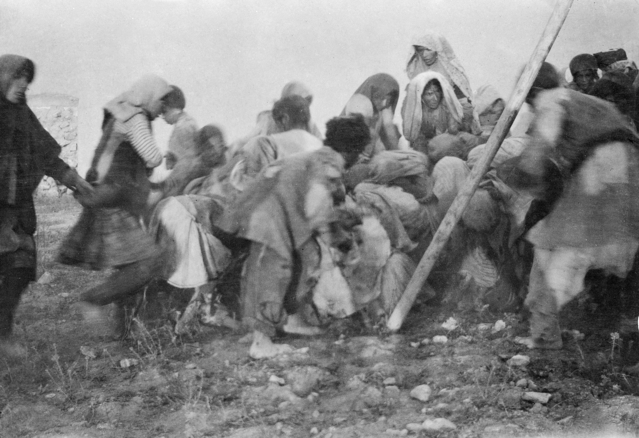
While Persia was a declared neutral in the First World War, British and Russian armies occupied the country and turned it into a logistical theatre against the Ottomans. The historian Mohammad Gholi Majd, working from U.S. State Department archives, documents what followed: occupation forces requisitioned or purchased almost the entire harvest, blocked grain shipments at the southern ports, and in some districts burned food storages to deny them to rivals or to clear land for military use. Wheat that Iranian peasants had grown was loaded onto British transports for Mesopotamia and India.
The result was the largest demographic catastrophe of the First World War. Famine and the typhus and cholera epidemics that travelled with it killed, by Majd's accounting, somewhere between eight and ten million Iranians — close to forty percent of the population — in barely two years. The episode is virtually absent from British and Russian textbooks. It is absent from the standard Western chronologies of the Great War. Even in Iran, the cynical use of the famine by later regimes has not produced a public reckoning commensurate with its scale.
The Iranian case shows the colonial logic at its most undisguised: a neutral country, a foreign army, a confiscated harvest, a population left to die, and a century of silence afterwards. The phrase 'collateral damage' had not yet been invented; the practice was already mature.
04The Herero and Nama Genocide
1904 – 1908Where
German South West Africa (Namibia)
Period
1904 – 1908
Estimated toll
≈80% of Herero, ≈50% of Nama killed

When the Herero rose against German settler land seizures in 1904, General Lothar von Trotha issued an Extermination Order: 'every Herero, with or without rifles, with or without cattle, will be shot.' The Herero were driven into the waterless Omaheke desert. Wells were poisoned. Survivors were sent to concentration camps on Shark Island, where forced labor and starvation killed roughly half of them.
German anthropologists collected the skulls of victims for racial-science research. Some of those skulls were only returned to Namibia in the 2010s. Germany formally recognized this as a genocide in 2021, more than a century later.
05The Algerian War
1954 – 1962Where
French Algeria
Period
1954 – 1962
Estimated toll
Up to 1.5 million Algerians dead (FLN figure; French state cites 400,000)

France did not consider Algeria a colony. It considered it part of metropolitan France. When Algerians rose for independence in 1954, the French Republic responded with the Battle of Algiers, in which paratroopers under General Massu used systematic torture — la gégène (electric shock to the genitals), waterboarding, rape — to extract information from suspected FLN members.
The war killed several hundred thousand Algerians. Entire villages were 'regrouped' — forcibly relocated to camps. In Paris in October 1961, French police under Maurice Papon murdered between 100 and 300 Algerian demonstrators and threw their bodies into the Seine. The French state acknowledged this in 2012.
06Tasmania
1803 – 1876Where
British colony of Van Diemen's Land
Period
1803 – 1876
Estimated toll
Effective extinction of full-descent Tasmanian Aboriginal people

The British colonization of Tasmania is one of the few cases in modern history that historians describe, with little controversy, as genocide. Settlers, with state backing, conducted the 'Black War' — a campaign of hunts and massacres that, combined with introduced disease and forced displacement, reduced an Aboriginal population of perhaps 5,000–10,000 to a handful within a generation.
Truganini, often (and inaccurately) called the last full-blooded Tasmanian Aboriginal woman, died in 1876. Her skeleton was put on display in a museum until 1947.
07Wounded Knee
29 December 1890Where
Lakota Pine Ridge Reservation, United States
Period
29 December 1890
Estimated toll
≈300 Lakota men, women and children

The Seventh Cavalry surrounded a band of Lakota under Spotted Elk who had been ordered to disarm. When the shooting started — over a deaf elder named Black Coyote who did not understand he was being told to give up his rifle — soldiers used Hotchkiss guns to cut down men, women, children and infants. The bodies were left in the snow.
Twenty soldiers received the Medal of Honor for this. The medals have never been rescinded.
08The Destruction of Libraries and Cultures
OngoingWhere
The Americas, Africa, Asia
Period
Ongoing
Estimated toll
Incalculable

The Mayan codices — folding books containing centuries of astronomy, mathematics, history and prophecy — were systematically burned by Spanish missionaries in the sixteenth century. Bishop Diego de Landa burned dozens of them at Maní in 1562. Four codices survive. Four.
The library of the University of Sankoré in Timbuktu, the libraries of the Songhai Empire, the architectural records of the Benin Bronzes (16,000 of which were looted by the British Army in 1897 and still sit, mostly, in European museums), the Buddhist sculptures of Gandhara, the ceremonial objects of the Pacific Northwest — colonialism was not only a project of killing people. It was a project of erasing the proof that they had a civilization in the first place.
09The Amritsar Massacre
13 April 1919Where
Jallianwala Bagh, Punjab, British India
Period
13 April 1919
Estimated toll
379 official / ≈1,000 Indian estimates

On Baisakhi day, an unarmed crowd — pilgrims, families, political meeting-goers — was trapped in a walled garden with one narrow exit. Brigadier-General Reginald Dyer arrived with fifty rifles, blocked the gate, and ordered ten minutes of continuous fire into the densest part of the crowd. Many died trying to climb the walls; others drowned in the garden's well, where 120 bodies were later recovered.
Dyer was relieved of command but never tried. The Morning Post raised £26,000 for him by public subscription — about £1.3 million today — and the House of Lords passed a motion of approval. Britain offered no formal apology until David Cameron called the killings 'deeply shameful' in 2013, still short of the word 'sorry.'
10Mau Mau and the Kenyan Gulag
1952 – 1960Where
British Kenya
Period
1952 – 1960
Estimated toll
≈90,000 executed, tortured or maimed; 160,000+ in camps

When the Kikuyu rose to demand the return of land stolen by white settlers, Britain declared a State of Emergency and built a network of concentration camps that historian Caroline Elkins, working from the surviving files, called Britain's Gulag. Detainees were beaten, electrocuted, castrated, and worked to death; women were raped with bottles and broken glass.
In 2011 the British government tried to deny the records existed. In 2013, after losing in the High Court, it admitted the abuses, paid £19.9 million in compensation to 5,228 elderly survivors, and quietly disclosed the 'Migrated Archive' — 1.2 million colonial files secretly shipped from twenty-three colonies to Hanslope Park to keep them out of the hands of newly independent governments.
11The Philippine–American War
1899 – 1902 (resistance into 1913)Where
U.S.-occupied Philippines
Period
1899 – 1902 (resistance into 1913)
Estimated toll
≈20,000 combatants and 200,000 – 1,000,000 civilians dead
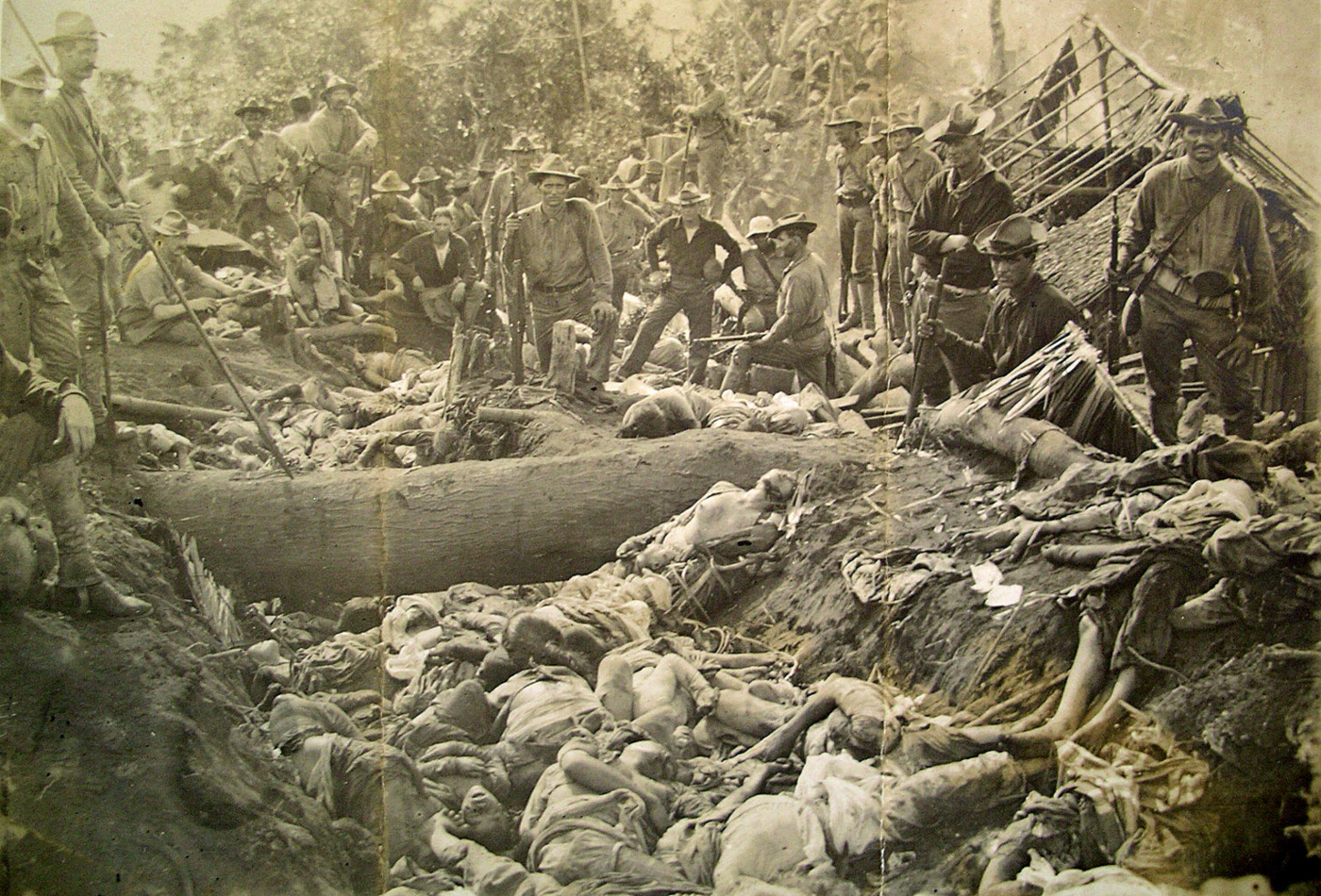
America's first overseas colonial war began the moment Filipino independence fighters realised the United States had bought the islands from Spain rather than recognising the republic they had just declared. General Jacob H. Smith ordered Samar turned into 'a howling wilderness' and instructed his men to kill every male over the age of ten. The 'water cure' — a forerunner of waterboarding — was used in field tribunals.
On Jolo in 1906 the U.S. Army surrounded around 1,000 Moro men, women and children in the crater of Bud Dajo and killed nearly all of them. Mark Twain, then vice-president of the Anti-Imperialist League, wrote that the flag should be redesigned 'with the white stripes painted black and the stars replaced by the skull and crossbones.' The episode does not appear in most American high-school textbooks.
12The Putumayo Rubber Atrocities
c.1900 – 1912Where
Peruvian and Colombian Amazon, under the British-registered Peruvian Amazon Company
Period
c.1900 – 1912
Estimated toll
≈30,000 – 40,000 Indigenous dead; entire peoples extinguished
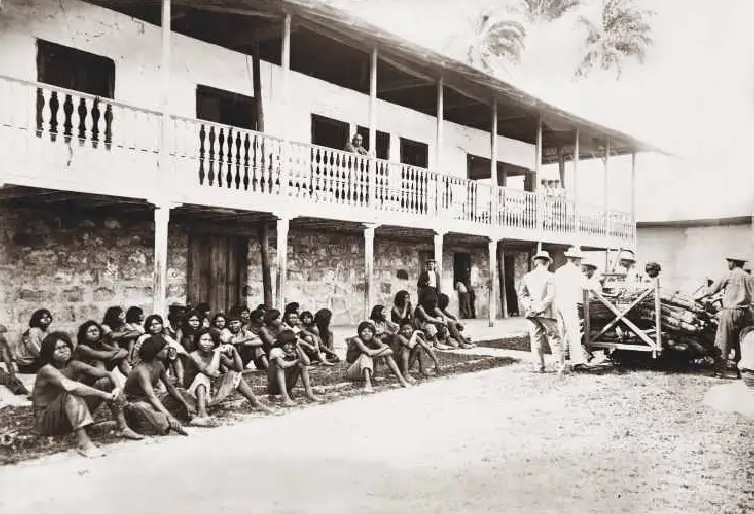
What Leopold did in the Congo, Julio César Arana did in the Amazon — on behalf of a company listed on the London Stock Exchange and audited by British accountants. Indigenous Huitoto, Bora and Andoque people were forced to tap rubber under threat of flogging, mutilation and the 'rubber stocks.' Roger Casement, the same Foreign Office investigator who had exposed Leopold, produced a 1912 report so damning that a House of Commons inquiry followed.
Nothing happened. Arana was elected to the Peruvian senate. The Indigenous population of the lower Putumayo had fallen from an estimated 50,000 to fewer than 8,000 within a decade. The City of London absorbed the profits and absolved itself of the deaths through the convenient fiction of limited liability.
13The Indonesian Mass Killings
1965 – 1966Where
Indonesia, with U.S., British and Australian intelligence backing
Period
1965 – 1966
Estimated toll
500,000 – 1,000,000 dead
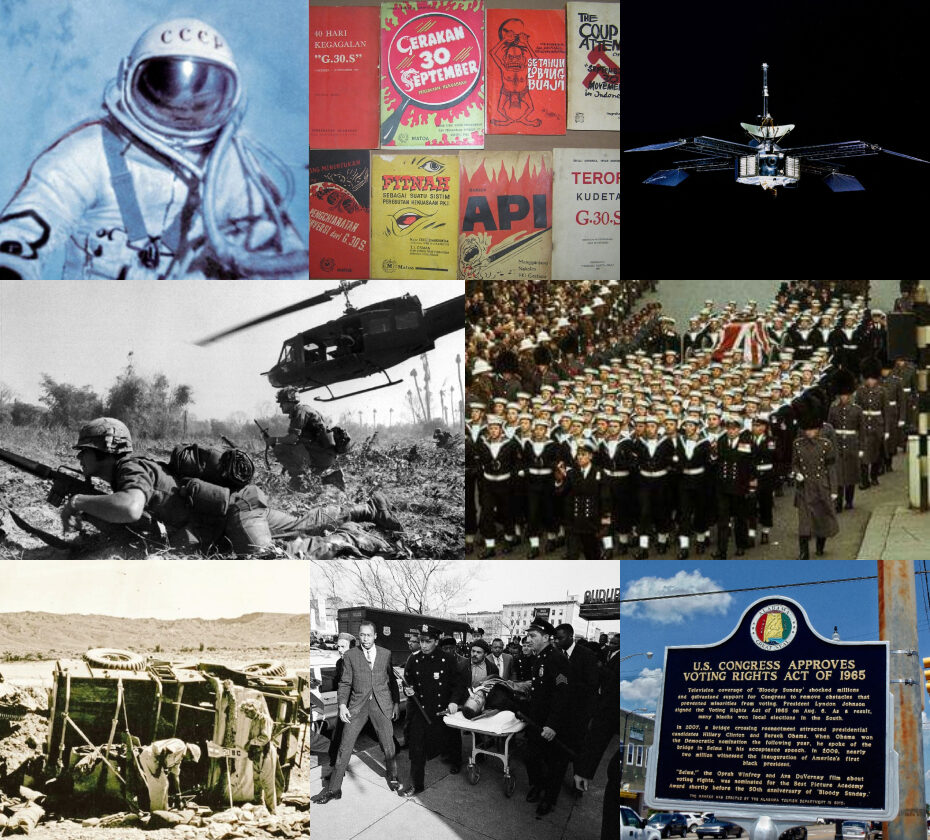
Following the alleged 30 September coup attempt, the Indonesian army under General Suharto, supplied with kill lists by the U.S. embassy in Jakarta, oversaw the extermination of suspected communists, ethnic Chinese, trade unionists and leftist artists. Rivers in Bali and East Java were clogged with corpses. The CIA's own retrospective called it 'one of the worst mass murders of the 20th century'; it remains absent from almost every Western chronology of the Cold War.
Declassified documents released in 2017 confirm that U.S. and British officials not only knew but actively encouraged the killings as a strategic gain. No Western government has apologised. Indonesia has held no trials. Joshua Oppenheimer's films The Act of Killing (2012) and The Look of Silence (2014) finally forced the episode into international view — fifty years late.
14The Aborigines and the 'Frontier Wars'
1788 – 1934Where
Australia
Period
1788 – 1934
Estimated toll
≈65,000 – 100,000+ Aboriginal dead in frontier violence; population collapse from ≈750,000 to ≈74,000 by 1933
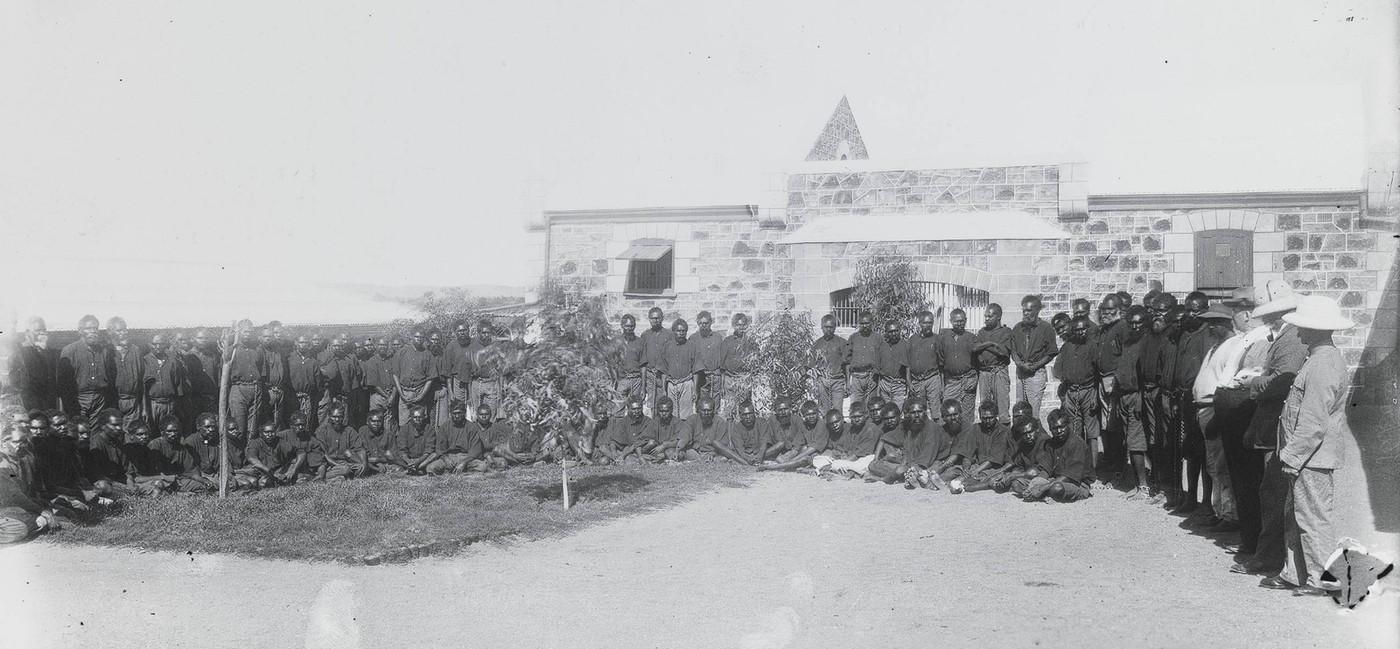
Australian historians have catalogued more than 400 separate massacres of Aboriginal people by settlers, police, and Native Mounted Police units between 1788 and 1928. The Myall Creek massacre (1838), the Coniston massacre (1928, the last officially recorded), and dozens of poisonings of waterholes with arsenic or strychnine are documented by name and date.
Australia simultaneously operated the 'Stolen Generations' policy from c.1905 to 1969: an estimated one in three Aboriginal children was forcibly removed from their families and placed in church and state institutions, where many were physically and sexually abused. A formal apology came in 2008. Reparations have not.
15The Armenian Genocide and Its Imperial Context
1915 – 1923Where
Ottoman Empire (Anatolia, Syrian desert)
Period
1915 – 1923
Estimated toll
≈1.5 million Armenians; 250,000 – 750,000 Assyrians; 350,000+ Greeks
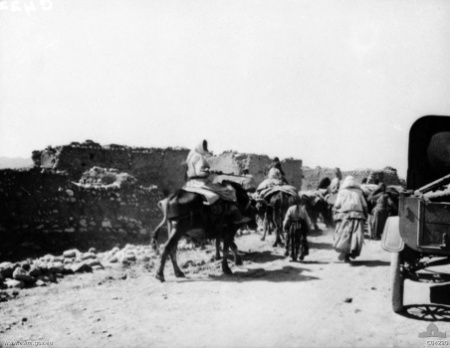
The Ottoman Empire's destruction of its Christian minorities is recognised as genocide by the European Parliament, the United States Congress, and most credible historians. It deserves a place in this archive not because the Ottomans were European colonialists — they were not — but because the modern Republic of Turkey still denies the genocide, and because the major Western powers, including Britain, France and Germany, knew, archived the evidence in real time, and then declined to prosecute under the Treaty of Lausanne (1923) when oil concessions in Mosul became the higher priority.
The pattern is colonial in its bookkeeping if not in its perpetrator: a mass killing whose denial is now policed by an allied state, whose evidence sits in the foreign offices of states that traded recognition for resources, and whose survivors are still asked, a century later, to prove that what happened to their grandparents happened.
16The Comfort Women & Unit 731
1932 – 1945Where
Japanese-occupied China, Korea, the Philippines, Indonesia
Period
1932 – 1945
Estimated toll
≈200,000 women trafficked into sexual slavery; 200,000+ killed in biological-warfare experiments
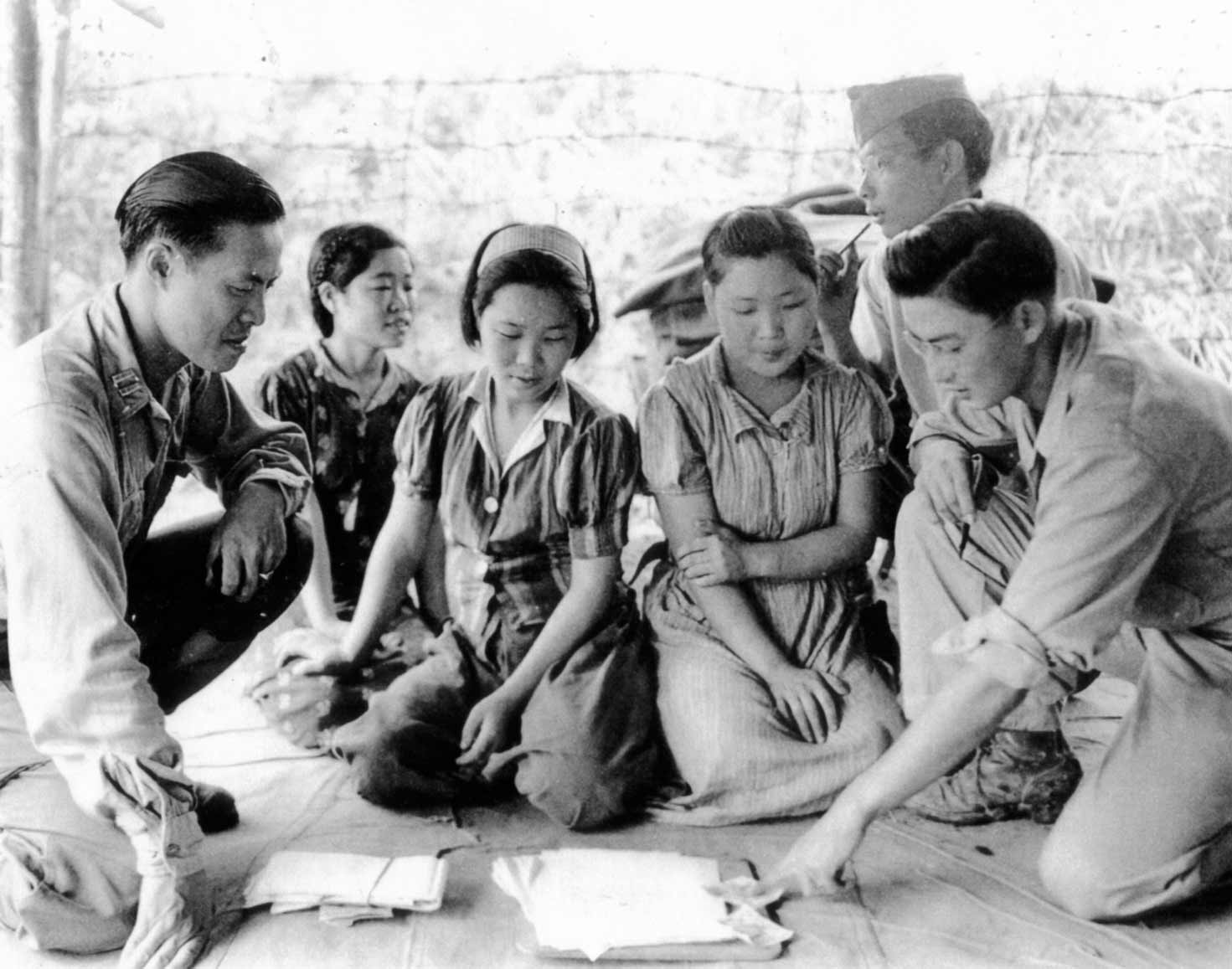
Imperial Japan ran two parallel atrocities whose paper trails were largely destroyed in August 1945 and whose surviving documentation the United States classified in exchange for the research data. The 'comfort women' system trafficked an estimated 200,000 Korean, Chinese, Filipino, Indonesian and Dutch women into military brothels; survivors waited fifty years for any official acknowledgement, and the Japanese state still disputes the numbers. Unit 731, in occupied Manchuria, performed vivisection, frostbite testing and plague-bomb development on Chinese, Korean, Mongolian and Soviet prisoners.
The architects of Unit 731 — including its commander, Shirō Ishii — were granted immunity from prosecution by General MacArthur's occupation administration in exchange for handing their biological-warfare research to the United States Army's Fort Detrick programme. The Tokyo Tribunal heard nothing about it. The data was used. The victims were not informed.
17Operation Condor
1968 – 1989Where
Argentina, Chile, Uruguay, Paraguay, Bolivia, Brazil — with U.S. coordination
Period
1968 – 1989
Estimated toll
≈60,000 killed, 30,000 disappeared, 400,000 imprisoned
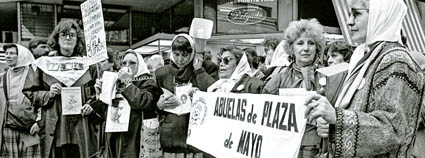
Operation Condor was a continent-wide intelligence-sharing agreement between the military dictatorships of the Southern Cone, brokered and underwritten by the United States via the CIA and the Pentagon. Its purpose was the cross-border kidnapping, torture and 'disappearance' of left-wing dissidents, trade unionists, priests, students and journalists. Pregnant women were kept alive until they delivered; their babies were given to military families. Roughly 500 stolen children have been identified by Argentina's Grandmothers of the Plaza de Mayo. Hundreds remain missing.
Henry Kissinger, in a 1976 cable later declassified, told the Argentine foreign minister: 'If there are things that have to be done, you should do them quickly.' He died in 2023 without standing trial. The U.S. School of the Americas, which trained many of the responsible officers, was renamed in 2001 and continues to operate.
18Yemen
2015 – presentWhere
Yemen, under a Saudi-led coalition armed by the US, UK, France, Germany
Period
2015 – present
Estimated toll
≈377,000 dead (2022 UN figure); 17m+ in acute food insecurity
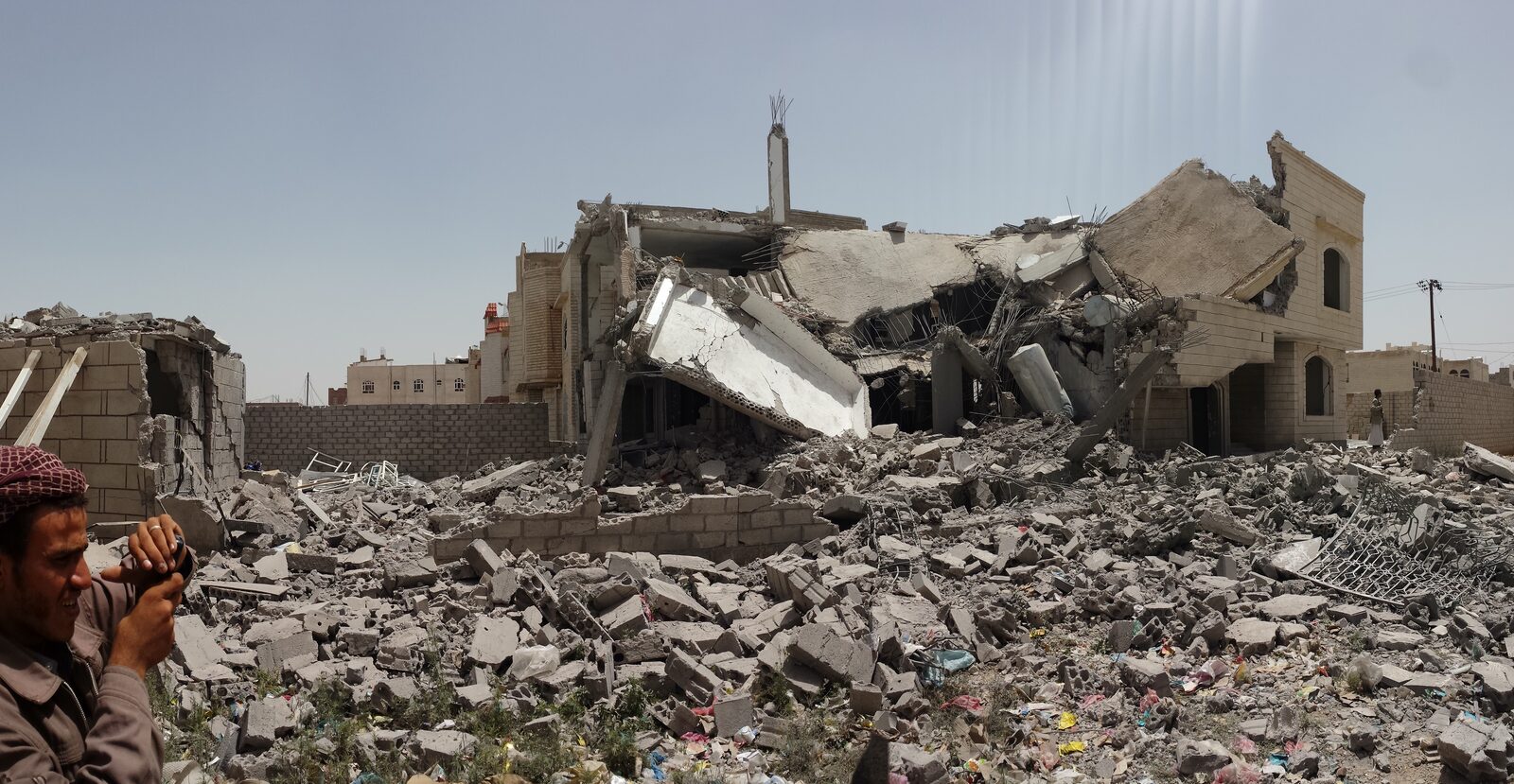
Since March 2015, a Saudi- and Emirati-led coalition has bombed Yemen using jets and munitions overwhelmingly supplied by the United States, the United Kingdom, France and Germany. Wedding halls, school buses, hospitals, water-treatment plants and the port of Hodeidah have been deliberately targeted. The naval and air blockade has produced what UNICEF described as the world's worst humanitarian crisis: cholera in the hundreds of thousands, child malnutrition at famine thresholds, and a state of permanent economic strangulation.
British arms-export licences to Saudi Arabia have been suspended, restored, and ruled unlawful by the UK Court of Appeal (2019), then resumed. US arms sales continued under three administrations. This is not history. It is the present tense, performed by the same parliaments that lecture other countries on rules-based order.
A note on numbers
Every figure on this page is contested by someone who would prefer it be lower.
The figures above are the upper-bound credible estimates drawn from peer-reviewed scholarship and archival research, and they count both direct deaths (killing, massacre, execution) and indirect deaths(engineered famine, deportation, introduced disease, forced labour, the epidemics that travel with occupation). We use the upper bound on purpose. A standard tactic of colonial apologetics is to seize on the disputed margins of casualty counts — "actually it was closer to two million than ten" — as if a reduced number were a vindication. It is not. Lower figures almost always originate from the responsible power or its sympathisers; higher figures, from independent historians working in the archives of the dead. We have chosen the latter.
How it works
The shared method
Read enough of these cases in sequence and a recipe emerges. It is not a metaphor. It is an operational playbook that recurs across centuries, continents and perpetrators.
Racial classification
Reduce a population to a category — 'savage', 'native', 'communist', 'terrorist sympathiser', 'illegal' — that places it outside the protections of the law you would apply to yourself.
Legal architecture of exception
Pass an Emergency Act, declare a Protectorate, draw a Mandate boundary, invoke a State of Siege. Once the territory is legally exceptional, normal procedural restraints do not apply.
Extraction quota
Set a target — rubber, grain, tax, votes, intelligence, lebensraum — and devolve responsibility for hitting it to local commanders without scrutiny of method.
Outsourced violence
Use settlers, militias, native auxiliaries, contractors or allied dictatorships. Plausible deniability is built into the org chart.
Document destruction
Burn the files (British Operation Legacy, 1957–63), classify them (US records on Indonesia 1965, Japan's Unit 731), or move them (the Hanslope Park 'Migrated Archive').
Statute of limitations / amnesty
By the time evidence surfaces, perpetrators are dead, treaties shield successor states, and the bureaucracy that would prosecute has been folded into a friendly post-war alliance.
Narrative laundering
Recast the episode as 'civilising mission', 'security operation', 'tragic excess of a few bad apples' or 'complicated period'. Fund the historians who specialise in the complication.
Receipts
Coverage asymmetry
| 01Event | 02Approx. dead | 03Western curriculum presence |
|---|---|---|
| The Holocaust (Shoah) | ≈6,000,000 Jews + 5m others | Universal — required in most Western school systems |
| Bengal Famine, 1943 | ≈3,000,000 | Optional / footnote in UK GCSE specifications |
| Congo Free State, 1885–1908 | ≈10–15,000,000 | Rarely on Belgian curriculum until 2020 reforms |
| Herero & Nama genocide, 1904–08 | ≈75,000 | Only added to German history syllabi after 2015 |
| Indonesian killings, 1965–66 | 500,000–1,000,000 | Almost entirely absent from US, UK, Australian curricula |
| Philippine–American War | 200,000–1,000,000 civilians | Rarely taught in US schools |
| Iranian famine, 1917–19 | Up to 10,000,000 | Effectively absent from all Western accounts of WWI |
Death tolls and English-language Google Books mentions per million dead, indicative orders of magnitude only. The asymmetry, not the decimal, is the point.
Pre-empted
Objections answered
#01The strongest version
"Every civilisation has done terrible things. Why single out the West?"
Reply
Because this is a Western-language site speaking to Western audiences about Western curricula. Other civilisations' atrocities are catalogued in their own historiographies. The asymmetry being addressed here is the asymmetry of which atrocities the audience was taught — not a claim that anyone else is innocent. Equivalence claims are usually deployed as exit ramps from accountability, not invitations to broader honesty.
#02The strongest version
"These events happened a century ago. Why hold today's people responsible?"
Reply
No one on this page is asked to feel personal guilt for what their great-grandparents did. The ask is institutional: the wealth, museums, universities, pension funds, banks and constitutions of today's Western states were directly capitalised by these events and still hold the proceeds. Holding institutions accountable is not generational guilt. It is normal property law.
#03The strongest version
"The numbers are inflated."
Reply
We use upper-bound credible estimates from peer-reviewed scholarship and explain why in the 'note on numbers' below. The pattern of disputing tolls — but only for atrocities committed by one's own country — is itself part of the apologetic playbook this page describes.
#04The strongest version
"Context matters. These were the norms of the time."
Reply
Contemporary critics — Las Casas (1542), Diderot, Tom Paine, Frederick Douglass, William Morris, E. D. Morel, Roger Casement, J. A. Hobson — denounced colonial violence in the language of their own century. The 'norms of the time' defence requires erasing the people who, at the time, refused those norms.
#05The strongest version
"Focusing on this fosters resentment and makes integration harder."
Reply
The opposite is observable. Societies that confronted their record — post-war Germany, post-Apartheid South Africa, Spain since 2007, France on Algeria since 2018 — have produced more durable social peace than societies that refused (the UK on empire, the US on the South, Belgium on the Congo until very recently). Honesty does not destabilise; the cover-up does.
Take it further
What to do with this page
01 —
Name one event
Pick the case from this page your country was responsible for and learn its name, its dates and one perpetrator. Mention it next time someone claims your country 'liberated' anyone.
02 —
Read the inquiry
Most of these atrocities have a public-domain official report — Casement on the Congo and the Putumayo, Hunter on Amritsar, the Sachar / Mukherjee work on Bengal. Read one. Cite it.
03 —
Support a survivor body
Donate to or amplify the Mau Mau War Veterans' Association, the Grandmothers of the Plaza de Mayo, the Korean Council for Justice, or your nearest equivalent.
From the Archive
Wikimedia-sourced photographs and documents related to this page.


Last updated 23 June 2026Submit a correctionMethodology
References
Sources & Further Reading
- [1]Adam Hochschild, King Leopold's Ghost (Houghton Mifflin, 1998).
- [2]Roger Casement, "Report on the Administration of the Independent State of the Congo" (House of Commons, 1904).
- [3]Mike Davis, Late Victorian Holocausts: El Niño Famines and the Making of the Third World (Verso, 2001).
- [4]Madhusree Mukerjee, Churchill's Secret War: The British Empire and the Ravaging of India during World War II (Basic Books, 2010).
- [5]Jürgen Zimmerer & Joachim Zeller (eds.), Genocide in German South-West Africa (Merlin, 2008).
- [6]Caroline Elkins, Imperial Reckoning (Henry Holt, 2005), on the Kenyan detention camps.
- [7]Roxanne Dunbar-Ortiz, An Indigenous Peoples' History of the United States (Beacon, 2014).
- [8]Ann Curthoys, "Genocide in Tasmania: the history of an idea", in A. Dirk Moses (ed.), Empire, Colony, Genocide (Berghahn, 2008).
- [9]Benny Morris, The Birth of the Palestinian Refugee Problem Revisited (Cambridge University Press, 2004); Ilan Pappé, The Ethnic Cleansing of Palestine (Oneworld, 2006).
- [10]Geoffrey Robinson, The Killing Season: A History of the Indonesian Massacres, 1965–66 (Princeton, 2018).
All works cited in good faith for documentary, educational and critical use. Errors and omissions: contact the archive.