The Soweto Uprising: A Massacre Born from the Crime of Bantu Education
The 1976 Soweto Uprising was not a riot but a state massacre of students protesting Bantu Education and the forced use of Afrikaans, the oppressor's language.
Key takeaways
- The Soweto Uprising was a massacre, not a riot, orchestrated by the apartheid state against protesting students on 16 June 1976.
- The immediate trigger was the Afrikaans Medium Decree, a flashpoint for deeper anger against the entire oppressive Bantu Education system.
- Bantu Education was a deliberate policy to engineer a subservient Black labour force by systematically underfunding schools and limiting intellectual development.
- The massacre, symbolized by the photo of Hector Pieterson, exposed the regime's brutality globally, leading to sanctions and radicalizing a generation of anti-apartheid activists.
- The legacy of the uprising and Bantu Education endures in South Africa's ongoing struggle against educational inequality, as seen in movements like #FeesMustFall.
- No police or state officials were ever criminally convicted for the murder of hundreds of children and civilians during the uprising.
The Soweto Uprising was not a riot but a state-sanctioned massacre on 16 June 1976, triggered by protests against a policy forcing Black schools to use the language of their oppressors. This attack on language became a flashpoint for rebellion against the entire apartheid system, proving that an attack on a people's language is an attack on their very being.
The apartheid state, under Prime Minister B.J. Vorster, deployed live ammunition against its own children. This was the calculated outcome of a system designed to crush the intellectual and spiritual horizons of Black South Africans. The peaceful student march became a bloodbath that claimed up to 700 lives in the ensuing months, broadcasting the regime’s depravity to the world and igniting an unquenchable fire in the war for freedom.
The Architecture of Subjugation
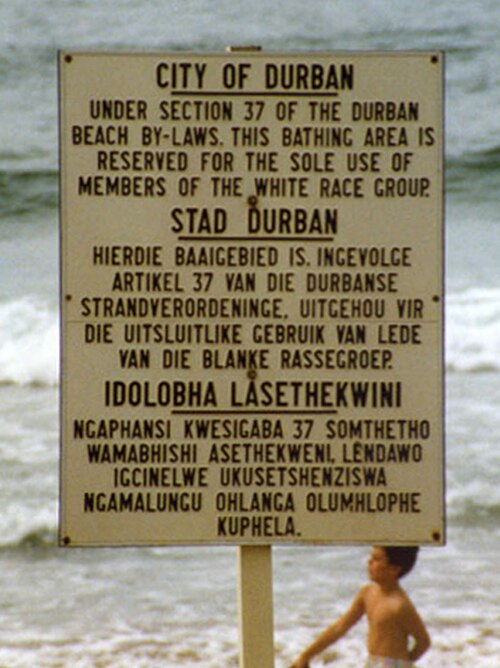
The bloodshed of 1976 was seeded decades earlier, in the cold, ideological calculus of apartheid's architects. When the National Party ascended to power in 1948, it began constructing a legal and social architecture of total racial segregation. This system was not merely about public segregation; it was about engineering the minds of the oppressed. The cornerstone of this project was the Bantu Education Act of 1953, a policy explicitly designed to relegate Black Africans to a permanent state of servitude.
Its chief ideologue, Dr. Hendrik Verwoerd, then Minister of Native Affairs and later Prime Minister, was unambiguous about its purpose. In a 1953 speech to Parliament, he laid bare the state's intentions:
"There is no place for [the Bantu] in the European community above the level of certain forms of labour... What is the use of teaching the Bantu child mathematics when it cannot use it in practice? That is absurd. Education must train people in accordance with their opportunities in life, according to the sphere in which they live."
The state seized control of mission schools—which had provided a higher standard of education—and systematically slashed funding. The curriculum was gutted and replaced with instruction for manual labour in mines, farms, and white households. This was a direct assault on Black intellect, a tool to manufacture a cheap labour force stripped of critical thought. The financial disparity was a stark measure of the system's intent. By the eve of the uprising, the state was spending over 15 times more on a white child's education than on a Black child's.
| Fiscal Year | Per Capita State Expenditure on White Pupils (in Rand) | Per Capita State Expenditure on Black Pupils (in Rand) | Expenditure Ratio (White:Black) |
|---|---|---|---|
| 1953–54 | R127.88 | R17.16 | 7.5 : 1 |
| 1963–64 | R191.00 | R12.08 | 15.8 : 1 |
| 1972–73 | R543.00 | R28.00 | 19.4 : 1 |
| 1975–76 | R644.00 | R42.00 | 15.3 : 1 |
| (Source: South African Institute of Race Relations, Hartshorne, K.B. "Crisis in Education") |
Overcrowded, under-resourced schools became incubators of frustration, providing fertile ground for the Black Consciousness Movement. This philosophy, championed by Steve Biko, provided a powerful psychological counter-narrative, asserting Black pride, self-reliance, and the necessity of mental liberation before physical liberation could be achieved. It taught students to reject the inferiority complex Bantu Education was designed to instill.
A War Waged in Language
Into this volatile environment, the National Party government threw a lit match: the Afrikaans Medium Decree. Issued in 1974 by Deputy Minister of Bantu Education Punt Janson, the policy mandated a "50/50" rule. Key subjects like mathematics and social studies were to be taught in Afrikaans, while others like science and practical skills were to be taught in English. Indigenous African languages were restricted to religion and early primary school.
For Soweto's students, this was an intolerable assault. Afrikaans was not neutral; it was the language of the police, the bureaucracy, and the politicians who declared them inferior. Forcing them to comprehend complex subjects like algebra in a language they barely spoke and deeply resented was a pedagogical and political violation.
Teachers, themselves often not fluent in Afrikaans, struggled to implement the policy. Student performance plummeted. But the state was intransigent. For National Party hardliners, this was about asserting ideological dominance. Refusing to learn in Afrikaans was seen as refusing the state itself—an act of insubordination.
The students' reasoning was clear and profound. As one student leader later articulated, "We were no longer prepared to accept the brain-damaging, poisonous education dished out to us. We were no longer prepared to be servants' sons and daughters."
The Arithmetic of Resistance
By early 1976, tensions were at a breaking point. On 24 May 1976, students at Orlando West Junior School went on strike, a protest that spread quickly throughout Soweto's schools. The Soweto Students' Representative Council (SSRC), an action committee of the South African Students' Movement (SASM), formed to coordinate the resistance.
Its charismatic leader, 19-year-old Tsietsi Mashinini, became the public face of the rebellion. On 13 June 1976, some 400 student activists met and resolved to hold a mass peaceful protest on Wednesday, 16 June. The plan was for students from numerous schools to march from their grounds and converge on Orlando Stadium. Their banners were prepared with simple, powerful slogans: "Down with Afrikaans," "To Hell with Bantu Education," "Afrikaans is the Oppressor's Language."
"Who were these children? What group of students was this, whose anger and bitterness had exploded with such deafening intensity on that unforgettable day? They were the products of the education which Dr Verwoerd, then Minister of Native Affairs, had outlined with such horrifying clarity in 1953... These were the children who, against all odds, had continued to cherish a vision of a new and just society for the land of their birth." – Ellen Kuzwayo, Call Me Woman (1985)
They demonstrated a logistical sophistication that belied their age, organising routes and emphasizing non-violence. Acutely aware of the risks, they found the alternative—intellectual capitulation—unthinkable. This was a generation raised on the Black Consciousness philosophy of "Black is beautiful," and they refused to be defined by their parents' subjugation.
Sixteen June, A Day of Rupture
On the cold winter morning of 16 June, an estimated 10,000 to 20,000 students marched. They were jubilant, singing freedom songs and carrying not weapons, but textbooks and placards. Their path was blocked by about 50 South African Police (SAP) officers near Orlando West High School.
Police commander Colonel Johannes Kleingeld had his orders: the state would not permit this public defiance. Initial attempts to disperse the crowd with tear gas failed against the wind and sheer numbers of marchers. Witnesses described a dog being loosed into the crowd and stoned by students, providing the pretext.
At approximately 10:30 AM, Colonel Kleingeld ordered his officers to shoot. They fired their service revolvers directly into the front lines, which were filled with children as young as ten.
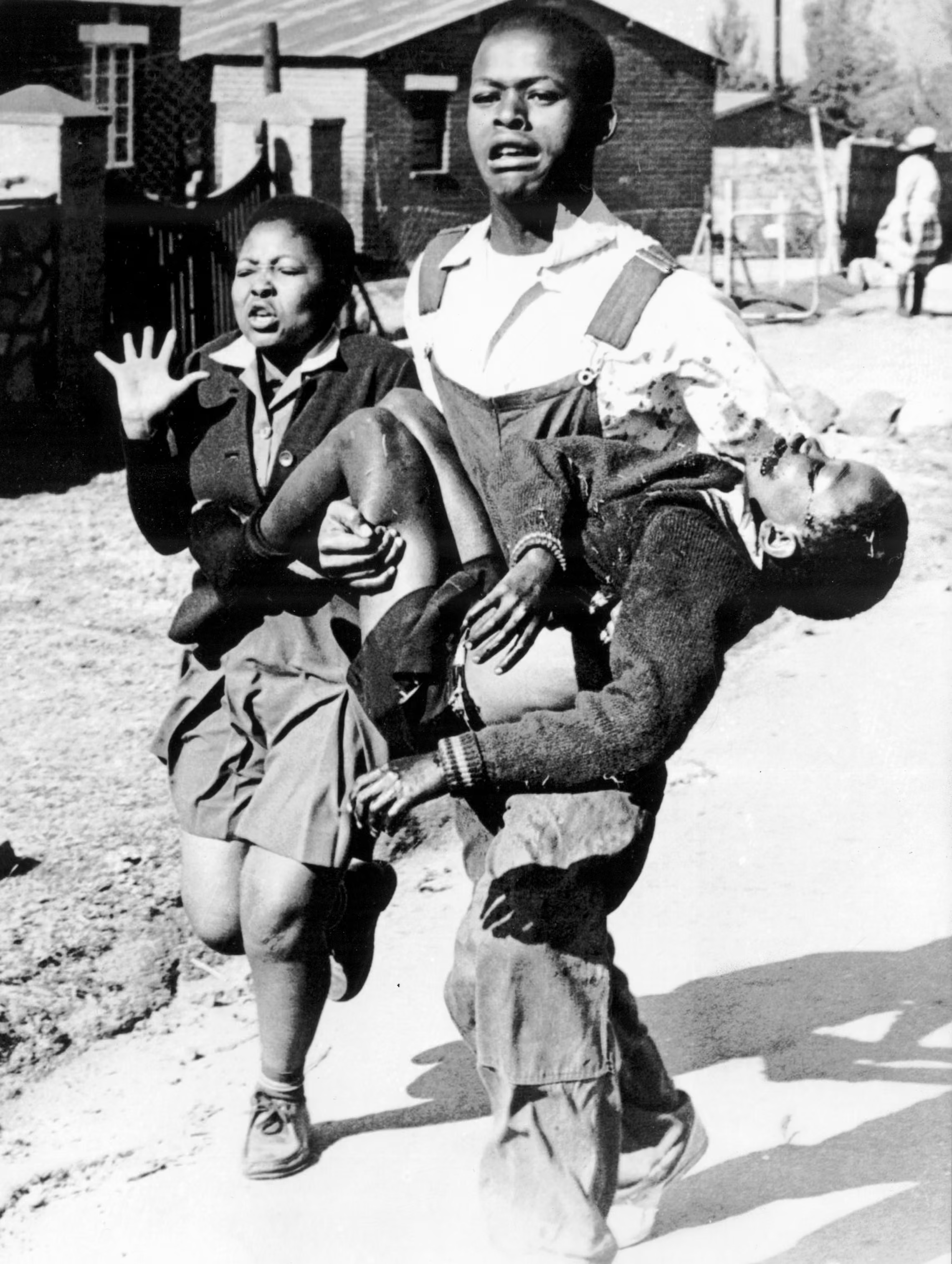
The first to fall was a 12-year-old boy named Hector Pieterson. As panic and chaos erupted, a high school student named Mbuyisa Makhubu scooped the dying boy into his arms and, alongside Hector's frantic sister Antoinette Sithole, ran towards the nearest clinic. The moment was captured by photographer Sam Nzima.
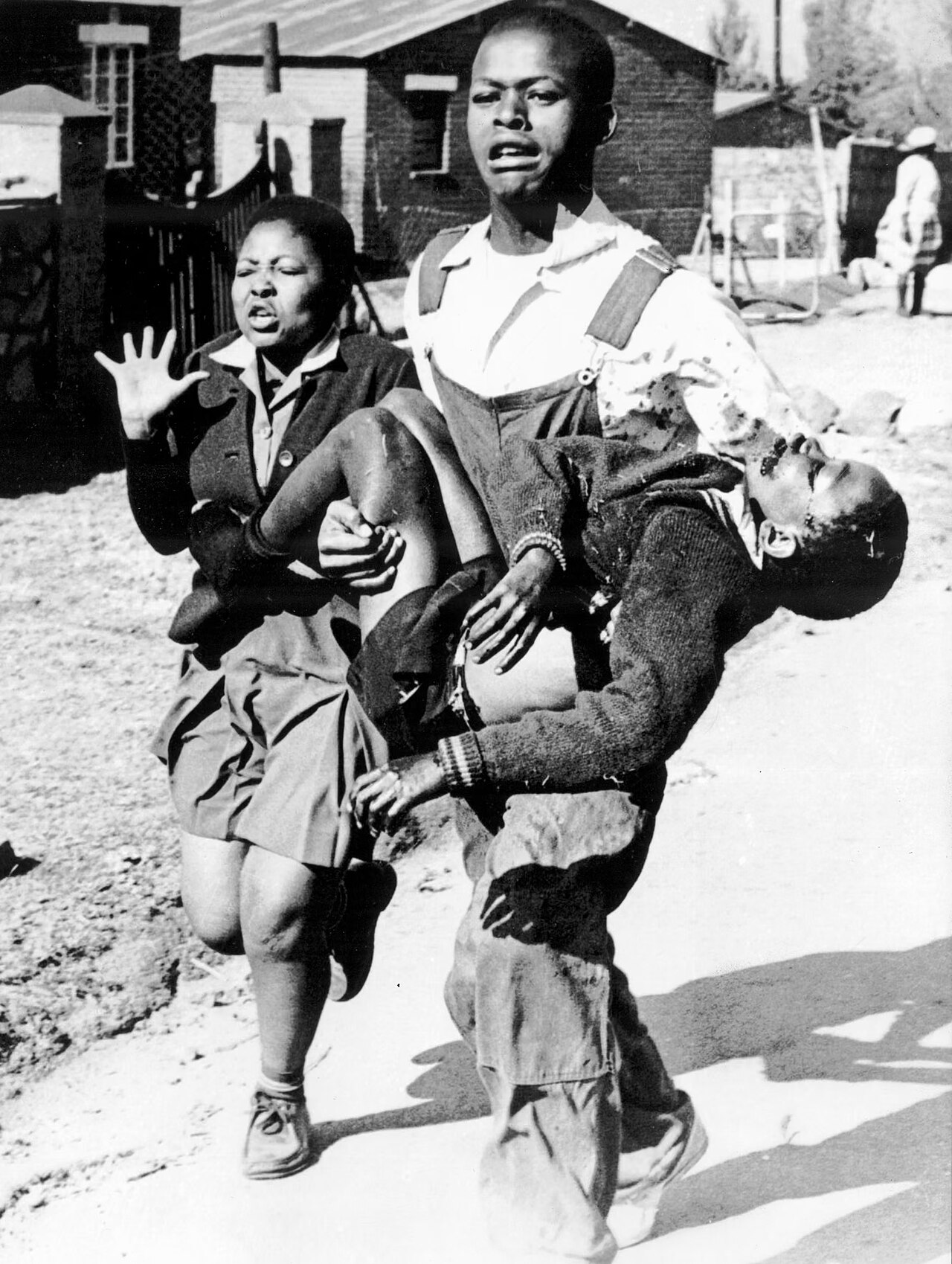
Nzima's photograph became an iconic image of the 20th century: not a riot, but a state murdering a child. A volley followed the first shot. The air filled with screams and gunfire. Unarmed and ambushed, the students fled as the demonstration turned into a massacre.
Counting the Dead, Naming the Guilty
The initial slaughter was only the beginning. As news spread, Soweto erupted. Government buildings and symbols of the state were set ablaze. The state's response was overwhelmingly disproportionate, with heavily armed paramilitary units pouring into Soweto, transforming it into a war zone.
For months, the country was in a state of low-grade civil war, and accounting for the dead was immediately mired in state obfuscation.
"The events of 16 June 1976 must be understood as a heroic and courageous act by the students. Their revolt against Bantu Education and the imposition of Afrikaans was a demonstration for a democratic, non-racial and united South Africa. They were armed with their consciousness and resolve. The apartheid regime was armed with guns. This was a contest between the present and the future." – Statement by the African National Congress (ANC), 1976
The Minister of Justice, Jimmy Kruger, infamously declared, "The police did their duty. They had to do it. They have my full support." The government's Cillié Commission later conceded 575 deaths nationwide (451 by police action), but independent bodies compiling lists from mortuaries and eyewitnesses put the true figure much higher.
| Source of Casualty Estimate | Timeframe | Reported Deaths | Notes |
|---|---|---|---|
| SA Police (initial report) | June 1976 | 23 | Widely dismissed as propaganda. |
| Minister Jimmy Kruger | June 1976 | 176 | Official figure for the first few days, a dramatic undercount. |
| Cillié Commission (Gov't) | June 1976 - Feb 1977 | 575 | Official inquiry total for all unrest nationwide. Admitted at least 451 killed by police. |
| SA Institute of Race Relations | June 1976 - Feb 1977 | 661 | Independent contemporary monitoring group. |
| Truth & Reconciliation Commission | Post-1994 | ≈700 | Retrospective analysis suggests this is a more accurate estimate of the total death toll. |
The Impunity of the Perpetrators
Justice was never served for the dead of Soweto. Instead, the state's judicial machinery was turned on the victims. Thousands of students were arrested, detained without trial, tortured, and imprisoned. Student leaders were hunted down; Tsietsi Mashinini was forced into exile, where he died under mysterious circumstances in Guinea in 1990. In contrast, perpetrators were shielded by the state. The Cillié Commission was ultimately a tool to absorb public anger, not secure accountability, identifying no specific perpetrators for prosecution.
Colonel Johannes Kleingeld, the man who gave the order to fire on children, testified before the post-apartheid Truth and Reconciliation Commission (TRC) decades later but was never criminally charged, retiring from the police force. Minister Jimmy Kruger died in 1987, having never faced a court for his role. The Truth and Reconciliation Commission (TRC), established in 1995, offered perpetrators amnesty for full disclosure. Few police involved in Soweto applied, and those who did often gave self-serving testimonies. The TRC found the state and SAP responsible, but individual criminal accountability remained almost entirely absent.
Echoes of Inequality: The Unfinished Struggle
Decades after the Soweto Uprising, Bantu Education's legal architecture is gone, but its structural ghost haunts South Africa. The gap in resources and outcomes between well-funded, historically white suburban schools and under-resourced township schools remains a chasm. This disparity is a direct legacy of apartheid's spending ratios.
This enduring inequality fueled new student activism. The #FeesMustFall movement, which erupted across South African universities in 2015, was a direct echo of 1976. Students protested against prohibitive tuition fees that excluded the poor, overwhelmingly Black, majority. Their calls to 'decolonise the curriculum' mirrored the Soweto generation's rejection of a 'poisonous education,' challenging the persistence of Eurocentric epistemology. The fight has evolved from one against legal segregation to one against the enduring economic apartheid that disadvantages Black students. The battle for educational justice, for which the students of 1976 died, is not yet won.
Echoes in Concrete and Memory
The Uprising was a strategic failure but a profound political victory. It shattered illusions about peaceful reform and broadcast the regime's inhumanity to a global audience, intensifying international condemnation, divestment campaigns, and cultural boycotts.
Crucially, it radicalized a generation. Thousands of young South Africans crossed the border to join the armed wings of the ANC and PAC, realizing there was no future for them under apartheid. The 'Soweto generation' infused the liberation movements with fierce urgency, intensifying the armed struggle. The state abandoned the Afrikaans Medium Decree—a tacit admission of its miscalculation—but doubled down on brutal repression, ushering in one of South Africa's most violent periods.
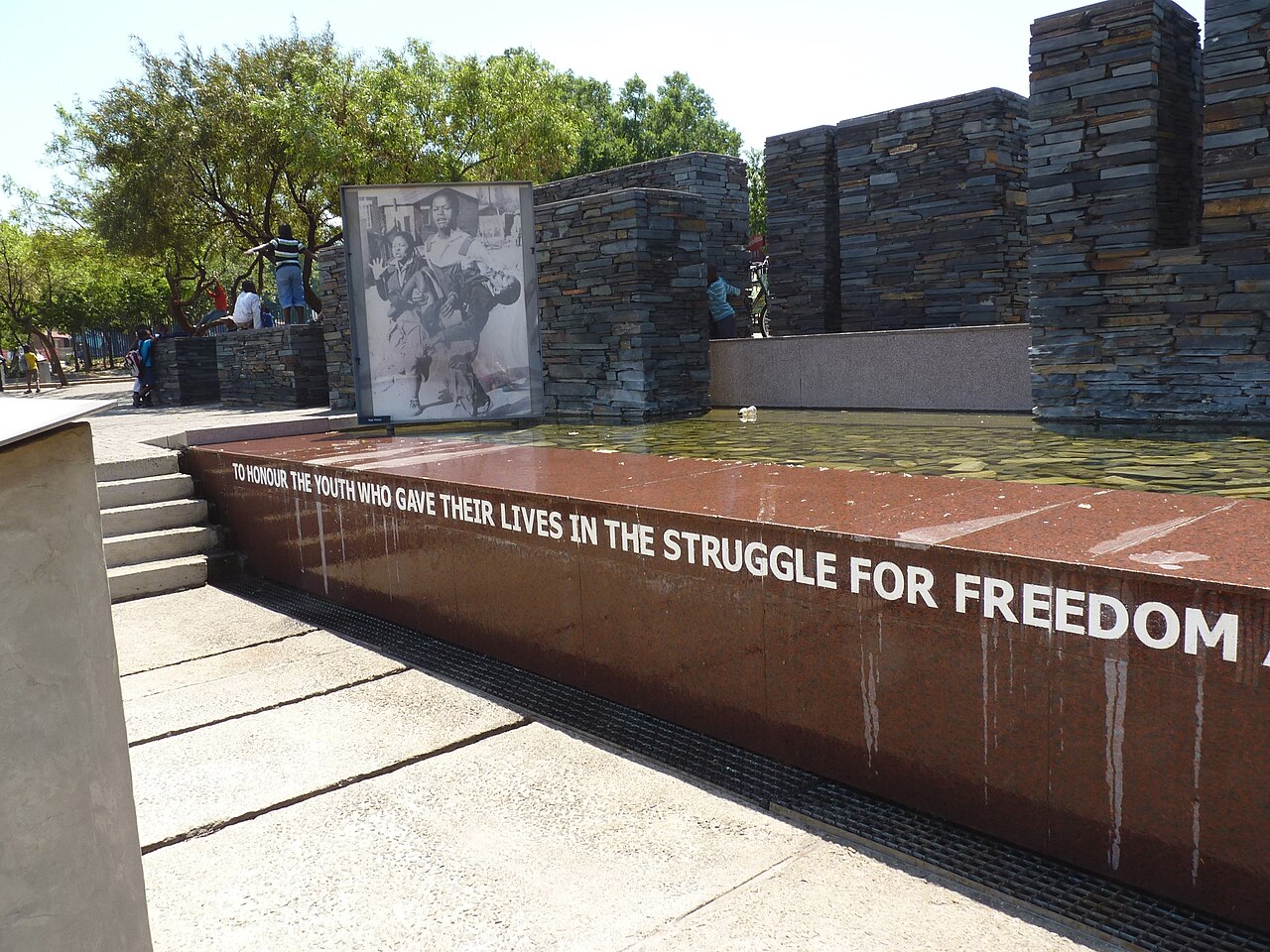
Today, the memory of 16 June is enshrined in South Africa as Youth Day, a national holiday. In Soweto, the Hector Pieterson Memorial and Museum stands near where he fell. It is a permanent site of conscience, chronicling the massacre and its aftermath.
The legacy is more than ceremony. It is a permanent reminder that education is never neutral, language is power, and the courage of the young can fracture even the most oppressive systems. The students of 1976 lost the battle on the streets, but their sacrifice ignited a fire that consumed apartheid, leaving a struggle for equality that continues today.
Sources & further reading
- SA History Online: The June 16 Soweto Youth Uprising
- Hector Pieterson Memorial and Museum
- Ndlovu, Sifiso Mxolisi. The Soweto Uprising (Ohio University Press, 2004).
- Truth and Reconciliation Commission of South Africa Report
- Biko, Steve. I Write What I Like (University of Chicago Press, 2002 edition).
- Brooks, Alan, and Jeremy Brickhill. Whirlwind Before the Storm: The Origins and Development of the Uprising in Soweto and the Rest of South Africa from June to December 1976. (International Defence and Aid Fund, 1980).
- Al Jazeera: "South Africa's #FeesMustFall: Decolonising education"
Frequently asked questions
- What was the Soweto Uprising?
- The Soweto Uprising was a series of demonstrations and protests led by Black school children in South Africa that began on 16 June 1976. The apartheid police responded to the peaceful march with brutal force, killing hundreds of students in what is now recognized as a state-sanctioned massacre.
- What specifically caused the Soweto Uprising?
- The immediate trigger was the 1974 Afrikaans Medium Decree, which forced Black schools to use Afrikaans—viewed as the language of the oppressor—for instruction in key subjects. This was the final intolerable act on top of the broader, dehumanizing system of Bantu Education.
- What was the Bantu Education Act?
- The Bantu Education Act of 1953 was a cornerstone of apartheid policy designed to relegate Black South Africans to permanent servitude. It gutted the curriculum, drastically cut funding for Black schools, and ensured Black children received an education tailored for manual labour, not intellectual or professional pursuits.
- How many people died in the Soweto Uprising?
- The official government inquiry (the Cillié Commission) conceded 575 deaths, but independent bodies and later analysis by the Truth and Reconciliation Commission estimate the true death toll was between 600 and 700 people in the months of protest that followed the initial massacre.
- Who was Hector Pieterson?
- Hector Pieterson was a 12-year-old boy who was one of the first students shot and killed by police on 16 June 1976. A photograph of his body being carried by fellow student Mbuyisa Makhubu became an international symbol of the apartheid regime's brutality.
- What were the consequences of the Soweto Uprising?
- The massacre shattered any illusion of peaceful reform, radicalizing a generation of Black youth who left the country in droves to join the armed struggle. It also triggered international condemnation, sanctions, and divestment campaigns that helped isolate the apartheid regime and lead to its eventual downfall.
- Does the legacy of Bantu Education still affect South Africa?
- Yes. While the legal framework is gone, its structural ghost remains. The vast disparities in funding and resources between historically white schools and those in townships and rural areas are a direct legacy of apartheid's design, fueling ongoing protests for educational equity like the #FeesMustFall movement.