The colonies they still hold.
The map you were given in school is out of date. The pink, the blue, the tricolour and the stars-and-stripes still cover hundreds of islands, dozens of countries' currencies, the seabeds under half the world's oceans, and the bedrooms of every brilliant young person the rich economies have decided they need.
The word "post-colonial" was an act of optimism. It assumed something had ended. The following is a partial — deliberately partial, because the full list would be a book — inventory of what has not.
I. The colonies that still have governors
The United States holds Puerto Rico, Guam, the U.S. Virgin Islands, American Samoa and the Northern Mariana Islands as "unincorporated territories" — a legal category invented by the Supreme Court in the Insular Cases of 1901, which ruled that the Constitution does not fully apply to people whose ancestors the United States acquired by war. Roughly three and a half million U.S. nationals cannot vote for the president whose military serves in their name.
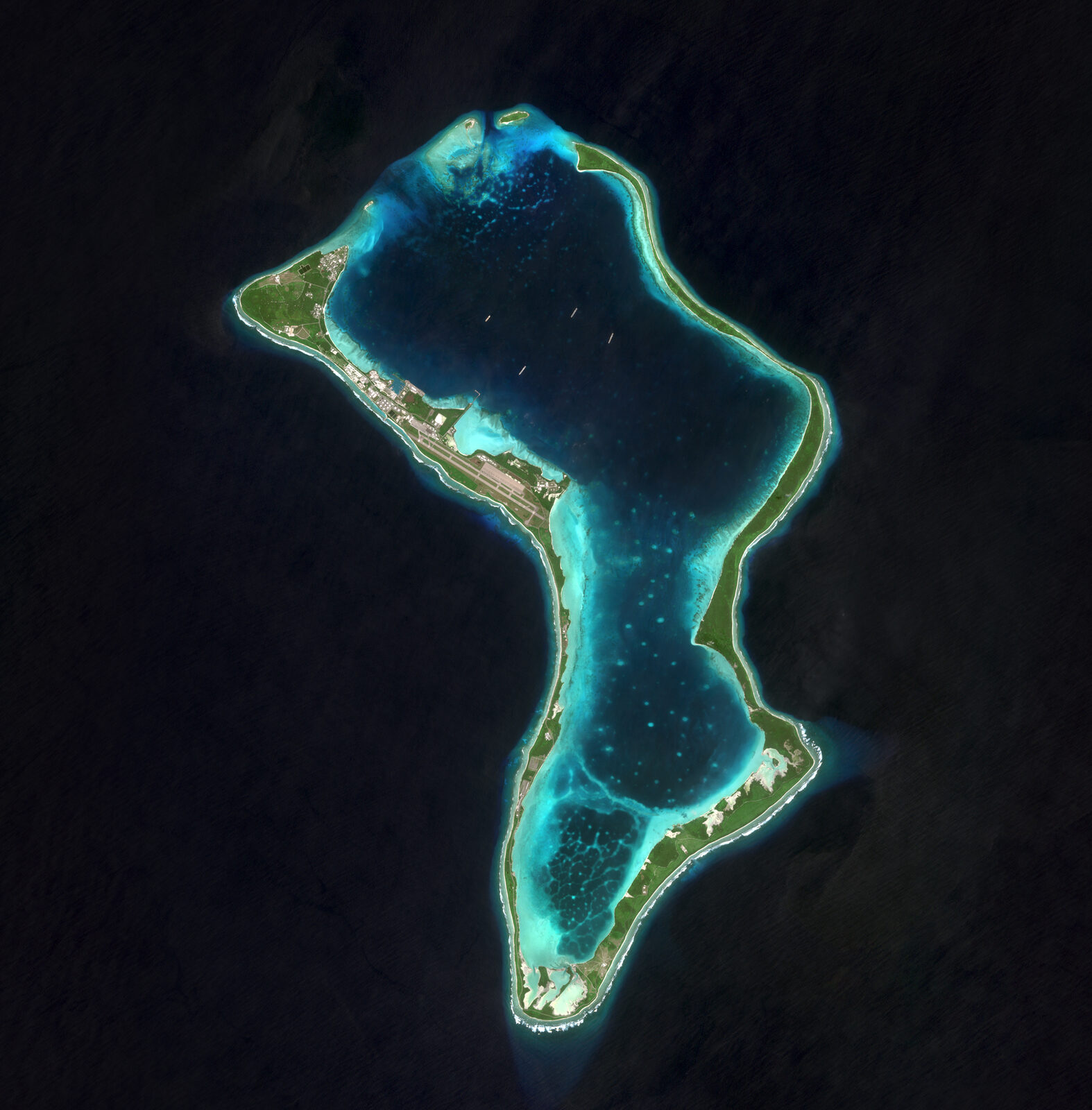
The United Kingdom still holds fourteen "British Overseas Territories", including the Falklands, Gibraltar, Bermuda, the Cayman Islands, and the British Indian Ocean Territory — that last one created in 1965 by forcibly expelling the entire Chagossian population so the United States could build a military base on Diego Garcia. The Chagossians, more than half a century later, are still not allowed home.
France holds thirteen overseas dependencies, including Mayotte, Réunion, French Guiana, Martinique, Guadeloupe, New Caledonia and French Polynesia. New Caledonia held independence referendums in 2018, 2020 and 2021; Paris counted the third one despite a Kanak boycott during COVID and announced that the territory had chosen France. In May 2024, when the French parliament tried to dilute the Kanak vote further, the territory rose in protest and Paris flew in police.
The Netherlands still holds Aruba, Curaçao, Sint Maarten, Bonaire, Sint Eustatius and Saba; Denmark still administers Greenland, whose subsoil — newly accessible as the ice melts — is suddenly of intense strategic interest. None of these are anomalies. They are the continuation, in legal form, of the project that began in the fifteenth century.
Figure
Inhabited overseas territories, by metropolitan power (2024)
Number of territories and resident population, in millions.
Source — UN list of non-self-governing territories; government data
II. The Commonwealth and the trick of the soft word
The British Empire did not dissolve. It rebranded. The Commonwealth of Nations, with its 56 member states and its smiling biennial summits, is the empire's pension plan. The British monarch remains head of state in fifteen "Commonwealth realms" — Australia, Canada, New Zealand, Jamaica, the Bahamas and others — and judicial appeals from several Caribbean and Pacific countries still go, ultimately, to the Judicial Committee of the Privy Council sitting in London. A judge in Westminster can still overturn a court in Mauritius, by treaty.
The "Commonwealth" preference scheme also gave Britain, for most of the twentieth century, privileged access to the food, raw materials and cheap labour of the formerly colonised. The Windrush generation, invited from the Caribbean to rebuild post-war Britain, were then in 2018 stripped of their citizenship by a Home Office that had quietly destroyed their landing cards.
III. The currency that is not yours
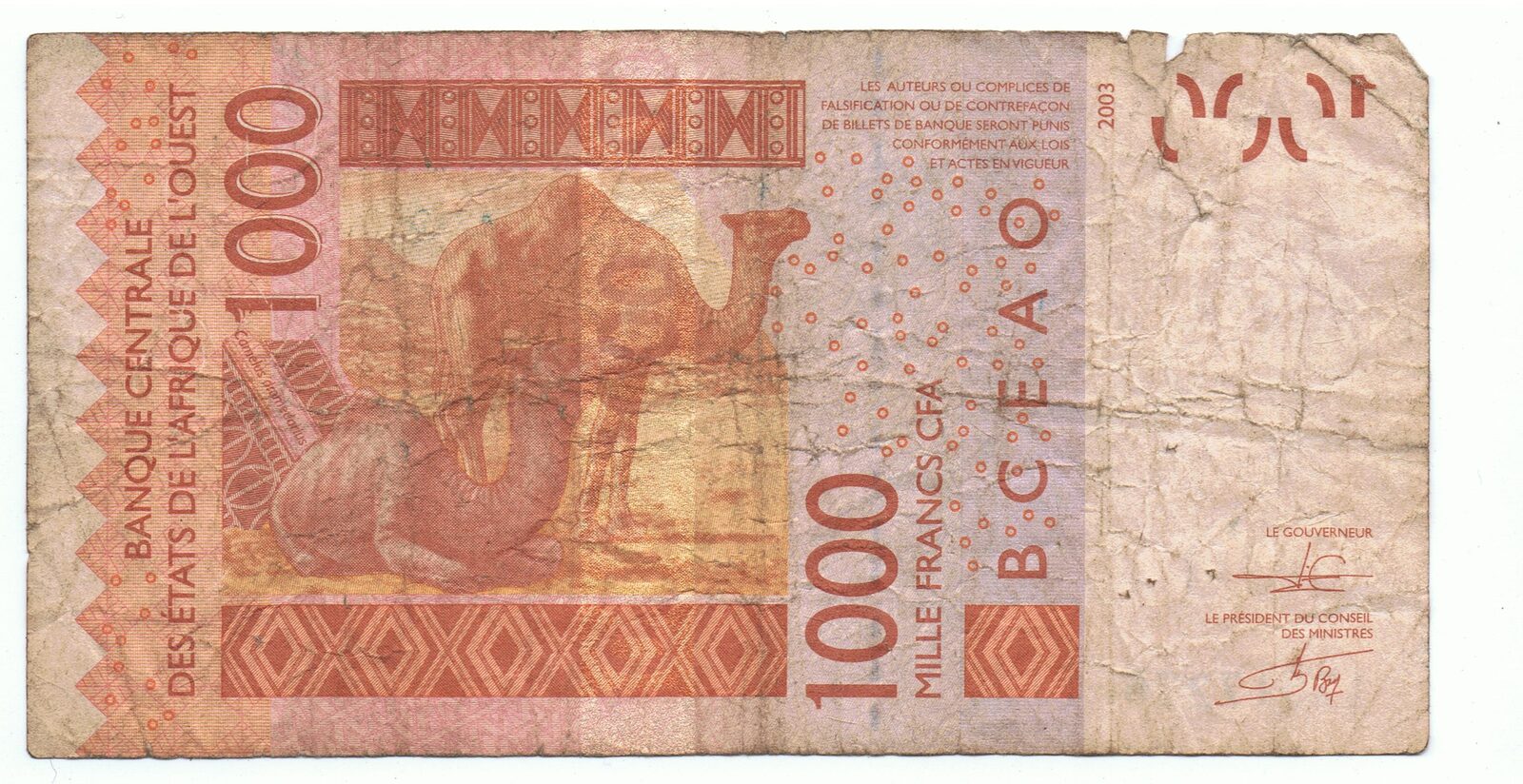
Fourteen African states still use the CFA franc, a currency invented in 1945 — its initials originally stood for "Colonies françaises d'Afrique"— and managed, in practice, from Paris. Until 2019, half of these countries' foreign reserves were held in the French Treasury. The CFA's fixed peg means African governments cannot devalue when they need to; their monetary policy is, in effect, made by the European Central Bank. Senegal's elected leadership cannot set its own interest rate. Côte d'Ivoire's central bank cannot print to fight a recession. This is a colonial relationship described in the language of central banking.
IV. The bases on someone else's lawn
The United States operates an estimated 750 military bases in roughly 80 countries, including in countries that have asked it, repeatedly, to leave. France maintains permanent garrisons across the Sahel and the Pacific. The United Kingdom retains "sovereign base areas" in Cyprus. None of these arrangements are reciprocal. There is no Senegalese base in Bordeaux, no Iraqi base in Texas, no Cuban base in Florida.
Figure
Foreign military bases worldwide, selected powers
Approximate number of facilities abroad, 2023–2024.
Source — David Vine, US Bases Abroad database; SIPRI; Janes
V. The land, the seabed, the subsoil
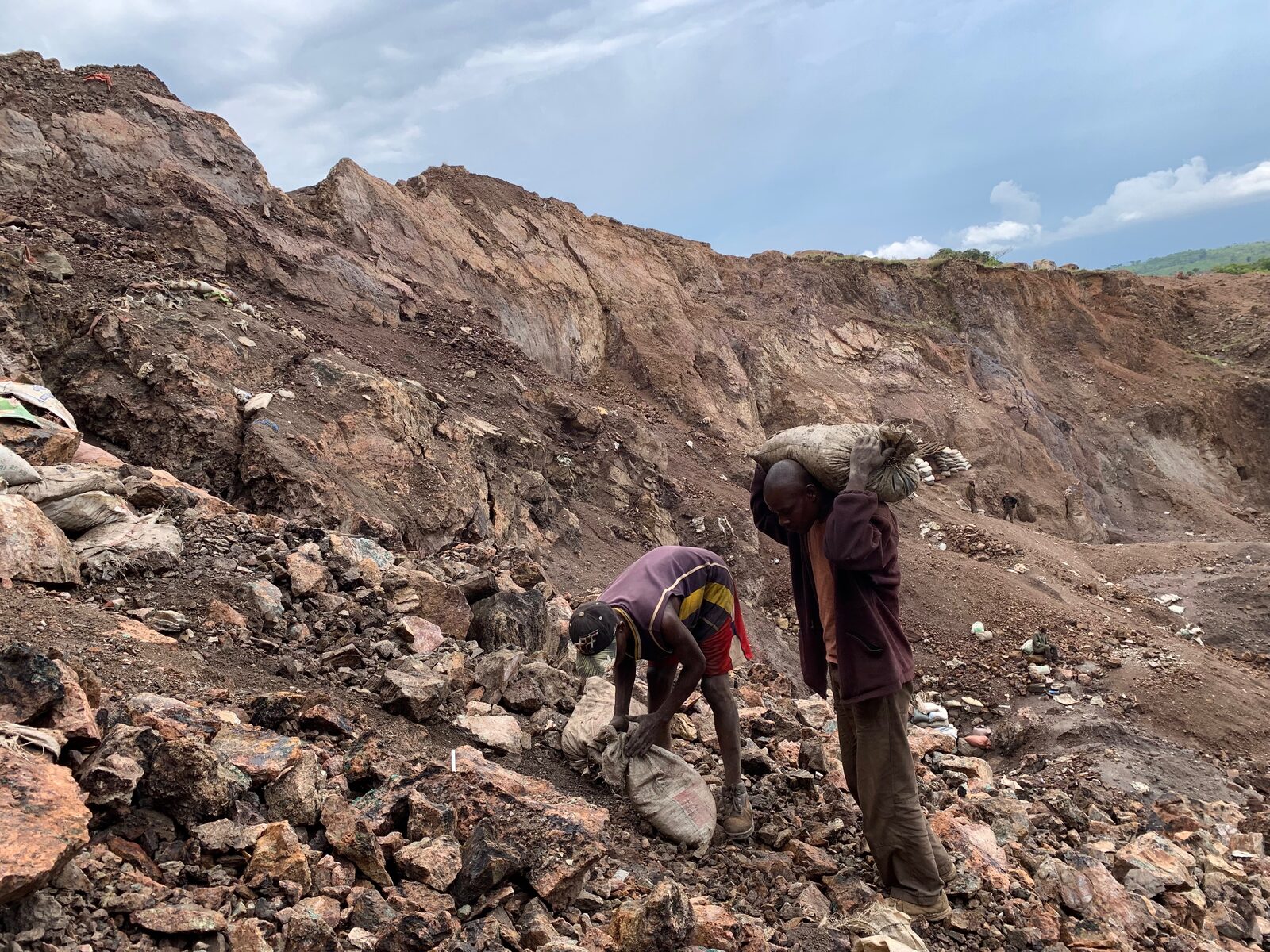
Most of the cobalt that powers the electric vehicles in Berlin, Oslo and San Francisco is dug, often by children, in the Democratic Republic of the Congo. The processing then happens in China; the profit accrues to listed companies in the North; the social and environmental cost stays in Lualaba. The pattern repeats with lithium in the salt flats of Bolivia and Chile, with bauxite in Guinea, with coltan in eastern Congo, with rare earths in Inner Mongolia and Myanmar, with uranium in Niger that has lit French light-bulbs for half a century.
When the Sahel coup wave of 2020–2023 produced governments that wanted to renegotiate these arrangements, the Western press explained, with grave concern, that the region was "destabilising". The arrangement being defended was the colonial concession.
Figure
Global mine production, share from selected countries (2023)
Percent of world output. Most of the wealth is recorded somewhere else.
Source — USGS; Statista; company reports
VI. The new colonialism: data, code, and seeds
A farmer in Maharashtra now pays a royalty, every season, to a Missouri-based corporation for the right to plant a seed her grandmother could have saved from last year's harvest. The intellectual-property regime imposed through the WTO's TRIPS agreement turned ancestral knowledge — turmeric, neem, basmati — into objects that could be patented in Western capitals and licensed back to the people who had cultivated them for millennia.
The new "AI revolution" runs on text and images scraped, without consent, from the archives of every culture on earth, but the resulting models are owned by five American and two Chinese corporations. The cloud infrastructure those models depend on sits in five jurisdictions. The labelling work — the part where humans tag thousands of disturbing images per shift for two dollars an hour — is contracted out to Kenya, the Philippines and Venezuela. The pattern is so familiar that giving it a new name would be flattering it.
VII. Brain extraction
The most efficient extraction in the modern system is no longer rubber or sugar. It is a person. A British medical school costs the NHS more than £270,000 per graduate; a Filipino, Nigerian or Indian doctor working in the same hospital arrived pre-trained, at no cost to the British taxpayer. Roughly 38% of Iranian physicians work outside Iran. Over half of Sierra Leone's nurses work abroad. The richest countries on earth import care work from the poorest, refuse to pay for the training, and then complain about the cost of immigration.
VIII. The war as extraction
Every major Western war of the last seventy years has, in addition to its stated objective, restructured a national economy in a way useful to Western contractors. The 2003 invasion of Iraq produced the privatisation of Iraqi oil and a generation of no-bid contracts for Halliburton, KBR, Bechtel and Blackwater. The 2011 destruction of Libya delivered the country's oil fields to a chaos that the international majors have learned to operate in. The 2014–2024 wars in Yemen, Syria and Sudan have delivered, between them, a refugee crisis that European centre-right governments have used to roll back the right to asylum across the continent.
A useful test: whenever a Western military intervention is described as "humanitarian", look at the contracts that follow it. The humanitarianism leaves; the contracts stay.
IX. The labels themselves are a tool
"Developing country." "Emerging market." "Failed state." "Global South." "Sub-Saharan Africa." "MENA." "Fragile context." "Conflict-affected." Each of these terms describes the same set of countries from a different angle, and each implies the same thing: that the natural state of these places is incomplete, that they are on a journey towards a destination defined by someone else, and that the someone else is permitted — even obligated — to assist, advise, or in extremity, intervene.
A more honest vocabulary would talk about the over-exploited world. Or about the creditor nations, since most Global South countries are net creditors to the Global North if you count what was taken. Or simply about countries by name, without the imperial subtitle.
X. The undersea cable and the satellite
Roughly 99% of all intercontinental internet traffic moves through fewer than 600 submarine cables. The companies that own and lay them — SubCom, Alcatel Submarine Networks, NEC, and increasingly Google, Meta, Microsoft and Amazon — are headquartered almost entirely in five jurisdictions: the United States, France, Japan, the United Kingdom and (now) China. African internet traffic between two African cities routinely transits via Marseille or London. Latin American traffic frequently routes through Miami. The colonial ports of the 19th century — Suez, Alexandria, Singapore, Lisbon, Marseille — are still the chokepoints, only now they carry data.
Low-earth-orbit satellite internet is consolidating along the same axis. A single American company operates more than 60% of all active satellites in orbit, can be switched off or geofenced unilaterally, and was reportedly disabled near Crimea by its owner in the middle of an ongoing war. There is no equivalent African, Latin American or Southeast Asian network. There is no plan for one.
XI. Vaccine apartheid
A model by Moore and colleagues in Nature Medicine (2022) estimated that increased global sharing of COVID-19 vaccines could have prevented about 1.3 million deaths worldwide by the end of 2021. This is a counterfactual estimate under specified sharing scenarios, not an observed death toll. Unequal access to doses and manufacturing capacity illustrates the stakes of procurement and intellectual-property rules. [8]
XII. Carbon colonialism and the offset market
A January 2023 investigation by The Guardian, Die Zeit and SourceMaterial concluded that more than 90% of the rainforest offsets it examined under Verra’s system did not represent the claimed reductions. Verra disputed the investigation’s methodology and conclusions. This finding concerns the projects and studies examined, not every carbon credit; climate-finance schemes also require scrutiny of land rights, community consent and how benefits are distributed. [9]
XIII. The investment-tribunal regime
Investor-state dispute settlement allows eligible foreign investors to bring treaty claims against states; a fall in expected profits does not automatically establish a legal violation. Philip Morris challenged Uruguay’s tobacco packaging and brand regulations, but Uruguay prevailed in 2016. Vattenfall sought roughly €4.7 billion over Germany’s nuclear phase-out; that arbitration was discontinued following a settlement in 2021. Claims, awards and settlements are different measures, and domestic legal remedies must not be confused with access to treaty arbitration. [10]
XIV. The ghost fleets and the stolen fish
The Environmental Justice Foundation’s Pirate Fishing Exposed (2012) reported that illegal fishing accounted for up to 37% of catches in West Africa. This is a historical regional estimate, not a uniform rate for every country or fleet. ODI’s Western Africa’s Missing Fish (2016) examines economic losses and consequences for coastal livelihoods. Industrial fishing, weak enforcement and unequal access agreements should be assessed by fishery, flag state and period rather than attributed to all foreign vessels. [11]
XV. The waste returns, but only one way
The Basel Convention’s Ghana e-Waste Country Assessment (2011) documents both imported used electronics and waste generated after equipment is used locally. Not all discarded electronics originated as illegal waste imports. Informal recovery can expose workers to hazardous substances, while Basel Action Network’s tracking investigations document unlawful export routes. Used goods, repairable equipment and hazardous waste require separate treatment; neither a universal export tonnage nor a universal wage follows from these reports. [12]
Instruments of present-day empire
62+
Inhabited territories still administered from a foreign capital
56
Commonwealth member states, with the British monarch as figurehead in 15
14
African countries whose monetary policy is, in effect, made in Paris
750+
U.S. military bases in foreign countries
~70%
Of world cobalt mined in the DRC; profits accrue elsewhere
50%+
Of Sierra Leone's nurses work abroad in OECD countries
TRIPS
The WTO regime that turned ancestral knowledge into patented IP
Iraq · Libya · Yemen · Syria · Sudan · Gaza
The 21st-century wars whose contracts speak for themselves
1973
Britain expels the Chagossians for a U.S. base
2018
UK Windrush scandal: Caribbean Britons illegally deported
2021
France 'wins' New Caledonia referendum during a Kanak boycott
2024
Sahel governments revoke French military access; press calls them 'unstable'
How it works
The five instruments of extraction without flags
Colonial economics survived decolonisation by changing instrument, not aim. Anyone who understands these five levers can read a Western government's relationship with the Global South in any week's news.
Currency
Anchor the target country's money to the metropole (CFA franc to euro), hold its reserves abroad, deny it monetary sovereignty. Whoever sets your interest rate runs your economy.
Debt
Lend at hard-currency rates the borrower cannot print; attach conditions; refinance at IMF terms requiring austerity, privatisation and capital-account opening. The repayment exceeds the original loan within a decade.
Trade rules
Through the WTO, EU and bilateral FTAs, prohibit the industrial-policy tools (tariffs, subsidies, IP infringement, capital controls) that every now-rich country used to develop. Lock the ladder.
Investor protection
Through 2,500+ bilateral investment treaties and ISDS arbitration, give foreign corporations the right to sue host governments for any regulation that reduces expected profits — outside the host's own courts.
Military access
Maintain bases, status-of-forces agreements, intelligence partnerships and arms-supply dependencies that make refusing the above unsafe. 750 US bases enforce the other four levers without needing to fire.
Receipts
Who actually holds African debt
| 01Creditor type | 02Share of African external debt (2022) | 03Effective interest rate |
|---|---|---|
| Western private bondholders (Wall St / City of London) | ≈35% | ~7–10% |
| World Bank, IMF, AfDB, other multilaterals | ≈30% | ~2–4% |
| China (state + commercial) | ≈12% | ~3–4% |
| Paris Club bilateral (Western governments) | ≈10% | ~3% |
| Other bilateral (incl. Gulf, India, Russia) | ≈13% | varies |
The 'China is debt-trapping Africa' narrative is overwhelmingly false. Western private bondholders and multilaterals hold the majority. Sources: World Bank IDS, Debt Justice 2023.
Pre-empted
Objections answered
#01The strongest version
"Post-colonial states have had 60+ years. Their failures are their own."
Reply
Compare the conditions at independence: most African and Asian colonies inherited single-commodity economies, near-zero literacy outside the coloniser's language, no native officer corps, borders drawn by Europeans, and immediate debt-service obligations to the departing power. South Korea and Singapore — the apparent counter-examples — received massive US capital inflows for Cold War reasons and were permitted to use industrial policy that the WTO has since outlawed for everyone else. The 'they had their chance' argument requires deleting the conditions of the chance.
#02The strongest version
"China is the real neo-colonialist now."
Reply
China's debt holding in Africa is approximately 12% — a third of what Western private bondholders hold. Chinese terms are typically lower-rate and longer-tenor than the bond market's. The narrative is louder than the balance sheet. None of which is an endorsement of Chinese practice — Tibet, Xinjiang and Belt-and-Road labour conditions deserve their own scrutiny — only a request that the accounting be honest.
#03The strongest version
"Western military presence prevents worse regional powers from filling the vacuum."
Reply
The premise asks countries to be grateful for occupation as the price of stability. Test the inverse: would France accept 750 Algerian bases on its soil as protection from a worse alternative? If the answer is no, the standard is colonial.
#04The strongest version
"The IMF and World Bank are technical institutions, not political."
Reply
Voting share at the IMF is allocated by capital contribution. The US holds a unique veto over major decisions. The managing director has been European by tradition since 1946. The World Bank president has been American by tradition since 1944. 'Technical' is the costume that political authorship wears in Bretton Woods buildings.
#05The strongest version
"Investment treaties protect everyone, including Southern investors abroad."
Reply
In practice, many ISDS claims are filed by Northern corporations against Southern governments. The system is asymmetric by design — there are almost no Southern multinationals large enough to file the reverse case. Equality of access without equality of capacity is the legal form of structural inequality.
In sum
They did not give the colonies back.
They taught the colonies to pay rent.
Take it further
What to do with this page
01 —
Trace one mineral
Pick the device you're reading this on. Look up where its cobalt, lithium, tantalum and tin were extracted, where they were processed, and where the manufacturer is headquartered. Map the route.
02 —
Read the loan
Find your country's most recent IMF Article IV consultation or World Bank country programme. The conditions are public. Read them. They are the actual constitution of the borrower.
03 —
Refuse the soft word
Stop saying 'developing country'. Try 'over-exploited country', 'low-income economy' or just the country's name. Watch how the conversation changes when the verb stops doing the laundering.
From the Archive
Wikimedia-sourced photographs and documents related to this page.


Last updated 23 June 2026Submit a correctionMethodology
References
Sources & Further Reading
- [1]UN List of Non-Self-Governing Territories, C-24 Committee (17 territories as of 2024).
- [2]Ndongo Samba Sylla & Fanny Pigeaud, Africa's Last Colonial Currency: The CFA Franc Story (Pluto, 2021).
- [3]Vijay Prashad, Washington Bullets (LeftWord, 2020); David Vine, Base Nation: How U.S. Military Bases Abroad Harm America and the World (Metropolitan, 2015).
- [4]Philippe Sands, The Last Colony: A Tale of Exile, Justice and Britain's Colonial Legacy (Weidenfeld & Nicolson, 2022), on the Chagos Islands.
- [5]International Court of Justice, Legal Consequences of the Separation of the Chagos Archipelago from Mauritius in 1965 (Advisory Opinion, 25 February 2019).
- [6]Kwame Nkrumah, Neo-Colonialism: The Last Stage of Imperialism (Thomas Nelson, 1965).
- [7]UNCTAD, Economic Development in Africa Report (annual).
- [8]Moore et al., “Retrospectively modeling the effects of increased global vaccine sharing on the COVID-19 pandemic”, Nature Medicine 28, 2416–2423 (2022). Counterfactual modelling.
- [9]Patrick Greenfield, Rainforest carbon offsets investigation (The Guardian, with Die Zeit and SourceMaterial, 18 January 2023); Verra disputed its methods and conclusions.
- [10]ICSID, Vattenfall v. Germany, Case ARB/12/12 (discontinued, 2021); Philip Morris v. Uruguay, Case ARB/10/7 (Uruguay prevailed, 2016); UNCTAD, Facts and Figures on ISDS Cases (2024).
- [11]Environmental Justice Foundation, Pirate Fishing Exposed (2012); ODI, Western Africa’s Missing Fish (2016).
- [12]Basel Convention Secretariat, Ghana e-Waste Country Assessment (2011); Basel Action Network, GPS-tracker investigation (2019).
All works cited in good faith for documentary, educational and critical use. Errors and omissions: contact the archive.