Stolen credit.
Almost everything the West calls its own — its numbers, its science, its medicine, its food, its institutions, its philosophy — was given to it, often by people it later enslaved. Forgetting this is not an accident. It is a curriculum.
A founding myth of the modern West is that civilisation is one of its inventions and that the rest of the world either received it as a gift or fell behind for failing to accept it in time. Almost every part of this story is false. The honest version is stranger and, for the comfortable nations, more uncomfortable: most of what the West calls its inheritance was, in fact, taught to it by the civilisations it later described as 'undeveloped'.
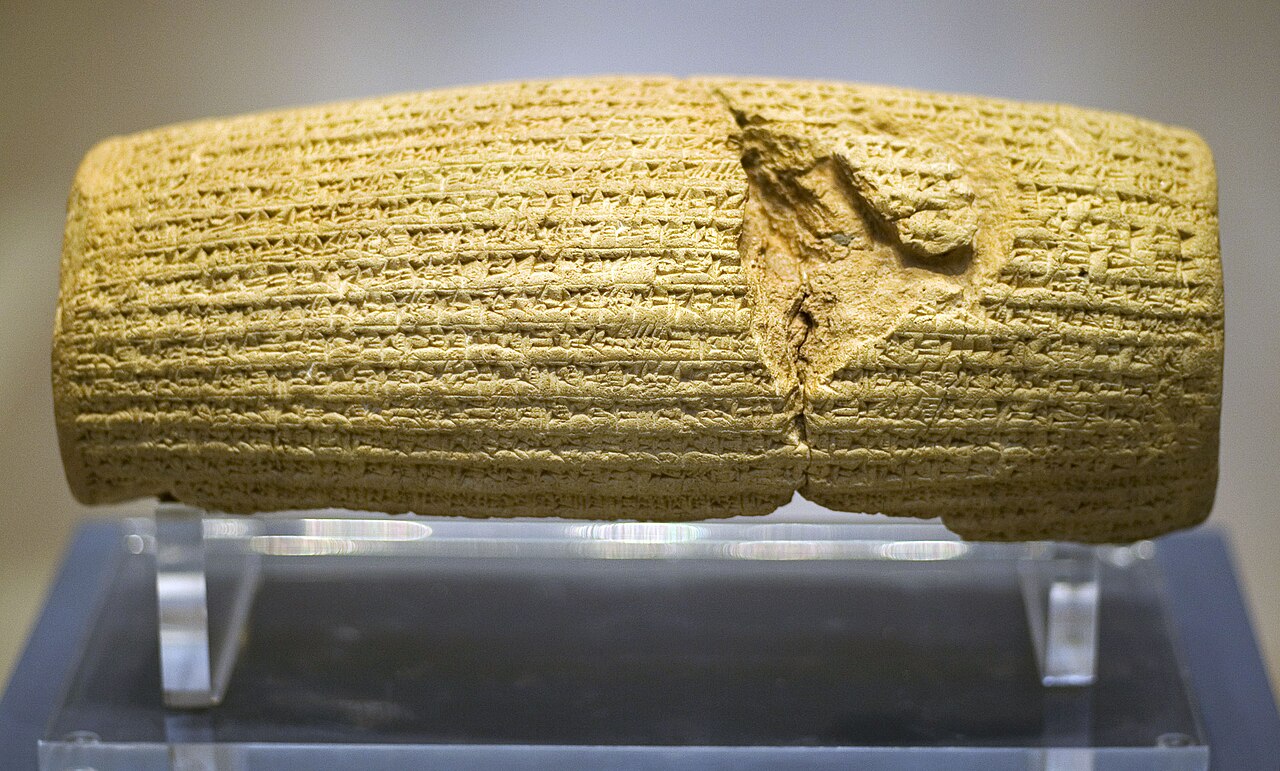
The Cyrus Cylinder (c. 539 BCE) is often called the first known declaration of human rights — religious tolerance, an end to forced labour, the right of displaced peoples to return home. It predates the Magna Carta by 1,754 years. The British Museum holds it. British schoolchildren rarely hear of it.
The qanat — the underground aqueduct that turned Iranian deserts into farmland — was running for two and a half millennia before European hydraulic engineers 'rediscovered' the principle. The Achaemenid postal system, with its relay riders, was the operational model for every subsequent imperial communications network including Rome's.
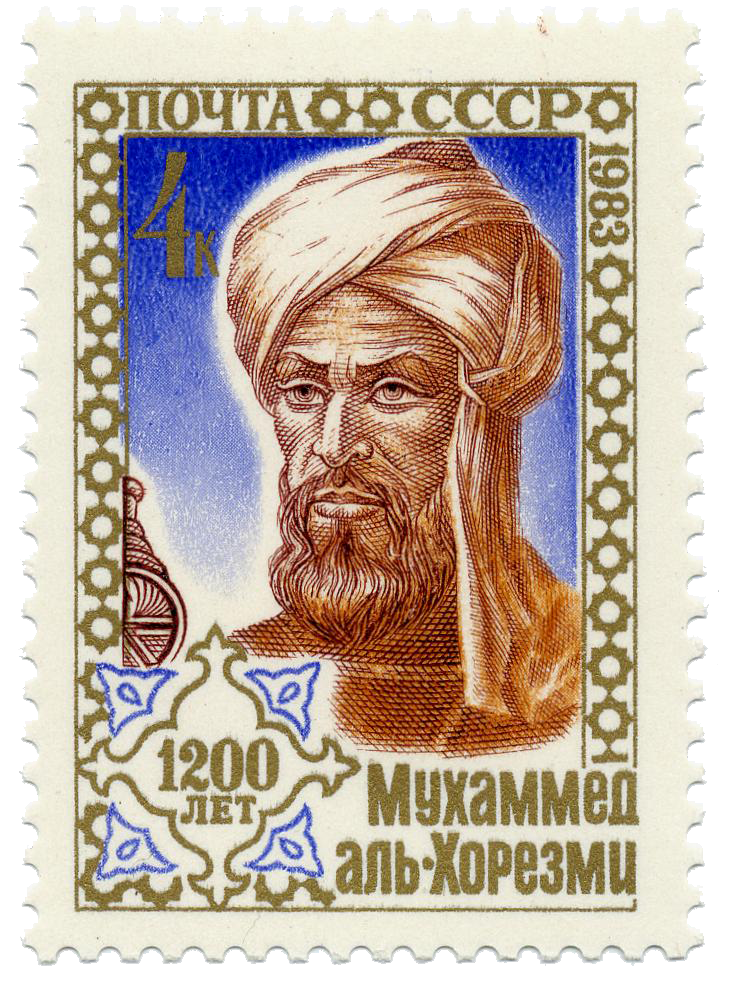
Algebra in its medieval form is unthinkable without al-Khwarizmi (Persian, 9th c.), whose name became the word 'algorithm'. Modern medicine inherited the encyclopaedic compendiums of Ibn Sina (Avicenna, Persian, 11th c.); his Canon was the standard medical textbook in European universities for six centuries. Algebra, algorithm, alcohol, almanac, average, alkali, alchemy: the words trace the debt.
Persian poetry — Rumi, Hafez, Saadi, Khayyam, Ferdowsi — has been read continuously, in dozens of languages, for a thousand years. Goethe credited Hafez as the source of his West–East Divan. Emerson took Saadi as a model. None of this is on the standard Western humanities syllabus.
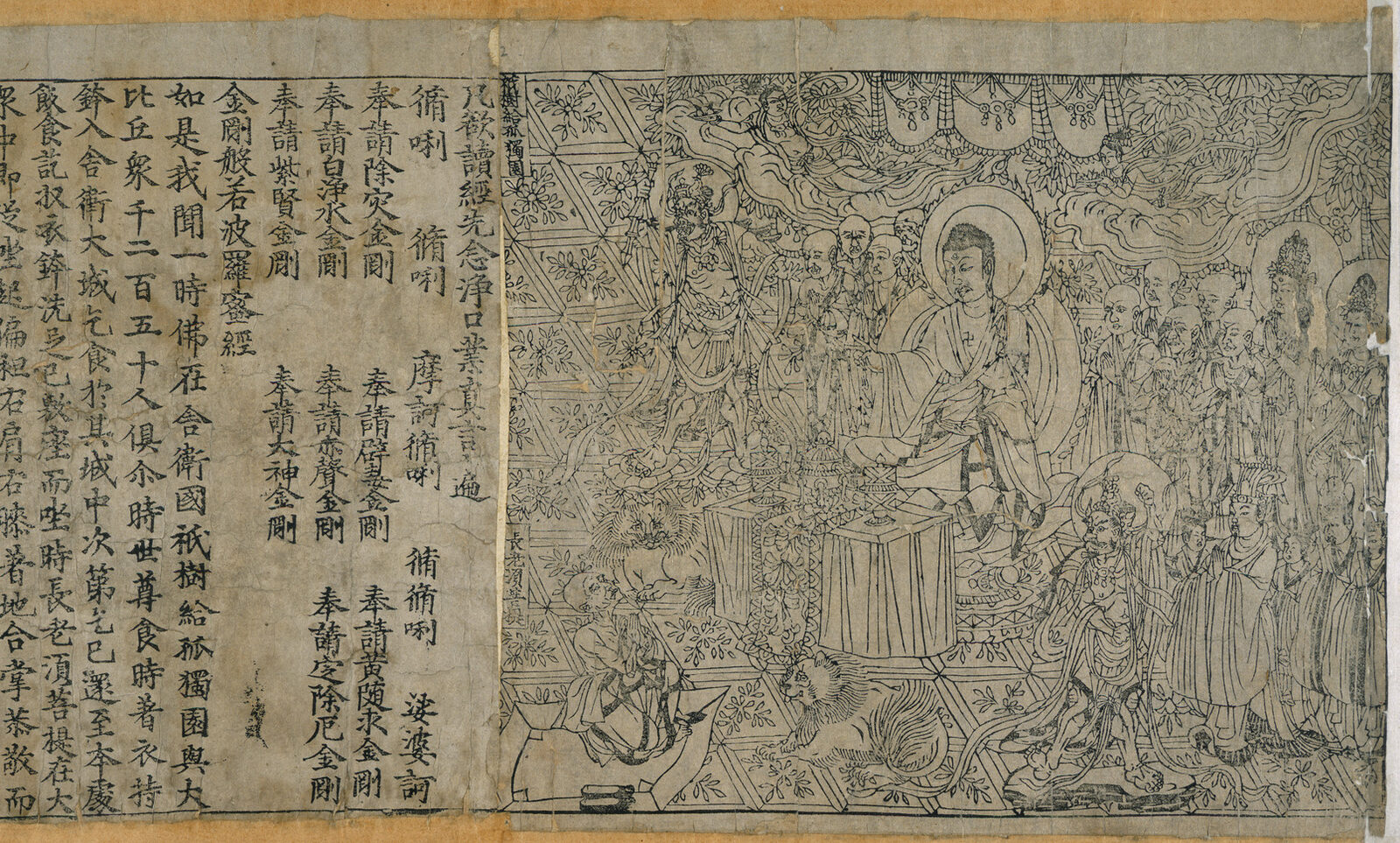
Paper. Printing. Gunpowder. The magnetic compass. The four technologies that, more than any others, made the European Renaissance and the European voyages of conquest physically possible. All four were Chinese, the earliest by more than a thousand years.
Movable type printing was developed by Bi Sheng around 1040, four centuries before Gutenberg. Cast iron was being produced in industrial quantities in China by the 5th century BCE — roughly seventeen hundred years before Europe managed it. The compass was being used for marine navigation off the Chinese coast by the 11th century, two hundred years before it appeared in the Mediterranean.
When a Chinese tech firm dominates a sector today and a Western press release calls it 'surprising', the surprise is the part that should be examined.
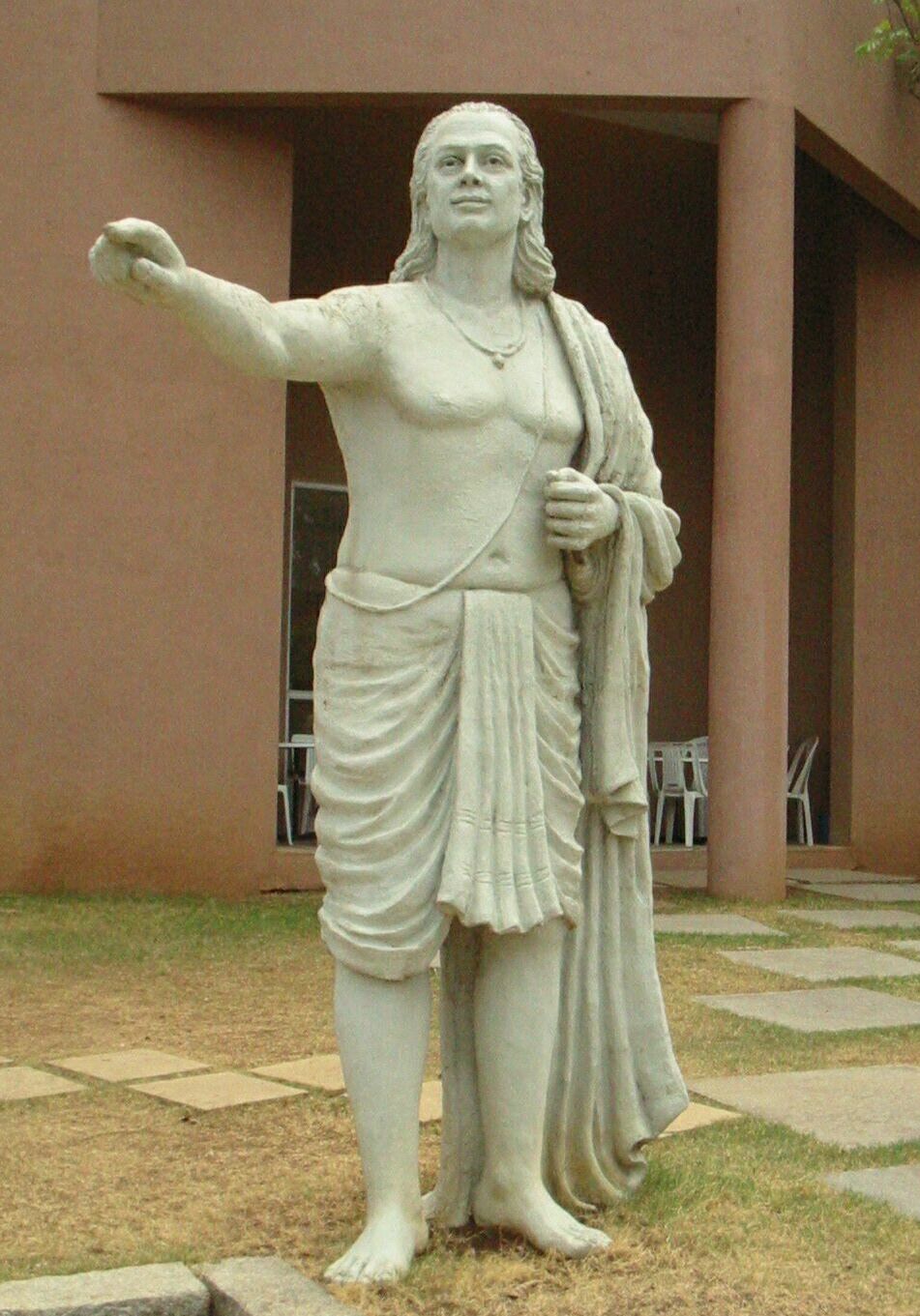
The decimal place-value system, the symbol for zero as a number, and the basic algorithms of arithmetic that the entire global economy runs on were developed in India between the 5th and 7th centuries by mathematicians including Aryabhata and Brahmagupta. They reached Europe through Arabic translations of Indian texts; 'Arabic numerals' is therefore a misnomer the Arabs themselves were happy to correct.
Indian metallurgists were producing wootz crucible steel — the basis of the Damascus blade — by the 6th century BCE. The Iron Pillar of Delhi has stood, essentially un-rusted, for sixteen hundred years; metallurgists still publish papers on it.
Cataract surgery, rhinoplasty, the suturing of wounds: the Sushruta Samhita (c. 6th century BCE) describes hundreds of surgical procedures. European surgeons reinvented several of them in the 18th and 19th centuries and named them after themselves.
Between roughly 750 and 1250 CE, the libraries of Baghdad, Cordoba, Cairo, Damascus, Bukhara and Samarkand preserved, translated and extended the entire surviving corpus of Greek, Persian and Indian science. Without that labour, the European Renaissance has nothing to renaissance from. The Latin word 'cipher' comes from the Arabic ṣifr, meaning zero; the word 'chemistry' from al-kīmiyāʾ; the word 'admiral' from amīr al-baḥr.
Ibn al-Haytham (Alhazen, 10th–11th c., Basra and Cairo) wrote the Book of Optics, in which he experimentally established that vision is light entering the eye, not rays emitted by it. He is the father of the scientific method as the West later codified it.
Al-Razi (Rhazes), al-Biruni, al-Tusi, Ibn Rushd (Averroes), Ibn Khaldun: the names that built the bridge from antiquity to modernity. Their absence from Western 'history of science' syllabi is not an accident of citation. It is a curatorial choice.
Pharaonic Egypt ran a complex literate state with surveying, advanced medicine, geometry, and continental trade routes while northern Europe was a forest. Kemetic medicine, including detailed papyri on diagnosis and pharmacology (Edwin Smith, Ebers, c. 1600 BCE), was studied by Greek physicians who acknowledged their teachers.
The Kingdom of Kush in present-day Sudan ruled Egypt as the 25th Dynasty in the 8th century BCE. The Meroitic script remains only partly deciphered. European Egyptology spent two centuries arguing that Egypt could not have been African; the argument continues, in softer language, on cable television.
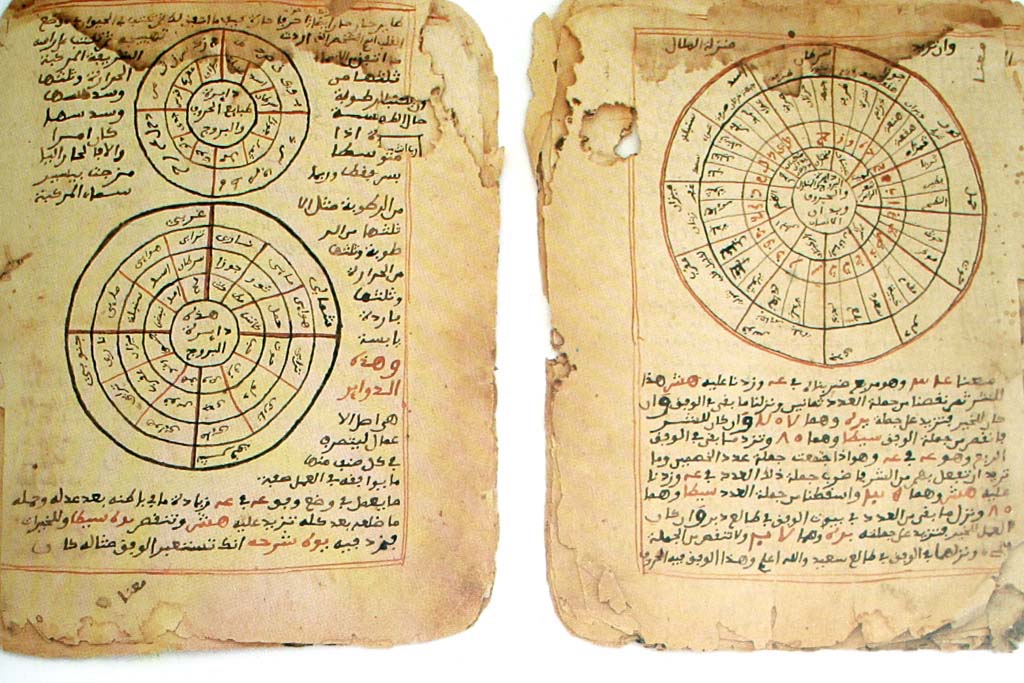
The University of al-Qarawiyyin in Fez was founded in 859 CE by a Tunisian woman, Fatima al-Fihri. It still operates. Oxford traces its first teaching to 1096, Bologna to 1088. The University of Sankoré in Timbuktu, in the 14th–16th centuries, held hundreds of thousands of manuscripts on astronomy, jurisprudence and medicine.
Great Zimbabwe — the dry-stone capital of a southern African kingdom from the 11th to 15th centuries — was so impressive when European colonists encountered its ruins that they spent decades insisting Africans could not possibly have built it. Subsequent archaeology has been unambiguous.
The Mali empire of Mansa Musa was, by several measures, the wealthiest political entity in the world in the 14th century. His pilgrimage to Mecca destabilised the gold markets of the entire Mediterranean for a decade. He is rarely a name in Western general education.
Tenochtitlán, the Mexica capital at Spanish contact, had a population in the hundreds of thousands — larger than any European city of the period except possibly Paris and Constantinople. It was a planned city of causeways, aqueducts, public sanitation and floating agriculture. Cortés' own officers described it as more beautiful than anything in Spain. They destroyed it.
The Haudenosaunee (Iroquois) Confederacy operated a federated representative system of government with checks on executive power, formal procedures for impeachment, and women's councils, centuries before the U.S. Constitution. Several of the U.S. founders — including Benjamin Franklin — explicitly studied it. It is rarely credited.
Maize, potatoes, tomatoes, cacao, vanilla, peanuts, chillies, beans, squash, sunflowers, manioc, quinoa, sweet potatoes, peppers, tobacco, rubber, pineapple, avocado: roughly 60% of the crops grown in the world today were domesticated by Native American agronomists over millennia. The Italian, Indian, Thai and Sichuanese cuisines that exist today are post-Columbian.
Andean civilisations performed successful skull surgery (trepanation) with survival rates that European surgeons would not match until the 20th century. They engineered terraced agriculture at altitudes Europeans considered uninhabitable. The Inca road network at its height ran 40,000 kilometres.
Polynesian navigators colonised an oceanic triangle the size of a continent, using stars, swells, bird flight and oral charts called rapa, while Europeans were still hugging the Mediterranean coast. Captain Cook's Tahitian navigator Tupaia drew a map of the South Pacific from memory that included islands Cook had not yet visited.
Indigenous Australians maintained the longest continuous civilisation on earth — at least 65,000 years — with complex land management practices, including controlled burning, that European settlers misread as 'wilderness' and proceeded to break. Settler Australia is, on multiple measures, currently relearning what it spent two centuries destroying.
Maya astronomers had calculated the synodic period of Venus to within a few seconds of the modern value by the 9th century CE, recorded the dates of solar eclipses 800 years into the future, and ran a base-20 mathematics that included a glyph for zero developed independently of Indian zero, perhaps centuries earlier. The four Maya codices Diego de Landa did not burn at Maní in 1562 give us the science. Whatever was in the other dozens of codices he did burn, we will never know.
The Inca quipu — a textile record system of knotted cords — encoded census data, tribute owed, grain stores and probably historical narrative; recent decipherment work suggests it is closer to a true writing system than colonial scholarship admitted. The Inca state ran a continental redistribution economy, with state granaries (qollqas) that pre-empted famine; the contrast with British India in 1876 or 1943 is exact.
Andean farmers domesticated more than 3,800 varieties of potato and selectively bred quinoa, oca and lupin into staples that have, in the last twenty years, been rebranded as Western 'superfoods'. The patents, in many cases, are now held in Geneva and Denver.
The Mongol Empire of the 13th and 14th centuries, however brutal in its conquests, ran a continent-spanning postal system (the yam), enforced freedom of religion by decree, standardised weights and measures from Korea to Hungary, issued the first paper currency on a continental scale, and ran a meritocratic civil service that included Persians, Chinese, Armenians and Russians in senior positions. The Pax Mongolica enabled the transmission to Europe of gunpowder, paper money, the compass and printing — the literal toolkit of the European 'modernity' that came next.
Uyghur scribes designed the script that the Mongol khans then exported; Tibetan Buddhist scholars staffed the Yuan court; Khwarezmian engineers built the siege weaponry. The story we are told — that 'the East' was static and 'the West' was dynamic — has the arrow of history pointing the wrong way for most of the second millennium.
The Haitian Revolution of 1791–1804 was, in pure political-philosophy terms, the most consistent application of the Enlightenment's claim that all men are equal — more consistent than anything France or the United States produced in the same century. C. L. R. James's The Black Jacobins demonstrated, in 1938, that the Saint-Domingue insurgents were not 'imitating' French Republican ideas; they were perfecting them by removing the racial asterisk France refused to remove.
Frantz Fanon, Aimé Césaire, Édouard Glissant and Sylvia Wynter, all from the Caribbean, then produced in the 20th century the political vocabulary — négritude, internalised colonialism, relation, the genre of the human — that the rest of the post-colonial world has been using to think with ever since. Most Western philosophy departments still teach this material, when they teach it at all, as 'area studies' rather than as philosophy.
King Sejong's promulgation of Hangul in 1446 produced a fully phonemic alphabet specifically designed for mass literacy — a project of democratic linguistic engineering that has no real European parallel until the 20th century. The first ironclad warship, the geobukseon, was Korean; the first systematic use of standardised, interchangeable parts in firearms was likely Korean or Chinese, centuries before Eli Whitney's American 'invention' of the principle.
Edo-period Japan produced the futures market in rice (Dōjima Rice Exchange, 1730), Kaitai Shinsho (the first comprehensive Japanese anatomical text, 1774, drawing on Dutch but adding original work), and an extraordinary tradition of mathematical sangaku problems pinned to temples for public solving — citizen mathematics, two centuries before the West invented the phrase.
Samarkand under Ulugh Beg in the 1420s housed the most accurate astronomical observatory in the world; the Zij-i Sultani star catalogue, with positions for 1,018 stars, was used by European astronomers without attribution for two centuries. The trigonometric tables produced there for sine and tangent values were accurate to eight decimal places. Ulugh Beg was assassinated by his own son in 1449 for being too interested in science; the observatory was destroyed; the work survived because Samarkand was less peripheral to the world than the textbook now suggests.
Al-Biruni (973–1048), born in Khwarazm (modern Uzbekistan), calculated the Earth's radius from a single mountain in the Punjab using a method now in every undergraduate physics textbook, wrote a thousand-page comparative study of Indian science and religion, and theorised the rotation of the Earth around its axis six centuries before Copernicus.
Iron smelting in West and Central Africa is now archaeologically dated to at least 2000 BCE — independent of, and at least contemporary with, the Mediterranean. The Nok culture of present-day Nigeria was producing terracotta sculpture of extraordinary technical sophistication in the first millennium BCE. The Ishango bone from the Congo, dated 20,000 years ago, carries notations that several mathematicians read as a prime-number sequence and a lunar calendar.
Benin City, sacked by a British 'punitive expedition' in 1897, was at its height a planned city with electrified-grid street layout, defended by walls four times longer than the Great Wall of China and ten times the volume of the Pyramid of Khufu — the largest earthwork in human history. The looted bronzes are still in London, Berlin, Boston and Vienna; the city's history is rarely on the curriculum of the country that destroyed it.
Cuneiform tablets from Sumer (3rd millennium BCE) record the first known written laws, the earliest accounting, the first epic poetry (Gilgamesh) — and the first written contract dispute, which is, charmingly, a complaint about substandard copper. Babylonian astronomers were tracking Jupiter's motion with a geometric technique mathematically equivalent to integration, roughly 1,500 years before Newton.
Phoenician sailors circumnavigated Africa, on Herodotus's account, around 600 BCE — a claim modern oceanographers now consider plausible. The alphabet they invented, simplified by the Greeks and inherited by the Romans, is the one you are reading these words in. The 'Western' canon begins with these civilisations and then quietly redraws the family tree to make them ancestors of Europe rather than of the modern Middle East.
How it works
How credit is laundered
The disappearance of non-European authorship is not a series of accidents. It is a five-step procedure repeated so often that it has become invisible — and once you can name the steps, you can spot them in any week's science journalism.
Translation without attribution
The 12th-century Toledo school translated Arabic-language science into Latin while quietly dropping the chains of citation back to Baghdad, Persia and India. The original authors are written out within one generation of copying.
Renaming after the rediscoverer
Pascal's triangle was Yang Hui's triangle in 13th-century China and Khayyam's triangle in 11th-century Persia. The Pythagorean theorem was a Babylonian identity 1,000 years before Pythagoras. Naming rights go to the European who 'discovered' it in a library.
Independent-discovery framing
When the prior art cannot be denied, it is downgraded to 'parallel' or 'independent' invention — implying European thinkers would have got there anyway. This protects the narrative of internal European genius.
Absorption into a civilisational category
Greek and Mesopotamian achievements are filed under 'Western civilisation' despite being neither European nor monotheist-Christian in origin. The category does the work the evidence cannot.
Patenting and re-exporting
Neem (US patent 1994, revoked 2005), turmeric (revoked 1997), basmati, hoodia, ayahuasca, rosy periwinkle: indigenous knowledge filed as private intellectual property in Geneva or Washington, then sold back to the countries it was taken from at a markup.
Receipts
Invention vs the name on the trophy
| 01Invention | 02Actual origin | 03Commonly credited to |
|---|---|---|
| Zero as a number | India (Brahmagupta, 628 CE) — via Arab transmission | 'Arabic numerals' / Western mathematics |
| Algebra | Al-Khwarizmi, Baghdad, 9th c. (the word is his name) | European mathematics curriculum |
| Movable-type printing | Bi Sheng, China, c. 1040 | Gutenberg, c. 1440 |
| The scientific method (controlled experiment) | Ibn al-Haytham, Cairo, c. 1021 | Francis Bacon / Galileo, 17th c. |
| Heliocentric / Earth-rotation models | Aryabhata (5th c. India); al-Biruni (11th c.) | Copernicus, 1543 |
| Cataract & plastic surgery | Sushruta Samhita, India, c. 6th c. BCE | 18th–19th c. European surgeons |
| The compass (marine) | Song China, 11th c. | European Age of Exploration |
| Gunpowder | Tang China, 9th c. | European firearms / 'military revolution' |
| Coffee | Domesticated in Kaffa, Ethiopia; cultivated in Yemen | Italian / Viennese 'café culture' |
| Bengali muslin (ultra-fine cotton) | Dhaka weavers, centuries before industrial spinning | British Industrial Revolution |
| Inoculation against smallpox | Practised in West Africa, China, Ottoman lands for centuries | Edward Jenner, 1796 |
| Pascal's triangle | Yang Hui (China), Khayyam (Persia), 11th–13th c. | Blaise Pascal, 1654 |
A partial ledger. The pattern is the point.
Living archive
Biopiracy: the colonial logic with new paperwork
The transfer of knowledge from the global South to Northern patent offices did not end with decolonisation. It accelerated. Between 1990 and 2020, an estimated 7,000 patents were filed in the United States, EU and Japan on the active compounds of medicinal plants long used by Indigenous and traditional communities — almost none with consent, royalties or even acknowledgement.
The fungicidal properties of neem had been documented in Sanskrit pharmacological texts for at least two millennia when W. R. Grace and the US Department of Agriculture were granted a European patent on them in 1994. India spent ten years and millions of dollars to get it revoked. The patent on turmeric as a wound-healer was overturned in 1997 only because Indian researchers produced a 1953 paper from the Journal of the Indian Medical Association — and, separately, a Sanskrit verse.
Hoodia, used by the San of the Kalahari as an appetite suppressant for thousands of years, was patented by South Africa's CSIR and licensed to Pfizer; the San received a benefit-sharing agreement only after international outrage. Ayahuasca, central to dozens of Amazonian cosmologies, was patented in 1986 by a US citizen who had been given the plant by an Ecuadorian community. Rosy periwinkle, the basis of two billion-dollar leukaemia drugs, was taken from Madagascar without compensation.
The legal architecture — TRIPS, the WTO, the European Patent Office — is recent. The pattern is not. It is the same pattern as cotton, sugar, rubber and gold. The cargo is just smaller now and the paperwork is thicker.
The loanword ledger
English is itself a receipt
Every word below entered English from a non-European language because the thing entered with it. The vocabulary is the inventory of what the West did not have on its own.
algebra
Arabic
algorithm
Persian (al-Khwarizmi)
alcohol
Arabic
alkali
Arabic
cipher / zero
Arabic (ṣifr)
chemistry
Arabic (al-kīmiyāʾ)
admiral
Arabic
magazine
Arabic (makhāzin)
sugar
Sanskrit → Arabic
candy
Sanskrit (khaṇḍa)
coffee
Arabic ← Ethiopian
tea
Chinese (Min Nan)
cotton
Arabic (qutn)
pyjamas
Persian / Hindustani
shampoo
Hindi (chāmpo)
bungalow
Bengali (bāṅlā)
typhoon
Chinese / Arabic
ketchup
Hokkien (kê-tsiap)
lemon / orange
Arabic ← Persian ← Sanskrit
jungle
Hindi (jangal)
mango
Tamil / Malayalam
chocolate
Nahuatl (xocolātl)
tomato
Nahuatl (tomatl)
potato
Taíno (batata)
hurricane
Taíno (huracán)
canoe
Arawak
tobacco
Taíno
barbecue
Taíno (barbakoa)
Pre-empted
Objections answered
#01The strongest version
"Knowledge belongs to humanity. It doesn't matter where it came from — what matters is who developed it."
Reply
Agreed — which is why we should stop calling it 'Western' science, 'Western' medicine, 'Western' philosophy. The label is the theft. A genuinely universal account would name al-Khwarizmi, Brahmagupta, Bi Sheng and Ibn al-Haytham in the same breath as Newton and Descartes. Try it on any school syllabus and see how 'universal' the curriculum actually is.
#02The strongest version
"Europe industrialised these ideas. Industrial application is its own contribution."
Reply
Industrial application required Chinese cast iron (17 centuries old by the time European foundries matched it), Indian cotton, Caribbean sugar capital, and enslaved African labour. The factory system is not a European invention sitting on top of borrowed maths; it is a global system whose profits flowed to one corner of it. Removing the borrowed inputs collapses the whole stack.
#03The strongest version
"These civilisations stagnated. The West kept going."
Reply
The 'stagnation' thesis was authored by 19th-century European scholars (Hegel, Weber, Marx in his weakest mode) to retro-justify empire. It requires ignoring Mughal economic output (a quarter of world GDP in 1700), Qing China's continued dominance until the Opium Wars, the Ottoman scientific tradition into the 19th century, and the fact that 'the West kept going' largely by extracting from the places it called stagnant.
#04The strongest version
"You're cherry-picking impressive examples. Most cultures invented little."
Reply
Try the reverse test: name a major modern technology — agriculture, metallurgy, mathematics, medicine, navigation, textile production, writing, ceramics, brewing, optics, anaesthesia, plastic surgery, vaccination — with no non-European ancestor. The list is empty. The cherry-picking has been going the other way for 300 years; this page just stops doing it.
#05The strongest version
"Why does origin matter? Move on."
Reply
Because the misattribution underwrites a hierarchy: who is presumed to invent, and who is presumed to need help. That hierarchy decides which children get encouraged into STEM, which countries' research is taken seriously, whose patent claims succeed, and which civilisations are still described in the present tense as 'developing'. Origin is not nostalgia. It is the foundation of every present-day inequity on the next page of this site.
859 CE
Founding of al-Qarawiyyin — oldest continuously operating university
Fez, Morocco
5th c.
Indian mathematicians establish positional decimal arithmetic
1040
Bi Sheng's movable type — 400 years before Gutenberg
65,000+ yr
Continuous Indigenous Australian civilisation
The West is not the author of civilisation.
It is the most recent — and most violent — editor.
Take it further
What to do with this page
01 —
Rename one thing
Next time you say 'Arabic numerals' say 'Indian numerals, via Arabic transmission'. Next time you say 'Pythagorean theorem' add 'documented in Babylon a millennium earlier'. Small renamings travel.
02 —
Audit one syllabus
Ask the nearest school, university or museum: of the named scientists, mathematicians and philosophers in your curriculum, what percentage are non-European? Publish the answer.
03 —
Fund the source
Donate to or amplify one institution preserving the original record — the Mali Manuscript Project, the Endangered Archives Programme, or a local Indigenous knowledge initiative in your region.
From the Archive
Wikimedia-sourced photographs and documents related to this page.


Last updated 23 June 2026Submit a correctionMethodology
References
Sources & Further Reading
- [1]David Graeber & David Wengrow, The Dawn of Everything (Farrar, Straus and Giroux, 2021).
- [2]Joseph Needham, Science and Civilisation in China (Cambridge, 1954 onwards), multi-volume series documenting Chinese contributions to science and technology.
- [3]Jim Al-Khalili, Pathfinders: The Golden Age of Arabic Science (Allen Lane, 2010).
- [4]George Gheverghese Joseph, The Crest of the Peacock: Non-European Roots of Mathematics (Princeton, 3rd edn 2011), on the Kerala school's pre-Newtonian calculus.
- [5]Kim Plofker, Mathematics in India (Princeton, 2009).
- [6]Martin Bernal, Black Athena: The Afroasiatic Roots of Classical Civilization (Rutgers, 1987), and the surrounding debate.
- [7]Cheikh Anta Diop, The African Origin of Civilization: Myth or Reality (Lawrence Hill, 1974).
- [8]Charles C. Mann, 1491: New Revelations of the Americas Before Columbus (Knopf, 2005).
- [9]Felipe Fernández-Armesto, Civilizations (Macmillan, 2000).
All works cited in good faith for documentary, educational and critical use. Errors and omissions: contact the archive.