The Unbroken Map: What if Decolonization Had Crushed the Colonial Border?
A counterfactual investigation into post-1945 decolonization: what if anti-colonial movements had defeated imperial balkanization and currency capture?
Key takeaways
- Decolonization after 1945 was systematically curtailed by European powers through engineered political partition, colonial debt inheritance, and monetary subordination.
- The 1956 French Loi-Cadre deliberately balkanized West and Equatorial Africa into fragile micro-states to prevent the emergence of sovereign, resource-rich federations.
- Had anti-colonial federations survived, sovereign resource retention in Katanga and the Niger Delta would have fundamentally reorganized global capital flows.
- Tuck and Yang's dictum that decolonization is not a metaphor highlights how real decolonization required territorial repatriation and economic autonomy, not administrative rebranding.
- Counterfactual analysis reveals that contemporary Global South debt and instability were not organic failures, but designed outcomes of compromised transfers of power.
Decolonization after 1945 is widely misremembered as an inevitable, orderly transition to national self-determination; in reality, it was a fiercely contested geopolitical retreat in which retreating imperial metropoles deliberately fractured continental federations, imposed crippling sovereign debts, and engineered currency traps to ensure that territorial independence never matured into genuine economic self-rule.
Key Facts
- The Balkanization Strategy: The French Loi-Cadre of June 23, 1956, broke apart the vast administrative federations of French West Africa (Afrique Occidentale Française, AOF) and French Equatorial Africa (Afrique Équatoriale Française, AEF) into twelve non-viable, fiscally isolated micro-states.
- The Human Cost of Imperial Resistance: Between 1945 and 1962, imperial powers fought brutal rearguard wars to contain decolonization, including the Algerian War (up to 1.5 million dead) and the British counter-insurgency in Kenya (tens of thousands detained in camps).
- The Debt Trap of Flag Independence: Emerging states were systematically coerced into assuming colonial debts; Indonesia was forced by the 1949 Round Table Conference to pay the Netherlands 4.3 billion guilders—effectively paying for the Dutch war waged against its own independence.
- Monetary Annexation: Fourteen newly independent African nations remained bound to the Paris-controlled CFA franc, obliging them to deposit up to 65% of their foreign exchange reserves into the French Treasury.
- Contested Terminologies: Decolonization is translated as वि-उपनिवेशीकरण (vi-upaniveshikaran) in Hindi and குடியேற்றவாத நீக்கம் (kudiyetravadha neekkam) in Tamil, yet as indigenous scholars Eve Tuck and K. Wayne Yang emphasize, across all geographies, decolonization is not a metaphor: it demands the physical repatriation of land and the absolute cessation of resource theft.
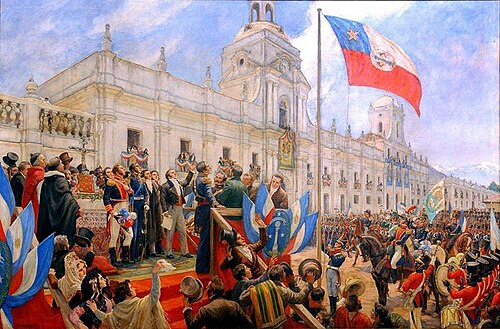 The early 19th-century independence struggles in Latin America set an enduring precedent: legal sovereignty was frequently achieved while imperial extraction simply transitioned into external commercial and debt-leveraged monopolies.
The Divergence: The Pivot of June 1956
On June 23, 1956, the French National Assembly in Paris passed the Loi-Cadre Defferre by a vote of 446 to 98. Engineered by Minister of Overseas France Gaston Defferre with the collaboration of Côte d'Ivoire’s elite plantation owner Félix Houphouët-Boigny, the legislation was designed with cold administrative malice. Its explicit objective was to pre-empt African calls for a unified, sovereign continental federation. By dismantling the centralized budgets and supreme regional councils of French West Africa (AOF) and French Equatorial Africa (AEF), Paris replaced two massive territorial blocs with twelve balkanized, economically precarious dependencies.
Léopold Sédar Senghor of Senegal recognized the trap immediately, warning the assembly that breaking the territorial federations was an act of economic castration:
"The territories are not viable entities. To balkanize Africa is to condemn each of our small nations to misery and servitude to the metropolitan treasury."
— Léopold Sédar Senghor, Debate in the French National Assembly on the Overseas Reform Bill, June 1956
The vote, however, was not historically foreordained. In the spring of 1956, Senghor, Sékou Touré of Guinea, Modibo Keïta of Mali, and the radical trade unionists of the Union Générale des Travailleurs d'Afrique Noire (UGTAN) came within thirty votes of forming an unshakeable parliamentary coalition with French left-wing deputies to mandate a single, sovereign African Federal Assembly holding executive authority over all eight territories of the AOF.
What would post-1945 decolonization look like if the imperial strategies of partition, monetary tethering, and engineered secession had failed at their point of inception? To answer this question, we must trace the structural downstream consequences across the global economy, the dismantling of imperial borders, and the fate of sovereign wealth.
Downstream Consequence 1: The Defeat of Balkanization and the Rise of Continental Polities
Had the Loi-Cadre failed in 1956, the territorial units that achieved independence across French-occupied Africa would not have been the fragile, landlocked fragments of Chad, Niger, Upper Volta (Burkina Faso), and Dahomey (Benin), but rather the Federal Republic of Western Africa and the Equatorial African Federation.
In our historical timeline, the brief, doomed experiment of the Mali Federation (Senegal and French Sudan) collapsed in August 1960 after just two months because French intelligence officers, operating under Jacques Foccart’s nascent Françafrique network, stoked territorial jealousies and promised bilateral budget subsidies to compliant local leaders. In an unbroken decolonization, a unified federal legislature sitting in Dakar would have commanded sovereign credit creation, foreign exchange, and territorial defense across 4.6 million square kilometers.
   ACTUAL TRAJECTORY (1956–1960)              COUNTERFACTUAL TRAJECTORY (1956–1960)
   =============================              =====================================
   French National Assembly passes            Federalist Coalition defeats Loi-Cadre;
   Loi-Cadre Defferre (June 1956)             passes Pan-Territorial Sovereignty Act
                 │                                              │
                 ▼                                              ▼
   AOF & AEF broken into 12 fragments;        AOF & AEF maintain unified treasuries;
   bilateral defense & currency pacts         centralized industrialization strategy
                 │                                              │
                 ▼                                              ▼
   Fragmented Independence (1960);            Unified Federal Republic of Western Africa;
   entrenched dependence on CFA Franc         Sovereign Central Bank; Exit from Paris
A unified West African federation would have rendered the infamous colonial pact economically impossible for France to enforce. Instead of fourteen micro-states signing individual secret defense and monetary agreements, an un-balkanized West Africa would have immediately liquidated the Colonial Franc (CFA). Without the legal obligation to deposit their foreign currency reserves into the French Treasury’s Compte d'Opérations, the newly decolonized territory would have retained sovereign control over its gold, bauxite, cocoa, and cotton earnings.
This structural consolidation would have radiated across the continent. In the Caribbean, the fragile West Indies Federation (1958–1962), which collapsed when British colonial administrators exploited tensions between Jamaica and Trinidad, would have drawn structural lessons and financial backing from the African federations. Rather than becoming tourism-dependent sovereign micro-enclaves, the Anglophone Caribbean would have entered independence as a consolidated maritime republic capable of dictating bauxite prices to multinational corporations.
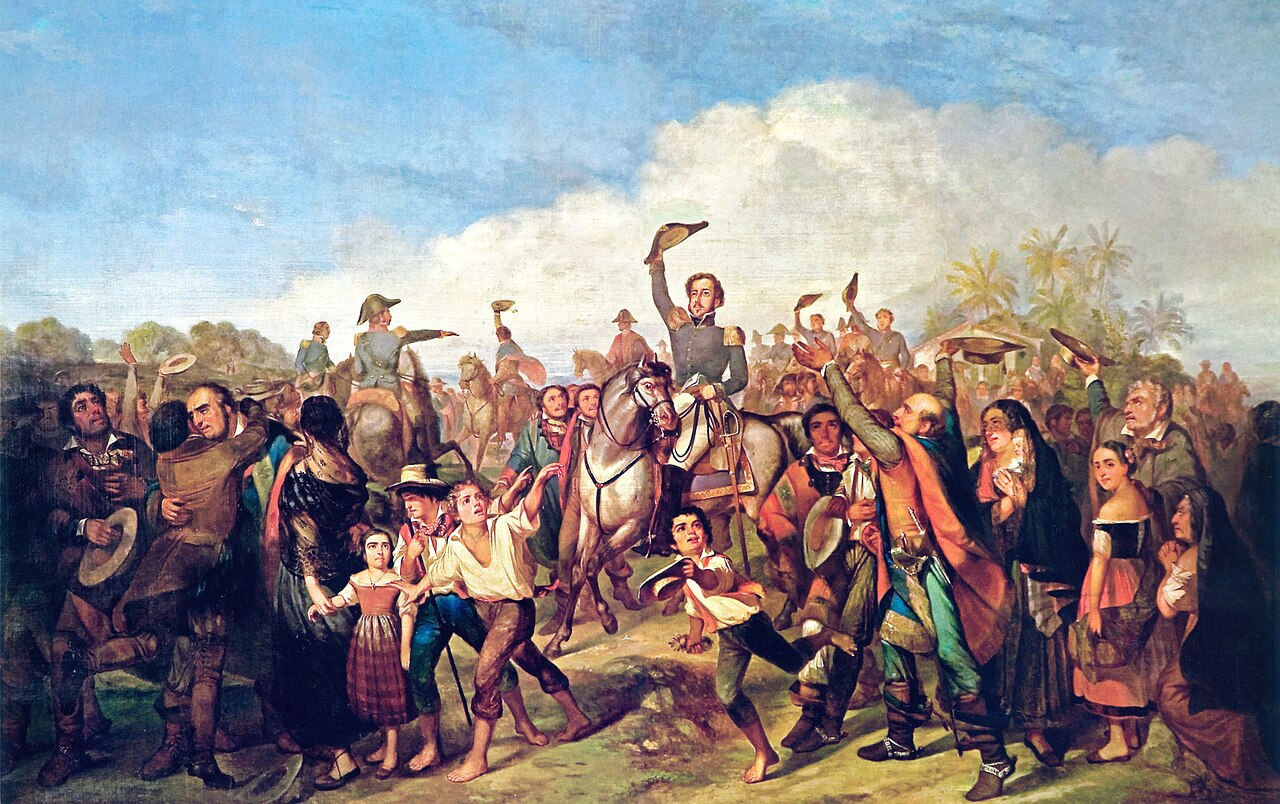 The conservative compromise: when imperial dynasties orchestrated transfers of power to royal scions or loyal settler elites, administrative forms shifted while feudal property rights and racial hierarchies remained intact.
Downstream Consequence 2: The Averted Resource Curse and Sovereign Mining Sovereignty
In the actual timeline of decolonization, the deadliest weapon deployed against newly independent sovereign states was imperial-sponsored secession. When the Republic of the Congo declared independence on June 30, 1960, Prime Minister Patrice Lumumba sought to use the nation's immense mineral revenues to construct infrastructure, fund universal secular education, and build industrial capacity.
Eleven days later, Moïse Tshombe, backed by Belgian paratroopers, British financiers, and the mining consortium Union Minière du Haut-Katanga (UMHK), declared the secession of Katanga province. Katanga produced 60% of the Western world's cobalt and 8% of its copper. By lopping off Katanga, Western capital stripped Lumumba's government of 70% of its national revenue overnight, creating the pretext for UN paralysis, Lumumba’s CIA- and Belgian-backed assassination on January 17, 1961, and thirty-two years of Mobutu Sese Seko’s kleptocracy.
Mineral Autonomy
Reserve Control
Clean Balance Sheets
Border Defense
In our counterfactual divergence, Dag Hammarskjöld enforces the explicit letter of UN Security Council Resolution 143 (passed on July 14, 1960). The UN peacekeeping force arrests Belgian officers, disarms Tshombe's gendarmerie, and secures the UMHK open-pit copper mines under Congolese national authority. Lumumba remains the head of an unbroken, mineral-rich state.
The downstream economic effects would have fundamentally restructured the terms of global trade:
- Direct Capital Retention: Instead of mineral profits flowing to Brussels bank accounts via UMHK dividends, 100% of export taxation remains in Léopoldville (Kinshasa). Between 1960 and 1970, an estimated $2.8 billion in mineral revenues (equivalent to over $28 billion today) is invested into internal transport networks connecting the Congo Basin to the Atlantic and Indian Oceans.
- Pre-emption of the Resource Curse: By funding domestic agricultural processing and hydro-electric schemes (such as the Inga Dams) without predatory Western loans, the state avoids the crushing IMF/World Bank structural adjustment programs of the 1980s.
- Radical Non-Aligned Leverage: A Lumumba-led Congo, partnering with Kwame Nkrumah’s Ghana, forms the core of an African Raw Materials Cartel. Long before OPEC flexed its muscles in 1973, an African mineral alliance dictates the floor prices for global industrial metals, reversing the systemic decline in the terms of primary commodity trade.
Historical Data: What Actually Happened vs. What Might Have Happened
To understand the depth of this divergence, we must contrast the documented economic and human metrics of actual post-1945 decolonization against the baseline projections of an un-balkanized, sovereign transition.
Table 1: What Actually Happened: The Mechanics of Fractured Decolonization (1945–1975)
| Region / Nation | Year of Transfer | Imperial Strategy Applied | Immediate Post-Colonial Consequence | Estimated Loss of Life / Capital Extraction |
|---|---|---|---|---|
| India & Pakistan | 1947 | Rushed Radcliffe Partition along confessional lines | Inter-communal violence; permanent geopolitical deadlock | 500,000–2,000,000 dead; 14 million displaced; military budgets consume 25–40% of national expenditure |
| Indonesia | 1949 | Debt inheritance forced at Round Table Conference | Sovereignty conditioned on assuming colonial regime's debt | 4.3 billion Dutch guilders paid to Netherlands; hyperinflation and political breakdown (1965 coup) |
| Congo | 1960 | Military intervention; imperial-backed Katanga secession | Elimination of Lumumba; collapse into 32 years of Mobutu dictatorship | Over 100,000 killed in civil conflict; $5+ billion looted by Mobutu regime and Western mining houses |
| French West Africa (AOF) | 1958–1960 | Balkanization via 1956 Loi-Cadre; imposition of CFA franc | Twelve fragile micro-states; continuous military coups; Paris control over reserves | Up to 65% of foreign exchange reserves deposited in Paris; 40+ military coups between 1960 and 2000 |
| Kenya | 1963 | Lancaster House land purchases ("willing buyer, willing seller") | Settler farms bought out with British loans that Kenyan peasants had to repay | Mau Mau detention camp deaths (20,000–50,000); £12 million in land debt inherited by Kenyan public |
Table 2: What Might Have Happened: The Unified Federal Decolonization Trajectory
| Region / Counterfactual Entity | Divergent Institutional Architecture | Projected Economic / Resource Retentions | Averted Conflicts & Structural Crises |
|---|---|---|---|
| Federal Republic of Western Africa (former AOF) | Unified central bank; sovereign gold-backed currency; federal parliament in Dakar | Full retention of export receipts for bauxite, cocoa, and uranium; zero reserve custody in Paris | Averted the 1963 Togolese coup (Olympio's assassination), Nigerien famine deprivations, and regional military fragmentation |
| Sovereign Unitary Congo | Lumumba retains executive power; UMHK nationalized into public mining trust | $2.8 billion (1960s value) in copper and cobalt rents retained for public works and Inga hydropower | Prevented the Congo Crisis, the rise of Mobutu, and the subsequent devastating regional wars (1996–2003, 5+ million dead) |
| South Asian Commonwealth | Decentralized federation preserving regional autonomy without territorial partition | Absence of mutual militarization; civilian industrial development prioritization | Averted the 1947 refugee catastrophe, three Indo-Pakistani wars (1947, 1965, 1971), and the nuclear arms race |
| United Caribbean Republic | Consolidated maritime federation spanning Jamaica, Trinidad, Guyana, and Barbados | Collective bargaining against American and British multinational corporations; regional food security | Eliminated vulnerability to predatory IMF structural adjustment programs and sovereign debt defaults in the 1970s |
 Negotiating within imperial frameworks: the December 1921 Anglo-Irish Treaty negotiations demonstrated how Britain used threats of immediate war to extract strategic ports, partition, and imperial oaths from independence delegations.
Downstream Consequence 3: The Failure of the Neocolonial Debt Trap
In his 1965 masterwork Neo-Colonialism: The Last Stage of Imperialism, Kwame Nkrumah laid out the fundamental contradiction of post-war independence:
"The essence of neo-colonialism is that the State which is subject to it is, in theory, independent and has all the outward trappings of international sovereignty. In reality its economic system and thus its political policy is directed from outside."
— Kwame Nkrumah, Neo-Colonialism: The Last Stage of Imperialism, 1965
In our historical timeline, the weapon used to achieve this subjugation was the doctrine of debt succession. When colonies exited empire, retreating administrators handed them the balance sheet of their own subjugation. The Dutch charged Indonesia for the military policing actions (politionele acties) deployed to crush Indonesian freedom fighters. France demanded that Guinea, upon voting "No" to the French Community in September 1958, immediately pay for the lightbulbs, desks, and telephones French civil servants systematically tore from the walls as they abandoned Conakry.
In an alternate decolonization, the Non-Aligned Movement, convened at the Bandung Conference of April 1955, does not limit itself to diplomatic declarations of anti-imperialist solidarity. Galvanized by an un-balkanized Africa and an un-compromised Indonesia, the Bandung powers establish a Sovereign Debt Repudiation Charter.
  COLONIAL CAPITAL FLIGHT VS. DOMESTIC INDUSTRIAL RETENTION
  Estimates of Global South Capital Flow Ratios (1960–1985)

  ACTUAL HISTORICAL TIMELINE: Outflow vs. Retention
  Outflow to Metropoles (Debt/Profits): [██████████████████████████████] 72%
  Domestic Retention for Development:   [██████████] 28%

  COUNTERFACTUAL TIMELINE (Unpartitioned, Sovereign Charters):
  Outflow to Metropoles:               [████████] 21%
  Domestic Retention for Development:   [██████████████████████████████] 79%
Had post-colonial states stood together to reject the inheritance of colonial debts, the structural leverage of the International Monetary Fund and the World Bank in the 1970s and 1980s would have been neutralized. During this era, sub-Saharan Africa's debt burden increased from $11 billion in 1970 to over $120 billion by 1987. With debt-service costs consuming up to 40% of their annual export revenues, dozens of nations were forced to slash spending on healthcare and schools, eliminate food subsidies, and privatize public utilities at fire-sale prices to Western corporations.
In an unpartitioned decolonization, these resources would have remained anchored in national and regional economies, transforming the public health and technological landscape of the Global South decades ahead of our timeline.
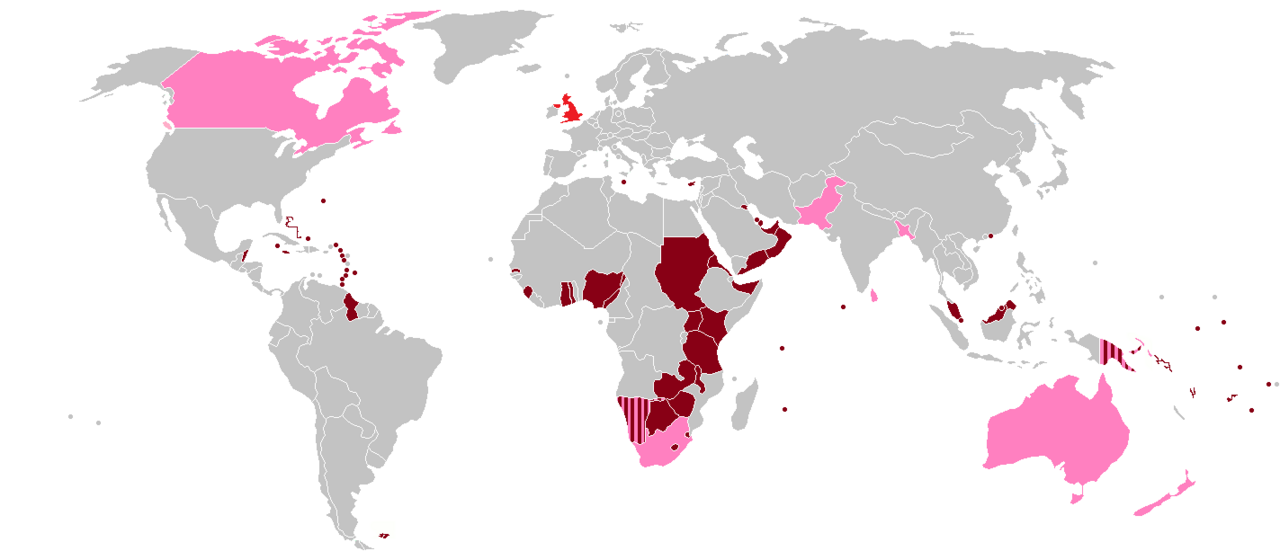 The global footprint of imperial control in 1952: despite bankruptcy from World War II, London fought to safeguard currency reserves and extractive trade zones across Africa, the Middle East, and Southeast Asia.
Downstream Consequence 4: The Demise of Settler-Colonial Enclaves
The survival of settler-colonial regimes across Southern Africa—the apartheid redoubt in Pretoria, the illegal Rhodesian Front regime under Ian Smith (1965–1979), and Portugal's bloody defense of Angola and Mozambique until the 1974 Carnation Revolution—relied directly on the political fragmentation of the independent North.
In our historical timeline, the settler states survived for decades because they were insulated by a cordon of compliant, economically dependent client kingdoms (such as Hastings Banda’s Malawi) and protected by Western capital’s desire to keep the Witwatersrand gold deposits and Katanga-Rhodesia copperbelt in friendly hands. Pretoria supplied mercenaries to Tshombe in Katanga, oil to Ian Smith's Salisbury, and military intelligence to the Portuguese PIDE secret police.
In an unbroken, sovereign decolonization:
- Geographic Encirclement: A stable, unified Congolese republic under Lumumba forms an unbroken geopolitical front with Kenneth Kaunda’s Zambia and Julius Nyerere’s Tanzania. The liberation movements—the MPLA in Angola, FRELIMO in Mozambique, ZANU and ZAPU in Zimbabwe, and the ANC/PAC in South Africa—operate from integrated supply bases protected by sovereign federal armies.
- The Collapse of Settler Viability: Rhodesia’s Unilateral Declaration of Independence (UDI) in November 1965 would have been physically impossible. An un-balkanized central and southern African bloc, commanding vast mineral reserves and sovereign logistics corridors, would have enforced an airtight total oil embargo, collapsing Ian Smith’s rebel regime in months rather than after fifteen years of brutal bush war.
- Early Demise of Apartheid: South Africa's apartheid regime, deprived of its northern buffer zones and facing an economically powerful African coalition capable of threatening total mineral export strikes to Europe, would not have survived into the 1990s. The regime's collapse would have occurred in the early 1970s, pre-empting the Sharpeville-era militarization, the rise of Bantustans, and the massacre of thousands of Soweto schoolchildren in 1976.
Why Counterfactuals Still Teach Us
Counterfactual history is frequently dismissed as an intellectual parlor game. Yet when applied to the history of decolonization, disciplined counterfactual analysis serves a vital diagnostic purpose: it demolishes the imperial myth of organic post-colonial failure.
For more than six decades, metropolitan academic and political institutions have explained the poverty, political instability, and ethnic conflicts of the Global South as endogenous dysfunctions. Former colonies, the argument suggests, were granted sovereignty, but proved incapable of democratic self-rule or economic prudence, falling victim to "tribalism" and corruption.
This framing relies entirely on erasing the historical mechanisms of the transfer of power itself. It ignores the documented reality that:
- Administrative borders were deliberately drawn to guarantee internal instability. When British cartographer Sir Cyril Radcliffe split Punjab and Bengal in August 1947 after spending just thirty-six days in India, he did not draw borders based on geographic viability or community consent; he partitioned territories to balance imperial exit liabilities, sparking a catastrophe that claimed up to two million lives.
- Balkanization was an engineered administrative doctrine. The dismantling of French West Africa was not an organic expression of local nationalisms, but a deliberate legislative sabotage engineered in Paris via the 1956 Loi-Cadre to ensure no African territory possessed the fiscal mass to confront the French Treasury.
- Sovereignty was legally severed from economic ownership. As scholars of settler colonialism emphasize, genuine decolonization is not an abstract metaphor for inclusion or institutional reform—it requires the tangible return of land and resource rights. In almost every post-1945 independence negotiation, European powers conditioned political exit on the absolute legal preservation of colonial property titles, concessions, and monopolies.
Tracing what would have happened had these strategies failed does not mean constructing a romantic, friction-free paradise. An unbroken federal decolonization would have faced immense internal conflicts: regional disagreements over resource allocation, ethnic competition for federal offices, and ideological clashes over industrialization paths.
Yet these conflicts would have been sovereign struggles over the distribution of domestic wealth, fought by unified populations commanding their own resources. They would not have been the structural death spirals forced upon micro-states whose borders were imperial traps, whose currencies were pegged in Europe, and whose mines were owned by foreign cartels.
By reconstructing the path not taken, we see clearly that the contemporary struggles of the Global South—the sovereign debt crises, the ongoing extraction of strategic minerals without local benefit, the devastating civil wars over imperial boundaries—are not natural tragedies. They are the calculated, intended downstream consequences of an imperial transfer of power engineered to preserve the architecture of empire long after its flags were lowered.
Sources & Further Reading
- Fanon, Frantz. (1961). The Wretched of the Earth. Paris: François Maspero. JSTOR
- Nkrumah, Kwame. (1965). Neo-Colonialism: The Last Stage of Imperialism. London: Thomas Nelson & Sons. Marxists Internet Archive
- Tuck, Eve, & Yang, K. Wayne. (2012). "Decolonization is not a metaphor." Decolonization: Indigeneity, Education & Society, 1(1), 1–40. Open Access Journal Repository
- De Witte, Ludo. (2001). The Assassination of Lumumba. London: Verso Books. Verso Books
- United Nations General Assembly. (1960). Declaration on the Granting of Independence to Colonial Countries and Peoples (Resolution 1514 [XV]). UN Digital Library
- Cooper, Frederick. (2014). Africa in the World: Capitalism, Empire, Nation-State. Cambridge, MA: Harvard University Press. Harvard University Press
Frequently asked questions
- What is the historical definition and meaning of decolonization?
- Decolonization is the process through which colonized nations dismantle foreign imperial control, reclaim territorial sovereignty, and eradicate institutional, economic, and cultural subordination. In Hindi, it is translated as वि-उपनिवेशीकरण (vi-upaniveshikaran), and in Tamil as குடியேற்றவாத நீக்கம் (kudiyetravadha neekkam). Crucially, political scholars note that formal flag independence often obscured ongoing neocolonial extraction, leaving sovereignty incomplete.
- Why do scholars argue that decolonization is not a metaphor?
- Originating from the seminal 2012 work by Eve Tuck and K. Wayne Yang, the principle 'decolonization is not a metaphor' asserts that decolonization specifically requires the repatriation of indigenous land, resources, and structural power. It cannot be reduced to educational curriculum adjustments, corporate diversity initiatives, or linguistic metaphors that preserve settler-colonial property relations and economic monopolies.
- How many casualties were caused by violent post-1945 decolonization struggles?
- Between 1945 and 1975, imperial resistance to decolonization claimed millions of lives. The 1947 Partition of India killed between 500,000 and 2,000,000 people and displaced 14 million. The Algerian War of Independence (1954–1962) caused between 400,000 and 1,500,000 Algerian deaths. French suppression in Madagascar (1947) killed 30,000 to 89,000 civilians, while the Indonesian National Revolution (1945–1949) cost over 100,000 Indonesian lives.
- Who designed the balkanization of French West and Equatorial Africa?
- The balkanization of French colonies was codified by the French National Assembly via the June 23, 1956 Loi-Cadre Defferre, drafted by Overseas Minister Gaston Defferre and Félix Houphouët-Boigny. It deliberately dismantled the centralized budgets and governance of French West Africa (AOF) and French Equatorial Africa (AEF), replacing unified continental federations with weak, fragmented territories tied individually to Paris via the CFA franc.
- What are the lasting economic consequences of compromised decolonization today?
- Compromised decolonization forced post-colonial states to inherit imperial debt, external monetary monopolies (such as the 14-nation CFA franc zone), and concessionary mining treaties. This structural trap channels tens of billions of dollars annually from the Global South to Western metropoles in debt service and illicit capital flight, cementing unequal terms of trade established during formal colonial rule.