Sovereignty on Paper: Debt, Extraction, and the Machinery of Neocolonialism
An investigative analysis into how modern debt, trade arbitration, and resource ownership perpetuate imperial extraction under legal sovereignty.
Key takeaways
- Neocolonialism defines a system where formal political sovereignty is granted while economic control, resource extraction, and monetary policy remain bound to foreign capital.
- Bilateral Investment Treaties (BITs) and Investor-State Dispute Settlement (ISDS) tribunals allow foreign multinationals to sue sovereign states for billions over environmental and tax regulations.
- Sub-Saharan Africa suffers an estimated net financial outflow of over $88 billion annually due to illicit capital flight and trade misinvoicing, outpacing total inbound foreign aid.
- Odious sovereign debt, often originated through structural adjustment conditionalities, forces Global South nations to allocate up to 40% of government revenue strictly to debt service rather than public infrastructure.
- Contemporary resistance involves legal pushes at the UN to reform multilateral debt architecture and unilateral cancellations of investor-state concession agreements.
Formal sovereignty across the post-colonial world was won through blood and treaty, yet the architecture of financial subordination, asymmetrical trade treaties, and resource concessions ensured that the physical departure of imperial administrators did not interrupt the outward flow of sovereign wealth.
Key facts
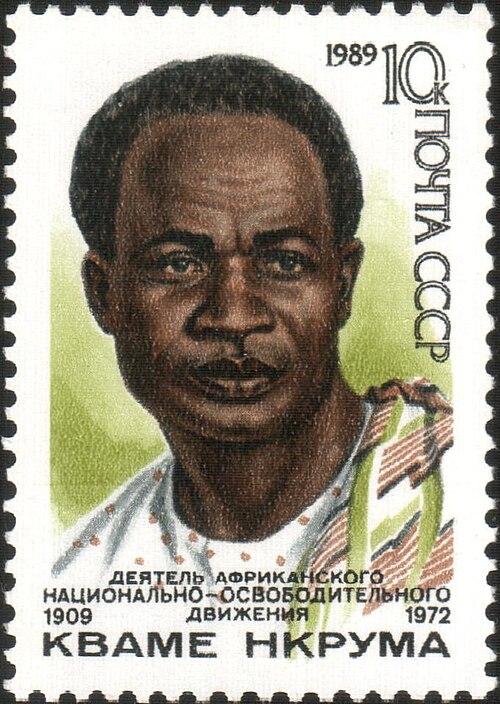
- Origins: Systematised by Kwame Nkrumah in his 1965 work Neo-Colonialism: The Last Stage of Imperialism, defining conditions where a state is formally independent but its economic system and political policy are directed from the outside.
- Capital Hemorrhage: Sub-Saharan Africa loses an estimated $88.6 billion annually to illicit financial flows, misinvoicing, and sovereign wealth extraction—vastly outstripping incoming official foreign aid.
- Enforcement Tribunals: Over 3,000 Bilateral Investment Treaties (BITs) empower corporate tribunals like the International Centre for Settlement of Investment Disputes (ICSID) to penalise sovereign nations for regulating public utilities and mining deposits.
- Modern Expansion: The geopolitical apparatus is no longer the exclusive preserve of Western empires; emerging powers, private equity, and mercenary security companies now deploy parallel mechanisms of territorial and economic co-optation.
Dateline: The Hague and Nairobi, 2024–2026
In recent international litigation, an escalating series of legal battles over sovereign resource control, debt restructuring, and arbitration awards has brought the mechanisms of indirect dominion back into the jurisprudence of international courts. Across the mid-2020s, a cohort of developing nations began systematically contesting decades-old Bilateral Investment Treaties (BITs) that subordinate democratic legislation to external commercial arbitration.
In parallel, United Nations committees advancing the resolution for an international, legally binding tax convention at the General Assembly in late 2024 marked a direct revolt by African, Latin American, and Asian states against the Organisation for Economic Co-operation and Development (OECD)—the body that has historically dictated international taxation rules to favor metropolitan capitals. What is unfolding is not an academic debate over vocabulary, but a real-time judicial and financial counter-offensive against the structures that preserved colonial extraction under the banner of sovereign independence.
What happened: The persistence of indirect dominion
When Ghana gained independence in 1957, followed by the sweep of formal decolonisation across Africa, Southeast Asia, and the Caribbean through the 1960s, imperial powers surrendered their flags and governorships. They did not, however, liquidate their holding companies, cancel their concessionary rights, or surrender their management of global commodity prices.
The concept of neocolonialism emerged to define precisely this dissonance: the condition wherein a nation possesses all the outward trappings of international sovereignty—a seat at the United Nations, a national anthem, a constitution, and border guards—while its economic lifeblood, primary resources, and monetary systems remain directed by external interests.
"The essence of neo-colonialism is that the State which is subject to it is, in theory, independent and has all the outward trappings of international sovereignty. In reality its economic system and thus its political policy is directed from outside."
— Kwame Nkrumah, Neo-Colonialism: The Last Stage of Imperialism, 1965
The operational machinery operates across three primary vectors:
- Sovereign Debt and Structural Adjustment: The issuance of loans denominated in foreign reserve currencies (primarily US dollars and euros) conditioned upon the deregulation of domestic markets, the suppression of public wages, and the liquidation of state enterprises.
- Unequal Terms of Trade and Commodity Dependency: Global South economies are confined to exporting untransformed raw materials (lithium, crude oil, cocoa, bauxite) while importing high-margin processed goods, creating structural trade deficits that necessitate permanent borrowing.
- Supranational Legal Shielding: The investor-state dispute settlement (ISDS) framework, housed within bodies such as the World Bank's International Centre for Settlement of Investment Disputes (ICSID), which enables transnational corporations to sue sovereign states for lost future profits when those states raise minimum wages, pass environmental restrictions, or revise mineral royalties.
The historical context: Constructing post-colonial dependency
The retreat of formal empire was never an unscripted capitulation; it was an intensely planned structural transition. As independence movements made direct administrative occupation militarily and diplomatically untenable, colonial administrations systematically privatised state-held colonial assets into the hands of metropolitan corporations, established foreign-reserve requirements, and saddle nascent post-colonial governments with the colonial state’s own sovereign debts.
The Debt Engine: From Decolonisation to the Washington Consensus
Between 1970 and 1980, sovereign debt in the developing world exploded, fostered by low global interest rates and aggressive Western bank lending of petrodollars. When the US Federal Reserve under Paul Volcker hiked nominal interest rates to above 20% in 1979 to arrest domestic inflation, the repayment costs for the Global South spiked catastrophically overnight.
The ensuing Third World Debt Crisis of the 1980s served as the delivery mechanism for the "Washington Consensus". Under Structural Adjustment Programs (SAPs) directed by the International Monetary Fund (IMF) and the World Bank, access to bridge financing required post-colonial states to dismantle developmental programs.
| Era / Treaty | Mechanism of Influence | Target Economic Sector | Lasting Consequence for Sovereign States |
|---|---|---|---|
| Post-1945 Accords | Imperial Debt Transference | Public Treasuries & Reserves | Newly formed nations forced to inherit debt incurred by colonial regimes to subjugate them. |
| 1960s–1970s Concessions | Long-Term Resource Leases | Hydrocarbons, Mining, Agriculture | Royalties capped at single digits; metropolitan firms retained 100% processing rights abroad. |
| 1980s–1990s SAPs | IMF/World Bank Loan Conditionalities | Healthcare, Education, State Utilities | Destruction of public infrastructure; mandatory fire-sale privatisation of state-owned entities. |
| 2000s–Present BITs | Investor-State Dispute Settlement (ISDS) | Environmental Policy, Taxation, Labor | Private tribunals award billions against states attempting to raise royalty rates or protect land. |
Net Resource Transfers: Global South to External Creditors (1975–2025)
Values in Billions USD (Adjusted for Inflation / Comparative Net Flows)

Year | Net Direction of Wealth
----------------------------------------------------------------------
1975 | [+$18B inbound]   ==================>
1985 | [-$36B outbound]  <====================================
1995 | [-$52B outbound]  <====================================================
2005 | [-$98B outbound]  <==========================================================================================
2015 | [-$140B outbound] <========================================================================================================================
2025 | [-$210B outbound] <======================================================================================================================================================
The Architecture of Commercial Law: How ISDS Silences Reform
While popular discourse focuses on public institutions like the IMF, the legal core of neocolonialism in the 21st century is private arbitration. Over 3,300 bilateral investment treaties, signed predominantly between high-income and low-income nations, include ISDS provisions. Under these clauses:
- Foreign companies bypass sovereign national courts entirely.
- Arbitrators—drawn from a small pool of international corporate lawyers—meet in closed-door sessions in Washington, London, or Paris.
- Rulings are strictly based on whether state policy diminished the investor's "legitimate expectations" of profit, completely disregarding domestic human rights covenants, clean water access, or local environmental destruction.
When the government of Pakistan attempted to deny an open-pit copper and gold concession to foreign mining consortium Tethyan Copper Company at Reko Diq due to local environmental and revenue concerns, an ICSID panel ruled against Pakistan in 2019, levying an unprecedented $5.97 billion fine—equivalent to almost the entirety of an emergency IMF bailout loan the country had just acquired.
Who benefits / who loses: The global supply chain ledger
The extraction engine functions through a closed financial loop where low-income states assume ecological damage, underpaid labor, and resource depletion, while intellectual property, refining markups, and ultimate capital accumulation accrue in financial centers.
| Country / Sector | Commodity Extracted | Primary Export Destination | Local Retention of Final Retail Value | Primary Financial Beneficiaries |
|---|---|---|---|---|
| Democratic Republic of Congo (Cobalt) | Unrefined Cobalt Hydroxide | China, European Union, USA | Less than 3% | Global battery manufacturers, tech conglomerates, mineral traders. |
| Ivory Coast & Ghana (Cocoa) | Raw Cocoa Beans | Western Europe, North America | Less than 6% | Transnational confectionery cartels, commodities trading houses. |
| Papua New Guinea (Timber) | Raw Round Logs | East Asia | Less than 8% | Offshore-registered logging conglomerates, foreign paper mills. |
| Zambia (Copper) | Raw & Blister Copper | Global smelters | Less than 5% (net tax) | Multinationals registered in low-tax jurisdictions (Switzerland, British Virgin Islands). |
"The colonialist had merely to unpack his bags and settle in; the neo-colonialist must keep his bags packed and operate through proxy hands, financial cables, and legal injunctions."
— Walter Rodney, How Europe Underdeveloped Africa, 1972

Beyond the West: The Multipolar Expansion of Extraction
A critical limit of early neocolonial analyses was the assumption that metropolitan control would indefinitely belong only to former North Atlantic empires. The reality of the 2020s is multipolar.
In the Central African Republic and Mali, the expulsion of French military forces was accompanied not by autonomous sovereignty, but by the entry of Russian private military companies such as Wagner (restructured under the Russian Ministry of Defence as Africa Corps). The operational paradigm remains structurally identical: access to gold, diamonds, and timber concessions in exchange for regime protection against internal rebellions.
Similarly, large-scale loan agreements for infrastructure across parts of Latin America and Africa financed by foreign state-backed lenders feature collateralisation of ports, railways, and primary commodity flows. While these loans often exclude the social austerity conditionalities historically demanded by the IMF, they enforce confidentiality clauses and concession rights that bind sovereign policy just as effectively.
What to watch next: Fractures in the system
The post-colonial settlement is facing structural resistance as sovereign nations test collective bargaining strategies and legal repudiation. Over the next three to five years, four fronts will determine whether neocolonial extraction can be sustained:
- The UN Framework Convention on International Tax Cooperation: Spearheaded by the African Union, this historic initiative aims to wrest control of global taxation rulemaking away from the Paris-based OECD. A sovereign tax body governed on a one-nation, one-vote basis at the UN would introduce binding regulations against trade mispricing, corporate transfer manipulation, and the tax havens where extracted wealth is hidden.
- Systematic Exit from ISDS and BIT Renegotiations: Following the lead of nations like Bolivia, South Africa, and Indonesia, a growing bloc of developing nations is systematically terminating old Bilateral Investment Treaties, rejecting the jurisdiction of the World Bank's ICSID, and requiring foreign corporations to settle disputes exclusively within domestic courts.
- Mandatory Domestic Mineral Processing: Countries including Indonesia (nickel), Zimbabwe (lithium), and Ghana (bauxite) have introduced export bans on raw, unprocessed ores. By legally mandating that mineral resources must be refined and value-added within national borders before export, these states are attempting to permanently break the historic colonial division of labor.
- Alternative Debt Financing and De-Dollarisation: The expanding scale of alternative bilateral lending, currency swaps denominated in non-reserve currencies, and calls for sovereign debt audits are challenging the monopoly of the Paris Club and Bretton Woods institutions.
The transition from physical colonialism to neocolonial extraction took decades to entrench through the manipulation of currency, corporate law, and the ledger book. Dismantling that architecture will require far more than changing the flags in capital cities; it demands the reclamation of legal authority over the soil, the water, and the debt agreements written to keep that soil in foreign hands.
Sources & further reading
- Nkrumah, Kwame. (1965). Neo-Colonialism: The Last Stage of Imperialism. Thomas Nelson & Sons, London. Marxists Internet Archive.
- Rodney, Walter. (1972). How Europe Underdeveloped Africa. Bogle-L'Ouverture Publications. Verso Books Edition.
- United Nations Conference on Trade and Development (UNCTAD). (2020). Tackling Illicit Financial Flows for Sustainable Development in Africa. UNCTAD Publications.
- International Centre for Settlement of Investment Disputes (ICSID). (2019). Tethyan Copper Company Pty Limited v. Islamic Republic of Pakistan (Case No. ARB/12/1). ICSID Case Database.
- Amin, Samir. (1976). Unequal Development: An Essay on the Social Formations of Peripheral Capitalism. Monthly Review Press. JSTOR Reference.
Frequently asked questions
- What is neocolonialism and who coined the term?
- Neocolonialism describes the indirect political, financial, and military control of formally sovereign nations by former colonial powers, foreign corporations, and international financial institutions. While early usages emerged post-1945, Ghana's first president Kwame Nkrumah codified the definition in his 1965 book Neo-Colonialism: The Last Stage of Imperialism, arguing that political independence without economic self-determination produces an illusion of freedom while imperial extraction accelerates.
- What are the primary economic mechanisms of neocolonial control?
- The system operates primarily through sovereign debt conditionalities enforced by the IMF and World Bank, unequal terms of trade where raw commodities are exported cheaply and refined goods imported at a premium, and Investor-State Dispute Settlement (ISDS) courts. Under ISDS, multinational companies sue developing governments in private arbitrations to block environmental protections, labor reforms, or resource nationalization.
- How much wealth is drained from developing countries under this system?
- According to the United Nations Conference on Trade and Development (UNCTAD), Africa loses approximately $88.6 billion annually in illicit capital flight, trade misinvoicing, and unrecorded resource transfers. Total net financial transfers from the Global South to external creditors regularly exceed $200 billion per year, completely eclipsing the roughly $160 billion provided in gross Official Development Assistance.
- Why is the concept of neocolonialism contested or criticized by some economists?
- Orthodox market economists argue that the term 'neocolonialism' deflects accountability away from domestic corruption, autocratic governance, and policy failure within postcolonial nations. Critics also claim that viewing all foreign direct investment as exploitative ignores legitimate technology transfer and economic development, while modern defenders emphasize that imperial debt architecture and asymmetrical legal frameworks severely constrain democratic choices regardless of internal governance.
- What actions and legal reforms are being pursued today to dismantle neocolonial structures?
- Global South coalitions, led by the African Union and the Group of 77 at the United Nations, are pushing for a binding UN Framework Convention on Sovereign Debt and International Tax Cooperation to strip power from the Paris Club and OECD. Domestically, countries are renegotiating bilateral investment treaties, terminating concession treaties that forfeit raw mineral royalties, and expanding regional trade settlement mechanisms away from the US dollar and euro.