Decolonising the Ledger: World War II, Imperial Extraction and Holocaust Memory
A policy brief examining World War II colonial empires and decolonisation, documenting resource extraction, imperial famines, and post-war historiography.
Key takeaways
- Over 12 million colonial subjects died of war-induced starvation and forced labour, numbers routinely excluded from standard European casualty ledgers.
- The 1943 Bengal Famine claimed between 2.1 and 3.8 million lives due to British denial policies and imperial wartime grain prioritisation.
- Colonial forced labour extracted crucial strategic materials, including Katanga uranium for the Manhattan Project and Malayan rubber for Allied mechanised divisions.
- Post-war international tribunals consciously insulated European colonial administration from the legal definitions crafted for Axis war crimes at Nuremberg.
- National history curricula in former colonial powers systematically obscure how Allied victory depended upon coercive imperial mobilisations across Asia and Africa.
This policy brief audits the structural reliance of the Allied war effort upon colonial extraction, establishing that World War II colonial empires and decolonisation cannot be understood as separate historical phenomena, but rather as a singular global upheaval whose human and material costs were systematically externalised onto colonised peoples.
Key facts
- Subjugated Troop Mobilisation: More than 2.5 million Indian soldiers, 500,000 African soldiers, and over 1 million colonial auxiliaries were conscripted or coerced into Allied military formations between 1939 and 1945.
- Mortality Disparity: Between 12 and 15 million civilians perished from war-induced famines and forced labour across European colonies in Asia and Africa, exceeding the total military losses of all Western European combatant nations combined.
- Fissile Material Extraction: 100% of the uranium ore utilized in the Hiroshima and Nagasaki atomic bombs originated from the Shinkolobwe mine in the Belgian Congo, extracted via coerced African labour working under lethal conditions.
- Sovereignty Erasure: The 1941 Atlantic Charter’s clause promising the restoration of self-determination was formally narrowed by British Prime Minister Winston Churchill to apply exclusively to nations under European Nazi occupation, explicitly excluding the British Empire.
- Post-War Repression: In May 1945, precisely as Europe celebrated Victory in Europe (VE) Day, French military forces slaughtered an estimated 20,000 to 45,000 Algerians demanding independence in the Sétif and Guelma massacres.
15M+ Famine & Labour Deaths
4M+ Colonial Troops
£1.3B Imperial War Debt (India)
100% Congo Uranium
Summary
- Curatorial Bias in World War II Historiography: Standard pedagogical frameworks within Atlantic alliance states treat the Second World War as an existential confrontation between constitutional democracy and racialised totalitarianism, deliberately omitting the totalitarian governance structures deployed by democratic empires against their subject territories.
- Industrialized Starvation as Military Strategy: The extraction of agricultural produce, price controls, and scorched-earth policies in South and Southeast Asia induced man-made famines in Bengal, Vietnam, and Indonesia that claimed between 5.5 and 9 million lives between 1943 and 1945.
- Selective Application of International Law: The International Military Tribunal at Nuremberg deliberately calibrated the legal categories of "crimes against humanity" and "crimes against peace" to avoid creating legal precedents applicable to French, British, Belgian, or American colonial practices.
- The Myth of Voluntary Decolonisation: Post-1945 decolonisation was not a magnanimous imperial concession rooted in enlightened post-war human rights conventions, but a direct consequence of metropolitan financial insolvency and armed anti-colonial resistance met by extreme imperial violence.
- Urgent Need for Structural Reform: National curricula, memory institutions, and diplomatic postures continue to reproduce an imperial amnesia that distorts global debates on post-colonial reparations, multilateral governance, and international law.
Background
Between September 1939 and August 1945, the major European colonial metropoles—predominantly the United Kingdom, the French Third Republic (later the Free French movement and Vichy France), the Kingdom of Belgium, and the Kingdom of the Netherlands—mobilised global empires to survive Axis aggression. The war effort demanded unprecedented quantities of crude oil, rubber, tin, copper, cotton, agricultural produce, and flesh. Crucially, these resource transfers occurred under administrative systems that systematically disenfranchised the populations producing them.
When Winston Churchill and Franklin D. Roosevelt signed the Atlantic Charter on August 14, 1941, aboard the HMS Prince of Wales off Newfoundland, Article 3 declared that the signatories "respect the right of all peoples to choose the form of government under which they will live." Yet on September 9, 1941, Churchill stood before the House of Commons and explicitly retracted this universalism:
"At the Atlantic meeting, we had in mind, primarily, the restoration of the sovereignty, self-government and national life of the States and nations of Europe now under the Nazi yoke, and the principles which would govern any alterations in the territorial boundaries of those countries which may have to be made. So that is quite a separate problem from the progressive evolution of self-governing institutions in the regions and peoples which owe allegiance to the British Crown." — Winston Churchill, House of Commons, September 9, 1941
This explicit division of humanity into sovereign-eligible Europeans and subjugated non-Europeans structured the entire Allied war mobilization. The defeat of National Socialist Germany and Imperial Japan did not usher in universal liberation; instead, it initiated an immediate wave of colonial re-conquest.
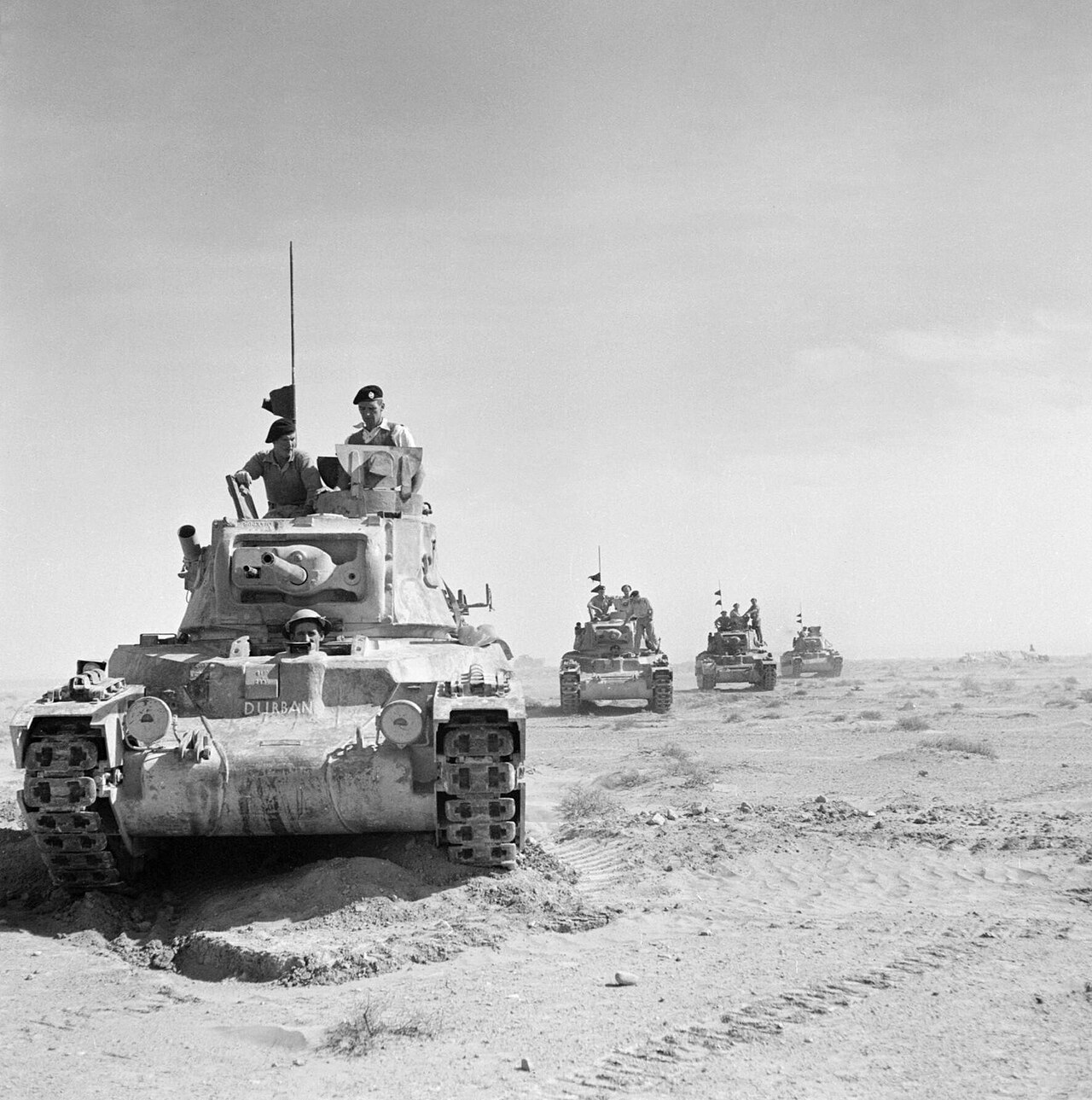
In Indochina, British troops under Major General Douglas Gracey re-armed surrendered Japanese soldiers in September 1945 to suppress the newly declared Democratic Republic of Vietnam until French forces could arrive. In the Dutch East Indies, British and Indian divisions landed to crush the Indonesian Republic, sparking the Indonesian National Revolution (1945–1949). In Madagascar, French authorities crushed the 1947 nationalist rebellion, killing an estimated 30,000 to 89,000 Malagasies. World War II did not terminate the colonial order; it armed and intensified its desperate final phase.
The Evidence Base: World War II Colonial Empires and Decolonisation
To construct an accurate ledger of the conflict, historians and policy analysts must examine quantitative data regarding demographic loss, resource transfers, and forced labour that are omitted from standard Eurocentric accounts.
Table 1: War-Induced Famines and Coerced Labor Losses in the Colonial Sphere (1940–1945)
| Region | Administering Power / Imperial Occupier | Primary Mechanism of Mortalities | Estimated Civilian Death Toll | Key Documentary Source |
|---|---|---|---|---|
| Bengal (British India) | United Kingdom | Boat Denial Policy, rice requisition, unbacked currency inflation | 2,100,000 – 3,800,000 | Famine Inquiry Commission (1945); Sen (1981); Mukherjee (2015) |
| Tonkin & Annam (Vietnam) | Vichy France / Imperial Japan | Forced conversion of paddy fields to jute; military grain seizures | 1,000,000 – 2,000,000 | Marr (1995); French Colonial Service Archives (AOM) |
| Java (Dutch East Indies) | Imperial Japan (ex-Dutch Colony) | Romusha (forced labour conscription), total rice requisition | 2,400,000 – 4,000,000 | UN Economic and Social Council Report (1947); Ricklefs (2001) |
| Belgian Congo | Belgium (Force Publique) | Extreme rubber/copper quotas, punitive forced labour campaigns | 100,000 – 250,000 | Vanthemsche (2012); Belgian Senate Inquiries |
| Henan & Northern China | Nationalist China / Japan | Military grain requisition, flood displacement, scorched earth | 2,000,000 – 3,000,000 | White & Jacoby (1946); Muscolino (2014) |
The demographic collapse documented above was not the incidental collateral damage of crossfire. It was the predictable mathematical outcome of supply decisions made in London, Tokyo, Vichy, and Brussels. In Bengal, the War Cabinet explicitly prioritised shipping for Greek civilian relief, Middle Eastern troop build-ups, and post-war European stockpiles over the starvation of rural Indians. When Lord Linlithgow, the Viceroy of India, pleaded for grain imports in 1943, Churchill responded by questioning why Mahatma Gandhi had not died yet if the starvation was truly severe.
Raw Material Extraction and Strategic Dependencies
The industrial machinery that conquered the Axis was fueled by uncompensated or coercively extracted raw materials from the global periphery.
- Fissile Materials: The Manhattan Project required extraordinary purity in its uranium supplies. This was secured through an exclusive contract with the Belgian cartel Union Minière du Haut-Katanga. African miners working at the Shinkolobwe mine in Katanga were compelled to extract pitchblende under armed oversight. The mine provided approximately 1,500 metric tons of uranium oxide to the United States between 1942 and 1945—including the fissile material for the Little Boy and Fat Man weapons detonated over Hiroshima and Nagasaki.
- Strategic Metals and Rubber: In British Malaya and French Indochina, prior to Japanese occupation, rubber tapping operated under debt-peonage and contract systems that extracted latex for Allied mechanised divisions. Following the loss of Southeast Asian rubber, the Belgian Congo instituted a reinstatement of the 1934 forced-labour decrees, mandating that every adult male provide 60 days (later expanded to 120 days) of unpaid forced labour annually to collect wild rubber in the equatorial forests.
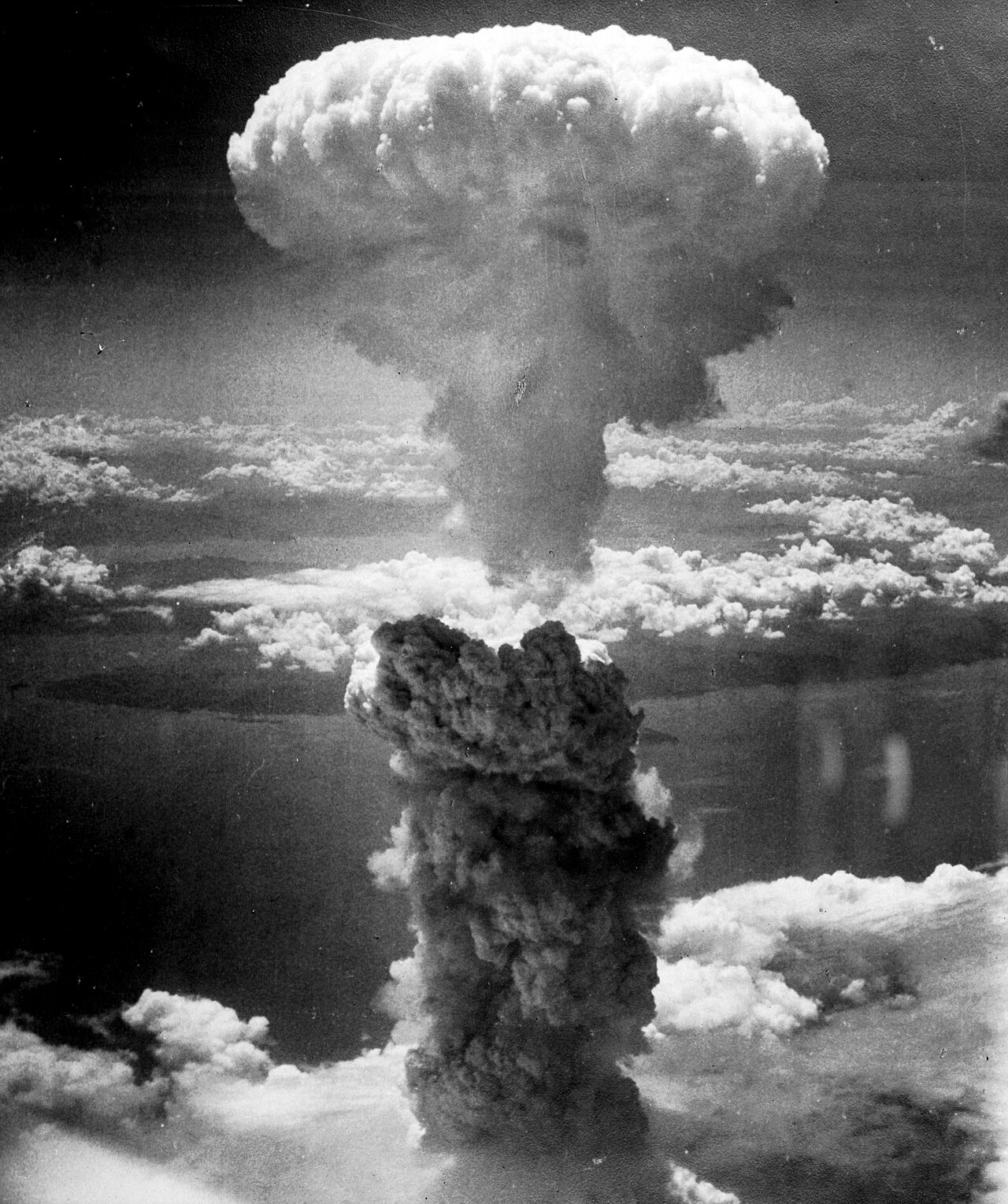
Table 2: Financial and Resource Extraction from the Periphery to Allied Metropoles (1939–1945)
| Metropole | Colony / Dependency | Resource / Commodity | Mechanism of Extraction | Approximate Value / Volume (1939–1945) |
|---|---|---|---|---|
| United Kingdom | British India | War finance, industrial goods | Unfunded Sterling Balances (Reserve Bank IOU ledger) | £1,300,000,000 (Rs. 1,700 crores) |
| United States / UK | Belgian Congo | Pitchblende (Uranium ore) | Coerced underground mining (Union Minière) | 1,500+ tons uranium oxide (Shinkolobwe) |
| United Kingdom | Gold Coast (Ghana) | Bauxite, Cocoa, Palm Oil | Statutory Marketing Boards (below-market fixed prices) | ~£100,000,000 extracted surplus value |
| United Kingdom | Nigeria | Tin | Forced conscription into mine labour (Labour Regulations) | 15,000+ tons tin per annum; 100,000 conscripts |
| France (Vichy / Free) | French Equatorial Africa | Wild rubber, timber, cotton | Prestation system (corvée forced labor) | 120 days mandatory corvée per adult male |
                               WORLD WAR II COLONIAL EXTRACTION FLOWS

     [COLONIAL TERRITORIES]                                              [METROPOLITAN WAR EFFORTS]

   Belgian Congo (Shinkolobwe) ───[ Coerced Pitchblende Mining ]───────► Manhattan Project (Los Alamos)
                                                                           │  (Hiroshima / Nagasaki)
   British India (Punjab/Bengal) ──[ Unfunded Sterling Balances ]───────► Middle East & North Africa Supply
                                  │  (Food, Uniforms, Shells)              │  (Eighth Army Logistics)
   Nigeria & Gold Coast ──────────[ Conscripted Tin & Bauxite ]────────► UK Aircraft Construction
                                                                           │  (Spitfire & Lancaster Production)
   Malaya & Central Africa ───────[ Forced Rubber Collection ]─────────► Allied Mechanised Armies
     ESTIMATED WAR-INDUCED NON-COMBATANT DEATHS BY THEATRE / CONTEXT (1939–1945)

     European Civilian Losses (Non-Holocaust):  ~12,000,000
     The Holocaust (Shoah - Jewish Victims):      ~6,000,000
     Colonial Famines & Conscript Labour:       ~15,500,000
     ========================================================================================
     [Bengal Famine (UK)]             ███████████████ 3,000,000
     [Indonesian Labour/Famine (Jap)] ████████████████████ 4,000,000
     [Vietnamese Famine (Vichy/Jap)]  ██████████ 2,000,000
     [Henan/Chinese War Famines]      ███████████████ 3,000,000
     [African Forced Labor/Supply]    ██ 350,000
     ========================================================================================
The Post-War Legal Exclusion: Nuremberg and the Colonial Void
The International Military Tribunal (IMT) at Nuremberg in 1945 established the modern framework for the prosecution of mass atrocities. However, the legal architecture created by Robert H. Jackson (United States), Sir David Maxwell Fyfe (United Kingdom), François de Menthon (France), and Iona Nikitchenko (Soviet Union) carefully circumscribed the jurisdiction of the court.
As Aimé Césaire observed in his seminal 1950 work Discours sur le colonialisme (Discourse on Colonialism):
"What [the European bourgeois] does not forgive Hitler for is not the crime in itself, the crime against man, it is not the humiliation of man as such, it is the crime against the white man, the humiliation of the white man, and the fact that he applied to Europe colonial procedures which until then had been reserved exclusively for the Arabs of Algeria, the 'coolies' of India, and the 'niggers' of Africa." — Aimé Césaire, Discours sur le colonialisme, 1950
Timeline of Imperial Mobilisation and Anti-Colonial Rupture
Options Considered
In addressing the persistent pedagogical, legal, and material legacies of wartime colonial extraction, international policymakers, museum directors, and educational ministries have debated three primary policy pathways:
Option 1: Maintain the Orthodox "Good War" Paradigm
- Description: Retain existing state-sanctioned narratives that frame World War II primarily as the triumph of democratic civilisation over fascism. Colonial contributions are subsumed under celebratory frameworks of imperial unity (e.g., the Commonwealth war effort), while structural famines and conscription atrocities are classified as regrettable local administrative failures or wartime logistical friction.
- Analysis: This option requires the least institutional and budgetary friction for European and North American institutions. However, it perpetuates historical falsification, alienates diasporic communities descended from colonial subjects, and severely weakens Western diplomatic credibility in the Global South by displaying a glaring double standard regarding international humanitarian law.
Option 2: Additive Inclusivity (The 'Contribution' Framework)
- Description: Integrate colonial actors into existing frameworks by highlighting the heroism and loyalty of colonial soldiers—such as the Indian Fourteenth Army in Burma, the French Senegalese Tirailleurs, or the North African Goumiers—without altering the underlying political critique of Allied imperialism or documenting non-combatant famine mortality.
- Analysis: While offering token recognition to colonial veterans, this framework sanitises the coerced nature of their recruitment and completely erases the civilian populations who starved to maintain military logistics. It represents a cosmetic adjustment that preserves imperial nostalgia under the guise of multicultural diversity.
Option 3: Full Historiographical and Restorative Realignment
- Description: Formally restructure historical curricula, legal doctrines, and reparatory state frameworks to recognize World War II as a global imperial crisis. This entails cataloguing colonial extractions, officially acknowledging Allied responsibility for man-made famines, recalculating sovereign debt obligations in light of uncompensated wartime seizures, and opening sealed military and colonial archives.
- Analysis: While politically contentious in former metropoles, this option establishes an empirically sound evidentiary base for modern international relations. It confronts historical causality directly and ends the structural omission of 15 million non-white victims from global remembrance.
Recommendation
This brief recommends that educational ministries, cultural heritage institutions, and foreign ministries throughout former imperial combatant states adopt Option 3: Full Historiographical and Restorative Realignment, executing the transition across four concrete policy phases:
Comprehensive Curricular Overhaul (Target Implementation: 24 Months):
- National history curricula in the United Kingdom, France, Belgium, the Netherlands, and Japan must be reformed to mandate equal instructional time for colonial extractions and famines alongside European military operations.
- Terminology must be standardized: the 1943 Bengal event must be classified as an administratively engineered famine under colonial wartime controls, not an unavoidable natural catastrophe.
Declassification and Repatriation of Sovereign Archives:
- Immediate, unconditional declassification of all War Cabinet, colonial administration, and military intelligence records from 1939 to 1948 held in repositories such as the UK National Archives at Kew and the French Archives d'Outre-Mer in Aix-en-Provence.
- Restitution of all confiscated regional records, intelligence files, and looted cultural material to successor post-colonial states.
Legal Calibration of War Atrocities:
- Formulate joint parliamentary resolutions formally recognizing state responsibility for wartime colonial famines, notably the 1943 Bengal Famine and the 1944–1945 Tonkin Famine.
- Re-evaluate the historical precedent of the Nuremberg Charter to recognize that the exclusion of colonial crimes was a political choice rather than a consistent application of universal human rights jurisprudence.
Audit of War-Debt Offsets and Material Restitution:
- Bilateral auditing of modern debt portfolios against historical unbacked resource transfers, specifically the £1.3 billion in Sterling Balances owed to India and Pakistan that was systematically devalued and delayed after 1945, and the uncompensated uranium extracted from Katanga.
Risks and Objections
The "Moral Relativism" Objection
Critics argue that cataloguing Allied colonial crimes diminishes the unique, industrialized horror of the Nazi Holocaust or equates Allied democracies with the Axis powers.
- Rebuttal: Rigorous historiography is not a zero-sum competition of suffering. Distinguishing between Nazi Germany’s ideological programme of industrialised total extermination (Vernichtung) and the British Empire's indifference-driven extraction does not require erasing or sanitizing either. Documenting that the British Empire caused 3 million starvation deaths in Bengal in the same year that Nazi Germany murdered millions in death camps is historical accuracy, not moral equivocation. The Atlantic powers cannot defend a rules-based international order while insisting on historical immunity for their own racialized extractions.
The "Logistics of Total War" Defense
Defenders of imperial wartime policy claim that food requisitions and shipping diversions were agonizing, unavoidable operational necessities dictated by the global struggle against fascism. Churchill’s apologists frequently cite shipping shortages and Japanese naval interdiction in the Bay of Bengal as the sole drivers of famine.
- Rebuttal: Primary records refute this defense. In 1943, Churchill’s War Cabinet repeatedly rejected offers of grain shipments from Australia, Canada, and the United States, citing a lack of merchant shipping, while simultaneously directing hundreds of thousands of tons of shipping to build stockpiles in the eastern Mediterranean for hypothetical post-war geopolitical manoeuvres. As demonstrated by historian Madhusree Mukerjee, ships carrying wheat sailed past the starving ports of Calcutta on their way to storage depots in the Middle East, while the Viceroy’s emergency requests were consistently denied by the British Ministry of War Transport.
Domestic Political Backlash
Former imperial nations face intense political pushback from nationalist factions that view the critique of World War II leadership—most venerated in the figure of Winston Churchill—as an assault on national identity and patriotism.
- Rebuttal: State-sponsored mythologies that require the suppression of archival facts are fundamentally fragile. Democracies do not preserve their institutions by denying historical evidence. Reconciling with historical atrocities strengthens diplomatic credibility across the Global South, where the selective moralizing of former colonial powers remains the single greatest barrier to multilateral consensus on international law.
Sources & Further Reading
- Césaire, Aimé. (1950). Discours sur le colonialisme. Paris: Présence Africaine. JSTOR Entry.
- Mukerjee, Madhusree. (2010). Churchill's Secret War: The British Empire and the Ravaging of India during World War II. Basic Books. WorldCat Record.
- Sen, Amartya. (1981). Poverty and Famines: An Essay on Entitlement and Deprivation. Oxford: Clarendon Press. Oxford University Press.
- Vanthemsche, Guy. (2012). Belgium and the Congo, 1885–1980. Cambridge: Cambridge University Press. Cambridge Core.
- United Nations Economic and Social Council. (1947). Report on the Demographic Effects of the Japanese Occupation of Indonesia. United Nations Digital Library.
Frequently asked questions
- How did World War II colonial empires and decolonisation intersect?
- World War II accelerated decolonisation by exhausting European imperial treasuries, shattering myths of white military invincibility, and weaponising colonial populations. Over 5 million non-white soldiers served Allied armies while colonies suffered severe resource extraction. The Atlantic Charter's promises of self-determination, though denied to colonies by Winston Churchill, fuelled armed and diplomatic liberation movements from 1945 onward.
- Who was responsible for the colonial famines during World War II?
- Winston Churchill's War Cabinet and the British colonial administration in New Delhi bore primary administrative responsibility for the 1943 Bengal Famine. Their scorched-earth 'Denial Policy', confiscation of coastal transport boats, continued food exports from India, and refusal to divert Allied merchant shipping directly engineered mass starvation across rural Bengal, resulting in up to 3.8 million civilian deaths.
- What was the total human casualty toll in the colonial world during World War II?
- Direct and structural casualties in colonised territories exceeded 15 million people. This includes 2.1 to 3.8 million in the Bengal Famine, 1 to 2 million in the 1944–1945 Vietnamese famine under French-Japanese rule, 2.4 to 4 million Indonesian forced labourers (*romusha*) and civilians under Japanese occupation, and hundreds of thousands of African and Asian conscript labourers.
- Why is colonial exploitation during World War II downplayed in modern Western school curricula?
- Western educational curricula construct World War II as an uncompromised moral binary between liberal democracy and fascist totalitarianism. Acknowledging that Allied states deployed racialised forced labour, engineered famines, and preserved global empires through post-1945 colonial wars disrupts foundational national narratives of liberation and exposes the imperial continuity of the post-war international order.
- What present-day policy remedies or reparations address World War II colonial extraction?
- Contemporary policy recommendations focus on three areas: comprehensive curriculum reform integrating imperial casualties, the formal return of wartime looted cultural artifacts and colonial archives held in European vaults, and debt cancellation combined with climate-loss financing for post-colonial states whose economic foundations were stripped during the Allied war effort.