Did Britain Cause the Bengal Famine of 1943?
Yes. British wartime rule turned Bengal’s food crisis into a famine that killed about 3 million people through inflation, exclusion and failed relief.
Short answer
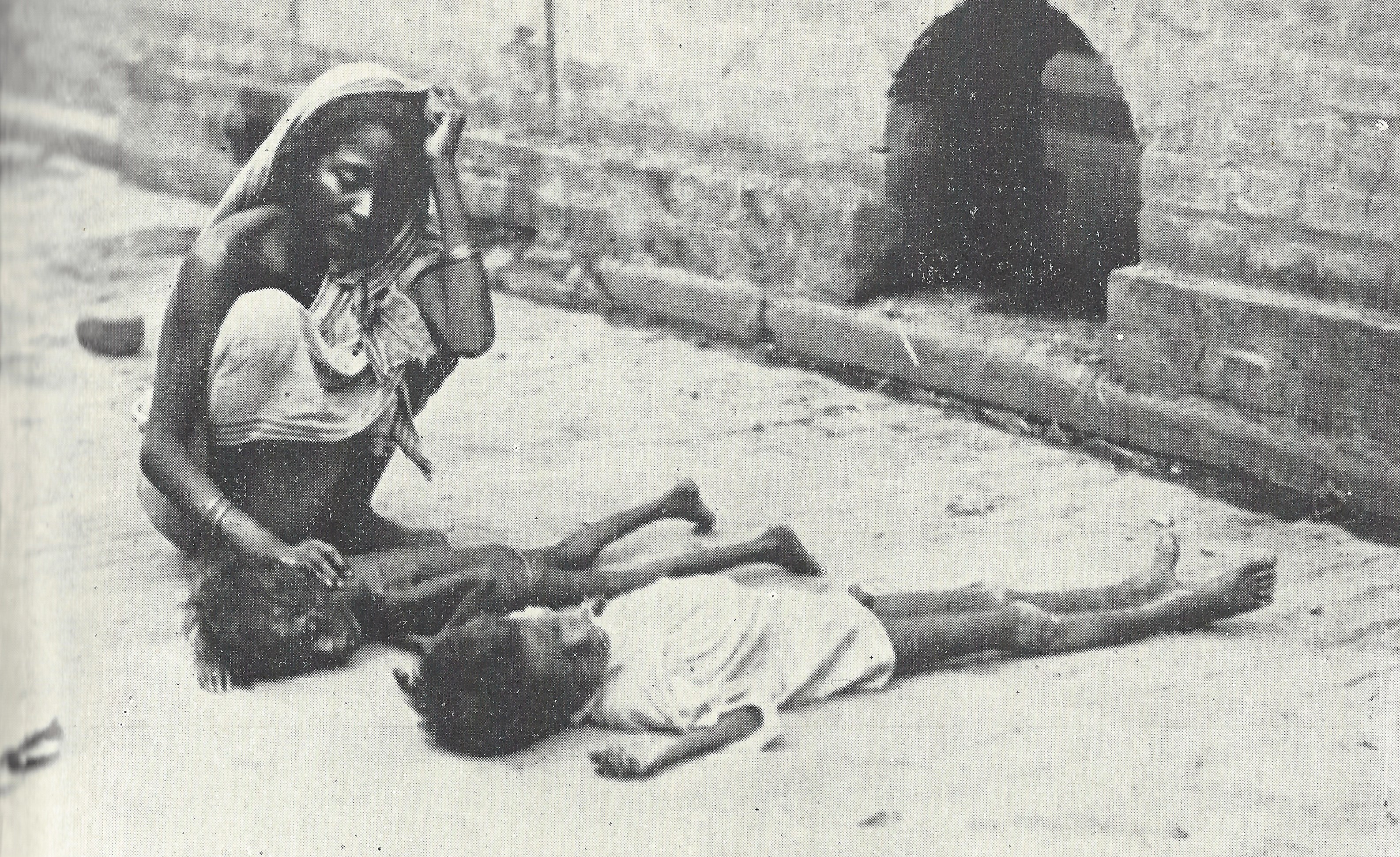
Yes. Britain bears primary responsibility for turning Bengal’s 1943 food crisis into a catastrophic famine. Japan’s conquest of Burma, cyclone damage and crop disease reduced supplies, but British wartime procurement, inflation, transport controls, “denial” policies and delayed relief made food inaccessible. The most widely cited official estimate is 1.5 million deaths in 1943, rising to about 3 million during 1943–1946 in later demographic research.
Key takeaways
- Britain bears primary responsibility because its wartime government controlled imports, shipping, procurement and relief while food access collapsed in Bengal during 1943.
- Published estimates range from 1.5 million deaths in 1943 to about 3 million across 1943–1946, depending on method and period.
- Burma’s loss, the October 1942 cyclone and crop disease reduced supplies, but colonial policy determined how scarcity and purchasing power were distributed.
- Most victims died from malaria and other diseases intensified by hunger, displacement, overcrowding and inadequate medical care during 1943–1944.
- The evidence supports institutional culpability and foreseeable neglect, not the simplistic claim that Churchill issued one explicit order to starve Bengal.
The short answer: British rule made mass death foreseeable and preventable
The Bengal famine was not caused by one order from London, nor simply by an absolute disappearance of rice. It emerged under the institutions of the British Empire, which controlled wartime trade, shipping, military procurement, interprovincial movement and Bengal’s ultimate political authority.
Burma normally supplied roughly 15% of India’s rice imports before Japan occupied it in 1942, according to the 1945 Famine Inquiry Commission. Bengal also suffered a cyclone on 16 October 1942, flooding and crop disease. These shocks mattered. They became famine because prices rose beyond the reach of rural laborers, fishermen, artisans and small cultivators while officials protected military and priority populations, underestimated mortality and resisted timely large-scale imports.
Amartya Sen’s entitlement analysis showed that Bengal’s total food availability in 1943 was not uniquely low compared with some non-famine years. Critics dispute his production series, but not the central fact that food remained available to those able to pay.
What British policy did
Four connected mechanisms drove the disaster:
- Wartime inflation and procurement. Military expenditure expanded rapidly after 1941. Government purchases and contracts increased demand while wages for many rural workers lagged behind rice prices. Speculators and hoarders worsened scarcity, but they operated inside a market the colonial state failed to stabilize.
- “Denial” policies. Anticipating Japanese invasion, authorities removed or destroyed surplus rice in vulnerable coastal districts and confiscated boats capable of carrying 10 or more people in 1942, according to the 1945 Famine Inquiry Commission. The boat-denial scheme impaired fishing, trade, evacuation and local transport.
- Fragmented trade and unequal protection. Provincial barriers restricted grain movement. Calcutta’s war industries, troops and politically important groups received greater protection than the countryside. Bengal’s provincial ministry was culpable, but overriding power rested with the Government of India and Britain’s War Cabinet.
- Late relief and imports. London rejected or failed to satisfy repeated shipping requests during 1943–1944. Global shipping was genuinely constrained, yet the War Cabinet allocated tonnage among competing military and civilian claims. Relief expanded only after widespread destitution and disease were visible.
“I hate Indians. They are a beastly people with a beastly religion.” — Winston Churchill, 1942, quoted in Leo Amery’s Diaries, entry for 9 September 1942.
The quotation documents Churchill’s racism; it is not, by itself, proof of causation. The stronger case lies in dated policy records, shipping decisions, price data and mortality. Explore the underlying figures in the archive’s data collection.
Evidence: food access collapsed, then disease killed
The famine’s first visible phase was starvation and migration, but malaria, diarrheal disease, cholera and smallpox caused much of the mortality. Malnutrition weakened immunity; displacement, overcrowding and inadequate health care multiplied deaths. Families sold land and tools, women and children entered Calcutta as destitute migrants, and trafficking and exploitation expanded.
The official inquiry concluded that Bengal’s government had failed to recognize and control the crisis:
“The catastrophe was one of the greatest that has befallen any people under British rule.” — Famine Inquiry Commission, 1945, Report on Bengal.
The commission criticized Bengal’s administration, traders and public panic, but operated within the colonial state and did not fully examine War Cabinet responsibility. Later archival work by Madhusree Mukerjee identified repeated British refusals and delays concerning grain and shipping in 1943–1944. Janam Mukherjee emphasized how war priorities and colonial social divisions determined who could eat and who was abandoned.
Death-toll estimates and what they measure
No single total captures the disaster because researchers use different periods, territories, baselines and methods. The broad published range often cited is 800,000–3.8 million deaths for 1943–1946, but about 3 million remains the common historical shorthand.
| Source | Publication year | Period measured | Estimate | Method or scope |
|---|---|---|---|---|
| Famine Inquiry Commission | 1945 | 1943 | 1.5 million | Excess deaths in Bengal; official and probably conservative |
| P. C. Mahalanobis, R. Mukherjea and A. Ghosh | 1946 | 1943–1944 | 2.1 million | Statistical survey and demographic reconstruction |
| Paul R. Greenough | 1982 | 1943–1946 | about 3 million | Extended mortality and social-demographic analysis |
| Cormac Ó Gráda | 2007–2015 | principally 1943–1944 | about 2–3 million | Historical-demographic synthesis; stresses disease and market failure |
| Utsa Patnaik | 2017–2018 | famine aftermath included | up to 3.8 million | Excess-mortality reconstruction using census trends |
These are not interchangeable counts. The 1945 official figure concentrates on 1943; Greenough’s 1982 total includes delayed deaths through 1946. Recording was weakest among homeless people and in rural districts, making precision impossible.
Who disputes British causation—and why
Few serious historians argue that colonial policy was irrelevant. The dispute concerns degree, intent and which decisions were decisive.
The 1945 Famine Inquiry Commission emphasized harvest damage, Burma’s loss, panic buying, hoarding and failures by Bengal’s provincial government. Economist Cormac Ó Gráda argues that severe wartime shortage, disrupted markets and epidemic disease complicate claims that exports or Churchill alone caused the famine. Tirthankar Roy places greater weight on war, environmental shocks, administrative fragmentation and Bengal’s weak provincial capacity.
Sen’s 1981 claim that famine occurred without a major aggregate food-availability decline has also been challenged. Mark Tauger argued in 2003 that brown-spot disease caused a larger rice-production fall than official statistics recorded. That correction would strengthen the scarcity explanation, but it does not absolve the state responsible for emergency imports, distribution and relief.
Claims that Churchill personally ordered Bengalis starved overstate the documentary record. Claims that Britain could do nothing because every ship was militarily indispensable understate evidence of discretionary allocation and repeated delay.
The defensible conclusion is institutional, not conspiratorial: British imperial priorities determined whose consumption was protected during a foreseeable civilian emergency.
What follows from the evidence
Responsibility operates at several levels. Japanese expansion and the 1942 cyclone helped initiate the emergency; traders, landlords and Bengal ministers contributed; disease produced many immediate deaths. But Britain possessed the sovereign power, imperial resources and final authority. It therefore bears primary political responsibility for prevention and relief.
This finding does not require proof that every death was intended. In famine history, culpability can rest on foreseeable consequences, discriminatory allocation, administrative neglect and refusal to change policy after mass suffering becomes known. The famine also exposes a structural fact about empire: Bengal produced revenue, soldiers and strategic goods, yet its poor had no enforceable claim on food.
The disaster accelerated distrust of British rule before independence and partition in 1947. It remains central to evaluating Churchill’s wartime record, colonial extraction and governmental duties during famine. See the archive’s broader histories of the British Empire, its dedicated Bengal famine account, and documented datasets.
Sources & further reading
- Amartya Sen, Poverty and Famines (Oxford University Press, 1981)
- Famine Inquiry Commission, Report on Bengal (Government of India, 1945), Internet Archive
- Paul R. Greenough, Prosperity and Misery in Modern Bengal (Oxford University Press, 1982)
- Janam Mukherjee, Hungry Bengal (Oxford University Press, 2015)
- Madhusree Mukerjee, Churchill’s Secret War (Basic Books, 2010)
- Cormac Ó Gráda, “Making Famine History,” Journal of Economic Literature (2007)
Frequently asked questions
- How many people died in the Bengal famine of 1943?
- The official Famine Inquiry Commission estimated 1.5 million excess deaths in Bengal during 1943. Mahalanobis, Mukherjea and Ghosh estimated 2.1 million for 1943–1944 in 1946, while Paul Greenough estimated about 3 million across 1943–1946 in 1982. A broad published range is 800,000–3.8 million, reflecting different periods, baselines and demographic methods.
- Did Winston Churchill deliberately cause the Bengal famine?
- No document shows Winston Churchill issuing a direct order to starve Bengal in 1943. However, his War Cabinet controlled shipping priorities and resisted or delayed requests for grain and transport during 1943–1944. Churchill’s recorded racist remarks illuminate official attitudes, but the case against Britain rests more securely on policy records, procurement, inflation, denial measures and inadequate relief.
- Was there enough food in Bengal in 1943?
- Amartya Sen argued in 1981 that Bengal’s aggregate food supply in 1943 was not exceptionally low and that collapsing purchasing power caused famine. Mark Tauger argued in 2003 that crop disease made the harvest deficit larger than official figures indicated. Either way, food remained available to protected consumers while millions of poor people lost the economic entitlement to obtain it.
- What was the British boat-denial policy in Bengal?
- In 1942, fearing Japanese invasion, British authorities confiscated or disabled boats generally capable of carrying 10 or more people in vulnerable Bengal districts. The policy sought to deny transport to an invading army, but it also damaged fishing, commerce and local grain movement. Alongside rice denial, inflation and trade controls, it reduced rural communities’ ability to survive the 1943 crisis.
- What actually killed victims of the Bengal famine?
- Starvation was only one cause. During 1943–1944, malnutrition weakened resistance to malaria, cholera, dysentery and other infections; displacement and overcrowding increased exposure; and health services were inadequate. Demographic studies therefore count excess mortality rather than starvation certificates alone. This explains why deaths continued after food availability improved and why estimates extending through 1946 exceed the 1945 commission’s figure for 1943.
Related chapters
Questions
- Did France Use Torture in Algeria?
- How Did the Berlin Conference Divide Africa?
- How Did the Dutch VOC Rule Indonesia?
- How Does Debt Keep Former Colonies Poor?
- How Is Racism Structured in the Present Day?
- How Many Indigenous People Died in the Americas After 1492?
- How Many People Died in the Congo Free State?
- How Many People Were Taken in the Atlantic Slave Trade?
- How Much Wealth Did Britain Extract from India?
Sources & further reading
CC BY 4.0 ·