How Many People Died in the Congo Free State?
About 10 million deaths is the best-known estimate for the Congo Free State, but incomplete records leave a defensible range of roughly 5–10 million.
Short answer
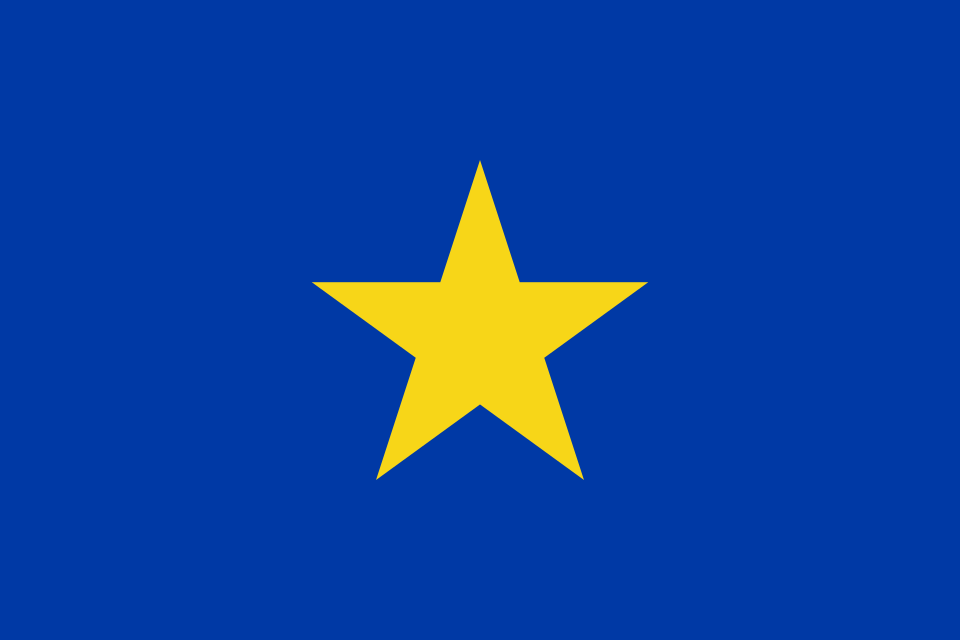
About 10 million people is the most widely cited estimate for deaths associated with King Leopold II’s Congo Free State between 1885 and 1908. No complete census or mortality register exists, so historians cannot establish an exact toll. Published estimates commonly range from roughly 5 million to 10 million, encompassing murder, starvation, disease, exhaustion and collapsing birth rates under forced-labour rule.
Key takeaways
- Around 10 million is the best-known estimate, while roughly 5–10 million is a more defensible range given the missing census evidence.
- The estimate covers demographic loss from killing, forced labour, starvation, disease, displacement and reduced births between 1885 and 1908.
- Leopold II privately ruled the Congo Free State for 23 years, from 1885 until Belgium annexed it in 1908.
- The 1904 Casement Report and 1905 Commission of Inquiry independently documented systematic killings, mutilation, hostage-taking and forced rubber collection.
- Uncertainty over the exact total does not undermine the extensive documentary evidence that Leopold’s extraction system caused mass mortality.
The short answer: approximately 10 million, with major uncertainty
The figure of 10 million deaths between 1885 and 1908 is best understood as a demographic estimate, not a body count. It broadly represents the possible reduction from a population estimated at about 20 million around 1880 to roughly 10 million by the first Belgian census in 1924, after allowing imperfectly for the years before and after Leopold’s rule. Adam Hochschild popularised this interpretation in King Leopold’s Ghost in 1998, describing a population loss of approximately one-half.
The defensible summary is therefore roughly 5–10 million excess deaths and missing people during, or resulting from, the Congo Free State system between 1885 and 1908. “Missing people” matters: demographic decline included direct killings and premature deaths, but also children never born because communities were displaced, women were held hostage, famine spread and fertility collapsed.
Leopold II personally controlled the Congo Free State from 1885 to 1908 through an absolute regime administered from Brussels. It was legally separate from Belgium until the Belgian state annexed it on 15 November 1908, making it the Belgian Congo within the wider Belgian Empire.
Why no exact death toll can be calculated
The Free State did not conduct a reliable territory-wide census during Leopold’s rule. The first Belgian colonial census in 1924, recording about 10 million inhabitants, came 16 years after annexation in 1908 and relied partly on estimates rather than modern enumeration. Estimates of approximately 20 million inhabitants around 1880 were themselves derived from travellers’ observations and population-density extrapolations.
Administrative evidence was also deliberately damaged. Shortly before Belgium assumed control in 1908, Leopold ordered Free State records burned. Consequently, historians triangulate from missionary diaries, concession-company accounts, official investigations, village surveys, testimony and later demographic returns.
The causes of death overlapped. The Force Publique and concession companies killed people during punitive expeditions and hostage-taking; forced rubber collection removed labour from farming; flight and village destruction produced hunger; and population displacement accelerated sleeping sickness, smallpox and other epidemics. Severed hands became documented evidence of coercion because soldiers were required to account for ammunition, although hands were also taken from living victims.
“The rubber from this district has cost hundreds of lives, and the scenes I have witnessed have been of such a nature that I can never forget them.” — British Vice-Consul Roger Casement, 1904, Report on the Administration of the Congo Free State
The Casement Report of 1904 documented killings, mutilation, hostage-taking and depopulation but did not calculate a national toll. The Congo Commission of Inquiry, appointed by Leopold in 1904 and reporting in 1905, corroborated systematic abuses. These records establish extensive atrocities, even though they cannot produce one exact total.
Comparing the principal estimates
Published totals differ because authors use different dates, baseline populations and definitions. Some estimate deaths; others estimate net population decline, which combines mortality, migration and births prevented by social collapse.
| Source | Publication year | Period or basis | Estimate |
|---|---|---|---|
| E. D. Morel, The Black Man’s Burden | 1920 | Decline under Leopold and early Belgian rule | Population reduced by about 50% |
| Belgian government commission cited in later scholarship | 1919 | Approximate decline since the late 19th century | Population reduced by about 50% |
| Jan Vansina, demographic reconstruction | 2010 | Equatorial Congo, especially 1880–1920 | Declines varied regionally; rejects one precise national count |
| Adam Hochschild, King Leopold’s Ghost | 1998 | Approximate halving from about 20 million | About 10 million lost |
| Encyclopaedia Britannica synthesis | updated through 2024 | Leopoldian Congo, 1885–1908 | As many as 10 million deaths |
| Common cautious historical range | 20th–21st-century synthesis | Excess mortality and demographic loss | Roughly 5–10 million |
The chart visualises estimates, not independently counted corpses. Regional studies show that losses were uneven: heavily exploited rubber districts and areas struck by war or epidemic could experience sharper decline than other regions.
Who disputes 10 million, and why
Few serious historians dispute that Leopold’s regime caused mass death. The argument concerns whether 10 million can be stated as a measured death toll. Belgian historian Jean Stengers, writing in 1989, accepted a grave demographic disaster but warned that uncertain precolonial population estimates made any exact national total speculative. Demographic historian Jan Vansina argued in 2010 that regional evidence supports severe decline while resisting a single Congo-wide number.
Some critics note that the decline continued after Belgian annexation in 1908, particularly through epidemic disease, making it difficult to assign every missing person exclusively to the Free State’s 23-year existence from 1885 to 1908. Others distinguish direct killing from indirect mortality and reduced fertility. Those are valid methodological cautions when made transparently.
The absence of a precise census does not mean the absence of mass death; it means the final total must be expressed as a range and tied to its assumptions.
Apologetic treatments go further, using uncertainty to suggest that the catastrophe itself is unproven. That conclusion is incompatible with the convergence of the 1904 Casement Report, the 1905 Commission of Inquiry, missionary records, company documents and population evidence. Disease was not an external alibi: forced movement, hunger, hostage-taking and the destruction of subsistence systems made epidemics deadlier. A responsible formulation neither presents 10 million as an audited count nor reduces documented colonial violence to an unknowable abstraction.
What follows from the evidence
The historical verdict does not depend on choosing between 5 million and 10 million. Under either estimate, the Congo Free State produced one of the largest demographic catastrophes of European colonial rule. Leopold’s government allocated territory to concession companies, imposed rubber and ivory quotas, used the Force Publique to enforce them and held families hostage to compel labour.
Responsibility was institutional and identifiable. Leopold II was sovereign and principal beneficiary; officials including Governor-General Théophile Wahis administered the system; the Anglo-Belgian India Rubber Company, known as ABIR, and the Société Anversoise extracted rubber through coercive concession regimes. International exposure by Congolese witnesses, missionaries, Roger Casement and E. D. Morel helped force annexation in 1908, but Belgian colonial rule continued until Congolese independence on 30 June 1960.
The most accurate concise answer remains: around 10 million is the best-known estimate, while approximately 5–10 million is the more defensible range. Any citation should explain that this includes demographic loss associated with violence, forced labour, famine, disease and falling births—not solely documented executions.
Sources & further reading
- Adam Hochschild, King Leopold’s Ghost (Macmillan)
- Roger Casement, Correspondence and Report from His Majesty’s Consul at Boma respecting the Administration of the Independent State of the Congo (1904)
- Encyclopaedia Britannica: Congo Free State
- David Van Reybrouck, Congo: The Epic History of a People (HarperCollins)
- Jan Vansina, Being Colonized: The Kuba Experience in Rural Congo, 1880–1960 (University of Wisconsin Press)
- Yale University Genocide Studies Program: Belgian Congo
Frequently asked questions
- Did 10 million people die in the Congo Free State?
- Possibly, but 10 million is a demographic estimate rather than a recorded body count. Adam Hochschild popularised it in 1998, drawing on estimates that Congo’s population fell from about 20 million around 1880 to about 10 million by 1924. Because both figures are uncertain, historians often use a cautious range of approximately 5–10 million.
- How did people die under King Leopold II?
- Between 1885 and 1908, Congolese people died through executions, punitive expeditions, mutilation, forced rubber labour, hostage-taking, famine, exhaustion and epidemic disease. Leopold II’s Force Publique and concession companies destroyed villages and disrupted food production. Reduced fertility and births also contributed to the estimated demographic loss of roughly 5–10 million.
- Was the Congo Free State a Belgian colony?
- Not formally between 1885 and 1908. It was King Leopold II’s privately controlled state, legally separate from Belgium and linked to it through his person. Belgium annexed the territory on 15 November 1908, renaming it the Belgian Congo. Belgian colonial rule then continued until independence on 30 June 1960.
- Why is there no exact Congo Free State death toll?
- No reliable territory-wide census was conducted during Leopold II’s rule from 1885 to 1908. Belgium’s first colonial census came in 1924 and was partly estimated. Leopold also ordered state records destroyed before annexation in 1908. Historians therefore reconstruct losses from regional surveys, missionary testimony, company records, official inquiries and later demographic data.
- Who exposed the atrocities in the Congo Free State?
- Congolese survivors supplied the essential testimony. Missionaries, journalists and campaigners transmitted evidence abroad. British Vice-Consul Roger Casement documented killings and coercion in his 1904 report, while E. D. Morel organised the Congo Reform Association in 1904. Leopold II’s own Commission of Inquiry confirmed abuses in 1905, helping force Belgian annexation in 1908.
Related chapters
Questions
- Did Britain Cause the Bengal Famine of 1943?
- Did France Use Torture in Algeria?
- How Did the Berlin Conference Divide Africa?
- How Did the Dutch VOC Rule Indonesia?
- How Does Debt Keep Former Colonies Poor?
- How Is Racism Structured in the Present Day?
- How Many Indigenous People Died in the Americas After 1492?
- How Many People Were Taken in the Atlantic Slave Trade?
- How Much Wealth Did Britain Extract from India?
Sources & further reading
CC BY 4.0 ·