Belgian Empire vs German Empire: A Colonial Comparison
Compare Belgian and German colonial rule: territories, forced labor, genocide, death tolls, racial ideology, extraction and paths to independence.
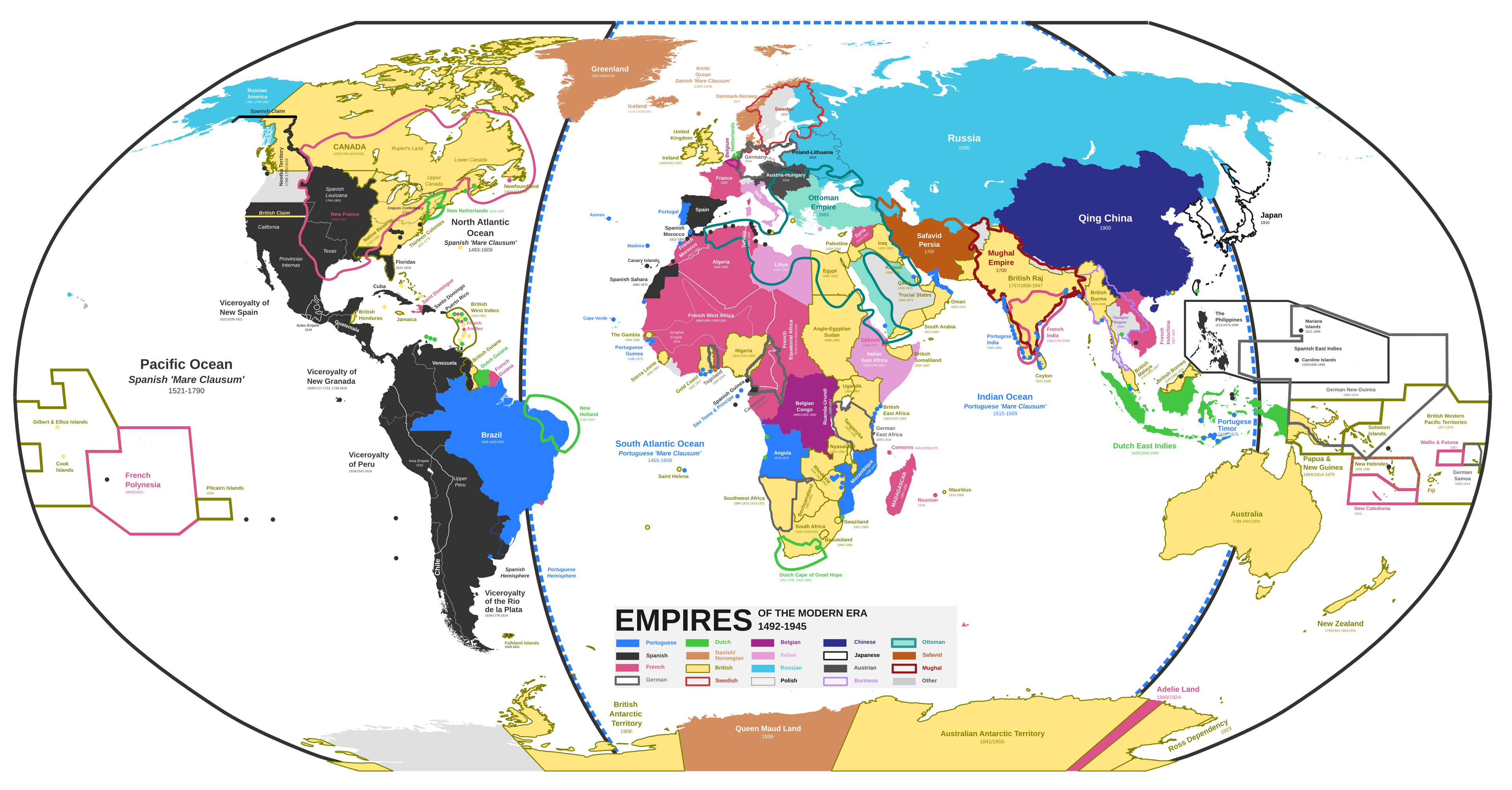
The Belgian empire differed from the German empire in duration, ownership and geographic concentration, but both imposed racial hierarchy, coerced labor and violent extraction on African societies. Belgium's principal colonies remained under Belgian control until 1960–1962; Germany lost its colonies in 1914–1919 after committing genocide and waging devastating wars of conquest.
Key takeaways
- Belgium's main African empire lasted until 1960–1962, while Germany's formal colonial empire ended through wartime defeat and the 1919 Treaty of Versailles.
- Both empires used racial hierarchy, forced labor, taxation, land seizure and military violence to redirect African resources toward European states and companies.
- German forces committed genocide against the Herero and Nama in 1904–1908, killing approximately 65,000 Herero and 10,000 Nama.
- Congo's often-cited 10 million loss for 1885–1908 is a demographic estimate popularized by Adam Hochschild in 1998, not a body count.
- Comparison clarifies shared colonial mechanisms without erasing major differences in legal structure, geography, chronology, settler presence and exterminatory intent.
Comparison at a glance
| Dimension | Belgian empire | German empire |
|---|---|---|
| Formal colonial period | Leopold II controlled the Congo Free State in 1885–1908; Belgium ruled the Belgian Congo in 1908–1960 and Ruanda-Urundi in 1922–1962. | The German colonial empire existed formally in 1884–1919, although Allied forces occupied most territories during 1914–1918. |
| Political structure | The Congo Free State was Leopold II's personal possession in 1885–1908; parliamentary Belgium annexed it in 1908. | Colonies belonged to the German Reich and were administered through imperial officials, chartered companies and military forces in 1884–1914. |
| Main African territories | Congo Free State/Belgian Congo and Ruanda-Urundi. | German South West Africa, German East Africa, Kamerun and Togoland. |
| Other territories | Belgium held concessions at Tianjin in 1902–1931; these were not equivalent in scale to its African colonies. | Germany held German New Guinea, Samoa, Pacific island groups and Kiautschou Bay before their wartime seizure in 1914. |
| Approximate colonial area | Belgian Congo covered about 2.345 million km² in 1908–1960; Ruanda-Urundi added about 54,000 km² in 1922–1962. | Germany's colonies covered roughly 2.95 million km² in 1914, according to standard historical statistical compilations. |
| Core extraction | Rubber and ivory dominated Leopoldian Congo in 1885–1908; copper, palm oil, cotton, diamonds and uranium expanded under Belgian rule in 1908–1960. | Plantation crops, cotton, rubber, sisal, minerals, land and labor were extracted through taxation, concessions and settler seizure in 1884–1914. |
| Signature mass violence | Congo Free State atrocities in 1885–1908: forced labor, hostage-taking, village destruction, killings and demographic collapse. | Herero and Nama genocide in 1904–1908; Maji Maji repression in 1905–1907. |
| Death estimates | Congo population loss in 1885–1908 has often been estimated at about 10 million by Adam Hochschild in 1998, drawing on earlier demographic work; historians including Jean Stengers stressed that missing censuses prevent a secure total. | About 65,000 of 80,000 Herero and 10,000 of 20,000 Nama died in 1904–1908, according to a 1985 UN report by Benjamin Whitaker; Maji Maji deaths in 1905–1907 are commonly estimated at 200,000–300,000, including famine deaths. |
| End of empire | Congo became independent on 30 June 1960; Rwanda and Burundi became independent on 1 July 1962. | The Treaty of Versailles, signed in 1919, stripped Germany of its colonies and transferred them as League of Nations mandates. |
| Postcolonial legacy | Belgian intervention shaped Congo's 1960–1965 crisis; Belgian officials assisted the 1961 transfer leading to Patrice Lumumba's killing, as Belgium's parliamentary inquiry concluded in 2001. | Former colonies became mandates under Britain, France, Belgium, South Africa, Japan, Australia and New Zealand after 1919; German colonial memory later became central to genocide and reparations disputes. |
The Belgian empire on its own terms
The Belgian empire grew from a private royal project. At the Berlin Conference of 1884–1885, European powers established rules for recognizing claims without consulting Africans; Leopold II then secured recognition of the Congo Free State in 1885. His regime assigned land and people to concessionary extraction, especially during the rubber boom. The Force Publique enforced quotas through flogging, hostage-taking, mutilation, village burning and killing.
“The government of the Congo Free State is a government of the slave-trader.” — George Washington Williams, 1890, An Open Letter to His Serene Majesty Leopold II, King of the Belgians and Sovereign of the Independent State of Congo.
International exposure by Congolese witnesses, missionaries, E. D. Morel and Roger Casement helped force annexation by Belgium in 1908. State rule ended the Free State's sovereign-private form, not colonial coercion. Compulsory cultivation, racial segregation and labor recruitment continued, while Union Minière du Haut-Katanga exploited copper, cobalt and uranium. Shinkolobwe supplied most of the uranium used in the Manhattan Project's first atomic weapons during 1942–1945.
Belgium prepared few Congolese for sovereign government: at independence on 30 June 1960, commonly cited contemporary counts found fewer than 30 Congolese university graduates, although definitions and totals vary. The Belgian empire archive follows this connection between extractive rule and the Congo Crisis.
The German empire on its own terms
The German empire acquired most colonies during 1884–1885 under Otto von Bismarck, initially relying on companies before expanding state control. Settlers and officials seized land, compelled labor and imposed taxes payable through colonial markets. African resistance met exemplary terror.
In German South West Africa, General Lothar von Trotha issued his extermination order on 2 October 1904, declaring that every Herero found within the frontier would be shot. German forces drove Herero into the Omaheke desert and confined survivors in camps; Nama prisoners were also subjected to forced labor, hunger, disease and lethal conditions. Germany recognized these events as genocide in 2015; its 2021 joint declaration with Namibia proposed €1.1 billion over 30 years, but many Herero and Nama representatives rejected the process and sum as inadequate.
In German East Africa, resistance to forced cotton cultivation and colonial authority developed into the Maji Maji war of 1905–1907. German scorched-earth operations destroyed food supplies. The resulting violence and famine killed an estimated 200,000–300,000 people in 1905–1907, a range widely used by historians though colonial records cannot sustain an exact count.
Shared logic and real differences
Both empires converted racial claims into administrative power. They classified populations, empowered chiefs selectively, criminalized resistance and used infrastructure primarily to move troops and commodities. Roads, railways, schools and hospitals did not cancel the coercive purposes or unequal distribution of colonial investment.
Colonialism was not simply overseas possession: in both cases it reorganized land, labor, law and political identity so that metropolitan states and companies controlled African wealth.
The differences still matter. Leopold's Congo in 1885–1908 was uniquely a monarch's internationally recognized personal state, whereas German colonies were Reich possessions. Belgium's rule was concentrated in Central Africa and lasted until 1960–1962; Germany's empire was dispersed across Africa, China and the Pacific and effectively collapsed during 1914–1918. German South West Africa contained a substantial settler project and an explicit extermination campaign. Belgian Congo relied more heavily on concessionary companies, mission education and paternalist administration, while denying Africans meaningful national representation.
Legal labels must also be precise. The Herero and Nama case is recognized as genocide. Congo Free State atrocities caused mass death and demographic collapse, but historians debate both the total and whether “genocide” best captures a system principally organized for extraction rather than the intended destruction of a protected group. That debate does not reduce the crimes.
Why the comparison is made—and resisted
Comparison exposes colonial violence as structural rather than an aberration produced by one unusually cruel king or general. Leopold II and von Trotha mattered, but companies, soldiers, missionaries, scientists, financiers and metropolitan governments made both systems durable. Linking the German empire with Belgian rule also reveals a direct territorial succession: Belgium occupied Ruanda and Urundi in 1916 and received a League of Nations mandate over Ruanda-Urundi in 1922.
Comparison is resisted when it threatens national stories of modernization, or when it appears to rank victims. Belgian public memory long centered supposedly benevolent development after 1908; German memory long treated colonialism as marginal beside Nazism. Neither framing justifies collapsing distinct events. Comparison should identify mechanisms and consequences without converting uncertain estimates into a competition.
The two histories also meet in later racial governance. German and Belgian administrations both hardened social categories in Ruanda-Urundi, though Belgian officials institutionalized identity classification more extensively, including identity cards introduced in 1933–1935. Colonial rule did not mechanically predetermine the 1994 genocide against the Tutsi, but it reshaped institutions and political identities later mobilized in mass violence.
Sources & further reading
- Encyclopaedia Britannica: Belgian Congo
- United States Holocaust Memorial Museum: Herero and Nama genocide
- German History in Documents and Images: von Trotha's 1904 proclamation
- Encyclopaedia Britannica: Maji Maji
- Belgian Chamber of Representatives: Lumumba inquiry, 2001
- Adam Hochschild, King Leopold's Ghost
Frequently asked questions
- Which was larger, the Belgian or German colonial empire?
- By territorial area, Germany's colonial empire was larger at its 1914 peak: roughly 2.95 million km². Belgian Congo covered about 2.345 million km² in 1908–1960, with Ruanda-Urundi adding approximately 54,000 km² after Belgium received its mandate in 1922. Belgium's empire, however, survived much longer, ending with Congolese independence in 1960 and Rwandan and Burundian independence in 1962.
- Did Belgium or Germany kill more people in Africa?
- No reliable league table is possible. Adam Hochschild popularized an estimate of 10 million population loss in Congo during 1885–1908, but absent censuses make precision impossible. For German rule, Benjamin Whitaker's 1985 UN report estimated 65,000 Herero and 10,000 Nama deaths in 1904–1908; historians commonly estimate another 200,000–300,000 deaths during the 1905–1907 Maji Maji war.
- Was the Congo Free State a Belgian colony?
- Not initially. From 1885 to 1908, the Congo Free State was the personal possession of Belgium's King Leopold II, recognized internationally as a separate state. Reports of forced labor, hostage-taking, mutilation and mass death helped compel the Belgian parliament to annex it in 1908. It then became the Belgian Congo, remaining under Belgian colonial rule until independence on 30 June 1960.
- What genocide did the German empire commit?
- German imperial forces committed genocide against the Herero and Nama in German South West Africa, now Namibia, during 1904–1908. A 1985 UN report by Benjamin Whitaker estimated that 65,000 of approximately 80,000 Herero and 10,000 of approximately 20,000 Nama died. General Lothar von Trotha's extermination order of 2 October 1904 directed the expulsion and shooting of Herero.
- Did Belgium take over any former German colonies?
- Yes. Belgian forces entered German-controlled Rwanda and Burundi in 1916 during the First World War. Belgium received the League of Nations mandate for Ruanda-Urundi in 1922 and later administered it as a United Nations trust territory. Belgian rule ended when Rwanda and Burundi became separate independent states on 1 July 1962.
Related chapters
Comparisons
- American Empire vs British Empire: A Comparison
- Apartheid South Africa vs Jim Crow United States
- Bengal Famine of 1943 vs the Great Irish Famine
- British Empire vs French Empire: A Comparative History
- Colonial Debt vs Modern Structural Adjustment
- Congo Free State vs Belgian Congo
- Dutch Empire vs Portuguese Empire: A Comparison
- Holocaust Reparations vs Reparations for Slavery
- Roman Empire vs European Colonial Empires
Sources & further reading
CC BY 4.0 ·