Bengal Famine of 1943 vs the Great Irish Famine
Compare the Bengal famine of 1943 and Ireland’s Great Famine: death tolls, exports, colonial rule, relief failures, migration and responsibility.
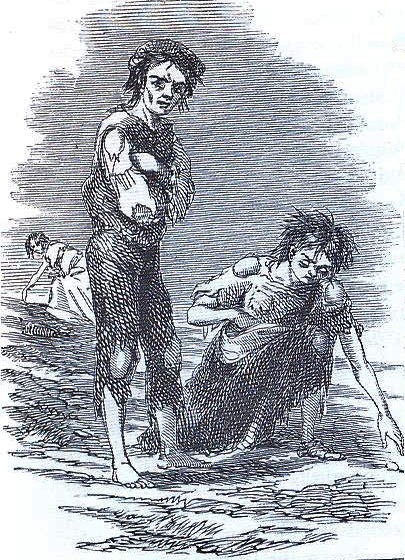
The Bengal famine of 1943 was a rapid wartime catastrophe without a single staple-crop collapse, whereas Ireland’s Great Famine began with repeated potato blight from 1845; both became mass-death crises because British imperial policy protected property, markets and state priorities before the survival of colonized people.
This comparison does not claim that the famines were identical. It asks how ecological or wartime shocks became disasters under British rule, who retained food and purchasing power, and why millions died amid continuing trade and unequal entitlement to relief.
Key takeaways
- Bengal’s famine peaked in 1943 amid wartime inflation and distribution failure; Ireland’s began in 1845 with repeated potato blight.
- The Famine Inquiry Commission estimated 1.5 million Bengal deaths in 1943–1944, while Amartya Sen estimated 3 million across 1943–1946.
- Ireland lost roughly 1 million people to excess mortality during 1846–1851 and another 2.1 million to emigration during 1845–1855.
- British policy did not create potato blight or every Bengali crop loss, but it made hunger more widespread, prolonged and lethal.
- Comparison clarifies recurring imperial priorities, provided it preserves the distinct economic structures, timelines and displacement patterns of each famine.
Comparison at a glance
| Measure | Bengal famine | Great Irish Famine |
|---|---|---|
| Main period | 1943–1944, within the Second World War of 1939–1945 | 1845–1852, with peak mortality in 1847 |
| Territory and ruler | Bengal Province under the British Raj in 1943 | Ireland within the United Kingdom under the 1800 Acts of Union |
| Population before crisis | About 60.3 million in Bengal in the 1941 census | About 8.18 million in Ireland in the 1841 census |
| Initial shock | Wartime inflation, the loss of Burmese rice imports in 1942, cyclone and crop damage in 1942, procurement, speculation and distribution failure | Phytophthora infestans destroyed much of the potato crop from 1845; failures recurred through 1849 |
| Estimated deaths | Amartya Sen estimated about 3 million deaths in 1943–1946; the official Famine Inquiry Commission estimated about 1.5 million excess deaths in 1943–1944 | The 1851 Irish census commissioners estimated roughly 1 million excess deaths in 1846–1851; modern demographic totals commonly remain near 1 million |
| Principal killers | Starvation followed by malaria, cholera, dysentery and other diseases, especially in 1943–1944 | Starvation, fever, dysentery and related disease, especially in 1846–1849 |
| Food movement | Bengal was not experiencing an absolute province-wide disappearance of food on the scale implied by mortality; rice remained available to people able to pay in 1943 | Grain, livestock and other foods continued leaving Ireland during the crisis beginning in 1845, although Ireland also imported grain |
| State policy | Britain prioritized the war; Bengal’s 1942 “denial” policies removed boats and rice in coastal districts, while price control and relief failed | Peel imported maize in 1845–1846; Russell’s government curtailed intervention, relied on public works and the Poor Law, and closed soup kitchens in 1847 |
| Displacement | Destitute rural people moved into Calcutta and other towns during 1943; no exact total is securely established | About 2.1 million people emigrated from Ireland during 1845–1855, according to historical migration series |
| Social structure | Rural laborers, fishers, artisans and small cultivators lost purchasing power first in 1942–1943 | Landless laborers and small tenants dependent on potatoes were most exposed from 1845 onward |
| Political consequence | Deepened anti-colonial anger before Indian independence in 1947 | Accelerated depopulation, diaspora and Irish nationalism after 1845 |
| Central analytical issue | Wartime imperial priorities and entitlement collapse | Blight interacting with landlordism, laissez-faire policy and imperial governance |
The differently dated estimates are not directly interchangeable. They reveal orders of magnitude, not a precise ranking of suffering.
Bengal on its own terms: war, inflation and entitlement
Japan’s conquest of Burma in 1942 cut a source that had supplied roughly 15% of India’s rice imports before the crisis, but imports themselves represented only a small share of Bengal’s consumption. A cyclone and tidal waves struck coastal Bengal on 16 October 1942, damaging the autumn rice crop. Wartime military demand, inflation, hoarding, interprovincial trade barriers and unequal distribution then drove prices beyond the reach of laborers and small producers.
The colonial government’s “boat denial” policy of 1942 confiscated or destroyed craft capable of carrying more than 10 people in vulnerable coastal zones; rice-denial measures also removed stocks from areas officials feared Japan might occupy. These actions damaged fishing, transport and local exchange. They did not alone cause the famine, but they increased vulnerability.
Amartya Sen argued in Poverty and Famines in 1981 that Bengal’s food availability in 1943 was not exceptionally low enough to explain the mortality: the decisive collapse was in the “exchange entitlements” of groups whose wages and assets could no longer buy rice. Later scholars, including Cormac Ó Gráda, have revised parts of Sen’s crop arithmetic while retaining the importance of inflation, distribution and public failure.
“I cannot see that the use of this word ‘famine’ is really justified on the evidence so far available.” — John Herbert, Governor of Bengal, confidential letter to Leo Amery, 2 August 1943.
Official reluctance to name the emergency delayed adequate intervention. The Bengal famine archive documents how starvation became visible in Calcutta during 1943 while Winston Churchill’s War Cabinet controlled shipping and imperial priorities. Substantial military-backed relief and imports came only after Field Marshal Archibald Wavell became viceroy in October 1943.
Ireland on its own terms: blight, landlordism and removal
Potato blight appeared in Ireland in 1845 and repeatedly devastated the staple on which millions—especially laborers and small tenants in western and southern counties—depended. The biological shock was real. Mass death was not biologically predetermined: Ireland remained integrated into a commercial food economy that moved grain, cattle, butter and other produce while the poor lacked money or legal command over them.
Prime Minister Robert Peel secretly purchased £100,000 of American maize in 1845, and relief limited mortality during the first failure. After Peel fell in June 1846, Lord John Russell’s Whig administration placed greater faith in markets, public works and local taxation. Public works employed about 714,000 people by March 1847, according to official returns, but low wages, delays and exhausting labor impaired relief. Temporary soup kitchens fed roughly 3 million people daily at their July 1847 peak, then closed in September 1847.
The Poor Law Extension Act of June 1847 shifted responsibility toward Irish workhouses and ratepayers. Its “Gregory clause,” proposed by William Gregory, denied outdoor relief to occupiers holding more than one-quarter acre, pressuring families to surrender land. Evictions accelerated; official constabulary returns recorded more than 250,000 people formally evicted during 1849–1854, while unrecorded removals raised the true total.
“The Almighty, indeed, sent the potato blight, but the English created the Famine.” — John Mitchel, The Last Conquest of Ireland (Perhaps), 1861.
Mitchel’s indictment was political rather than a neutral demographic finding, yet it identifies the enduring issue: state choices converted crop failure into dispossession. Ireland’s population fell from 8.18 million in the 1841 census to 6.55 million in the 1851 census through death and emigration.
Shared imperial logic, and the differences that matter
Both crises occurred within systems where food was a commodity protected by law before it was treated as a right. British officials feared market “distortion,” guarded property and disciplined supposedly dependent populations. Racist assumptions influenced whose hunger counted. Relief frequently arrived late, carried degrading conditions or remained subordinate to fiscal and strategic aims. These patterns connect both famines to the archive’s wider record of colonial atrocities.
Yet the mechanisms and contexts differed. Ireland’s emergency lasted from 1845 to 1852 and began with repeated destruction of the potato staple in a landlord-tenant economy. Bengal’s acute famine peaked in 1943 during a global war; rice prices, lost incomes, military procurement, transport disruption and administrative fragmentation mattered more than a single crop pathogen. Ireland underwent mass transatlantic emigration and long-term population decline; Bengal’s displaced people primarily moved within the province, and recovery followed improved supplies and the 1943–1944 harvest without a comparable overseas exodus.
Legal classification must also remain precise. Scholars debate whether either famine constitutes genocide. The 1948 Genocide Convention requires intent to destroy a protected group, wholly or partly. There is extensive evidence of contempt, lethal neglect and policy culpability, but no scholarly consensus that either case meets that specific intent threshold. Rejecting an unproven legal label does not absolve the British governments that made foreseeable mortality worse.
The comparison is made because it exposes recurring imperial priorities across 98 years, from the Irish crop failure of 1845 to Bengal’s mass death in 1943. It is resisted when used either to exonerate empire—by reducing both to natural disaster—or to collapse distinct histories into one moral slogan. Comparative history should identify mechanisms, not stage a competition among victims. See the archive’s broader framework for documenting atrocities and contested responsibility.
Sources & further reading
- Amartya Sen, Poverty and Famines: An Essay on Entitlement and Deprivation (Oxford University Press, 1981)
- Cormac Ó Gráda, Eating People Is Wrong, and Other Essays on Famine (Princeton University Press, 2015)
- Famine Inquiry Commission, Report on Bengal (Government of India, 1945), Internet Archive
- Cormac Ó Gráda, Black ’47 and Beyond: The Great Irish Famine in History, Economy, and Memory (Princeton University Press, 1999)
- University College Cork, Great Irish Famine Online
- Encyclopaedia Britannica, Bengal famine of 1943
Frequently asked questions
- How did the Bengal famine of 1943 differ from the Irish Famine?
- Bengal’s famine peaked in 1943 during the Second World War and arose through inflation, purchasing-power collapse, disrupted trade, crop damage and failed colonial distribution. Ireland’s Great Famine began in 1845 when potato blight repeatedly destroyed the staple of poor tenants and laborers. Both unfolded under British rule, but Ireland experienced sustained transatlantic emigration and depopulation, while Bengal’s displacement was mainly internal.
- How many people died in the Bengal and Irish famines?
- India’s Famine Inquiry Commission estimated about 1.5 million excess deaths in Bengal during 1943–1944. Amartya Sen estimated about 3 million deaths across 1943–1946 in his 1981 study. Ireland’s 1851 census commissioners calculated roughly 1 million excess deaths during 1846–1851. Exact totals remain uncertain because registration was incomplete and disease, not literal starvation alone, caused many deaths.
- Did Britain export food during both famines?
- Commercial food movements continued during both crises, but the pattern was not identical. From 1845, Ireland continued exporting grain, livestock and dairy produce while also importing grain. In Bengal in 1943, rice remained available to militaries, prioritized industries and buyers with money; wartime procurement, interprovincial barriers and shipping constraints obstructed equitable supply. Export alone therefore does not explain either famine, but market access was decisive.
- Was Winston Churchill responsible for the Bengal famine?
- Winston Churchill, British prime minister from 1940 to 1945, did not single-handedly cause Bengal’s famine, but his War Cabinet controlled imperial shipping and prioritized military needs during 1943. Provincial mismanagement, wartime inflation, crop damage, speculation and transport disruption also mattered. Churchill’s government received warnings, and relief imports remained inadequate during peak mortality. Responsibility was distributed, but Britain’s highest leadership cannot be excluded.
- Were the Bengal famine and Irish Famine genocides?
- Both have been described as genocide, but historians lack consensus that either satisfies the 1948 Genocide Convention’s requirement of intent to destroy a protected group. The evidence firmly supports British state culpability for lethal policies, delayed relief and foreseeable suffering: roughly 1 million Irish excess deaths during 1846–1851 and 1.5–3 million Bengal deaths across estimates dated 1943–1946. Legal uncertainty does not mean moral or political innocence.
Related chapters
Comparisons
- American Empire vs British Empire: A Comparison
- Apartheid South Africa vs Jim Crow United States
- Belgian Empire vs German Empire: A Colonial Comparison
- British Empire vs French Empire: A Comparative History
- Colonial Debt vs Modern Structural Adjustment
- Congo Free State vs Belgian Congo
- Dutch Empire vs Portuguese Empire: A Comparison
- Holocaust Reparations vs Reparations for Slavery
- Roman Empire vs European Colonial Empires
Sources & further reading
CC BY 4.0 ·