Congo Free State vs Belgian Congo
Compare Leopold II’s Congo Free State, 1885–1908, with the Belgian Congo, 1908–1960: rule, forced labor, extraction, violence and death tolls.
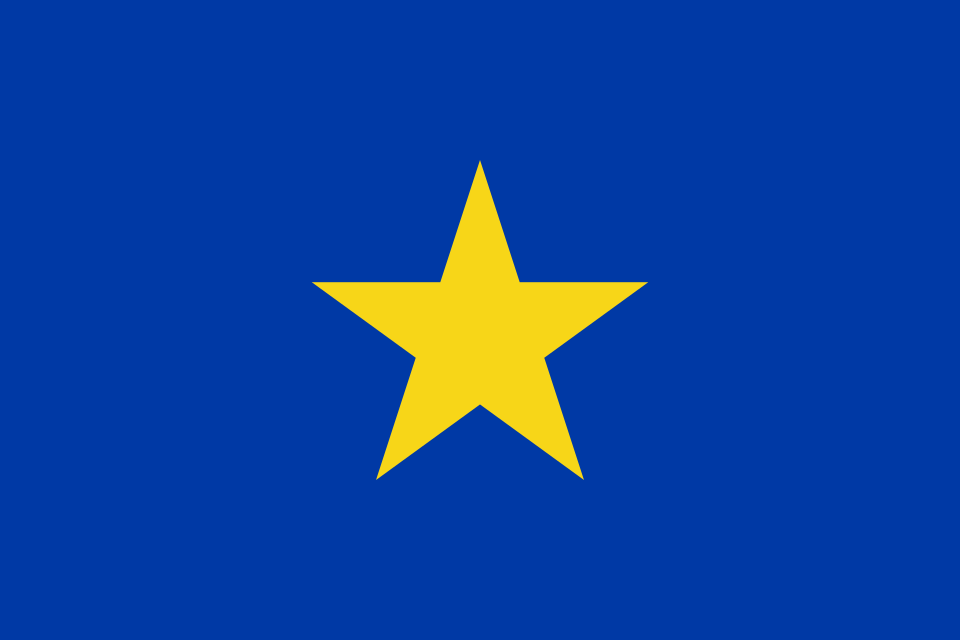
The Congo Free State, Leopold II’s personal possession from 1885 to 1908, differed from the Belgian Congo, Belgium’s formal colony from 1908 to 1960, but both subjected Congolese people to coercive rule, racial hierarchy and export-driven extraction.
The transfer ended the king’s proprietary regime, not colonial domination. Administration became more regular, some notorious practices were curtailed, and infrastructure and social services expanded; political sovereignty, economic control and senior authority nevertheless remained overwhelmingly European until independence on June 30, 1960.
Key takeaways
- The Congo Free State was Leopold II’s personal state from 1885 to 1908; the Belgian Congo was Belgium’s colony from 1908 to 1960.
- Belgian annexation in 1908 curbed the Free State’s concessionary rubber terror but preserved foreign sovereignty, coercive labor and racial hierarchy.
- The often-cited 10 million figure is a demographic estimate for roughly 1880–1920, not a verified count of executions.
- Mining, infrastructure, missions and bureaucracy expanded under Belgian rule, while Congolese people remained excluded from meaningful national political power.
- Comparing the regimes reveals both institutional change after 1908 and continuity in the colonial organization of land, labor and profit.
The Congo Free State on its own terms
European powers recognized Leopold II’s claim at the Berlin Conference of 1884–1885; the new state was proclaimed on July 1, 1885. Leopold controlled it personally through officials, concessionary companies and the Force Publique, established in 1885. Ivory and, after the rubber boom of the 1890s, wild rubber financed the regime and the king’s projects.
Villages received compulsory rubber quotas enforced through hostage-taking, flogging, imprisonment, killings and destruction of settlements. Force Publique soldiers had to account for ammunition; severed hands became evidence that cartridges had not been wasted, while hands were also taken from living victims. The system’s violence is documented in the reports of missionaries, Congolese witnesses, British consul Roger Casement and reform campaigners including E. D. Morel. See the archive’s detailed history of the Congo Free State.
“The rubber system is a system of slavery.” — Roger Casement, 1903, Report on the Administration of the Congo Free State.
Population loss cannot be converted into a precise count of people directly murdered. No reliable territory-wide census existed in 1885. Historian Jan Vansina estimated that the population fell by at least one-third between 1880 and 1920; Adam Hochschild popularized an estimate of approximately 10 million excess deaths or missing people for roughly 1880–1920, while warning that the evidence permits no exact total. Killings, famine, exhaustion, flight, falling births and diseases including sleeping sickness all contributed.
The Belgian Congo on its own terms
Belgium annexed the territory on November 15, 1908, after an international scandal made Leopold’s rule politically costly. Under the Colonial Charter of October 18, 1908, parliament formally supervised the colony, while a governor-general and territorial administration governed without Congolese electoral consent. The Belgian Empire replaced personal sovereignty with state colonialism.
The most notorious rubber abuses declined, but forced labor and corporal punishment survived in altered forms. Colonial authorities compelled labor for roads, plantations and public works; taxation pushed households into wage labor. Mining became central, especially through Union Minière du Haut-Katanga, founded in 1906, which extracted copper, cobalt, tin, zinc and uranium. Congolese miners and farmers created the colony’s wealth, while Belgian companies, the state and missions controlled capital and institutions.
Education and medicine expanded largely through Catholic and Protestant missions. These systems improved literacy and disease control in some areas but remained paternalist and racially segregated. By June 30, 1960, Belgium had prepared strikingly few Congolese for national leadership: commonly cited official figures identify only 16 Congolese university graduates in 1960, although counts vary by whether overseas students and incomplete degrees are included.
Belgian rule was less openly privatized after 1908, but it remained government without Congolese consent and development without Congolese control.
Side-by-side comparison
| Comparison | Congo Free State | Belgian Congo |
|---|---|---|
| Formal period | July 1, 1885–November 15, 1908 | November 15, 1908–June 30, 1960 |
| Sovereign authority | Personal state of Leopold II | Colony of the Belgian state under the 1908 Colonial Charter |
| Political rights | No Congolese national representation from 1885–1908 | No democratic national government before independence in 1960 |
| Main extractive priorities | Ivory and wild rubber, especially during the 1890s–1900s | Copper, cobalt, diamonds, palm products, cotton and uranium, especially during 1908–1960 |
| Labor regime | Quotas, hostage-taking and armed compulsion | Taxes, compulsory cultivation, labor recruitment and forced public works, particularly before reforms after 1945 |
| Armed enforcement | Force Publique, created in 1885 | Force Publique retained from 1908 and renamed the Congolese National Army in July 1960 |
| Corporate power | Concessionary companies including ABIR, established in 1892 | Major firms including Union Minière du Haut-Katanga, founded in 1906, and Société Générale-linked interests |
| Violence | Mutilation, village destruction, execution, flogging and hostage-taking extensively documented in 1890s–1900s | Flogging, forced labor, lethal repression and racial policing continued; troops killed protesters at Léopoldville on January 4, 1959 |
| Population impact | No 1885 census; Vansina estimated at least one-third population loss during 1880–1920 | Population recovered over later decades; colonial censuses remained shaped by uneven coverage and administrative purpose |
| Education | Limited provision, mainly mission-based, during 1885–1908 | Wider mission schooling during 1908–1960, but only about 16 Congolese university graduates were commonly reported at independence in 1960 |
| End | International pressure forced annexation by Belgium in 1908 | Nationalist mobilization and the 1959–1960 crisis led to independence on June 30, 1960 |
Shared logic, real differences and disputed comparisons
Both regimes treated Congolese land, labor and political authority as resources available to outsiders. Both relied on the Force Publique, European command, racial segregation and companies tied to the colonial state. Roads, railways, ports, hospitals and schools served real social functions, but investment was organized principally around labor discipline, mineral zones and exports rather than Congolese sovereignty.
The differences still matter. The Free State concentrated ultimate ownership and profit in Leopold II and used concessionary terror during the rubber boom with exceptional arbitrariness. The Belgian Congo had legislation, budgets, a larger bureaucracy and greater scrutiny. It built more durable institutions and eventually reduced some forms of compulsory labor, especially after 1945. None of those changes converted colonial subjects into equal citizens.
Comparison is made because annexation in 1908 is often narrated as a clean humanitarian break. It was a significant institutional rupture, yet Belgian officials inherited territory, troops and extractive structures created under Leopold. Comparison is resisted for opposite reasons: defenders of Belgian colonialism use the Free State’s atrocities to portray 1908–1960 as benevolent, while imprecise accounts collapse all 75 years from 1885 to 1960 into an unchanged system. Evidence supports neither claim.
The end also exposed structural failure. After the January 4, 1959 Léopoldville uprising, Belgium accelerated decolonization. Independence followed about 18 months later, on June 30, 1960, leaving a state with few Congolese senior administrators or commissioned officers and an economy dominated by foreign capital.
Sources & further reading
- Encyclopaedia Britannica: Congo Free State
- Encyclopaedia Britannica: Belgian Congo
- Roger Casement’s 1904 Congo Report — Internet Archive
- Adam Hochschild, King Leopold’s Ghost — Macmillan
- Georges Nzongola-Ntalaja, The Congo from Leopold to Kabila — Bloomsbury
- Royal Museum for Central Africa: Colonial history
Frequently asked questions
- What was the main difference between the Congo Free State and Belgian Congo?
- The Congo Free State was the personal possession of King Leopold II from July 1, 1885, to November 15, 1908. The Belgian Congo was a formal colony governed by Belgium from November 15, 1908, until June 30, 1960. Annexation brought parliamentary oversight and a larger bureaucracy, but Congolese people still lacked sovereignty and equal political rights.
- Did forced labor end when Belgium annexed the Congo in 1908?
- No. Belgium curtailed the Free State’s most notorious rubber-quota and hostage system after annexation on November 15, 1908, but coercion continued through taxation, compulsory cultivation, labor recruitment and mandated public works. Forced labor was progressively restricted, particularly after 1945, yet colonial officials and companies retained powerful means to direct Congolese labor until independence in 1960.
- Did 10 million people die in the Congo Free State?
- Ten million is an influential estimate, not a documented body count. Adam Hochschild popularized it for demographic loss over roughly 1880–1920. Jan Vansina estimated a decline of at least one-third during the same broad period. Direct killing, disease, hunger, exhaustion, flight and reduced births all contributed; the absence of a reliable 1885 census prevents an exact total.
- Was the Belgian Congo less violent than the Congo Free State?
- Belgian rule after 1908 was more regulated and reduced the arbitrary concessionary terror associated with Leopold II’s rubber system. It was not nonviolent: flogging, forced labor, racial policing and military repression persisted. On January 4, 1959, Force Publique troops suppressed unrest in Léopoldville; reported deaths vary, with official contemporary figures around 49 and other estimates reaching several hundred.
- Why did Belgian rule in the Congo end in 1960?
- Congolese nationalism, labor unrest and the January 4, 1959 Léopoldville uprising made gradual reform untenable. Belgium convened the Brussels Round Table Conference from January 20 to February 20, 1960, with leaders including Patrice Lumumba and Joseph Kasa-Vubu. The Republic of the Congo became independent on June 30, 1960, after 52 years of formal Belgian colonial rule.
Related chapters
Comparisons
- American Empire vs British Empire: A Comparison
- Apartheid South Africa vs Jim Crow United States
- Belgian Empire vs German Empire: A Colonial Comparison
- Bengal Famine of 1943 vs the Great Irish Famine
- British Empire vs French Empire: A Comparative History
- Colonial Debt vs Modern Structural Adjustment
- Dutch Empire vs Portuguese Empire: A Comparison
- Holocaust Reparations vs Reparations for Slavery
- Roman Empire vs European Colonial Empires
Sources & further reading
CC BY 4.0 ·