Roman Empire vs European Colonial Empires
Compare Roman imperial rule with European colonial empires: conquest, slavery, extraction, race, settlement, resistance, violence and lasting legacies.
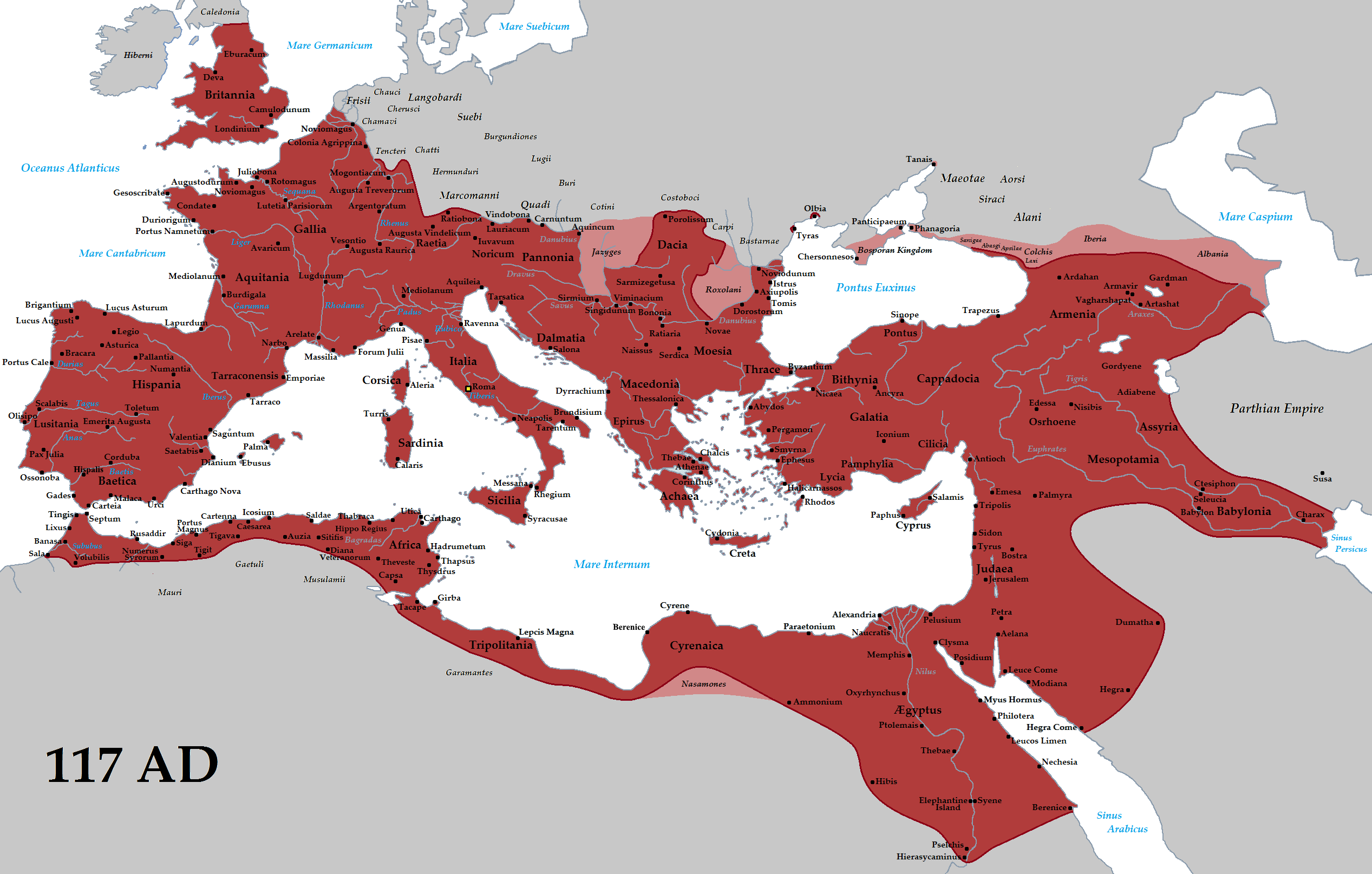
The Roman Empire differed from modern European colonial empires in its political geography, racial ideology and economic setting, but both converted military superiority into unequal rule, coerced labor, taxation, extraction and cultural domination. Rome’s imperial state began conventionally with Augustus in 27 BCE, after centuries of republican conquest; its western government ended in 476 CE, while the eastern empire survived until Constantinople fell in 1453.
Key takeaways
- Rome and European colonial empires both transformed conquest into taxation, extraction, coerced labor, unequal law and claims of civilizing rule.
- Roman citizenship could expand across conquered populations, while modern colonial regimes more systematically made ancestry, race and overseas origin barriers to equality.
- European imperialism joined conquest to Atlantic racial slavery, settler dispossession, corporations, industrial weapons and globally integrated commodity markets.
- Ancient casualty claims require scrutiny, but uncertainty over totals does not erase documented massacres, enslavement, deportation and demographic collapse.
- Comparison clarifies recurring imperial mechanisms only when it avoids false equivalence and preserves differences in race, capitalism, technology and political geography.
Comparison at a glance
| Dimension | Roman Empire | European colonial empires |
|---|---|---|
| Core period | Principate established under Augustus in 27 BCE; western imperial rule ended in 476 CE; Constantinople fell in 1453 | Overseas expansion accelerated after 1492; formal empires peaked around 1914; most decolonization occurred from 1945 to 1975 |
| Political form | Provinces governed through emperors, officials, armies, cities and local elites | Colonies, protectorates, chartered companies, settler states and informal spheres controlled from European capitals |
| Geography | Mostly contiguous territory around the Mediterranean, with sea routes binding the imperial core | Often transoceanic territories separated from metropolitan states by thousands of kilometers |
| Conquest | Legions annexed territory, imposed treaties and crushed revolts | Firearms, naval power, private companies and industrial logistics enabled invasion and occupation |
| Extraction | Tribute, taxes, rents, mines, grain requisitions, enslaved labor and military levies | Plantation slavery, land seizure, taxation, mining, monopolies, forced labor and export-oriented production |
| Slavery | Enslavement followed war, piracy, birth and sale; status was not defined by a single global color line | Atlantic slavery became hereditary and racialized; Europeans transported about 12.5 million captives from Africa from 1501 to 1867, according to SlaveVoyages |
| Citizenship | Roman citizenship expanded unevenly; Caracalla’s Constitutio Antoniniana extended it to nearly all free imperial inhabitants in 212 CE | Colonial subjecthood usually preserved legal inequality; metropolitan citizenship was restricted by race, origin and territory |
| Settlement | Veterans and migrants founded colonies, but Rome did not operate a modern worldwide settler system | Settler colonialism displaced or subordinated Indigenous peoples in the Americas, Australia, New Zealand and parts of Africa |
| Ideology | Roman writers invoked civilization, peace, law and victory; outsiders were labeled barbarians | Christianity, scientific racism and the “civilizing mission” presented domination as moral or biological hierarchy |
| End and legacy | Fragmentation, transformation and conquest produced successor states; Roman law and languages endured | Anticolonial struggle and negotiated withdrawal produced states whose borders, economies and institutions often retained colonial structures |
The Roman Empire on its own terms
Rome grew through repeated conquest before Augustus made one-man rule durable in 27 BCE. Provinces supplied taxes, grain, metals, soldiers and enslaved people. Governors worked with municipal aristocracies, while roads, ports, garrisons and law stabilized domination. Incorporation was real but unequal: selected provincials entered the Senate, auxiliary soldiers could receive citizenship, and Caracalla widened citizenship in 212 CE without abolishing class, slavery or imperial coercion.
Violence was constitutive. In The Jewish War, written around 75 CE, Josephus reported 1.1 million deaths during the siege of Jerusalem in 70 CE and 97,000 captives; modern historians generally reject the death figure as inflated because it exceeds plausible population estimates, illustrating why ancient totals require source criticism. After the Bar Kokhba revolt of 132–135 CE, Cassius Dio claimed 580,000 Jewish men were killed; modern scholarship treats the exact total cautiously but recognizes catastrophic depopulation and enslavement.
“They make a desert and call it peace.” — Tacitus, around 98 CE, Agricola, placing the indictment in the speech of the Caledonian leader Calgacus.
That line is literary rather than a transcript, but it records a Roman author’s recognition that conquest could be disguised as order. See the archive’s broader history of imperial violence.
European colonial empires on their own terms
Portugal, Spain, the Netherlands, France, Britain, Belgium, Germany and other states built maritime empires after 1492 through crowns, armies, settlers, missionaries and corporations. Their systems differed, yet transoceanic shipping, plantation commodities, industrial weapons and metropolitan finance connected distant seizures to European accumulation.
The transatlantic trade embarked about 12.5 million Africans from 1501 to 1867 and landed about 10.7 million alive, according to the 2023 SlaveVoyages dataset. These figures exclude deaths during capture and forced marches, and exclude slavery within Africa and after arrival. In the Congo Free State, privately controlled by Leopold II from 1885 to 1908, demographic loss is disputed because no reliable precolonial census exists: Adam Hochschild estimated roughly 10 million excess deaths by 1908 in his 1998 book, while historians including Jan Vansina stressed the evidentiary limits and proposed lower or differently framed losses. Forced labor, hostage-taking, mutilation, famine and disease are nonetheless extensively documented.
At the Berlin Conference of 1884–1885, European governments established rules for recognizing African territorial claims without African representation. By 1914, European powers controlled roughly 90% of Africa, a commonly cited territorial estimate synthesized from contemporary colonial maps rather than a population census.
Shared logic, real differences and contested comparison
Both imperial formations treated conquest as a source of legitimate authority. Both delegated power to intermediaries, redirected labor and resources, punished resistance, moved populations and described imposed order as civilization. Neither was uniformly administered: local bargains coexisted with exemplary terror.
Empires differ historically, but their recurring structure is unequal sovereignty: one political community claims the power to govern, classify and extract from another without equal consent.
The differences are decisive. Rome lacked the early modern Atlantic’s integrated hereditary color line and the later pseudo-sciences that ranked humanity biologically. A freed Roman slave could obtain citizenship, although stigma and dependency remained; colonial racial regimes more systematically made ancestry and phenotype determine status across generations. Rome was predominantly a tributary agrarian empire. European colonialism became entangled with capitalism, joint-stock corporations, plantation monoculture, industrial production and global commodity markets.
Rome’s core and provinces also became deeply interwoven around one inland sea. European empires commonly maintained a legal and racial gulf between overseas colony and metropolis. Some colonies pursued Indigenous elimination or replacement rather than incorporation. These distinctions explain why historical systems must be differentiated, but they do not excuse either system’s coercion.
The comparison is made because “Rome” supplied later conquerors with a political vocabulary. British writers styled their empire as a new Rome; French rulers invoked Romanization in Algeria; fascist Italy used Roman imagery during its invasion of Ethiopia in 1935. It is resisted for two opposite reasons: admirers of Rome may sanitize ancient conquest, while critics fear that analogy normalizes modern colonial crimes by presenting empire as timeless. The answer is controlled comparison: identify common mechanisms, then test differences in law, race, technology, economy and demography. That method belongs within a connected history of domination and resistance and requires stating clearly why different atrocities are not interchangeable.
Sources & further reading
- The Roman Empire: Economy, Society and Culture — Peter Garnsey and Richard Saller, University of California Press
- The Cambridge Economic History of the Greco-Roman World — Cambridge University Press
- SlaveVoyages: Trans-Atlantic Slave Trade Database
- The Oxford History of the British Empire — Oxford University Press
- King Leopold’s Ghost — Adam Hochschild, Macmillan
- UNESCO General History of Africa
Frequently asked questions
- Was the Roman Empire a colonial empire?
- Rome was imperial and established colonies, but it was not a European overseas colonial empire of the type built after 1492. From Augustus’s Principate in 27 BCE, Rome governed mostly contiguous Mediterranean provinces through armies, taxation, cities and local elites. Its systems of conquest, settlement and extraction justify comparison, while its citizenship rules, agrarian economy and absence of a modern global racial order require distinction.
- Was Roman slavery the same as Atlantic racial slavery?
- No. Roman slavery was hereditary and brutally exploitative, but enslavement also followed warfare, piracy and sale across many ethnic groups. Atlantic slavery became systematically associated with African descent and racialized inheritance. According to SlaveVoyages in 2023, about 12.5 million captives embarked for the Americas from 1501 to 1867, and about 10.7 million survived the crossing.
- Did Rome commit genocide?
- Roman forces destroyed communities, enslaved survivors and sometimes pursued collective elimination, but applying the legal term genocide requires case-specific evidence of intent. Josephus claimed 1.1 million deaths at Jerusalem in 70 CE, while Cassius Dio claimed 580,000 Jewish men killed after the revolt of 132–135 CE; modern historians consider both exact totals uncertain while accepting catastrophic violence.
- Which empire lasted longer, Rome or the European colonial empires?
- Using conventional dates, the Roman imperial state lasted from 27 BCE to the western collapse in 476 CE, while its eastern continuation survived until 1453. European overseas empires expanded after 1492 and mostly decolonized from 1945 to 1975, although important territories remain. Duration depends on definitions, so longevity alone does not measure violence, reach or historical impact.
- Why did European colonizers compare themselves to Rome?
- European rulers used Rome to legitimize conquest as law, order and civilization. British imperial writers claimed Roman precedent; French authorities described colonization in Algeria as Romanization; Benito Mussolini invoked a revived Roman Empire when fascist Italy invaded Ethiopia in 1935. The analogy supplied prestige while obscuring racial hierarchy, settler dispossession and capitalist extraction specific to modern colonialism.
Related chapters
Comparisons
- American Empire vs British Empire: A Comparison
- Apartheid South Africa vs Jim Crow United States
- Belgian Empire vs German Empire: A Colonial Comparison
- Bengal Famine of 1943 vs the Great Irish Famine
- British Empire vs French Empire: A Comparative History
- Colonial Debt vs Modern Structural Adjustment
- Congo Free State vs Belgian Congo
- Dutch Empire vs Portuguese Empire: A Comparison
- Holocaust Reparations vs Reparations for Slavery
Sources & further reading
CC BY 4.0 ·