Settler Colonialism vs Extractive Colonialism
Compare settler and extractive colonialism: population, land, labor, sovereignty, violence, wealth transfer, historical cases and enduring structures.
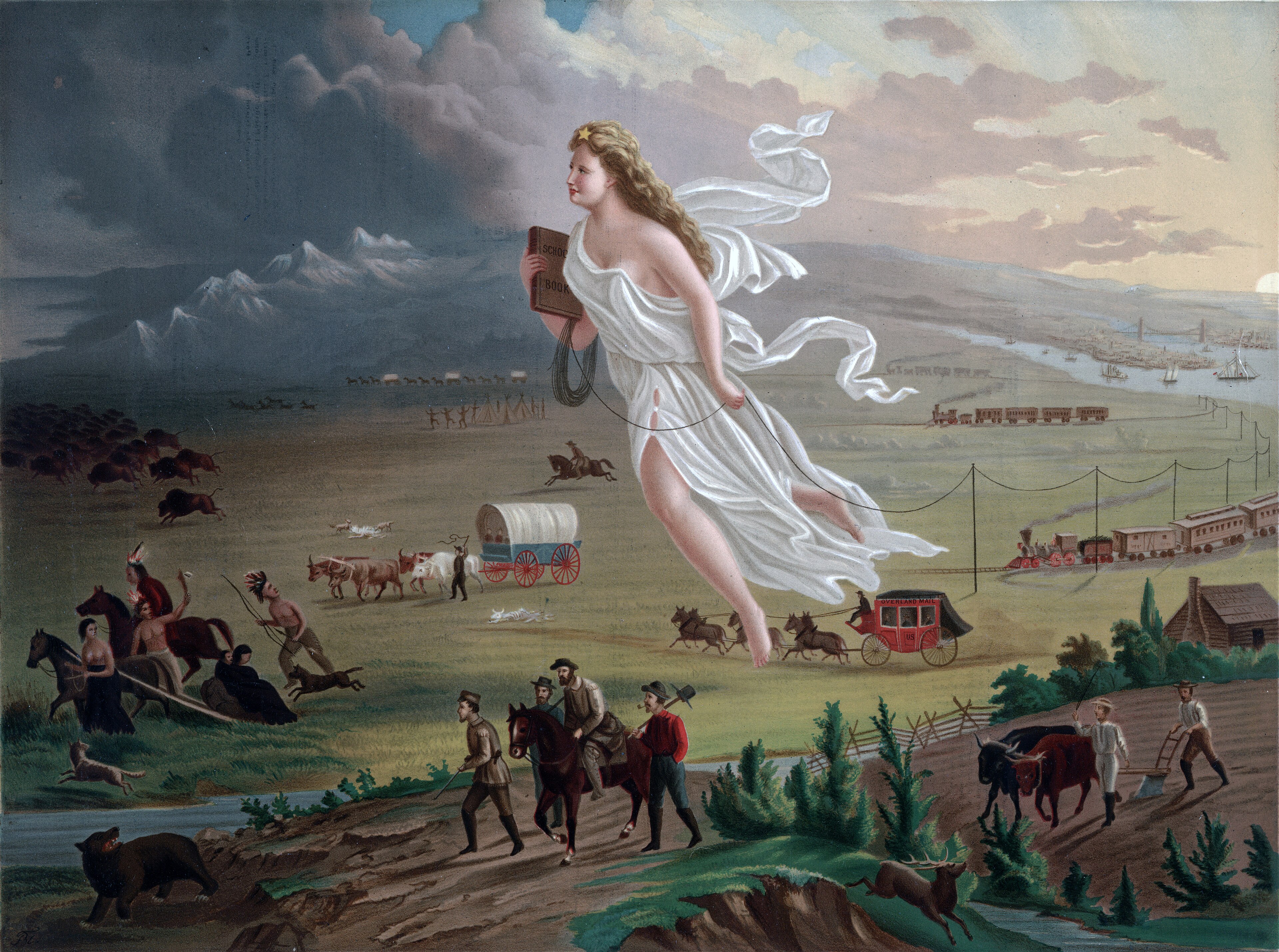
Settler colonialism seeks enduring control by building a settler society on Indigenous land, whereas extractive colonialism chiefly organizes territories and labor to transfer wealth outward; both seize sovereignty, reorder economies and enforce racial hierarchy through coercion.
Key takeaways
- Settler colonialism seeks lasting settler sovereignty, while extractive colonialism primarily structures territory and labor to transfer wealth elsewhere.
- Both systems seize political authority, racialize populations and use law, coercion and violence to convert land and labor into imperial assets.
- Settler colonies can be highly extractive, and extractive colonies can include settlement; the categories identify dominant structures rather than exclusive types.
- Formal independence more readily ends colonial administration than inherited land ownership, export dependence, corporate concessions or unequal distributions of political power.
- Comparison clarifies mechanisms and continuities, but it should never flatten distinct peoples, chronologies, death tolls or forms of resistance.
Settler colonialism on its own terms
Settler colonialism is not simply migration under foreign rule. It is a political structure in which settlers claim land, establish institutions intended to endure and eliminate Indigenous sovereignty through killing, expulsion, confinement, forced assimilation or incorporation into a settler majority. Patrick Wolfe summarized this recurring logic in 2006: “settler colonizers come to stay: invasion is a structure not an event.”
The means varied. British colonies in North America and Australasia entrenched settler sovereignty; the United States used warfare, treaties, allotment and removal. President Andrew Jackson’s Indian Removal Act became law in 1830. During the resulting Cherokee removal of 1838–1839, roughly 4,000 people died, according to the US National Park Service. In Australia, state institutions removed Indigenous children from families through policies operating broadly between 1910 and 1970; the Australian Human Rights Commission’s 1997 Bringing Them Home report estimated that between 10% and 33% of Indigenous children were removed.
“Your new moons and your Sabbaths and your great appointed days are all for yourselves, not for us.” — Chief Seattle, 1855, address as recorded by Henry A. Smith in 1887; the wording is disputed because Smith published it 32 years later.
Settler societies also exploited labor and exported commodities. The distinguishing aim is therefore not an absence of extraction, but the permanent localization of settler power and the displacement or absorption of prior political communities. See the archive glossary for related terms.
Extractive colonialism on its own terms
Extractive colonialism organizes conquered territory around outward transfers of minerals, crops, taxes and labor. A relatively small expatriate administration may rule through chartered companies, soldiers and selected local intermediaries without seeking demographic replacement. European empires drew borders, imposed cash taxes, coerced cultivation and built railways from producing regions to ports rather than integrating colonized economies for local welfare.
King Leopold II’s Congo Free State, his personal possession between 1885 and 1908, used hostage-taking, mutilation and killing to enforce rubber quotas. Precise mortality cannot be reconstructed from incomplete records. Adam Hochschild estimated in 1998 that the population fell by about 10 million, while demographer Jan Vansina argued in 2010 for a decline of at least 50% between 1880 and 1920; both include deaths, reduced births, flight and disease rather than executions alone.
British India combined taxation, commodity exports and metropolitan financial claims. Economist Utsa Patnaik estimated in 2018 that Britain extracted about US$45 trillion in 2018 prices from India between 1765 and 1938. That counterfactual calculation is debated, but the documented mechanisms—tax-financed export surpluses and “Home Charges”—are not.
Shared logic, different configurations
Both systems begin by denying or subordinating existing sovereignty. They convert land and people into administrable assets, classify populations by race or legal status and use state or corporate violence to secure accumulation. Neither category is morally softer: extractive regimes could produce mass death, while settler regimes routinely extracted labor and commodities.
| Dimension | Settler colonialism | Extractive colonialism |
|---|---|---|
| Primary objective | Permanent settler sovereignty over land | Sustained outward transfer of wealth |
| Demographic project | Settlement, displacement, elimination or assimilation | Rule by a smaller foreign cadre is often sufficient |
| Indigenous presence | Treated as an obstacle to exclusive territorial authority | Often retained as a taxable or coercible workforce |
| Land | Reconstituted as settler property | Allocated to concessions, plantations or resource zones |
| Labor | Settler, enslaved, indentured and Indigenous labor may coexist | Forced, enslaved, indentured or underpaid local labor is central |
| Political form | Settler assemblies, reservations, removals and assimilation agencies | Colonial ministries, companies and indirect rule |
| Infrastructure | Supports settlement as well as commodity movement | Commonly links mines or plantations to ports |
| Typical endpoint | Settler state may survive formal decolonization | Formal rule may end while unequal trade and ownership persist |
| Exemplary cases | United States, Canada, Australia, New Zealand | Congo Free State, British India, Dutch East Indies |
| Core continuity | Disputed land title and Indigenous sovereignty | Debt, concessions, commodity dependence and profit repatriation |
The categories overlap within single empires. French Algeria became a major settler colony after invasion in 1830, yet settlers also appropriated farms and controlled commercial production. German South West Africa combined ranching and mineral ambitions with genocidal removal: German forces killed an estimated 65,000 of 80,000 Herero and 10,000 of 20,000 Nama between 1904 and 1908, figures cited by the United Nations’ Whitaker Report in 1985.
Real differences—and why the comparison is resisted
The real distinction concerns reproduction of power. Settler colonialism aims to make the colonizing society sovereign and normal; extractive colonialism can preserve colonized communities and authorities where they facilitate production. Settler regimes therefore characteristically attack collective land tenure, jurisdiction and cultural reproduction. Extractive regimes more characteristically preserve unequal labor pools, export corridors and concessionary control. These are tendencies, not sealed boxes.
Comparing structures does not make their victims interchangeable: it identifies which institutions transfer land, labor, wealth and political authority, and which survive independence.
The comparison is resisted for several reasons. Settler states often narrate colonization as completed national history rather than a continuing question of title and sovereignty. Former empires may reduce extraction to regrettable misconduct while retaining museums, corporations and inherited wealth. Nationalist histories can also treat formal independence as a clean break, obscuring foreign ownership, debt and commodity dependence—issues often described as neocolonialism.
Comparison becomes misleading when used to rank suffering or force every colony into one model. It is useful when it asks testable questions: Who settled? Who owned land? Who supplied labor? Where did profits go? Which legal order endured? For distinctions among genocide, colonialism and imperialism, consult the glossary; for the archive’s method of comparing unequal cases without declaring them identical, see why histories differ.
Sources & further reading
- Patrick Wolfe, “Settler Colonialism and the Elimination of the Native” (Journal of Genocide Research, 2006)
- United Nations, Whitaker Report on the Prevention and Punishment of Genocide (1985)
- Australian Human Rights Commission, Bringing Them Home (1997)
- US National Park Service, Trail of Tears National Historic Trail
- Encyclopaedia Britannica, Congo Free State
- Stanford Encyclopedia of Philosophy, Colonialism
Frequently asked questions
- What is the main difference between settler and extractive colonialism?
- Settler colonialism builds a permanent settler society that displaces, eliminates or assimilates Indigenous political communities; extractive colonialism chiefly channels labor, taxes and resources outward through foreign rule. The United States after the Indian Removal Act of **1830** illustrates the first tendency. Leopold II’s Congo Free State, ruled from **1885 to 1908** to obtain rubber and ivory, illustrates the second.
- Can a colony be both settler and extractive?
- Yes. French Algeria, conquered in **1830**, installed a durable European settler population while appropriating land and agricultural wealth. German South West Africa likewise combined settlement, ranching and mining with genocidal removal. Between **1904 and 1908**, approximately **65,000 of 80,000 Herero** and **10,000 of 20,000 Nama** were killed, according to figures cited in the United Nations’ **1985** Whitaker Report.
- Is settler colonialism the same as genocide?
- No, but settler colonial projects can commit genocide when they intend to destroy a protected national, ethnic, racial or religious group. Raphael Lemkin coined “genocide” in **1944**, and the UN convention defined it legally in **1948**. Settler rule may also proceed through expulsion, confinement, child removal and assimilation; whether a specific case is genocide requires evidence of prohibited acts and destructive intent.
- Why is the Congo Free State considered extractive colonialism?
- King Leopold II controlled the Congo Free State from **1885 to 1908** and imposed rubber extraction through armed concessionary rule, hostage-taking and mutilation. Adam Hochschild estimated in **1998** a population loss of about **10 million**; Jan Vansina estimated in **2010** a decline of at least **50% between 1880 and 1920**. Those estimates include disease, famine, flight and reduced births as well as direct killing.
- Did extractive colonialism end with independence?
- Formal colonial government often ended, but extractive relationships could persist through foreign ownership, debt, concessions, trade rules and commodity dependence. India became independent in **1947**, after British fiscal and commercial control dating from the East India Company’s acquisition of Bengal revenue rights in **1765**. Utsa Patnaik estimated in **2018** that Britain extracted about **US$45 trillion in 2018 prices** from India between **1765 and 1938**, though scholars debate her counterfactual method.
Related chapters
Comparisons
- American Empire vs British Empire: A Comparison
- Apartheid South Africa vs Jim Crow United States
- Belgian Empire vs German Empire: A Colonial Comparison
- Bengal Famine of 1943 vs the Great Irish Famine
- British Empire vs French Empire: A Comparative History
- Colonial Debt vs Modern Structural Adjustment
- Congo Free State vs Belgian Congo
- Dutch Empire vs Portuguese Empire: A Comparison
- Holocaust Reparations vs Reparations for Slavery
Sources & further reading
CC BY 4.0 ·