Is the CFA Franc Still Colonial?
Yes: the CFA franc remains structurally colonial in origin and governance, despite African central banks, euro pegs and limited French reforms since 2019.
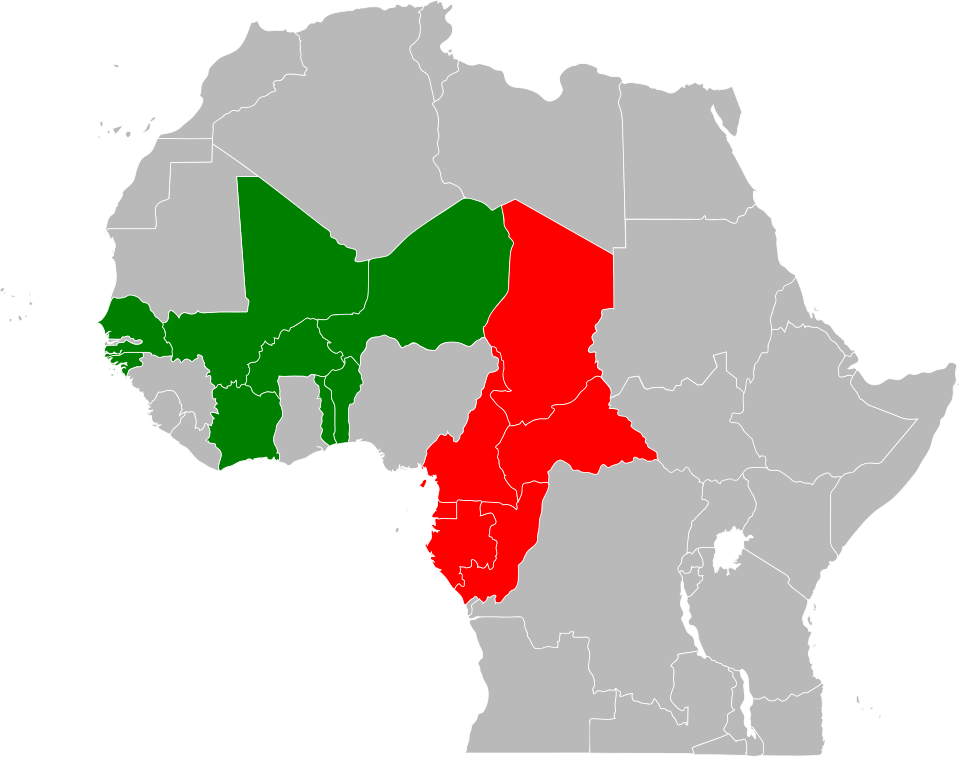
Short answer
Verdict: yes—the CFA franc remains colonial in structure, though not unchanged since independence. In 2026, 14 African states still use 2 currencies created by France in 1945, fixed to the euro under arrangements involving the French Treasury. African institutions issue them, but France retains a formal guarantee and, in Central Africa, a governance role inherited from empire.
“Colonial” here describes institutional lineage and unequal constraints, not the absence of African agency. The West African reforms announced in 2019 removed French representatives and compulsory reserve deposits; they did not end the fixed parity, French guarantee or underlying hierarchy.
Key takeaways
- The CFA franc remains colonial in institutional origin and external anchoring, although the West African system shed some direct French controls after 2019.
- Fourteen African states used two separate CFA currencies in 2026: eight used XOF and six used XAF.
- Both currencies remained fixed in 2026 at 655.957 CFA francs per euro under a convertibility guarantee from the French Treasury.
- The 1994 devaluation halved the CFA franc’s value against the French franc, demonstrating the large distributional consequences of externally negotiated adjustment.
- No credible scholar provides a single monetary estimate of colonial harm; research instead compares inflation, growth, trade and sovereignty under uncertain counterfactuals.
The short answer: continuity with partial reform
France established the franc des Colonies françaises d’Afrique by Decree No. 45-0136 on 26 December 1945. After decolonisation, treaties recast rather than abolished the system. The West African CFA franc, XOF, serves 8 states through the Central Bank of West African States, BCEAO; the Central African CFA franc, XAF, serves 6 through the Bank of Central African States, BEAC. The 2 currencies had equal official value in 2026 but were not mutually interchangeable.
Both were fixed at 1 euro to 655.957 CFA francs from 1 January 1999, following the euro’s introduction, and had previously been pegged to the French franc. France guaranteed convertibility through its Treasury. That guarantee is the system’s central defense and its clearest surviving connection to the French Empire.
“The franc of the French colonies of Africa is constituted by monetary units having a legal definition distinct from that of the metropolitan franc.” — French Provisional Government, 1945, Decree No. 45-0136
What the institutional evidence shows
The evidence is strongest when broken into powers rather than slogans.
| Feature | West African zone, XOF | Central African zone, XAF |
|---|---|---|
| Members in 2026 | 8 | 6 |
| Issuer | BCEAO | BEAC |
| Euro rate since 1999 | €1 = CFA 655.957 | €1 = CFA 655.957 |
| French voting presence in 2026 | Removed under the 2019–2020 reform | Retained in governing arrangements |
| Compulsory Treasury operations-account deposits | Ended by the 2019–2020 reform | Continued under cooperation rules |
| French convertibility guarantee | Retained | Retained |
The West African agreement announced by French President Emmanuel Macron and Ivorian President Alassane Ouattara on 21 December 2019 promised to rename XOF the “eco,” withdraw French officials and end the requirement to place 50% of foreign-exchange reserves in an operations account at the French Treasury. France ratified the revised cooperation agreement in 2021. By 2026, however, XOF remained the circulating name and the euro peg and guarantee survived.
Central Africa underwent no equivalent withdrawal. BEAC statutes revised in 2017 preserved French participation, including representation on governing bodies. The zones therefore cannot honestly be treated as institutionally identical.
The structure belongs in the history of monetary neocolonies: formal sovereignty coexists with inherited rules that narrow exchange-rate and reserve-policy choices.
What can and cannot be measured
There is no credible scholarly percentage for “how colonial” a currency is. Researchers instead compare observable outcomes: inflation, exchange-rate stability, trade, growth, reserve accumulation and adjustment costs. Their conclusions differ because the counterfactual—what each state would have achieved with another regime—cannot be observed.
| Source | Period or year | Finding or estimate |
|---|---|---|
| IMF, World Economic Outlook | 1994 | The CFA franc was devalued by 50% against the French franc on 12 January 1994: parity changed from 50 to 100 CFA francs per French franc |
| Patrick Guillaumont and Sylviane Guillaumont Jeanneney | 2017 assessment | The guarantee and common rules supported credibility and comparatively low inflation, but required fiscal and wage flexibility |
| Ndongo Samba Sylla and Fanny Pigeaud | 2018 French edition; 2021 English edition | The system constrained sovereignty, favored external creditors and importers, and reproduced colonial economic relations |
| World Bank population data | 2023 | The 14 member states contained roughly 200 million residents; totals vary by database revision and should not be confused with all users or diaspora holdings |
The 1994 devaluation is the clearest quantified distributional shock. Overnight, imported goods priced in French francs became twice as expensive in CFA terms before market adjustments; exporters received more local currency per franc earned. France, the IMF and African heads of state negotiated the change, exposing how the guarantee could stabilize parity for decades yet culminate in a politically concentrated adjustment.
The defensible conclusion is institutional, not a fabricated welfare total: no accepted study calculates a single net gain or loss for all 14 states.
Who disputes the colonial label—and why
BCEAO, BEAC, French officials and several member-state governments reject or qualify the label. They emphasize that African treaty parties can withdraw, African central banks conduct monetary policy, pooled reserves insure smaller economies, and the fixed rate limits currency risk. Supporters also cite price stability: the euro anchor generally produced lower inflation than in several neighboring states with floating currencies, although country selection, fiscal policy and commodity shocks complicate comparisons.
Critics—including economists Ndongo Samba Sylla, Kako Nubukpo and Demba Moussa Dembélé—answer that consent among postcolonial elites does not erase an imperial design. They point to the external peg, restricted monetary financing, France’s guarantee and its continuing Central African role. A hard currency can also penalize domestic production when productivity is low, while facilitating imports, profit repatriation and debt service.
The dispute is therefore not “stability versus chaos.” It concerns who defines stability, who bears adjustment and why arrangements born under the French Empire remain the default. France’s reduced role in XOF after 2019 matters; presenting that reform as complete decolonisation does not.
What follows from the evidence
Calling the CFA franc colonial does not by itself identify the safest replacement. An abrupt exit without reserves, payment infrastructure, fiscal coordination or credible institutions could cause depreciation, inflation and capital flight. Keeping the system also has costs: policy follows the euro area’s anti-inflation priorities, while economies exposed to cocoa, oil, cotton and other commodity cycles cannot independently change parity.
A substantive decolonisation test would ask whether African publics and legislatures can choose the exchange-rate regime; whether France has exceptional legal or governance powers; whether reserve and guarantee terms are transparent; and whether regional institutions are democratically accountable. On those tests, XOF became less directly French-controlled after the 2019–2021 reforms, while XAF retained stronger formal continuities.
The practical alternatives include a reformed African-managed peg, a currency basket, adjustable rates, national currencies or a genuinely regional currency. Each redistributes risk. The historical baseline remains clear: these are not merely currencies that happened to survive colonialism; they are institutions created by colonial decree and preserved through post-independence agreements. That makes CFA reform part of the wider struggle over neocolonies, not a technical footnote.
Sources & further reading
- Banque de France: The franc zone and monetary cooperation
- BCEAO: History of the CFA franc and West African monetary institutions
- IMF: The CFA franc zone and the 1994 devaluation
- Ndongo Samba Sylla and Fanny Pigeaud, Africa’s Last Colonial Currency
- French Treasury: Reform of monetary cooperation with WAEMU
- Encyclopaedia Britannica: CFA franc
Frequently asked questions
- Which countries still use the CFA franc?
- In 2026, XOF was used by 8 states: Benin, Burkina Faso, Côte d’Ivoire, Guinea-Bissau, Mali, Niger, Senegal and Togo. XAF was used by 6: Cameroon, Central African Republic, Chad, Republic of the Congo, Equatorial Guinea and Gabon. The 2 currencies shared the same official value but were not interchangeable.
- Does France still control the CFA franc?
- France did not unilaterally run either African central bank in 2026, but it still guaranteed convertibility and remained embedded more deeply in Central African arrangements. Under reforms announced in 2019 and ratified by France in 2021, French representatives left West African governing bodies and BCEAO ceased compulsory deposits of 50% of reserves at the French Treasury.
- How much is one euro worth in CFA francs?
- Since the euro’s introduction on 1 January 1999, the fixed rate has been €1 to 655.957 XOF and €1 to 655.957 XAF. Before that, both were pegged to the French franc. Equal official rates do not make XOF and XAF interchangeable because separate central banks issue them for 2 distinct monetary unions.
- Why was the CFA franc devalued in 1994?
- On 12 January 1994, France, international lenders and CFA-zone governments approved a 50% devaluation after prolonged overvaluation, weak competitiveness and fiscal stress. The rate shifted from 50 to 100 CFA francs per French franc. Exports became cheaper abroad, while French-franc-priced imports immediately required twice as many CFA francs before subsequent price adjustments.
- Will the eco replace the West African CFA franc?
- Emmanuel Macron and Alassane Ouattara announced on 21 December 2019 that XOF would become the eco alongside governance reforms. By 2026, the circulating currency was still officially the West African CFA franc. A broader ECOWAS eco project, intended for 15 member states when proposed, also remained delayed by disagreements over convergence, governance and exchange-rate design.
Related chapters
Questions
- Did Britain Cause the Bengal Famine of 1943?
- Did France Use Torture in Algeria?
- How Did the Berlin Conference Divide Africa?
- How Did the Dutch VOC Rule Indonesia?
- How Does Debt Keep Former Colonies Poor?
- How Is Racism Structured in the Present Day?
- How Many Indigenous People Died in the Americas After 1492?
- How Many People Died in the Congo Free State?
- How Many People Were Taken in the Atlantic Slave Trade?
Sources & further reading
CC BY 4.0 ·