What Is the Difference Between Colonialism and Imperialism?
Colonialism imposes rule over territory and people; imperialism is the broader pursuit of foreign dominance through political, military or economic power.
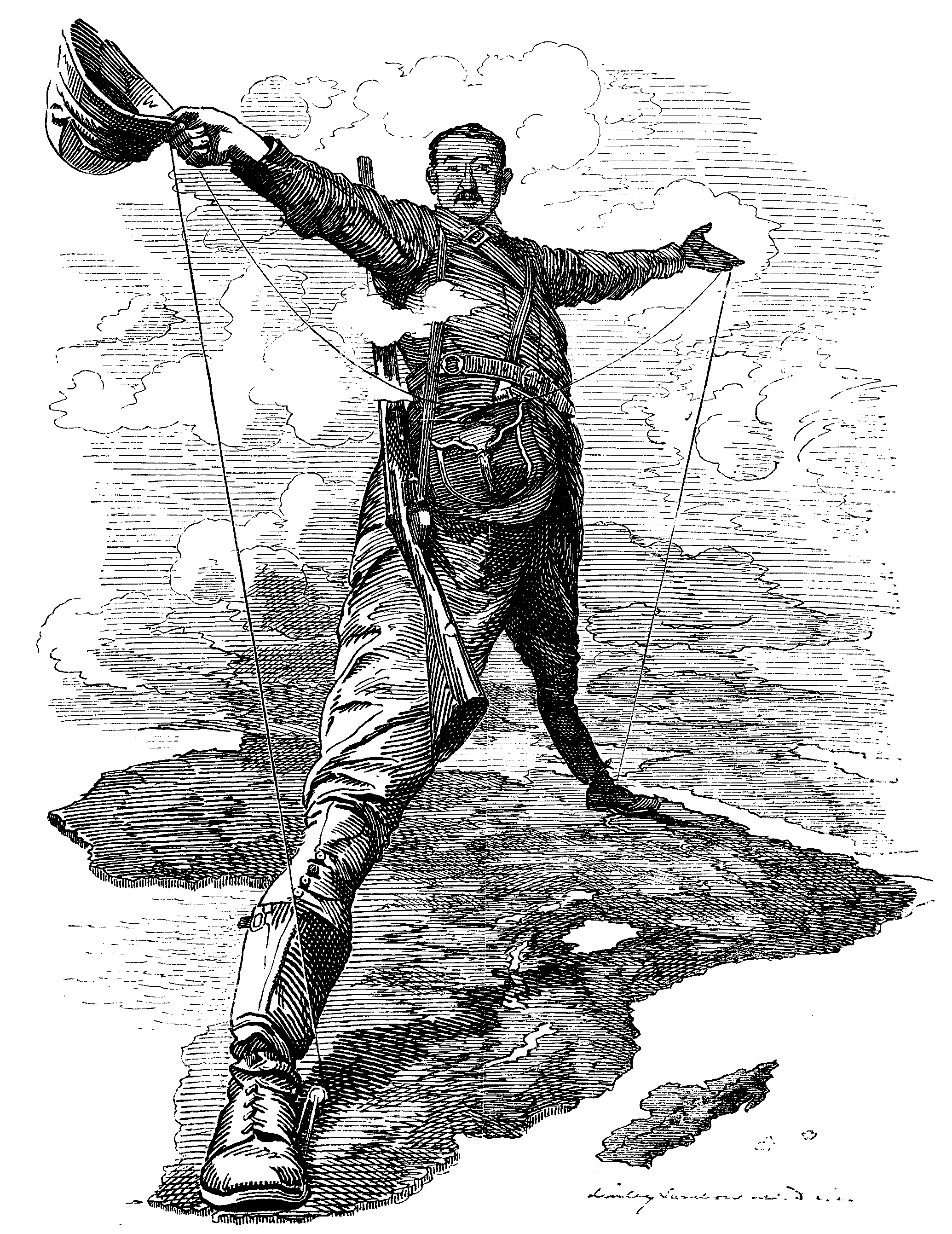
Short answer
The verdict: colonialism is a form of imperialism, but imperialism does not always require colonies. Colonialism establishes control over another territory and its people, usually through conquest, settlement, annexation or direct administration. Imperialism is the broader policy or practice of extending power abroad through military force, political pressure, economic dependency, unequal treaties or cultural influence.
The distinction concerns method, not morality. Both have transferred land, labor, wealth and sovereignty from subordinated peoples to dominant states or companies. Colonialism normally makes foreign rule territorially explicit; imperialism can preserve nominal independence while controlling decisive institutions.
Key takeaways
- Colonialism is territorial rule over another people, while imperialism is the broader pursuit of foreign political, military, economic or cultural dominance.
- Every colonial system is imperial, but an imperial power can dominate a formally sovereign state without annexing or directly administering it.
- British India from 1858 to 1947 exemplifies colonial administration; British coercion in Qing China after 1842 exemplifies informal imperialism.
- Scholars disagree over imperialism’s scope because Marxist, postcolonial, diplomatic and settler-colonial approaches examine different mechanisms of power.
- Formal decolonization expanded United Nations membership from 51 states in 1945 to 193 by 2011, but did not automatically end external domination.
The short answer expanded
Colonialism generally joins external domination to territory. A colonial power occupies, settles or administers land beyond its established borders, displaces or subordinates its inhabitants, and reorganizes law and production for outside benefit. Examples include British rule in India from 1858 to 1947, French rule in Algeria from 1830 to 1962, and Belgian rule in the Congo from 1908 to 1960.
Imperialism names the larger system or strategy: extending and maintaining power over foreign societies. It includes formal colonies but also protectorates, military occupations, spheres of influence, debt control, coerced trade and client regimes. Britain did not annex Qing China, yet the Treaty of Nanjing in 1842 ceded Hong Kong, opened 5 treaty ports and imposed a 21 million silver-dollar indemnity after the First Opium War of 1839–1842.
| Concept | Central mechanism | Sovereignty in law | Illustrative case |
|---|---|---|---|
| Settler colonialism | Permanent settlement and Indigenous dispossession | Replaced or radically constrained | French Algeria, 1830–1962 |
| Administrative colonialism | Direct foreign government | Formally transferred to colonizer | British Raj, 1858–1947 |
| Informal imperialism | Economic, diplomatic or military leverage | Nominally retained | British influence in Qing China after 1842 |
| Anti-imperial hegemony critique | Structural dominance without annexation | Nominally retained | Debt, bases, sanctions or unequal exchange |
See the archive glossary for related terms and why historians use different definitions.
How the distinction developed
The vocabulary changed with the systems it described. In Imperialism: A Study (1902), J. A. Hobson treated imperialism as expansion driven partly by concentrated wealth and investment. In Imperialism, the Highest Stage of Capitalism (1917), Vladimir Lenin connected it to monopoly capital, finance and division of the world among great powers. Neither reduced it to direct colonial administration.
“Imperialism is the monopoly stage of capitalism.” — Vladimir Lenin, Imperialism, the Highest Stage of Capitalism (1917)
Hannah Arendt’s The Origins of Totalitarianism (1951) examined imperial expansion, race ideology and bureaucratic rule. Political theorist Michael Doyle defined empire in 1986 as effective control by an imperial society over a subordinated society, allowing control to operate formally or informally. Edward Said’s Culture and Imperialism (1993) showed how literature and knowledge normalized conquest.
Decolonization changed legal maps without necessarily ending external control. The United Nations had 51 founding members in 1945 and 193 member states by 2011, reflecting the breakup of many empires alongside other state formations.
Evidence: rule, extraction and human cost
The difference becomes concrete by asking who governed, who owned land, who set trade terms and who could use force. In the Congo Free State, Leopold II personally controlled the territory from 1885 to 1908 through concessionary companies, hostage-taking, forced labor and armed violence. Adam Hochschild’s 1998 synthesis popularized an estimate of roughly 10 million excess deaths or missing population; scholars including Jan Vansina warned that absent reliable censuses make any exact toll impossible. The defensible conclusion is mass demographic catastrophe, not a precise body count.
British India combined colonial government with imperial extraction. Economic historian Utsa Patnaik estimated in 2018 that Britain transferred about £9.2 trillion in 2018 prices from India during 1765–1938. That calculation is influential but disputed because it compounds export surpluses at a 5% interest rate and treats colonial fiscal mechanisms as uncompensated appropriation. Tirthankar Roy and other economic historians favor narrower accounting and emphasize institutional and regional variation.
| Case and period | Published estimate | Source and year | Main limitation |
|---|---|---|---|
| Congo Free State, 1885–1908 | About 10 million demographic loss | Adam Hochschild, 1998 | No reliable colony-wide baseline census |
| Indian wealth transfer, 1765–1938 | £9.2 trillion at 2018 prices | Utsa Patnaik, 2018 | Depends heavily on counterfactual and compound interest |
| Great Bengal famine, 1769–1773 | About 10 million deaths | Common historical estimate, including William Wilson Hunter’s 1868 account | Population records were incomplete |
Estimates are not interchangeable: deaths, excess deaths, population deficit and monetary transfer measure different things and require different evidence.
Who disputes the distinction, and why?
There is no single numerical “scholarly estimate” of how much colonialism differs from imperialism; these are analytical categories, not countable events. Disagreement concerns boundaries. Some historians use “imperialism” mainly for the expansionist era from approximately 1870 to 1914. Others apply it to Roman conquest, early modern maritime empires, Cold War interventions and present-day financial or military dominance.
Marxist scholars often foreground capital export, monopoly and unequal exchange. Postcolonial scholars emphasize racial hierarchy, knowledge and cultural authority. Settler-colonial theorist Patrick Wolfe argued in 2006 that settler colonialism is a continuing structure organized around elimination of Indigenous societies, not merely a completed episode. Critics warn that stretching “imperialism” to cover every unequal relationship can erase differences between occupation, annexation, market power and ordinary interstate inequality.
Defenders of empire have also disputed its harms. Niall Ferguson argued in Empire (2003) that British rule spread institutions and global integration. Critics answer that railways, courts and commerce were built within coercive systems and cannot be assessed apart from dispossession, racial law, famine policy and extraction. For methodological cautions, consult why estimates differ and definitions in the glossary.
What follows from the distinction
The practical test has 4 parts: identify control over territory, legal sovereignty, enforcement mechanisms and material beneficiaries. Direct foreign administration strongly indicates colonialism. Military bases, debt leverage, covert intervention or unequal trade may indicate imperialism without colonial annexation. A case can be both: Britain’s occupation and protectorate over Egypt from 1882 to 1922 imposed imperial control while withholding full annexation.
The distinction also shapes remedies. Colonial dispossession raises questions of land return, political sovereignty, repatriation and treaty obligations. Informal imperial domination raises questions of debt cancellation, corporate liability, sanctions, military withdrawal and voting power in international institutions. “Postcolonial” therefore means after formal colonial rule, not necessarily after imperial power.
Neocolonialism, associated particularly with Kwame Nkrumah’s Neo-Colonialism: The Last Stage of Imperialism (1965), describes formally sovereign states constrained by outside economic and political power. The term is contested when used without identifying an actor, mechanism and measurable effect. Strong analysis names the creditor, company, treaty, military or government involved rather than treating all global inequality as identical.
Sources & further reading
- Stanford Encyclopedia of Philosophy: Colonialism
- Encyclopaedia Britannica: Imperialism
- United Nations: Growth in United Nations Membership, 1945–present
- J. A. Hobson, Imperialism: A Study (1902), Internet Archive
- Vladimir Lenin, Imperialism, the Highest Stage of Capitalism (1917), Marxists Internet Archive
- Patrick Wolfe, “Settler Colonialism and the Elimination of the Native” (2006), Journal of Genocide Research
Frequently asked questions
- Is colonialism the same as imperialism?
- No. Colonialism is a territorial form of imperialism involving foreign settlement, annexation or administration. Imperialism is broader and includes domination through force, diplomacy, finance or trade without direct rule. British India from 1858 to 1947 was colonial and imperial; British leverage over Qing China after the Treaty of Nanjing in 1842 was largely informal imperialism.
- Can imperialism exist without colonies?
- Yes. A power can preserve another state’s formal sovereignty while controlling its choices through military threats, debt, unequal treaties or client rulers. Britain did not colonize all of Qing China after the First Opium War of 1839–1842, but the 1842 Treaty of Nanjing imposed 5 treaty ports, ceded Hong Kong and required 21 million silver dollars.
- What is settler colonialism?
- Settler colonialism seeks permanent possession of Indigenous land through migration, displacement, confinement, assimilation or elimination. Patrick Wolfe argued in 2006 that it is a continuing structure rather than a single event. French Algeria, ruled from 1830 to 1962, combined European settlement with land seizure, racialized legal status and violent suppression of Algerian sovereignty.
- What is neocolonialism?
- Neocolonialism describes external control over formally independent states through economic, political or military mechanisms. Kwame Nkrumah systematized the term in his 1965 book *Neo-Colonialism: The Last Stage of Imperialism*. The label is strongest when evidence identifies specific creditors, corporations, treaties, bases or interventions rather than using the word for every international inequality.
- Did decolonization end imperialism?
- No. Formal empires contracted rapidly after 1945, while United Nations membership rose from 51 founding states in 1945 to 193 states by 2011. Independence restored legal sovereignty, but former colonial powers, multinational companies and international institutions could still exert influence through debt, trade rules, military agreements, covert intervention and control of strategic resources.
Related chapters
Questions
- Did Britain Cause the Bengal Famine of 1943?
- Did France Use Torture in Algeria?
- How Did the Berlin Conference Divide Africa?
- How Did the Dutch VOC Rule Indonesia?
- How Does Debt Keep Former Colonies Poor?
- How Is Racism Structured in the Present Day?
- How Many Indigenous People Died in the Americas After 1492?
- How Many People Died in the Congo Free State?
- How Many People Were Taken in the Atlantic Slave Trade?
Sources & further reading
CC BY 4.0 ·