Why Do People Say Colonialism Was Not Unique?
Why colonialism had historical precedents but remained a distinct global system of racial rule, extraction, settlement, forced labor, and mass death.
Short answer
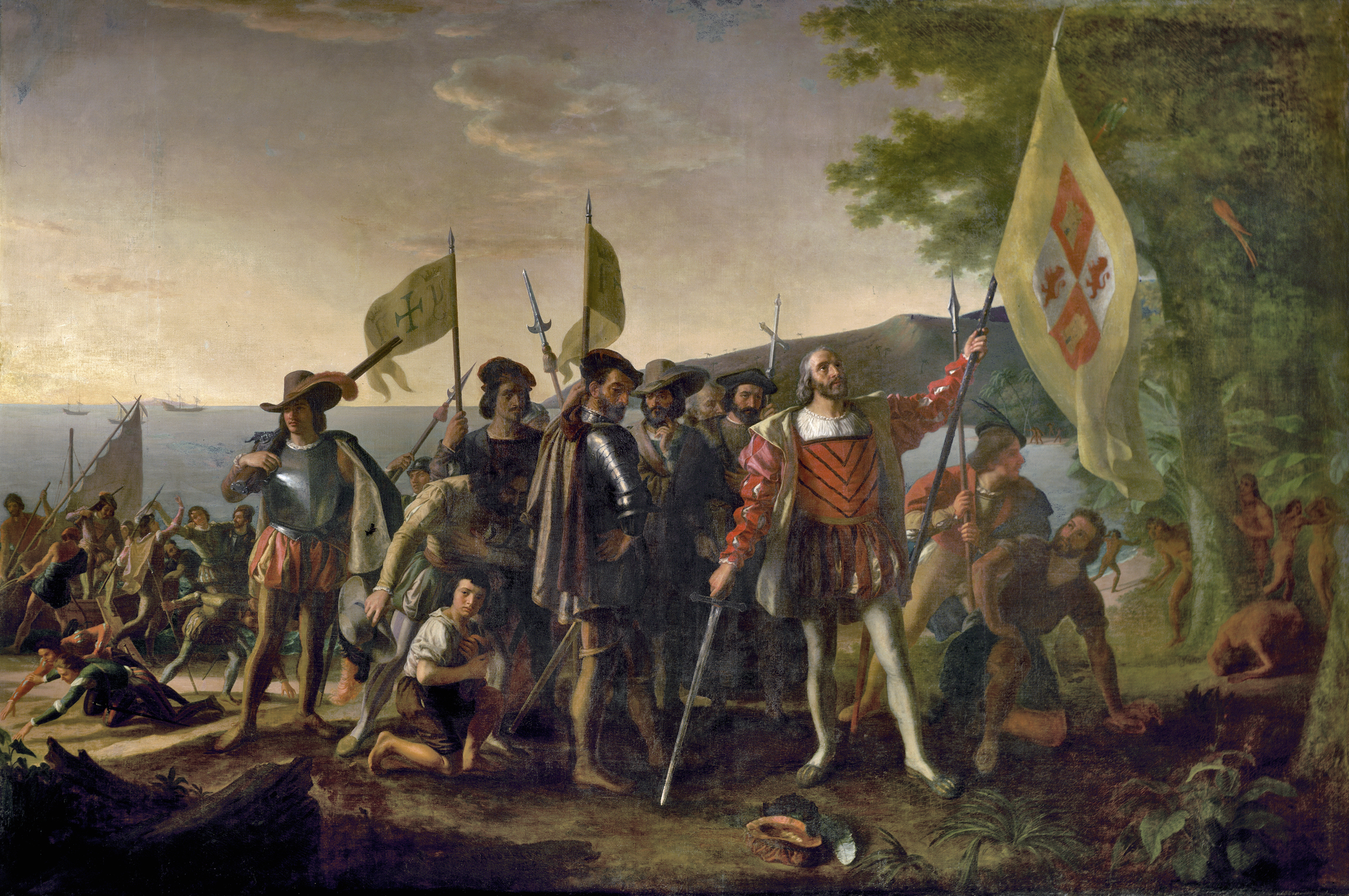
Verdict: colonialism was not unique because conquest, tribute, slavery, settlement, and empire existed for thousands of years before European expansion. But the colonial system built after 1492 combined worldwide reach, racial classification, capitalist extraction, distant metropolitan rule, and settler replacement on an unprecedented scale. Historical precedents do not erase those distinctive structures, their death tolls, or their continuing effects.
Key takeaways
- Colonialism was not the first system of conquest, slavery, tribute, settlement, or imperial rule in recorded history.
- After 1492, European powers combined global reach, racial hierarchy, capitalist extraction, metropolitan government, and settler replacement on an unprecedented scale.
- Comparing colonialism with earlier empires is historically necessary, but comparison does not erase specific perpetrators, beneficiaries, victims, or obligations.
- Colonial death estimates vary because scholars measure direct killing, excess mortality, population decline, famine, disease, displacement, and forced labor differently.
- Claims that “everyone did it” become apologetics when they replace documented responsibility with vague assertions about universal human behavior.
The short answer: precedent is not equivalence
People usually mean one of three things when they say colonialism was “not unique”: Europeans did not invent empire; non-European states also conquered and enslaved; and colonial regimes varied across time and place. All three propositions are true. Ancient Rome, the Mongol Empire, the Ottoman Empire, the Aztec Triple Alliance, and many other powers seized territory, exacted tribute, moved populations, or enslaved captives.
The misleading step is to treat shared features as proof of equivalence. From 1492 onward, Spanish, Portuguese, Dutch, French, British, Belgian, German, and other projects connected conquest across the Americas, Africa, Asia, and Oceania. Colonizers commonly governed territories as subordinate possessions rather than equal parts of the metropole, imposed racial or civilizational hierarchies, redirected land and labor toward external markets, and sometimes established settlers intending permanent possession.
“Whatever happens, we have got / The Maxim gun, and they have not.” — Hilaire Belloc, The Modern Traveller (1898)
Belloc’s satire captured a material asymmetry: industrial weapons, steam transport, finance, bureaucracy, and communications enabled conquest and administration over enormous distances. See the archive’s account of why colonial systems differed and its broader historical chronology.
What was historically distinctive after 1492
Modern European colonialism fused older practices into a new global order. Oceanic empires integrated plantation slavery, chartered companies, military occupation, missionary institutions, scientific racial classification, commodity extraction, and settler seizure. The 1884–1885 Berlin Conference formalized rules among European powers for claiming African territory without African representation.
Settler colonialism was especially consequential in the Americas, Australia, and parts of southern Africa. It sought not only labor or tribute but land, replacing Indigenous jurisdiction through warfare, expulsion, confinement, child removal, assimilation, and settlement. Under Article II of the United Nations Genocide Convention, adopted in 1948, acts including killing, deliberately inflicting destructive living conditions, preventing births, and forcibly transferring children may constitute genocide when committed with intent to destroy a protected group.
Colonialism is best compared by mechanisms—land seizure, coerced labor, political subordination, racial law, extraction, and demographic replacement—not by assigning every empire an identical moral or institutional character.
This distinction also explains why colonialism requires separate analysis, while the archive’s history overview places it beside earlier empires rather than outside history.
The evidence: demographic collapse, slavery, famine, and extraction
No single colonial death toll is methodologically defensible. Researchers count different events and distinguish direct killing from deaths caused by disease, hunger, forced labor, displacement, and collapsing subsistence systems. Disease often preceded effective occupation in the Americas, but conquest, enslavement, resettlement, and food-system disruption intensified exposure and mortality.
| Case | Period | Published estimate | Source and scope |
|---|---|---|---|
| Indigenous Americas | 1492–1600 | About 56 million deaths, within an estimated 54–60 million population decline | Alexander Koch and colleagues, 2019, modeled demographic collapse after European arrival |
| Atlantic slave trade | 1501–1867 | 12.5 million embarked; 10.7 million landed alive | SlaveVoyages database, figures current in 2024; excludes many deaths during capture and inland transport |
| Congo Free State | 1885–1908 | Population loss commonly cited at about 10 million, but highly uncertain | Adam Hochschild, 1998, popular synthesis; demographic records are inadequate and scholars dispute precision |
| British India excess mortality | 1891–1920 | 50–165 million excess deaths | Dylan Sullivan and Jason Hickel, 2023, range depends on mortality baseline |
| Herero and Nama genocide | 1904–1908 | Approximately 65,000 Herero and 10,000 Nama killed | German government figures acknowledged in its 2021 recognition statement; totals remain estimates |
The chart demonstrates scale, not comparability. The Americas figure is modeled population decline; the Congo figure is a contested population-loss estimate; and the German South West Africa figure concerns genocidal deaths. Evidence must remain attached to its definition.
Who disputes distinctiveness, and why
Some comparative historians object to presenting European colonialism as an unprecedented rupture. They emphasize earlier Eurasian empires, Ottoman expansion, the Arab and trans-Saharan slave trades, African participation in Atlantic slave trading, and Indigenous warfare. Scholars including Jane Burbank and Frederick Cooper argued in 2010 that empire has been a durable, varied political form rather than an exclusively European invention.
Other disputes concern numbers, causation, or terminology rather than whether atrocities occurred. In 1998, Adam Hochschild’s estimate of roughly 10 million population loss under Leopold II became influential, but Congo specialists warn that the absence of reliable censuses before 1885 prevents a firm death count. In 2023, Sullivan and Hickel estimated 50–165 million excess deaths in India during 1891–1920; critics challenge their counterfactual mortality baselines, while the study’s authors argue that British-era mortality exceeded plausible precolonial standards.
Political actors often turn valid comparison into evasion: “everyone conquered” shifts attention from documented perpetrators, beneficiaries, laws, and reparative claims. Conversely, treating every colonial setting as identical can obscure local agents and different systems. Precision requires both comparison and attribution. Consult the archive’s history of colonial expansion rather than substituting analogy for evidence.
What follows from saying it was not unique
The sound conclusion is comparative, not absolving. Colonialism belongs within the longer history of empire, but modern European colonial systems require analysis on their own evidentiary terms. Their legacies include borders, concentrated landownership, racial categories, unequal trade, extractive infrastructure, museum collections, and legal disputes over sovereignty and restitution.
Recognizing precedents also prevents a false geography of innocence: domination was not an exclusively European capacity. Yet responsibility attaches to institutions and decisions, not ethnic essences. Britain’s Parliament compensated slave owners—not enslaved people—with £20 million in 1835, approximately 40% of annual government expenditure at the time, after the Slavery Abolition Act of 1833. Germany formally recognized the Herero and Nama genocide in 2021, while its proposed €1.1 billion over 30 years was framed as development support rather than legally binding reparations and was rejected by many victim representatives.
Historical comparison should therefore sharpen questions about archives, land, wealth, apology, restitution, and repair. It should not convert the existence of earlier empires into an alibi for later ones.
Sources & further reading
- Koch et al., “Earth System Impacts of the European Arrival and Great Dying in the Americas after 1492”, Quaternary Science Reviews (2019).
- SlaveVoyages: Trans-Atlantic Slave Trade Database, collaborative scholarly database covering 1501–1867.
- Sullivan and Hickel, “Capitalism and Extreme Poverty”, World Development (2023), including British India mortality estimates for 1891–1920.
- United Nations, Convention on the Prevention and Punishment of the Crime of Genocide, adopted 1948.
- Jane Burbank and Frederick Cooper, Empires in World History, Princeton University Press (2010).
- Encyclopaedia Britannica, “Western Colonialism”, historical overview.
Frequently asked questions
- Did Europeans invent colonialism?
- No. Conquest, tribute, enslavement, colonization, and population transfer long predated European overseas expansion. What changed after 1492 was their integration into ocean-spanning systems of metropolitan rule, racial classification, plantation slavery, capitalist extraction, and permanent settlement across multiple continents.
- How was European colonialism different from earlier empires?
- European colonialism after 1492 used transoceanic shipping, chartered companies, industrial weapons, global finance, racial law, and distant bureaucracies to connect territories worldwide. The 1884–1885 Berlin Conference exemplified interstate partition: European governments established rules for African claims without African representation.
- Does disease explain the Indigenous American population collapse?
- Epidemics were central, but disease alone is incomplete. Koch and colleagues estimated in 2019 that about 56 million Indigenous people died after 1492, within a modeled 54–60 million decline by 1600. Warfare, enslavement, forced relocation, famine, and social disruption increased vulnerability and mortality.
- How many people died under colonial rule?
- There is no credible single total. Published case estimates include about 56 million Indigenous deaths or population decline in the Americas during 1492–1600, roughly 75,000 Herero and Nama deaths during 1904–1908, and a disputed 50–165 million excess deaths in British India during 1891–1920.
- Why is “other empires did it too” not a sufficient defense?
- Because precedent does not cancel responsibility. Roman, Ottoman, Mongol, African, or Indigenous conquests can be studied alongside European colonialism, but they did not authorize Leopold II’s Congo regime after 1885 or Germany’s 1904–1908 genocide of the Herero and Nama. Accountability concerns identifiable actions and institutions.
Related chapters
Questions
- Did Britain Cause the Bengal Famine of 1943?
- Did France Use Torture in Algeria?
- How Did the Berlin Conference Divide Africa?
- How Did the Dutch VOC Rule Indonesia?
- How Does Debt Keep Former Colonies Poor?
- How Is Racism Structured in the Present Day?
- How Many Indigenous People Died in the Americas After 1492?
- How Many People Died in the Congo Free State?
- How Many People Were Taken in the Atlantic Slave Trade?
Sources & further reading
CC BY 4.0 ·