Algerian War of Independence and French Torture
Evidence-led history of Algeria’s 1954–1962 independence war, French torture, contested death tolls, colonial interests, resistance and official memory.
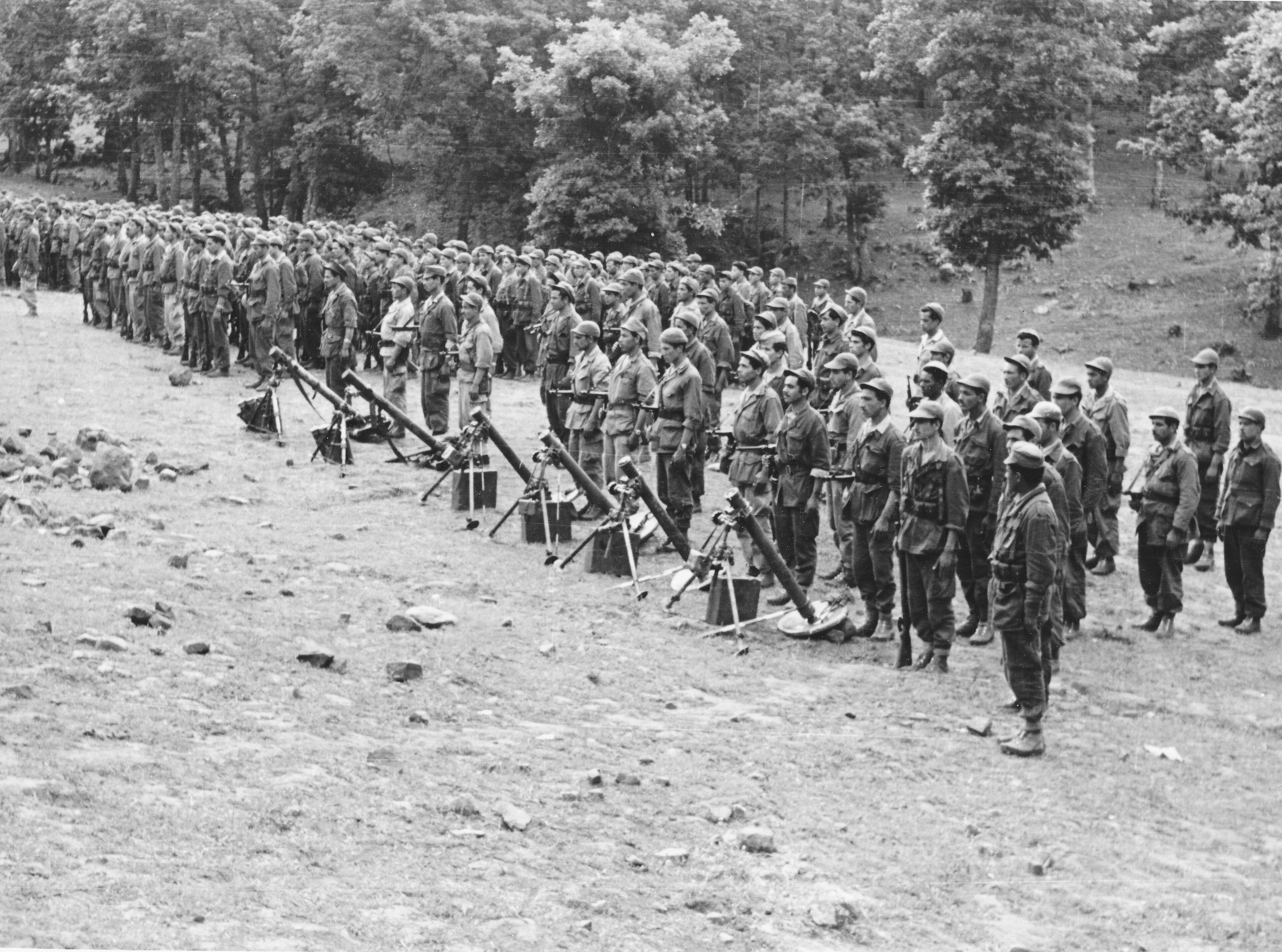
The Algerian War of Independence was fought from 1 November 1954 to the 18 March 1962 Évian Accords, ending 132 years of French colonial rule. The National Liberation Front (FLN) confronted a French state that deployed mass detention, forced displacement, executions and systematic torture while legally insisting that Algeria was part of France.
This was both a decolonization war and a set of overlapping internal conflicts involving the FLN, its Algerian rival the MNA, European settlers, French conscripts, harkis and the anti-independence OAS. Algeria became independent on 5 July 1962 after the 1 July referendum produced 5,975,581 votes for independence and 16,534 against, according to the official result.
Key takeaways
- Algerian independence in 1962 ended 132 years of French rule after a war combining anticolonial struggle, state terror and internal civil conflicts.
- French torture was a system of counterinsurgency enabled by emergency law, military policing powers, secret detention and institutional protection.
- Historians commonly estimate approximately 250,000–300,000 Algerian deaths between 1954 and 1962, far below Algeria’s official 1.5 million figure.
- About 2 million rural Algerians had been forcibly regrouped by 1960, separating communities from land and suspected FLN guerrillas.
- French acknowledgments since 1999 have named the war and selected state crimes, but comprehensive accountability, remediation and archival access remain incomplete.
What happened: conquest, revolt and counterinsurgency
France invaded Algiers in 1830 and formally annexed northern Algeria in 1848. By 1954, about 984,000 Europeans lived beside roughly 8.5 million Algerian Muslims, according to French census categories; political rights, landholding and public investment remained radically unequal.
The FLN launched coordinated attacks on 1 November 1954, the Toussaint Rouge. France expanded the conflict from policing into war without formally calling it one until 1999. Its armed forces rose from roughly 60,000 personnel in 1954 to about 400,000 by 1956; the total reached approximately 500,000 near the 1958 peak in standard historical accounts.
| Date | Event | Concrete consequence |
|---|---|---|
| 1 Nov 1954 | FLN uprising begins | About 70 attacks; 7 people killed in commonly cited official accounts |
| Aug 1955 | Philippeville/Skikda uprising and repression | 123 killed by insurgents in French figures; reprisals killed at least 1,273, while historians cite several thousand |
| 1956–1957 | Battle of Algiers | Bombings answered by mass arrest, disappearance, torture and summary execution |
| 13 May 1958 | Algiers crisis | Military-settler pressure helped return Charles de Gaulle to power |
| 17 Oct 1961 | Paris police massacre | At least 48 killed in Jim House and Neil MacMaster’s research; Jean-Luc Einaudi estimated more than 200 |
| 18 Mar 1962 | Évian Accords signed | Ceasefire took effect on 19 March 1962 |
| 5 Jul 1962 | Independence proclaimed | French colonial sovereignty ended after 132 years |
See the archive’s wider colonial history and documented atrocities.
The mechanism of French torture
Torture was not an accidental excess by a few soldiers. During the 1957 Battle of Algiers, General Jacques Massu’s 10th Parachute Division received police powers and dismantled FLN networks through intelligence-led raids, unregistered detention and coercive interrogation. Methods included electric shocks from field generators—the gégène—water torture, beatings, sexual violence, sleep deprivation and simulated execution. Detainees were sometimes killed and recorded as escapees.
The system depended on emergency powers, military impunity and euphemisms such as interrogatoire poussé—“intensive interrogation.” Historian Raphaëlle Branche established from military, judicial and personal archives that torture became a system within French counterinsurgency, although practice varied by unit and period.
“The police came to the villa and carried out the formalities regarding my arrest. It was the paratroopers who tortured me.” — Henri Alleg, 1958, La Question
A 2018 French archival survey identified 1,056 people reported missing after arrest by French forces during the 1957 Battle of Algiers. That documented list is not a complete count of all torture victims or disappearances across Algeria.
The numbers: deaths, displacement and detention
No single death toll commands scholarly agreement. Categories overlap, records are incomplete and governments counted differently. The FLN state later institutionalized the figure of 1.5 million Algerian “martyrs”; many historians judge that figure substantially higher than demographic and archival estimates.
| Population or harm | Period | Estimate and source |
|---|---|---|
| Algerian war deaths | 1954–1962 | About 250,000–300,000, estimated by historian Charles-Robert Ageron |
| Algerian deaths | 1954–1962 | About 300,000, demographic estimate associated with Kamel Kateb |
| Official Algerian claim | 1954–1962 | 1.5 million martyrs, promoted by the post-1962 Algerian state |
| French military deaths | 1954–1962 | 23,196, French official military accounting commonly cited by historians |
| European civilians killed or missing | 1954–1962 | Roughly 2,800–3,000, compiled in French historical accounts |
| Harkis and relatives killed after ceasefire | 1962 onward | About 30,000–90,000; estimates vary among historians including Charles-Robert Ageron and Mohand Hamoumou |
| Algerians forcibly regrouped | By 1960 | About 2 million in camps; Michel Cornaton estimated up to 2.35 million by 1961 |
France also constructed electrified, mined frontier barriers: the Morice Line from 1957 and the Challe Line from 1959 restricted FLN movement from Tunisia and Morocco. Regroupment camps emptied rural districts to isolate guerrillas, destroying livelihoods and exposing civilians to hunger and disease. Detailed comparative figures belong in the archive’s data collections.
The most defensible conclusion is a range, not a slogan: approximately 250,000–300,000 Algerian deaths is widely supported, while specific categories remain disputed.
Who profited and what France sought to retain
Colonial Algeria concentrated land and political power among European settlers known as pieds-noirs. By 1954, approximately 984,000 Europeans formed about 10% of the population but dominated commercial agriculture, urban property, credit and representation. Earlier land confiscations had transferred millions of hectares from Algerian communities to settlers and companies.
Oil transformed the late-colonial calculation. French prospectors discovered major petroleum deposits at Edjeleh and Hassi Messaoud in 1956 and gas at Hassi R’Mel in 1956. Saharan output rose from negligible levels in 1956 to approximately 20 million metric tons of crude oil in 1962, according to contemporary French energy statistics summarized in economic histories. French firms including Compagnie Française des Pétroles and state-backed CREPS gained privileged access.
The Évian Accords protected French economic interests, property and Saharan testing sites during transition. France conducted 17 nuclear tests in Algeria between 1960 and 1966: 4 atmospheric tests near Reggane in 1960–1961 and 13 underground tests at In Ekker in 1961–1966. Independence ended formal sovereignty, but not immediately the military, energy and financial relationships built under empire.
Resistance, civil conflict and independence
Resistance was broader than battlefield combat: villagers supplied food and intelligence; women including Djamila Bouhired and Zohra Drif carried messages and bombs; workers financed the FLN; and emigrants organized in France. The FLN also enforced authority violently, killing alleged collaborators and fighting Messali Hadj’s Algerian National Movement (MNA), notably in France’s “café wars.”
The path to independence can be summarized in five stages:
- The FLN converted scattered armed groups into a national movement after 1 November 1954.
- The 20 August 1956 Soummam Congress created political and military structures, although internal struggles persisted.
- The 1956–1957 Battle of Algiers internationalized both FLN attacks on civilians and French torture.
- De Gaulle accepted Algerian self-determination on 16 September 1959, provoking settler and military resistance, including the OAS campaign from 1961.
- The Évian Accords of 18 March 1962 produced a ceasefire, referendum and sovereignty on 5 July 1962.
Key facts
- The conflict lasted 7 years and 8 months, from 1 November 1954 to independence on 5 July 1962.
- Approximately 1 million pieds-noirs left Algeria, overwhelmingly during 1962.
- France abandoned many harkis; only about 40,000–45,000 auxiliaries and relatives reached France in 1962 under official or improvised evacuations.
- OAS bombings and assassinations targeted Algerians and pro-independence French citizens during 1961–1962.
Denial, official memory and present meaning
France’s Fifth Republic emerged directly from the war’s 1958 crisis. Successive amnesties shielded perpetrators: laws and decrees adopted between 1962 and 1968, followed by the 1982 rehabilitation of putschist officers, narrowed routes to prosecution. On 18 October 1999, French law finally adopted the term “Algerian War,” replacing official language about “operations to maintain order.”
Public acknowledgment has remained incremental. President François Hollande recognized the “bloody repression” of the 17 October 1961 Paris demonstration in 2012. Macron acknowledged state responsibility for Maurice Audin’s torture and death in 2018 and Ali Boumendjel’s killing in 2021. In 2022, he described the 26 March 1962 Rue d’Isly shooting, where French soldiers killed at least 46 European demonstrators according to the official toll, as “unforgivable.”
The war matters now because torture migrated from colonial emergency doctrine into later counterinsurgency debates, while unresolved archives, nuclear contamination and competing victim memories shape French-Algerian relations. Recognition without full archival access, remediation or accountability remains partial.
Sources & further reading
- Encyclopaedia Britannica: Algerian War
- Yale University Press: A Savage War of Peace by Alistair Horne
- Cornell University Press: Torture and the Twilight of Empire by Marnia Lazreg
- French Presidency: Maurice Audin declaration, 2018
- French Presidency: Ali Boumendjel statement, 2021
- BBC News: France admits systematic torture in Algeria
Frequently asked questions
- Why did the Algerian War begin in 1954?
- The FLN began an armed uprising on 1 November 1954 against a colonial system established by France in 1830. Roughly 984,000 European settlers enjoyed disproportionate control over land, government and commerce among about 9.5 million residents in 1954. Failed reform, electoral manipulation and the violent repression around Sétif and Guelma in May 1945 helped convince nationalists that legal equality under French rule was unattainable.
- Did France systematically use torture in Algeria?
- Yes. Torture became systematic in important sectors of French counterinsurgency, especially during General Jacques Massu’s 1957 Battle of Algiers. Soldiers and police used electric shocks, water torture, beatings, sexual violence and simulated executions to obtain intelligence. Henri Alleg documented his treatment in *La Question* in 1958. France acknowledged state responsibility for Maurice Audin’s torture and death in 2018.
- How many people died in the Algerian War?
- Charles-Robert Ageron estimated approximately 250,000–300,000 Algerian deaths during 1954–1962; demographer Kamel Kateb’s work supports about 300,000. Algeria’s post-independence state adopted 1.5 million martyrs, a figure most demographic historians reject. French official accounting records 23,196 military deaths, while roughly 2,800–3,000 European civilians were killed or disappeared.
- What happened to the harkis after Algerian independence?
- Harkis were Algerian Muslim auxiliaries who served France. After the 19 March 1962 ceasefire, France restricted their evacuation despite foreseeable reprisals. Approximately 40,000–45,000 harkis and relatives reached France during 1962 through official and unauthorized channels. Estimates of those killed in Algeria range from about 30,000 to 90,000, reflecting incomplete records and disputed definitions.
- When did France officially recognize the Algerian War and its crimes?
- A French law dated 18 October 1999 officially replaced “operations to maintain order” with “Algerian War.” François Hollande acknowledged the bloody repression of 17 October 1961 in 2012. Emmanuel Macron recognized state responsibility for Maurice Audin’s 1957 torture and death in 2018 and admitted in 2021 that French forces tortured and murdered lawyer Ali Boumendjel in 1957.
Related chapters
Topics
- Aimé Césaire and Discourse on Colonialism
- South African Apartheid: The Legal Architecture of Racism
- Atlantic Slave Trade: Scale, Profits and Resistance
- Banda massacre and the Dutch nutmeg monopoly
- Belgian Congo: From Leopold’s Atrocities to Colonial Rule
- The 1943 Bengal Famine and British Policy
- Benin Bronzes: Looting, Trade and Restitution
- Berlin Conference and the Partition of Africa
- The Black War and the Genocide of Tasmanian Aboriginals
Sources & further reading
CC BY 4.0 ·