Benin Bronzes: Looting, Trade and Restitution
How Britain looted Benin City in 1897, dispersed thousands of royal artworks through museums and markets, and why restitution remains unfinished.
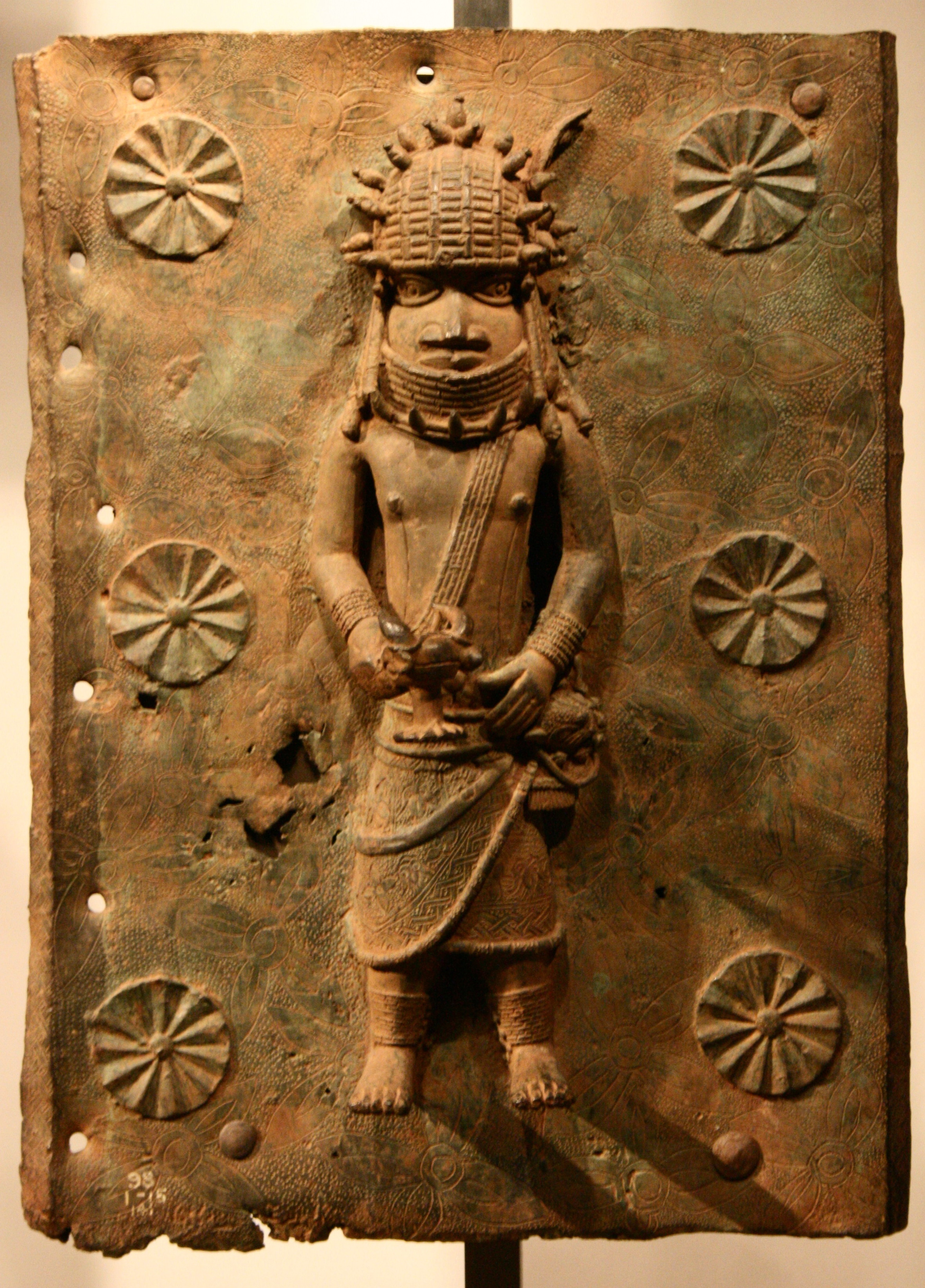
The Benin Bronzes are thousands of brass, bronze, ivory and wooden works made by Edo artists for the royal court of the Kingdom of Benin from at least the 1400s. They include commemorative heads, altar objects and relief plaques—called ama in Edo—that record rulers, ceremonies, warfare and diplomacy.
British forces seized the works during the destruction of Benin City in February 1897. Officials then sold and distributed them to offset expedition costs and reward participants, dispersing a royal archive among museums and private collections. This was not archaeological recovery: it was colonial plunder produced by armed invasion.
Key takeaways
- The Benin Bronzes formed a royal and historical archive before British troops violently dispersed it during the invasion of February 1897.
- Britain's Foreign Office recorded 2,500 objects in 1897, while later estimates range from 3,000–5,000 to more than 10,000.
- Colonial officials, museums, dealers and collectors converted seized cultural property into institutional prestige, private assets and a lucrative international market.
- Nigeria's restitution campaign predates independence in 1960 and has secured major ownership transfers from Germany and United States institutions since 2021.
- Returning legal title does not settle every custody question, but disagreement within Nigeria cannot legitimate continued possession by former colonial powers.
What happened in Benin City
Britain had pressed Oba Ovonramwen Nogbaisi to accept expanding commercial and political control. In January 1897, Acting Consul-General James Robert Phillips led an unauthorized mission toward Benin City during a sacred period, despite warnings not to proceed. Edo forces attacked the party near Ugbine; historians generally report that 7 of its 9 European officers and an uncertain number of African carriers were killed in 1897.
Britain answered with a force of roughly 1,200 naval personnel and marines under Rear-Admiral Harry Rawson. It captured Benin City on 18 February 1897, deposed the Oba and incorporated the kingdom into the Niger Coast Protectorate. British troops removed royal and sacred objects before fire destroyed much of the city. Contemporary evidence does not establish a reliable African death toll; it records intense fighting, bombardment and punitive attacks on settlements.
“The houses of the chiefs were well stored with loot, and the palace itself contained an enormous quantity.” — Captain Herbert Sutherland Walker, 1897, Diary of the Benin Expedition
| Date | Event | Concrete figure |
|---|---|---|
| 9 January 1897 | Phillips party attacked near Ugbine | 7 of 9 Europeans killed; African losses uncertain |
| 9 February 1897 | Rawson's punitive expedition began | About 1,200 British-controlled personnel |
| 18 February 1897 | Benin City captured | 1 capital occupied and subsequently burned |
| September 1897 | Oba Ovonramwen surrendered | Exiled until his death in 1914 |
The invasion belongs within the archive's wider histories of colonial conquest and documented atrocities.
The mechanism: seizure, sale and dispersal
The operation followed a recognizable colonial mechanism:
- British officials reframed commercial resistance as obstruction and the January 1897 killings as grounds for collective punishment.
- A naval expedition used Maxim guns, rifles, rockets and artillery to defeat Edo forces in February 1897.
- Soldiers and officers inventoried, divided and removed palace, ancestral and religious property.
- The British Admiralty sold objects through auctioneers and dealers to defray expedition expenses.
- Museums converted violently acquired property into ethnographic specimens and fine art, often obscuring the conditions of seizure.
Britain's Foreign Office recorded 2,500 objects sent to Britain in 1897, a figure often treated as a shipment count rather than a complete total. Historian Philip Igbafe estimated in 1979 that 3,000–5,000 objects were removed. Dan Hicks argued in 2020 that the broader haul likely exceeded 10,000 objects when ivories, regalia, household materials and subsequently fragmented works are included.
The numbers and who profited
The British Museum received an initial allocation of approximately 200 objects in 1897 and reported holding more than 900 Benin objects in 2021, including about 700 brass plaques and other metalworks. Berlin's Ethnologisches Museum held approximately 530 historical Benin objects in 2021 before Germany transferred ownership of 1,130 objects nationwide to Nigeria in 2022.
| Holder or transaction | Year | Recorded number or value | Significance |
|---|---|---|---|
| British Museum initial allocation | 1897 | About 200 objects | Direct state-museum benefit from the invasion |
| British Museum collection | 2021 | More than 900 objects | One of the largest holdings outside Nigeria |
| German public collections | 2022 | 1,130 objects | Ownership transferred to Nigeria |
| Smithsonian Institution | 2022 | 29 objects | Ownership transferred to Nigeria |
| Nigerian purchase at Sotheby's | 1953 | £5,500 for 1 head | Bought back from the dispersal market |
| Auction of an Edo mask at Sotheby's | 2011 | £7.4 million | Demonstrated the market value created by scarcity |
Officials, auction houses, dealers, collectors and museums all benefited. Felix von Luschan, who built Berlin's collection, called Benin works great art while participating in their removal from African control. Market prices rose as museums authenticated, classified and exhibited the pieces. The Oba's court and Edo people bore the loss of political records, ritual instruments and ancestral property.
Resistance and demands for return
Edo resistance did not end with conquest. Oba Ovonramwen surrendered in September 1897 and was exiled to Calabar, where he died in 1914. His son, Oba Eweka II, restored court institutions after taking the throne in 1914; the Igun-Eronmwon brass-casting guild continued producing work despite the rupture.
Nigeria requested loans for the planned Museum of West African Arts around independence in 1960 and repeatedly pursued returns afterward. In 1977, the British Museum refused Nigeria's request to borrow the ivory mask of Queen Mother Idia for FESTAC ’77; Nigeria used a replica as the festival emblem.
Restitution is not the erasure of museum history. It is the restoration of title and decision-making power to communities dispossessed by force.
A major shift followed France's 2018 Sarr-Savoy report. The University of Aberdeen returned 1 Benin bronze in 2021; Jesus College, Cambridge, returned 1 cockerel in 2021; the Smithsonian transferred 29 objects in 2022; and Germany transferred title to 1,130 objects in 2022. Some remain in Germany on renewable loan. These cases can be compared through the archive's restitution data.
Denial, memory and ownership now
Institutional defenses commonly invoke legal title, universal access and the preservation capacity of European museums. These arguments detach possession from the 1897 invasion. Britain's National Heritage Act 1983 generally prevents the British Museum from disposing of collection objects except under narrow exceptions, but statutory restriction does not convert violent acquisition into ethical ownership.
In March 2023, outgoing Nigerian president Muhammadu Buhari declared ownership of returned Benin objects vested in the Oba of Benin. That decision generated debate among Nigeria's federal institutions, Edo State, museum planners and the royal court over custody, public access and whether returned works should enter a national, regional or royal collection. It did not revive British ownership.
The present issue is therefore larger than location. Restitution requires provenance disclosure, transfer of legal title, access for Edo communities, investment in conservation without paternalistic conditions, and recognition that museums accumulated authority through empire. Digitization cannot substitute for return: a scan preserves information while leaving control with the institution that holds the original.
Key facts
- British forces captured Benin City on 18 February 1897 and removed royal, sacred and historical property.
- Published estimates range from the Foreign Office's 2,500-object shipment record in 1897 to Dan Hicks's 2020 estimate exceeding 10,000 items.
- The British Museum reported more than 900 Benin objects in 2021 but remains constrained by the National Heritage Act 1983.
- Germany transferred ownership of 1,130 Benin objects to Nigeria in 2022, while retaining some under loan arrangements.
- Restitution concerns legal title, cultural authority and repair—not merely whether an object can be viewed in Nigeria.
Sources & further reading
- British Museum: Benin Bronzes
- Digital Benin: global collections and provenance records
- Dan Hicks, The Brutish Museums
- The Metropolitan Museum of Art: The Art of Benin
- Smithsonian: National Museum of African Art transfers ownership
- German Contact Point for Collections from Colonial Contexts: Benin Bronzes
Frequently asked questions
- What are the Benin Bronzes?
- The Benin Bronzes are thousands of brass, bronze, ivory and wooden works made by Edo artists for the Kingdom of Benin from at least the 1400s. They include relief plaques, commemorative heads, altar objects and regalia. Many were produced by the royal brass-casters' guild at Igun-Eronmwon in present-day Benin City, Nigeria.
- Why did Britain loot the Benin Bronzes?
- Britain invaded the Kingdom of Benin in February 1897 after Edo forces killed 7 of 9 European officers in James Phillips's unauthorized party in January. Rear-Admiral Harry Rawson's force of roughly 1,200 captured Benin City on 18 February. Troops seized royal property, and the Admiralty sold much of it to offset expedition costs and consolidate colonial rule.
- How many Benin Bronzes were taken in 1897?
- No complete inventory survives. Britain's Foreign Office recorded 2,500 objects shipped in 1897. Historian Philip Igbafe estimated 3,000–5,000 in 1979, while archaeologist Dan Hicks argued in 2020 that more than 10,000 items may have been taken when ivories, regalia, fragmented works and non-metal objects are counted.
- Where are the Benin Bronzes today?
- Digital Benin documents works across institutions worldwide. In 2021, the British Museum reported more than 900 Benin objects, while German public museums held about 1,130 covered by the 2022 ownership transfer to Nigeria. Other pieces remain in museums and private collections across Europe and North America; some returned objects are held or displayed under Nigerian, royal or loan arrangements.
- Have the Benin Bronzes been returned to Nigeria?
- Some have. Jesus College and the University of Aberdeen each returned 1 object in 2021; the Smithsonian transferred 29 in 2022; and Germany transferred ownership of 1,130 in 2022. The British Museum has not returned its collection, citing the National Heritage Act 1983. Restitution remains incomplete and involves title, custody, display and conservation.
Related chapters
Topics
- Aimé Césaire and Discourse on Colonialism
- Algerian War of Independence and French Torture
- South African Apartheid: The Legal Architecture of Racism
- Atlantic Slave Trade: Scale, Profits and Resistance
- Banda massacre and the Dutch nutmeg monopoly
- Belgian Congo: From Leopold’s Atrocities to Colonial Rule
- The 1943 Bengal Famine and British Policy
- Berlin Conference and the Partition of Africa
- The Black War and the Genocide of Tasmanian Aboriginals
Sources & further reading
CC BY 4.0 ·