The CFA Franc and French Monetary Control in West Africa
How France built and retained influence over the West African CFA franc: its colonial origins, euro peg, reserve rules, beneficiaries and resistance.
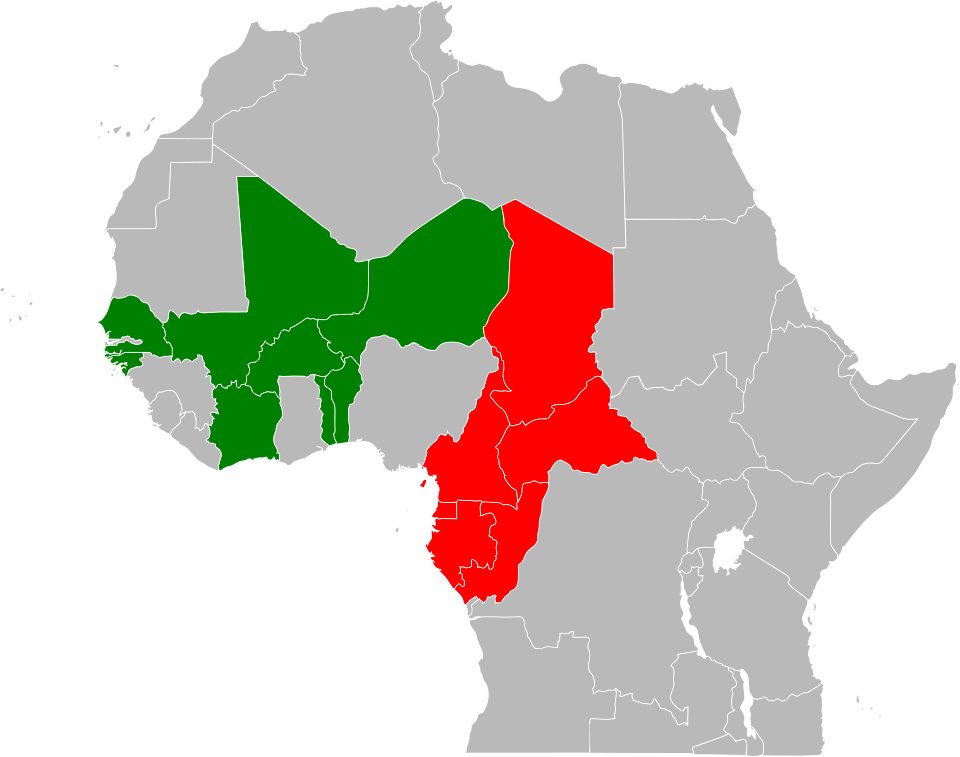
The CFA franc began as an explicitly colonial currency. France created the franc des Colonies françaises d’Afrique on 26 December 1945, the day it ratified the Bretton Woods agreements, and set its value from Paris. Independence changed the institutions and the acronym, but not the central arrangement: a fixed exchange rate guaranteed by the French Treasury, regional central banks, convertibility rules and—until reforms agreed in 2019—mandatory deposits of foreign-exchange reserves in France.
Today, the West African CFA franc (XOF) is issued by the Central Bank of West African States (BCEAO) for eight countries. It is distinct from the Central African CFA franc (XAF), issued for six countries by the Bank of Central African States; both had the same euro value in 2026 but were not interchangeable. This hub focuses on French monetary power in West Africa and connects it to the archive’s wider accounts of colonial rule, colonial violence and economic evidence.
Key takeaways
- France created the CFA franc in 1945 and retained influence through parity rules, a Treasury guarantee, reserve accounts and governance arrangements.
- The West African CFA franc served eight countries and an estimated 151.6 million people in 2024, based on summed World Bank figures.
- The 1994 devaluation doubled the price of one French franc from 50 to 100 CFA francs, sharply raising import costs.
- Reforms announced in 2019 removed mandatory French reserve deposits and routine French governance seats, but retained the euro peg and guarantee.
- The system delivered price and exchange stability while limiting national control over devaluation, monetary financing and responses to economic shocks.
Key facts: what France created
- France established the CFA franc by decree on 26 December 1945.
- France devalued it by 50% on 12 January 1994, changing the rate from 50 to 100 CFA francs per French franc.
- Since 1 January 1999, the XOF peg has been €1 = 655.957 CFA francs, derived from France’s euro conversion rate.
- The XOF served 8 states with about 141 million residents in 2024, based on World Bank country totals; the often-cited 14-country, 227-million figure describes both CFA zones around 2023, not West Africa alone.
- Before the reform announced on 21 December 2019, the BCEAO generally had to place 50% of foreign reserves in a French Treasury operations account; the required share had been 65% until 2005.
| Date | Institutional change | Concrete rule or rate |
|---|---|---|
| 26 Dec 1945 | France creates the CFA franc | 1 CFA franc = 1.70 French francs |
| 17 Oct 1948 | Revaluation against the French franc | 1 CFA franc = 2 French francs |
| 12 Jan 1994 | Coordinated devaluation | 1 French franc: 50 → 100 CFA francs |
| 1 Jan 1999 | Euro replaces French-franc anchor | €1 = 655.957 CFA francs |
| 21 Dec 2019 | France and WAEMU announce reform | Reserve-deposit obligation and French governance seats removed |
How the control mechanism worked
The system had four linked parts:
- A fixed parity: France determined the initial rates; since 1999, the BCEAO has maintained the euro peg.
- A convertibility guarantee: the French Treasury promised conversion into the anchor currency, subject to the monetary agreements.
- Reserve centralization: BCEAO members pooled reserves; historically, a prescribed share went into an operations account at the French Treasury.
- External discipline: protecting the peg prioritized reserves, low inflation and limits on central-bank financing over nationally chosen exchange rates.
France’s role was not simply that banknotes were once printed in France. It occupied governance seats under earlier agreements, held reserve deposits and acted as guarantor. The 2019 reform, legally implemented through a new French-WAEMU cooperation agreement ratified by France in 2021, ended French representatives’ routine presence in BCEAO bodies and the formal 50% deposit requirement. France retained the guarantee, while the currency remained XOF because the planned “eco” had not replaced it by 2026.
“France without Africa will have no history in the twenty-first century.” — François Mitterrand, 1957, Présence française et abandon
The quotation captures an elite strategic view; it does not prove that every later policy had one motive. The documentary record nonetheless places monetary agreements inside Françafrique: the post-independence network linking French officials, African governments, banks and corporations.
The numbers: scale, reserves and devaluation
| XOF member state | Population, 2024 World Bank estimate | Joined monetary union |
|---|---|---|
| Benin | 14.5 million | 1962 |
| Burkina Faso | 23.5 million | 1962 |
| Côte d’Ivoire | 31.9 million | 1962 |
| Guinea-Bissau | 2.2 million | 1997 |
| Mali | 24.5 million | 1962; withdrew 1962, rejoined 1984 |
| Niger | 27.0 million | 1962 |
| Senegal | 18.5 million | 1962 |
| Togo | 9.5 million | 1962 |
| Total | 151.6 million | 8 states |
The population total is the sum of World Bank 2024 estimates, rounded to 0.1 million; revisions explain differences from earlier estimates near 141 million. The decisive shock was the 1994 devaluation: one CFA franc lost 50% of its external value overnight. Imported fuel, medicines and machinery became roughly twice as expensive in CFA terms before taxes, margins or later price adjustment, while exporters received more local currency.
There was no single death toll attributable to the CFA franc, and assigning one would be false precision. Its measurable harms concern distribution, austerity, imported-price shocks and constrained policy—not a defensible body-count range.
Who profited—and who carried the risk
The arrangement benefited different actors in different ways. French and other euro-area companies gained exchange-rate predictability, freedom to repatriate eligible profits and reduced currency risk. Commodity exporters and African political elites gained access to a stable settlement currency. France received strategic influence and reserve deposits, although those deposits were liabilities of the Treasury, remunerated under agreement—not a cost-free confiscated fund.
The peg also produced advantages for residents: comparatively low inflation and easier intra-union payments. But benefits were unequal. Importers, creditors and holders of financial assets generally value a strong, stable currency; farmers, manufacturers and governments seeking cheaper export prices or monetary financing may bear its constraints.
The CFA system should be assessed as a distribution of power and risk, not through the inaccurate claim that France simply “takes 50%” of African money.
The reserve rule restricted control over public assets, but deposits remained owned by the BCEAO. The stronger indictment is institutional: governments representing millions of Africans inherited a parity and guarantee structure negotiated under colonial and postcolonial asymmetry, with France holding powers unavailable to ordinary citizens.
Resistance, reform and official denial
Guinea rejected continued membership in France’s constitutional community in 1958 and introduced the Guinean franc in 1960. Mali created its own franc in 1962, then returned to the West African union in 1984 after monetary instability. Thomas Sankara of Burkina Faso denounced debt and neocolonial dependence before his assassination on 15 October 1987, although he did not abolish the CFA franc.
Opposition intensified after 1994 and again in the 2010s. Economists including Ndongo Samba Sylla, Kako Nubukpo and Demba Moussa Dembélé argued that the peg suppressed industrial policy and democratic sovereignty. In 2017, protests against the CFA franc occurred in several African and European cities.
French and BCEAO officials answer that African states sit in regional institutions, may legally withdraw and receive stability through the guarantee. That defense identifies real African agency but understates path dependence, exit costs and France’s historical leverage. Claims that the system was unchanged after 2019 are also inaccurate: reserve and governance rules changed. Claims that monetary sovereignty was completed are equally misleading: in 2026, the euro peg and French Treasury guarantee remained.
What it means now
The central question is no longer whether XOF is literally the 1945 currency; its institutions have changed repeatedly. The question is who sets monetary priorities, who can alter parity, and who absorbs adjustment when export prices, debt costs or the euro move.
A future “eco” could mean three different things: a renamed XOF retaining the euro peg; an expanded regional currency governed by the Economic Community of West African States; or a genuinely different exchange-rate regime. These are not equivalent. ECOWAS repeatedly postponed its single-currency target, including the earlier 2020 launch plan, and by 2026 no union-wide eco circulated.
For the archive, the CFA franc belongs neither to conspiracy folklore nor to a narrow technical history. It is a documented case of colonial statecraft surviving through treaties, balance sheets and elite alliances. Readers can compare its chronology with the wider history of empire, assess claims through the archive’s data collections, and distinguish economic coercion from catalogued mass atrocities.
Sources & further reading
- Banque de France — The franc zone and monetary cooperation
- BCEAO — History of the monetary union
- French Treasury — Reform of monetary cooperation with WAEMU
- World Bank — Population, total
- IMF — West African Economic and Monetary Union country information
- Ndongo Samba Sylla, The CFA Franc: French Monetary Imperialism in Africa
Frequently asked questions
- What is the West African CFA franc?
- The West African CFA franc, ISO code XOF, is the common currency of Benin, Burkina Faso, Côte d’Ivoire, Guinea-Bissau, Mali, Niger, Senegal and Togo. France created its colonial predecessor on 26 December 1945. The BCEAO issues XOF, which has been fixed at €1 to 655.957 CFA francs since 1 January 1999.
- Does France still control the CFA franc?
- France no longer exercises all the formal powers it once held. A reform announced on 21 December 2019 ended the requirement to deposit 50% of BCEAO reserves at the French Treasury and removed routine French representatives from BCEAO governance. In 2026, however, France still provided the convertibility guarantee, and XOF remained pegged to the euro at €1 to 655.957 francs.
- Does France take 50% of CFA countries’ reserves?
- Not in 2026. Before the 2019 reform, the BCEAO generally deposited 50% of its foreign-exchange reserves in an operations account at the French Treasury; the requirement had been 65% until 2005. Those funds remained BCEAO assets and earned remuneration, so “France took half” is inaccurate. The rule nevertheless constrained where reserves were held and symbolized unequal sovereignty.
- Why was the CFA franc devalued in 1994?
- France and the CFA-zone governments devalued the currency on 12 January 1994 after recession, declining commodity competitiveness and reserve pressure. The rate moved from 50 to 100 CFA francs per French franc, a 50% loss in external value. The IMF and World Bank supported accompanying adjustment programs. Exports became cheaper abroad, while imported goods became substantially more expensive in local currency.
- Is the West African CFA franc the same as the Central African CFA franc?
- No. In 2026, XOF was issued by the BCEAO for eight West African states, while XAF was issued by the Bank of Central African States for six Central African states. Both were fixed at €1 to 655.957 units, but they were legally separate currencies and were not ordinarily interchangeable across their two monetary unions.
Related chapters
Topics
- Aimé Césaire and Discourse on Colonialism
- Algerian War of Independence and French Torture
- South African Apartheid: The Legal Architecture of Racism
- Atlantic Slave Trade: Scale, Profits and Resistance
- Banda massacre and the Dutch nutmeg monopoly
- Belgian Congo: From Leopold’s Atrocities to Colonial Rule
- The 1943 Bengal Famine and British Policy
- Benin Bronzes: Looting, Trade and Restitution
- Berlin Conference and the Partition of Africa
Sources & further reading
CC BY 4.0 ·