Congo Free State under Leopold II
How Leopold II’s Congo Free State used forced labor, hostage-taking and terror, causing mass death while rubber and ivory enriched Europe, 1885–1908.
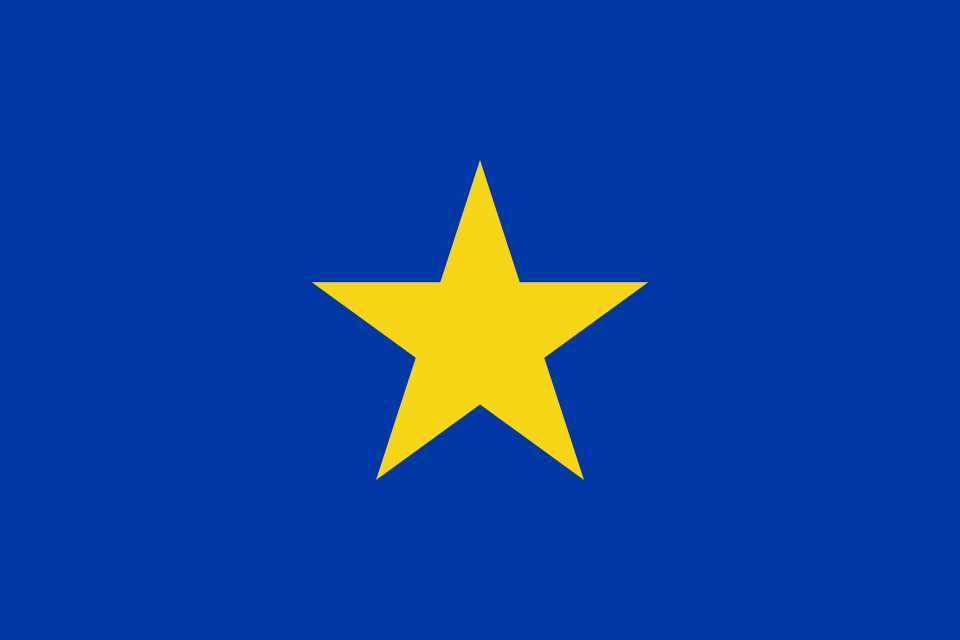
The Congo Free State was King Leopold II of Belgium’s personal colonial regime in the Congo Basin from 1885 to 1908. It seized land, labor, rubber and ivory through armed coercion, hostage-taking, flogging, imprisonment and killing. Although presented as a humanitarian and anti-slavery project, it functioned as an extractive state controlled from Brussels; Leopold never visited Congo.
Its demographic cost cannot be reduced to one provable death toll because no reliable territory-wide census existed before 1924. Historians nevertheless agree that violence, forced displacement, famine, exhaustion, collapsing birth rates and disease produced a catastrophic population decline. This hub connects the regime to the wider histories of colonialism, documented atrocities and contested historical data.
Key takeaways
- Leopold II personally controlled the Congo Free State from 1885 to 1908, although he remained Belgium’s constitutional king.
- Rubber quotas were enforced through hostage-taking, flogging, village destruction, imprisonment, mutilation and killing by concession forces and the Force Publique.
- Rubber exports rose from about 100 metric tonnes in 1887 to roughly 6,000 tonnes in 1901, according to Jules Marchal’s reconstruction.
- No reliable baseline census exists, but scholars describe a loss of millions through violence, hunger, disease, displacement and collapsing birth rates.
- Belgian annexation in 1908 ended Leopold’s private rule but retained colonial extraction and racial domination until independence in 1960.
What happened: a privately controlled colonial state
European powers recognized Leopold’s claims during and after the Berlin Conference of 1884–1885. The General Act was signed on 26 February 1885; Leopold announced the Congo Free State on 29 May 1885, and that name officially replaced the International Association of the Congo on 1 August 1885. Belgium’s parliament authorized Leopold to become sovereign on 28 April 1885, but the territory was not a Belgian colony: Belgium and the Free State were legally separate states under one monarch.
Leopold claimed that free trade, scientific work and opposition to the slave trade justified his rule. In practice, decrees issued from 1885 onward treated much supposedly “vacant” land as state property. After an 1891 decree asserted state control over products gathered on that land, officials compelled Congolese communities to supply wild rubber and other goods.
Key facts
- The Congo Free State existed for 23 years, from 1885 to 1908, under Leopold II’s personal sovereignty.
- It covered about 2.34 million square kilometers in 1885, roughly 76 times Belgium’s contemporary area.
- The Force Publique, created in 1885, combined European officers with African soldiers recruited or coerced across Central Africa.
- Belgium annexed the territory on 15 November 1908, renaming it the Belgian Congo.
The mechanism: quotas, hostages and the Force Publique
The regime divided extraction among the state domain, Leopold’s private Domaine de la Couronne and concession companies including the Anglo-Belgian India Rubber Company, known as ABIR, and the Société Anversoise du Commerce au Congo. Communities received rubber quotas while soldiers seized women and children as hostages, destroyed crops, burned settlements and administered the chicotte, a hippopotamus-hide whip.
Force Publique units were expected to account for cartridges, encouraging soldiers to present severed right hands as evidence that ammunition had not been wasted. Hands were also taken from living people, and commanders sometimes accepted them when soldiers had used cartridges for hunting or could not produce bodies. The practice therefore served both bureaucratic accounting and terror.
“The rubber from this district has cost hundreds of lives, and the scenes I have witnessed, unable to help, have been almost enough to make me wish I were dead.” — Edmund Dene Morel, 1904, King Leopold’s Rule in Africa
The system operated through these linked steps:
- Land appropriation: decrees culminating in 1891 declared uncultivated resources state-controlled.
- Compulsory quotas: officials and concession agents demanded rubber without a freely negotiated wage.
- Hostage-taking: soldiers detained relatives until men delivered the required amount.
- Punishment: shortfalls brought flogging, imprisonment, village destruction, mutilation or killing.
- Export and reward: rubber entered European markets while agents received commissions tied to output.
The numbers: exports, revenue and demographic collapse
Rubber exports rose as the pneumatic-tire and electrical industries expanded. Figures vary by accounting series, but historian Jules Marchal’s reconstruction from Free State statistics shows an increase from roughly 100 metric tonnes in 1887 to about 6,000 tonnes in 1901.
| Year | Recorded or reconstructed indicator | Figure | Source |
|---|---|---|---|
| 1887 | Rubber exports | about 100 metric tonnes | Jules Marchal, archival reconstruction published 1996 |
| 1895 | Rubber exports | about 1,300 metric tonnes | Free State statistics synthesized by Marchal, 1996 |
| 1901 | Rubber exports | about 6,000 metric tonnes | Free State statistics synthesized by Marchal, 1996 |
| 1906 | Congo-derived income received by Leopold | at least 11.5 million Belgian francs | Belgian parliamentary inquiry cited by Hochschild, 1998 |
No exact death count can be established. Population estimates were extrapolated from local observations rather than a baseline census.
| Estimate published | Claimed loss by or across | Figure | Estimator and basis |
|---|---|---|---|
| 1904 | Early Free State period to 1904 | about 5 million | Roger Casement, extrapolation from depopulated districts |
| 1919 | Roughly 1880–1919 | 50%, often rendered as 10 million | Jan Vangroenweghe later summarized official Émile Vandervelde-era demographic claims |
| 1998 | Approximately 1880–1920 | about 10 million | Adam Hochschild, synthesis of demographic scholarship |
| 2001 | Free State and early Belgian period | indeterminate; millions plausible | Jean Stengers, warning that precision is impossible without census data |
The first systematic Belgian colonial census was conducted in 1924, 16 years after annexation. “Ten million” is therefore a widely cited magnitude, not a body count. Deaths arose from killings, overwork, hunger, flight, sleeping sickness, smallpox and reduced fertility; the regime intensified each by disrupting food production, settlement and care.
Who profited, and who resisted
Leopold financed early occupation partly through loans, including 25 million Belgian francs authorized by Belgium in 1890, then redirected the rubber boom’s gains through state accounts, the Crown Domain and construction projects in Belgium. Historian Adam Hochschild estimated in 1998 that Leopold extracted roughly 220 million francs in contemporary Belgian currency, equivalent in his calculation to about US$1.1 billion in 1990s value. The precise total remains disputed because ownership structures and accounts were deliberately opaque.
ABIR shareholders, Antwerp firms, European officers, shipping companies and commodity traders benefited. Congolese collectors generally received token goods or nothing approaching the value produced; coercion replaced a labor market.
Resistance was continuous. Communities fled, concealed rubber vines, refused quotas, ambushed posts and fought concession forces. The Yaka resisted around Popokabaka in 1893–1894. Batetela soldiers mutinied against the Force Publique beginning in 1895, with fighting continuing into 1898. Reform also depended on Congolese testimony given to missionaries, consuls and the Commission of Inquiry in 1904–1905.
The Free State was not exposed by benevolent administration. Congolese witnesses and resisters supplied the evidence that European and African-American campaigners carried into international politics.
George Washington Williams’s 1890 open letter accused Leopold of crimes against humanity. E. D. Morel and Roger Casement founded the Congo Reform Association on 23 March 1904, turning shipping records, photographs and testimony into a sustained campaign.
Denial, annexation and public memory
Leopold denied systematic abuse, blamed isolated agents and promoted official publications presenting forced extraction as civilization. International pressure forced him to appoint a Commission of Inquiry in 1904; its report, published in 1905, confirmed hostage-taking, coercion and lethal abuses while using restrained administrative language.
Belgium annexed the Free State on 15 November 1908 after negotiating a takeover that assumed colonial debts and protected royal projects. Leopold died on 17 December 1909. Annexation ended his personal state, not colonial domination: forced labor, racial hierarchy and export-led extraction continued under Belgian rule until Congolese independence on 30 June 1960.
Public commemoration long centered Leopold as a builder. During worldwide anti-racist protests in June 2020, authorities removed or relocated several Belgian statues after repeated vandalism and petitions. On 30 June 2020, King Philippe expressed “deepest regret” for colonial violence but did not issue a formal state apology. Belgium returned Patrice Lumumba’s tooth to his family on 20 June 2022, addressing a later colonial crime without settling demands for restitution, reparations or full archival access.
What the Congo Free State means now
The Free State demonstrates how humanitarian language, corporate concessions and state violence can operate together. Its legal fiction of a sovereign philanthropic project gave private extraction diplomatic cover. Its accounting systems measured rubber and ammunition while leaving Congolese deaths largely unrecorded.
The legacy remains material. Wealth transferred into Belgian companies, urban monuments and royal building schemes; Congolese communities inherited disrupted political economies and infrastructure designed principally to move commodities outward. Present-day debates concern provenance research, museum collections, human remains, archives, land and compensation—not only symbolic regret.
The history also demands precision. Calling every death a direct execution misstates the evidence; treating epidemics and famine as unrelated natural events erases how forced labor, displacement and food-system destruction made people vulnerable. Responsible interpretation identifies both documented acts and the limits imposed by the regime’s records.
Sources & further reading
- Encyclopaedia Britannica: Congo Free State
- Roger Casement’s 1904 Congo Report, Internet Archive
- Adam Hochschild, King Leopold’s Ghost, publisher page
- Royal Museum for Central Africa: colonial history and provenance
- United Nations Educational, Scientific and Cultural Organization, General History of Africa
Frequently asked questions
- How many people died under Leopold II in the Congo Free State?
- No exact total is recoverable because the regime conducted no reliable territory-wide baseline census; the first systematic Belgian census came in 1924. Roger Casement suggested about 5 million lost by 1904, while Adam Hochschild’s 1998 synthesis popularized about 10 million for approximately 1880–1920. Historians agree on catastrophic loss through killing, forced labor, famine, disease, displacement and reduced births, while disputing numerical precision.
- Was the Congo Free State owned by Belgium?
- No. From 1885 to 1908, the Congo Free State was legally separate from Belgium and personally controlled by King Leopold II in a personal union. Belgium authorized Leopold’s sovereignty on 28 April 1885 but did not annex the territory until 15 November 1908. Leopold governed from Brussels and never visited Congo.
- Why were hands cut off in the Congo Free State?
- Force Publique soldiers were required to account for ammunition, and severed right hands were presented as proof that cartridges had killed people rather than been wasted. Hands were also cut from living victims and used to cover missing ammunition. During the rubber boom of the 1890s and 1900s, this accounting practice became an instrument of terror alongside hostage-taking, flogging and village destruction.
- Who exposed Leopold II’s rule in Congo?
- Congolese witnesses and resisters provided essential evidence. George Washington Williams denounced Leopold in 1890; missionaries documented abuses; Roger Casement issued his British consular report in 1904; and E. D. Morel analyzed shipping records. Casement and Morel founded the Congo Reform Association on 23 March 1904. Alice Seeley Harris’s photographs also made mutilation and killing difficult for European audiences to dismiss.
- Did Belgian annexation end forced labor in Congo?
- No. Belgium annexed the Congo Free State on 15 November 1908 and abolished some of Leopold’s most notorious rubber-quota arrangements, but coercive labor, racial segregation and commodity extraction continued in the Belgian Congo. Colonial rule lasted until independence on 30 June 1960. The administrative form changed; Congolese people did not gain democratic control over land, labor or export wealth.
Related chapters
Topics
- Aimé Césaire and Discourse on Colonialism
- Algerian War of Independence and French Torture
- South African Apartheid: The Legal Architecture of Racism
- Atlantic Slave Trade: Scale, Profits and Resistance
- Banda massacre and the Dutch nutmeg monopoly
- Belgian Congo: From Leopold’s Atrocities to Colonial Rule
- The 1943 Bengal Famine and British Policy
- Benin Bronzes: Looting, Trade and Restitution
- Berlin Conference and the Partition of Africa
Sources & further reading
CC BY 4.0 ·