The Coolie Trade and Racialised Labour Migration
How empires moved Indian and Chinese workers after slavery, who profited, how migrants resisted, and why indenture still shapes inequality today.
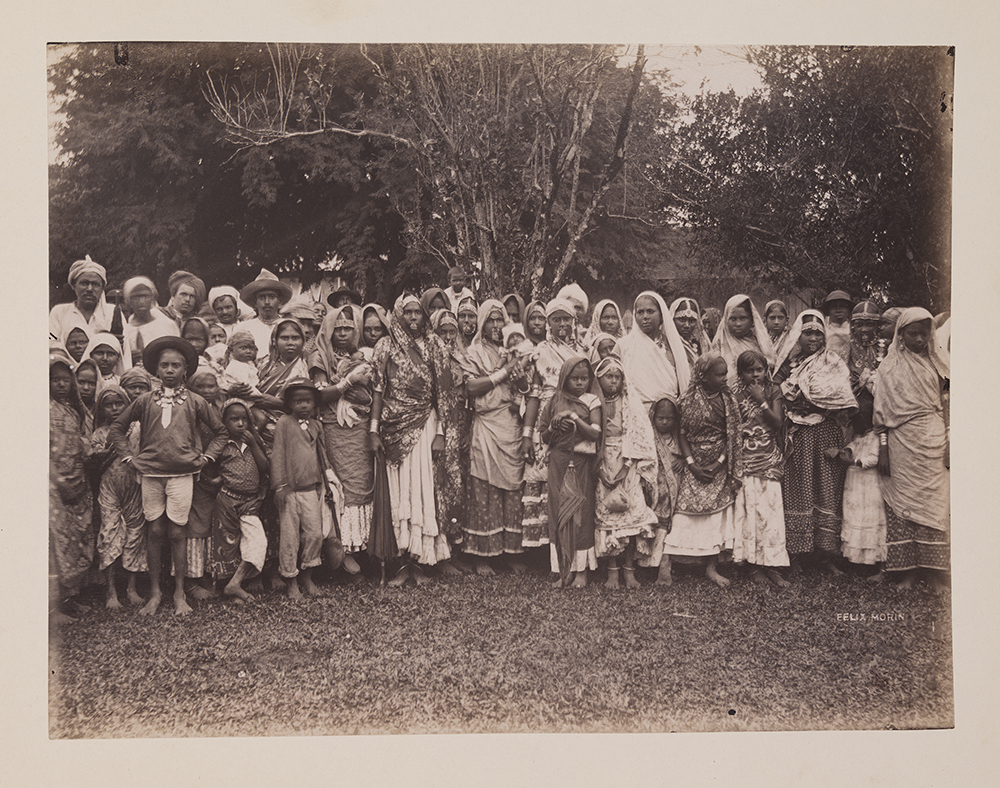
The “coolie trade” was the coercive mass movement of mainly Indian and Chinese workers through indenture, credit-ticket migration, convict transportation and nominally free contracts. European empires and settler states expanded these systems as Atlantic slavery was abolished: Britain ended slavery in most colonies in 1834, imposed “apprenticeship” until 1838, and sent the first Indian indentured workers to British Guiana in 1838.
The word coolie—used by European traders in Asia by the 16th century—became a racial slur that collapsed distinct peoples and legal statuses into an allegedly cheap, obedient labour type. Contracts did not make the system slavery, but penal sanctions, deception, debt, confinement and colonial violence often made consent fictitious. This hub connects that history to the archive’s wider accounts of colonial history, mass violence and historical data.
Key takeaways
- The coolie trade racialised Indian and Chinese migrants as disposable labour while presenting coercive colonial contracts as freely chosen employment.
- Approximately 1.3–1.5 million Indian indentured departures occurred between 1834 and 1917, alongside roughly 215,000–242,000 Chinese arrivals in Cuba and Peru.
- Plantation owners, transport firms, recruiters, merchants and colonial treasuries profited from workers constrained by debt, penal law and restricted movement.
- Workers resisted through desertion, petitions, litigation, strikes and political campaigns, forcing India to halt new indentured emigration in March 1917.
- Indenture differed legally from chattel slavery but continued plantation production through racial hierarchy, coercive discipline and state-backed limits on freedom.
What happened: migration organised through coercion
Plantation owners claimed that emancipation had created a “labour shortage”; in practice, formerly enslaved people were resisting plantation wages and discipline. Colonial governments answered by subsidising recruitment overseas and writing labour breaches into criminal law. Recruiters enlisted Indians through depots at Calcutta and Madras and Chinese workers through ports including Macau, Hong Kong, Xiamen and Shantou.
Indian indentures commonly lasted 5 years in the 19th century, with restricted mobility and the possibility of re-indenture. In British colonies, absence, desertion or refusal of work could trigger fines, imprisonment or added labour. Cuba and Peru received Chinese workers under contracts commonly lasting 8 years during 1847–1874. Colonial officials inspected paperwork, yet recruiters used advances, false promises, kidnapping and debt.
“A new system of slavery” was how British abolitionist John Scoble described Indian indenture in his 1840 pamphlet Hill Coolies: A Brief Exposure of the Deplorable Condition of the Hill Coolies.
| Date | Legal or migratory turning point | Consequence |
|---|---|---|
| 1834–1838 | British emancipation and compulsory apprenticeship | Planters searched for controllable replacement labour |
| 1838 | First organised Indian indenture arrivals in British Guiana | Beginning of a major British imperial labour system |
| 1847 | Chinese contract migration to Cuba and Peru accelerated | Pacific and Caribbean traffic expanded |
| 1860 | British Convention of Peking | Britain gained formal authority to recruit Chinese labour |
| 1917 | Government of India prohibited further indentured emigration | Recruitment ended, though existing contracts continued |
| 1920 | Final Indian indentures expired | Formal British Indian indenture ended |
The numbers: routes, mortality and demographic change
The most widely cited database assembled by historian Hugh Tinker in 1974, refined by later scholars including David Northrup in 1995, places overseas Indian indentured migration at roughly 1.3–1.5 million departures between 1834 and 1917. Destination totals vary because records count arrivals, departures or contracts differently.
| Destination | Period | Recorded or estimated arrivals |
|---|---|---|
| Mauritius | 1834–1910 | about 453,000, indenture registers and later scholarship |
| British Guiana | 1838–1917 | about 239,000, colonial immigration records |
| Trinidad | 1845–1917 | about 144,000, colonial immigration records |
| Natal | 1860–1911 | about 152,000, South African archival totals |
| Fiji | 1879–1916 | 60,965, Fiji indenture records |
| Cuba | 1847–1874 | about 125,000–142,000 Chinese arrivals, estimates synthesised by Evelyn Hu-DeHart and Walton Look Lai |
| Peru | 1849–1874 | about 90,000–100,000 Chinese arrivals, estimates used by Watt Stewart and later historians |
Mortality changed by route and decade. Historian Madhavi Kale’s 1998 analysis reports that early Indian voyages to British Caribbean colonies could exceed 10% mortality in the 1840s, while regulation, shorter passages and steam reduced many later rates below 2% by the late 19th century. For the ship Dea del Mar, Hugh Tinker’s 1974 account records 47 deaths among 423 emigrants in 1858, or 11.1%.
Who profited and how the system worked
Plantation companies obtained a disciplined workforce while colonial governments transferred recruitment and transport costs through immigration funds, export duties and deductions. Shipowners, labour recruiters, depot contractors, insurers and merchants earned fees at each stage. Sugar consumers and metropolitan refiners benefited from commodities produced under racially unequal law.
Employers also used indenture to depress bargaining power among emancipated African workers. In Peru, Chinese labourers cut sugar and cotton, built railways and extracted guano; guano generated approximately £80 million in gross state revenue between 1840 and 1879, according to economic historian Shane Hunt’s 1973 reconstruction, although exchange-rate methods produce differing totals. In Cuba, Chinese workers entered a slave plantation economy that did not abolish slavery until 1886.
Key facts
- Indian indenture moved approximately 1.3–1.5 million people between 1834 and 1917, according to Tinker’s 1974 estimate and later revisions.
- Women were deliberately under-recruited: British rules often targeted only 40 women per 100 men by 1868, a ratio frequently unmet.
- The British imperial system ended recruitment in 1917, after sustained Indian nationalist and worker pressure.
- “Free labour” contracts operated inside racial states that criminalised breach of contract and restricted movement.
Indenture was not simply private employment: colonial law converted employers’ claims over time, mobility and obedience into punishable offences.
Resistance, survival and abolition
Workers deserted estates, slowed production, petitioned officials, litigated, preserved languages and religions, and organised strikes. Resistance was met with police and military force. In Fiji, the 1920 strike mobilised Indian workers against wages and living costs; colonial authorities deported organiser Manilal Doctor in 1920. In Natal, M.K. Gandhi’s 1913 campaign opposed the annual £3 tax, imposed from 1895 on many formerly indentured Indians who would not re-indenture or return.
Abolition resulted from intersecting pressure rather than imperial benevolence:
- Workers exposed abuse through complaints, desertion, strikes and court cases throughout 1834–1917.
- Missionaries and abolitionists published evidence, including John Scoble’s reports from 1840 onward.
- Indian nationalists attacked indenture as racial degradation; Gopal Krishna Gokhale demanded abolition in the Imperial Legislative Council in 1912.
- Gandhi’s South African campaign culminated in the Indian Relief Act of 1914, which abolished the £3 tax.
- The Government of India stopped new indentured emigration in March 1917; remaining contracts expired by 1920.
Resistance also included staying. Most descendants formed enduring Indo-Caribbean, Indo-Fijian, Mauritian, South African Indian and Chinese Latin American communities rather than returning to lands transformed by poverty, debt and colonial rule.
Denial, memory and what the system means now
Imperial accounts often presented indenture as voluntary uplift, citing signed contracts and return passages while minimising penal enforcement and asymmetric power. A more accurate comparison avoids two errors: calling every labour contract chattel slavery, or treating legal differences as proof of freedom. Enslaved people were legally property and their status hereditary; indentured workers possessed limited legal personhood and time-bound contracts. Yet both systems served plantation accumulation through racial domination, family separation and violence.
Public memory is uneven. UNESCO inscribed Mauritius’s Aapravasi Ghat in 2006, the immigration depot through which roughly 462,000 indentured migrants passed between 1849 and 1923, according to UNESCO’s nomination record. Britain’s formal commemoration remains slight compared with the empire-wide scale. Descendant communities continue to debate monuments, archives, caste, gendered violence and the slur itself.
The system’s legacy appears in citizenship disputes, ethnic party systems, land inequality and migrant sponsorship regimes that bind legal residence to an employer. Modern workers are not indentured merely because they migrate, but passport confiscation, recruitment debt and employer-controlled visas reproduce mechanisms familiar from the 19th century. The lesson from atrocity records and comparative datasets is institutional: a contract cannot establish freedom when law, debt and race prevent refusal.
Sources & further reading
Frequently asked questions
- What was the coolie trade?
- The coolie trade was the 19th- and early-20th-century movement of mainly Indian and Chinese labourers under indenture, debt or other restrictive contracts. It expanded after British emancipation in 1834 and apprenticeship’s end in 1838. Approximately 1.3–1.5 million Indian indentured departures occurred by 1917; Cuba and Peru together received roughly 215,000–242,000 Chinese workers between 1847 and 1874.
- Was indentured labour the same as slavery?
- No, but legal difference did not make indenture free. Enslaved people were property, generally for life, and slave status was hereditary. Indian indentures commonly lasted 5 years in the 19th century, while Chinese Cuban and Peruvian contracts often lasted 8 years during 1847–1874. Penal sanctions, recruitment fraud, debt and violence nevertheless produced coercion so severe that John Scoble called it “a new system of slavery” in 1840.
- How many people were transported through Indian indenture?
- Historians generally estimate approximately 1.3–1.5 million Indian indentured departures between 1834 and 1917, based on Hugh Tinker’s 1974 synthesis and subsequent scholarship. Major recorded destinations included Mauritius with about 453,000 arrivals, British Guiana with about 239,000, Natal with about 152,000, Trinidad with about 144,000, and Fiji with exactly 60,965 in colonial indenture records.
- When and why did Indian indenture end?
- The Government of India prohibited new indentured emigration in March 1917, and the last contracts expired by 1920. Abolition followed decades of worker desertion, petitions and strikes, alongside campaigns by John Scoble, Gopal Krishna Gokhale, M.K. Gandhi and others. It was not a voluntary imperial reform: critics exposed recruitment fraud, family disruption, penal labour law and racial degradation across British colonies.
- Why is the word coolie offensive?
- European traders used the term from the 16th century, but during the 19th century it became a racial category for supposedly cheap and obedient Asian labour. It erased distinctions among Indian, Chinese and other workers and helped justify lower wages, segregation and coercive discipline. Because it survives as an anti-Asian slur, historians normally use it only in quotation marks, historical titles or explicit analysis of racism.
Related chapters
Topics
- Aimé Césaire and Discourse on Colonialism
- Algerian War of Independence and French Torture
- South African Apartheid: The Legal Architecture of Racism
- Atlantic Slave Trade: Scale, Profits and Resistance
- Banda massacre and the Dutch nutmeg monopoly
- Belgian Congo: From Leopold’s Atrocities to Colonial Rule
- The 1943 Bengal Famine and British Policy
- Benin Bronzes: Looting, Trade and Restitution
- Berlin Conference and the Partition of Africa
Sources & further reading
CC BY 4.0 ·