Dutch East India Company: A Corporate Empire
How the Dutch East India Company used monopoly, war, slavery and colonial rule to extract Asian wealth—and how its violence still shapes memory.
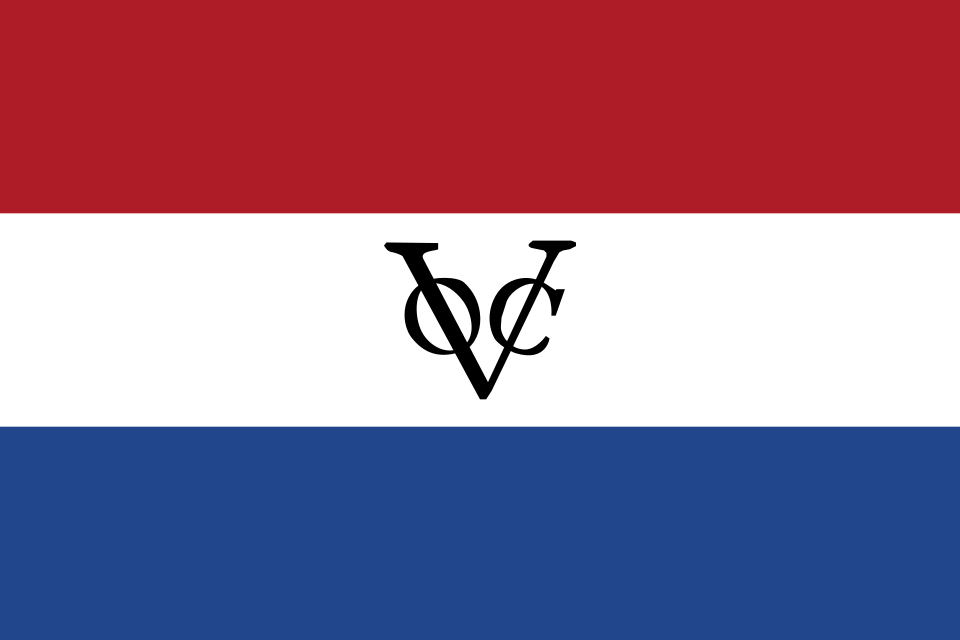
The Dutch East India Company—the Vereenigde Oostindische Compagnie, or VOC—was not simply a trading firm. Chartered by the States General on 20 March 1602, it combined private investment with sovereign powers: making war, concluding treaties, building forts, administering colonies, minting money and punishing or executing people. It became a corporate empire centered on Batavia, founded after the Dutch destruction of Jayakarta in 1619.
Its profits rested on armed monopoly, coerced production, dispossession and slavery across the Indian Ocean. The VOC’s history belongs simultaneously to corporate history, the history of European colonialism, and the archive of mass violence documented in History, Atrocities and Data.
Key takeaways
- The VOC was a state-backed corporate empire whose 1602 charter delegated war-making, treaty, judicial, monetary and colonial powers.
- Its spice monopolies depended on blockades, forced deliveries, crop destruction, enslavement and punitive expeditions rather than voluntary exchange alone.
- The 1621 conquest reduced Banda’s estimated 15,000 inhabitants to about 1,000 remaining locally through killing, deportation, flight and enslavement.
- Shareholders and officials extracted dividends and private fortunes while Asian communities, enslaved workers and crews carried the system’s human costs.
- When the VOC dissolved in 1799, Dutch taxpayers inherited about 134 million guilders in debt and the state inherited its colonial possessions.
What happened: a company became a state
The States General merged six Dutch trading ventures into the VOC in 1602 and granted it a 21-year Asian monopoly. Its charter authorized armed forces, fortifications, treaties and governors in the Dutch Republic’s name. Seventeen directors, the Heren XVII, governed from the Netherlands; governors-general and councils exercised coercive power in Asia.
Jan Pieterszoon Coen made Batavia the headquarters in 1619. From there, the VOC connected forts, factories and conquered territories stretching from the Cape of Good Hope to Japan. It did not rule every port directly: it combined territorial conquest with naval blockades, unequal treaties, local intermediaries and control over shipping.
“Despair not, spare your enemies, for God is with us.” — Jan Pieterszoon Coen, letter to the Heren XVII, 29 September 1618; commonly rendered from the Dutch “Dispereert niet, ontziet uwe vijanden niet, want God is met ons.”
| Date | Event | Corporate-imperial consequence |
|---|---|---|
| 20 March 1602 | VOC charter issued | 21-year monopoly and delegated sovereign powers |
| 30 May 1619 | Jayakarta captured and destroyed | Batavia established as the Asian command center |
| April–May 1621 | Banda campaign | Population expelled, killed or enslaved; nutmeg monopoly imposed |
| 1652 | Cape settlement founded | Supply station developed into a settler colony using enslaved labor |
| 1667 | Treaty of Bungaya | Makassar forced into a VOC-centered trading order |
| 31 December 1799 | Charter expired | Debts and possessions transferred to the Batavian Republic |
The mechanism: monopoly, forced delivery and slavery
VOC power worked through a repeatable sequence:
- Secure a chartered monopoly and raise permanent capital from investors.
- Seize strategic ports or compel rulers to sign exclusive contracts.
- destroy rival crops, blockade shipping and punish unauthorized trade.
- Require fixed-price deliveries, taxes, labor or military assistance.
- Move commodities and enslaved people through an armed intercontinental network.
On the Banda Islands, where nutmeg and mace grew, Coen’s 1621 expedition imposed monopoly through mass killing, deportation and enslavement. Land was divided into perken—plantations managed by European leaseholders using enslaved workers. In the Moluccas, VOC agents conducted hongi expeditions to uproot trees and suppress production outside approved zones. On Java, the company increasingly extracted rice, coffee, timber, cash and labor through agreements enforced by war.
The VOC was also a slave trader and slaveholder. Historian Matthias van Rossum estimated in 2015 that Dutch companies transported roughly 600,000–1,000,000 enslaved people within the Indian Ocean world during the 17th and 18th centuries; the range includes the VOC and other Dutch actors and remains less precisely documented than the Atlantic trade.
The numbers: capital, shipping, violence and debt
The VOC’s 1602 subscription raised 6,424,588 guilders, according to surviving company capital records analyzed by economic historians including Oscar Gelderblom and Joost Jonker. Between 1602 and 1795, the Clio-Infra reconstruction based on VOC shipping records counts 4,721 outward voyages from the Dutch Republic; about 1,737 ships returned from Asia between 1603 and 1795. Dutch-Asiatic Shipping estimates approximately 973,000 people departed Europe aboard VOC vessels between 1602 and 1795; only about 366,000 returned, although the difference includes settlement, intra-Asian reassignment and desertion as well as death.
| Measure | Figure | Period and source basis |
|---|---|---|
| Initial subscribed capital | 6,424,588 guilders | 1602 VOC subscription ledger; Gelderblom and Jonker |
| Outward voyages | 4,721 | 1602–1795, Clio-Infra/VOC shipping reconstruction |
| People departing Europe | about 973,000 | 1602–1795, Dutch-Asiatic Shipping database |
| People returning to Europe | about 366,000 | 1602–1795, Dutch-Asiatic Shipping database |
| Outstanding debt at dissolution | about 134 million guilders | 1799 company accounts, figure commonly reported by VOC historians |
Banda’s demographic loss is the clearest atrocity. Historian Willard A. Hanna estimated in 1978 that approximately 15,000 people inhabited the islands before the 1621 conquest; afterward, about 1,000 remained locally. Scholars differ over how many were killed rather than deported, enslaved or displaced, producing a death estimate commonly stated as roughly 2,500–15,000 in 1621. The upper figure can misleadingly treat total population disappearance as direct killing.
| Violence | Date | Best-supported scale |
|---|---|---|
| Banda conquest | 1621 | About 15,000 pre-conquest inhabitants; roughly 1,000 remained, Hanna, 1978 |
| Banda deaths | 1621 | Roughly 2,500–15,000; range reflects disputed separation of killing, starvation, flight and enslavement |
| Amboina executions | 1623 | 20 men executed: 10 English, 9 Japanese and 1 Portuguese |
| Batavia Chinese massacre | October 1740 | About 10,000 Chinese killed, contemporary and later Dutch estimates |
Who profited—and who paid
The principal beneficiaries were shareholders, directors, senior officials, merchants and suppliers in Dutch cities, especially Amsterdam, Middelburg, Delft, Rotterdam, Hoorn and Enkhuizen. The company paid dividends averaging roughly 18% of nominal capital annually between 1602 and 1650 in calculations by Lodewijk Petram published in 2011, though dividends fluctuated and were sometimes paid in spices rather than cash. Officials also amassed private fortunes through patronage, illicit trade and officeholding.
Asian rulers, brokers and merchants sometimes profited as contractors or allies, but their participation did not remove the coercion imposed on conquered communities. Enslaved Africans and Asians, Bandanese plantation workers, Javanese peasants, sailors, soldiers and port laborers carried the human cost. European crews also faced extreme mortality from disease, warfare and shipwreck.
Key facts
- The VOC began in 1602 with 6,424,588 guilders in subscribed capital.
- Its monopoly was enforced through fleets, forts, courts, prisons and colonial armies.
- The 1621 Banda campaign removed most of a population estimated at about 15,000.
- The company’s Asian headquarters stood at Batavia from 1619 until its dissolution in 1799.
- Dutch taxpayers inherited approximately 134 million guilders of VOC debt in 1799.
The VOC socialized its final losses after nearly two centuries of privatized dividends, colonial extraction and state-backed violence.
Resistance, revolt and the limits of VOC power
Resistance was continuous. Bandanese communities evaded contracts and fought the 1621 invasion. Sultan Hasanuddin of Gowa opposed VOC attempts to dominate Makassar until defeat produced the Treaty of Bungaya on 18 November 1667. In Java, Sultan Agung’s Mataram forces besieged Batavia twice, in 1628 and 1629. Trunajaya’s rebellion from 1674 to 1681 destabilized Mataram and drew the VOC into deeper territorial intervention.
Workers resisted through desertion, smuggling, slowdowns and mutiny. Enslaved people escaped, built communities and exploited rival jurisdictions. Chinese residents around Batavia rebelled after the October 1740 massacre; the resulting Java War continued from 1741 to 1743. These struggles show that VOC rule was never uncontested or all-powerful. Its monopoly repeatedly depended on expensive warfare, local allies and divided sovereignties, helping create the debt crisis that ended the company in 1799.
Denial, memory and what the VOC means now
Dutch public memory long presented the VOC as evidence of a prosperous “Golden Age,” emphasizing ships, entrepreneurship and global reach while marginalizing conquest and slavery. Coen was commemorated by a statue erected at Hoorn in 1893. After public controversy, its revised plaque in 2012 explicitly acknowledged his violent conduct, but the monument remains contested.
The VOC archive—about 1,225 meters of records preserved across repositories in the Netherlands, Indonesia, Sri Lanka, India and South Africa—was added to UNESCO’s Memory of the World Register in 2003. It is indispensable but structurally biased: ledgers quantify cargo and revenue more consistently than hunger, sexual violence, displacement or coerced labor.
The company matters now because it demonstrates that corporate globalization and colonial sovereignty developed together. Limited liability was not the VOC’s defining legal form, but transferable shares, centralized management and state protection allowed investors distant from Asia to profit from organized coercion. Its successor territories and debts passed into Dutch colonial states after 1799, linking corporate conquest directly to the Netherlands East Indies. Responsible commemoration must therefore connect financial innovation to the people whose land, labor and freedom financed it.
Sources & further reading
- Encyclopaedia Britannica: Dutch East India Company
- UNESCO Memory of the World: VOC Archives
- Huygens Institute: Dutch-Asiatic Shipping
- Matthias van Rossum, “Towards a Global Perspective on Early Modern Slave Trade”
- Oscar Gelderblom, Abe de Jong and Joost Jonker, “The Formative Years of the Modern Corporation”
- Willard A. Hanna, Indonesian Banda
Frequently asked questions
- What was the Dutch East India Company?
- The Dutch East India Company, or VOC, was a chartered joint-stock company founded by the States General on 20 March 1602. It received a 21-year monopoly over Dutch trade in Asia and powers normally associated with states, including making war, negotiating treaties, minting coins, administering justice and establishing colonies. It operated from Batavia after 1619 and dissolved on 31 December 1799.
- Was the VOC the world’s first multinational corporation?
- The VOC is often called the first multinational corporation because, from 1602, it had permanent capital, transferable shares, centralized directors and operations across Europe, Africa and Asia. The label is useful but anachronistic: it was also a chartered sovereign instrument of the Dutch Republic. Its exceptional feature was not global trade alone, but the combination of investor ownership with delegated powers of war and colonial government.
- How many people did the VOC kill in the Banda massacre?
- No complete death register exists. For the 1621 conquest, published estimates commonly range from roughly 2,500 to 15,000 deaths, depending on whether they count only direct killing or also starvation and population disappearance. Willard A. Hanna estimated in 1978 that Banda had about 15,000 inhabitants before the campaign and only about 1,000 remained afterward; many others were enslaved, deported or fled.
- Did the Dutch East India Company use enslaved labor?
- Yes. From the 17th century, the VOC bought, transported and owned enslaved Africans and Asians across its settlements, ships and households. Enslaved workers cultivated nutmeg on Banda after the 1621 conquest and labored at Batavia, the Cape and elsewhere. Matthias van Rossum estimated in 2015 that Dutch actors transported roughly 600,000–1,000,000 enslaved people within the Indian Ocean during the 17th and 18th centuries.
- Why did the VOC collapse in 1799?
- The VOC collapsed through rising military and administrative costs, corruption, declining competitiveness, war disruption and accumulated debt. The Fourth Anglo-Dutch War of 1780–1784 severely damaged shipping and credit. After the French-backed Batavian Republic replaced the Dutch Republic in 1795, the state took closer control. The charter expired on 31 December 1799, leaving approximately 134 million guilders in debt and transferring its possessions to the state.
Related chapters
Topics
- Aimé Césaire and Discourse on Colonialism
- Algerian War of Independence and French Torture
- South African Apartheid: The Legal Architecture of Racism
- Atlantic Slave Trade: Scale, Profits and Resistance
- Banda massacre and the Dutch nutmeg monopoly
- Belgian Congo: From Leopold’s Atrocities to Colonial Rule
- The 1943 Bengal Famine and British Policy
- Benin Bronzes: Looting, Trade and Restitution
- Berlin Conference and the Partition of Africa
Sources & further reading
CC BY 4.0 ·