Frantz Fanon and The Wretched of the Earth
Frantz Fanon’s life, Algeria’s colonial war, the violence and political economy behind The Wretched of the Earth, and its continuing influence.
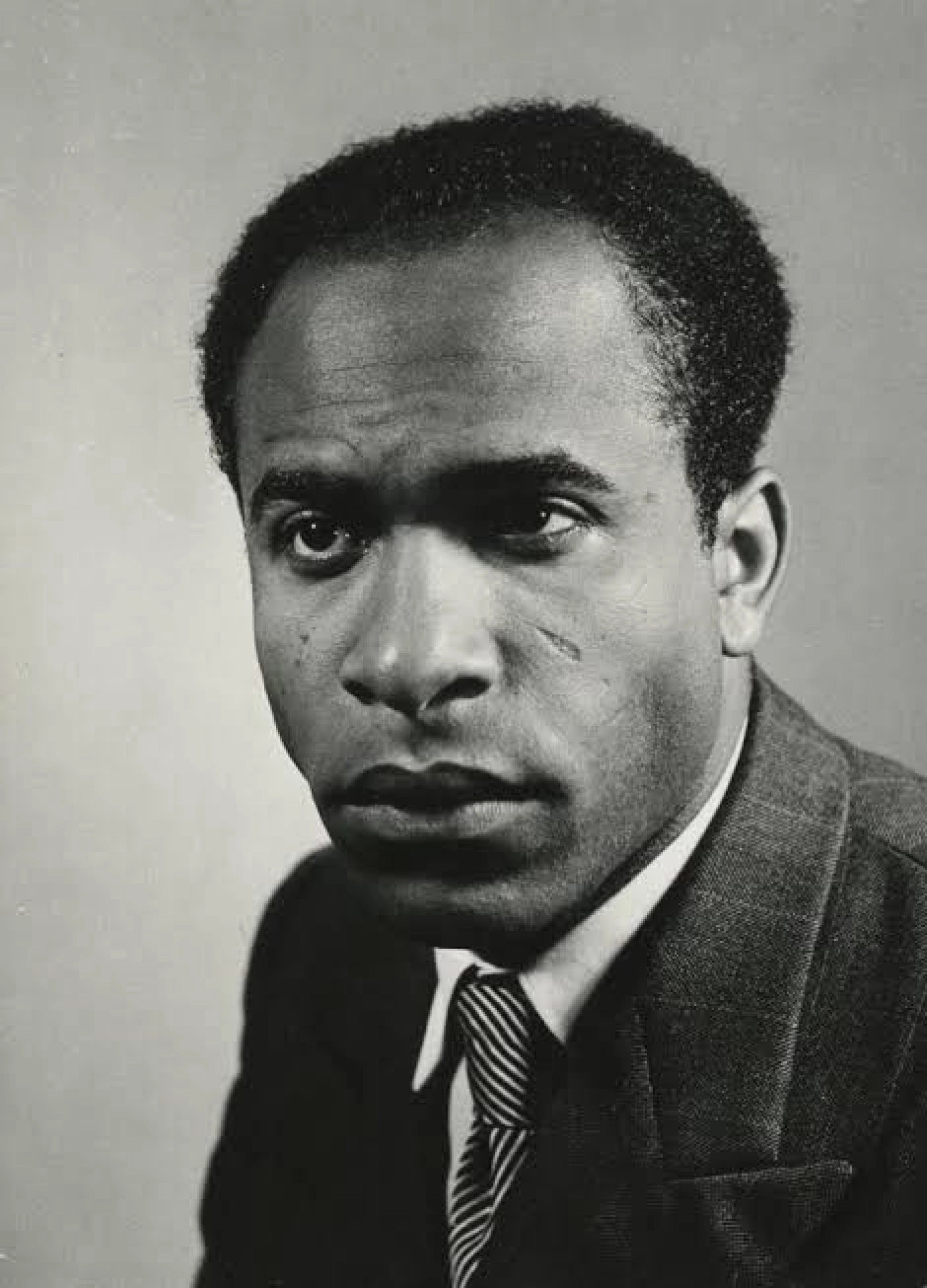
Frantz Fanon (1925–1961) was a Martinican psychiatrist, anti-colonial revolutionary and theorist whose final book, The Wretched of the Earth (1961), analysed colonial violence, national liberation and the dangers awaiting independent states. Written during the Algerian War, it was neither a detached history nor a simple celebration of violence: it was an intervention by a National Liberation Front militant treating people psychologically injured by colonial rule and war.
Fanon connected racial hierarchy, land seizure, forced labour and psychiatric trauma. His argument emerged from a conflict in which French armed forces reached approximately 400,000 personnel by 1958; estimates of Algerian deaths still range from roughly 300,000 in mainstream historical research to the Algerian state’s commemorative figure of 1.5 million. This hub places Fanon within that material history, alongside the archive’s wider accounts of colonial history, mass atrocities and contested historical data.
Key takeaways
- Frantz Fanon joined the Algerian liberation struggle and interpreted colonialism as a system of material expropriation, racial rule and psychological injury.
- The Wretched of the Earth, published in 1961, analyses decolonisation while warning that national elites can preserve colonial extraction after independence.
- Historians estimate roughly 250,000–400,000 Algerian deaths during the 1954–1962 war, while Algeria officially commemorates 1.5 million martyrs.
- French Algeria privileged approximately 1 million European settlers over roughly 8.5 million Muslim Algerians in 1954 through unequal citizenship, property and representation.
- Fanon remains influential because he links political sovereignty to land, wealth, mental health and control over the institutions of coercion.
Key facts: Fanon, Algeria and the book
- Fanon was born in Fort-de-France, Martinique, on 20 July 1925 and died near Washington, DC, on 6 December 1961, aged 36.
- He served in the Free French forces in 1944–1945, studied medicine and psychiatry in Lyon, then worked at Blida-Joinville Psychiatric Hospital in French Algeria from 1953.
- He resigned from the colonial medical service in 1956 and joined Algeria’s National Liberation Front, commonly known as the FLN.
- François Maspero published The Wretched of the Earth in Paris in 1961, with a preface by Jean-Paul Sartre.
- Algeria became independent on 5 July 1962, seven months after Fanon’s death.
| Date | Event | Significance |
|---|---|---|
| 1925 | Fanon born in Martinique | Raised within a French colony structured by slavery’s aftermath and racial assimilation |
| 1952 | Black Skin, White Masks published | Examined language, desire and racial alienation |
| 1954 | Algerian War began on 1 November | Armed revolt placed colonial domination at the centre of Fanon’s work |
| 1956 | Fanon resigned from Blida-Joinville | Publicly rejected service within France’s colonial system |
| 1958 | Joined the FLN mission in Accra | Worked as a diplomat and Pan-African organiser |
| 1961 | The Wretched of the Earth published | Diagnosed decolonisation, violence, class power and trauma |
| 1962 | Algeria became independent | French rule ended after 132 years, counted from 1830 to 1962 |
“Decolonization is always a violent phenomenon.” — Frantz Fanon, 1961, The Wretched of the Earth
The sentence describes colonial power as violence already institutionalised in borders, policing and property. Whether every liberation must become militarily violent remains one of the book’s most disputed claims.
The mechanism: conquest, segregation and psychological injury
France invaded Algiers in 1830 and formally annexed northern Algeria in 1848. European settlement converted conquest into a durable political economy: land passed to settlers, while Muslim Algerians were governed as subjects rather than equal citizens. The 1881 Code de l’indigénat entrenched exceptional penalties and administrative coercion; citizenship remained restricted unless Muslims accepted conditions that effectively required abandoning their personal status under Islamic law.
Fanon called this a compartmentalised world. The settler city possessed infrastructure, security and political authority; the colonised majority experienced dispossession, surveillance and coercive labour relations. At Blida-Joinville from 1953 to 1956, he challenged psychiatric practices that treated North Africans as biologically primitive. His clinical cases instead connected distress to racism, torture, displacement and war.
The mechanism operated through four linked stages:
- Conquest: military force destroyed or subordinated existing sovereignty after 1830.
- Expropriation: laws and seizures transferred fertile land to settlers and companies throughout the 19th and 20th centuries.
- Racial administration: separate legal and political statuses converted inequality into routine governance, particularly under the 1881 indigénat.
- Counterinsurgency: detention, torture, collective punishment and forced relocation defended the colonial order during 1954–1962.
The numbers: war, displacement and disputed death tolls
Quantification is politically contested because French records, FLN claims and demographic reconstructions count different populations and causes. Historian Benjamin Stora has cited approximately 400,000 Algerian deaths; Martin Evans gives an estimated range of 250,000–300,000 Algerian deaths. The Algerian state commemorates 1.5 million martyrs. French military deaths are commonly given as approximately 25,000, while estimates for European civilians killed are roughly 3,000. These figures concern the 1954–1962 war unless stated otherwise.
| Measure | Period/year | Estimate | Source or basis |
|---|---|---|---|
| Algerian deaths | 1954–1962 | 250,000–300,000 | Martin Evans, historical synthesis published in 2012 |
| Algerian deaths | 1954–1962 | about 400,000 | Benjamin Stora, historical estimate |
| Algerian “martyrs” | 1954–1962 | 1.5 million | Official Algerian commemorative claim |
| French military deaths | 1954–1962 | about 25,000 | French official and historical accounting |
| European civilian deaths | 1954–1962 | about 3,000 | Common historical estimate; definitions vary |
| Internally displaced Algerians | by 1960 | about 2 million | Historical estimates of regroupment and flight |
| French forces in Algeria | 1958 | about 400,000 personnel | French wartime deployment level |
The range should not be collapsed into a false precision. It records differences in methods, missing persons, indirect deaths and political commemoration, all central concerns of the archive’s data pages.
Who profited from French Algeria
The principal beneficiaries were the colonial state, European settlers—often called colons or pieds-noirs—and agricultural, mining, banking and trading interests protected by French sovereignty. By 1954, approximately 1 million Europeans lived among roughly 8.5 million Muslim Algerians, according to contemporary demographic totals used by historians. Europeans were therefore around 10% of Algeria’s approximately 9.5 million inhabitants but held disproportionate political power and much of the most productive agricultural land.
Wine exposes the structure clearly. Algeria produced approximately 18 million hectolitres in 1930, or 1.8 billion litres, according to interwar production statistics synthesised by economic historians; most entered the French market. Settler-owned vineyards used expropriated land and low-paid Algerian labour, while metropolitan merchants, shippers and blenders captured revenue downstream.
| Asset or advantage | Year | Concrete measure | Main beneficiaries |
|---|---|---|---|
| European settler population | 1954 | about 1 million of 9.5 million residents | Settlers with French citizenship and representation |
| Muslim Algerian population | 1954 | about 8.5 million of 9.5 million residents | Majority denied equivalent power under colonial rule |
| Algerian wine output | 1930 | about 18 million hectolitres, or 1.8 billion litres | Vineyard owners, exporters and metropolitan wine firms |
| Hydrocarbon discovery at Hassi Messaoud | 1956 | commercial oil discovered during the war | French state and petroleum companies seeking Saharan control |
Fanon warned that formal independence could leave this extractive structure intact if a local bourgeoisie merely inherited licences, offices and commissions. That warning made The Wretched of the Earth a foundational critique of neo-colonialism rather than only a study of colonial occupation.
Resistance, liberation and Fanon’s warning
The FLN launched coordinated attacks on 1 November 1954. France answered with mass deployment and counterinsurgency; the Battle of Algiers in 1956–1957 made systematic torture and disappearance internationally notorious. Fanon worked for the FLN newspaper El Moudjahid, represented the movement in Ghana from 1958 and advocated a continental front against colonial rule.
Resistance was not politically uniform. The FLN fought France but also its Algerian rival, Messali Hadj’s Algerian National Movement. The FLN’s attacks killed civilians, and post-ceasefire violence struck European civilians and harkis, Algerians who had served France. Naming those crimes does not erase the initiating structure: France was the occupying colonial power, and Algerians were denied national sovereignty.
Fanon’s central warning was that replacing foreign rulers with a domestic elite would not liberate the peasantry or urban poor if land, capital and state coercion remained concentrated.
The Évian Accords were signed on 18 March 1962; a ceasefire followed on 19 March. In the 1 July 1962 referendum, 5,975,581 votes supported independence and 16,534 opposed it, according to the official result. Fanon did not live to see the vote: leukaemia killed him on 6 December 1961.
Denial, memory and what Fanon means now
French public memory long displaced responsibility onto euphemisms. The state officially called the conflict “operations to maintain order” until a 1999 law recognised the term “Algerian War.” In 2018, President Emmanuel Macron acknowledged that mathematician and communist activist Maurice Audin had been tortured and killed, or tortured and left to die, by the French army in 1957. In 2021, Macron acknowledged that French forces tortured and murdered Algerian lawyer Ali Boumendjel in 1957, overturning the official suicide story.
Algerian state memory has also narrowed the past by elevating a unified FLN narrative and marginalising internal rivals, dissidents and some civilian experiences. Serious remembrance must hold together colonial responsibility, French torture, FLN authoritarianism, settler flight and reprisals against harkis without treating conquest and resistance as equivalent projects.
Today, Fanon helps explain why legal independence may coexist with foreign-controlled finance, commodity dependence, racialised borders and security states. His psychiatric writing also anticipates current work on intergenerational trauma and institutional racism. Yet his prescriptions require scrutiny: revolutionary violence does not automatically create democracy, and several post-independence governments reproduced prisons, one-party rule and elite accumulation. Read alongside documented atrocities and longer histories of empire and resistance, Fanon remains valuable because he asks who owns land, commands force, defines humanity and receives the wealth after the flag changes.
Sources & further reading
- Frantz Fanon, The Wretched of the Earth — Penguin Random House
- Stanford Encyclopedia of Philosophy: Colonialism
- Encyclopaedia Britannica: Frantz Fanon
- Martin Evans, Algeria: France’s Undeclared War — Oxford Academic
- France recognises responsibility for Maurice Audin’s death — Élysée, 2018
- France recognises Ali Boumendjel’s torture and murder — Élysée, 2021
Frequently asked questions
- What is The Wretched of the Earth about?
- Frantz Fanon’s *The Wretched of the Earth*, published in 1961, examines colonial violence, armed liberation, national consciousness, culture and war trauma. Drawing particularly on the Algerian War of 1954–1962, Fanon argues that independence fails when a domestic elite inherits colonial institutions without redistributing land and power. Its most disputed claim is that decolonisation is inherently violent because colonial rule itself rests on organised force.
- Was Frantz Fanon Algerian?
- Fanon was born in French-ruled Martinique on 20 July 1925, not Algeria. He moved to Algeria in 1953 to work as a psychiatrist at Blida-Joinville Hospital, resigned from French service in 1956 and joined the FLN’s independence struggle. He identified politically with Algeria, represented the FLN abroad and was buried there after dying from leukaemia on 6 December 1961.
- How many people died in the Algerian War?
- No single total is universally accepted. For the 1954–1962 war, Martin Evans estimated 250,000–300,000 Algerian deaths in his 2012 history, while Benjamin Stora has cited about 400,000. The Algerian state commemorates 1.5 million martyrs. French military deaths are commonly placed near 25,000, and European civilian deaths near 3,000. Different definitions, incomplete records and political commemoration explain much of the range.
- Did Fanon support political violence?
- Yes, Fanon defended revolutionary violence in *The Wretched of the Earth* in 1961, but his position was more specific than indiscriminate approval. He argued that French conquest, land seizure, racial law and torture had already made colonial Algeria violent, and that organised resistance could restore agency. Critics contend that he underestimated how revolutionary force could become post-independence repression; Fanon himself warned against authoritarian national elites.
- Why is Frantz Fanon still important today?
- Fanon remains important because he connected racism and mental health to property, policing and imperial power rather than treating prejudice as merely personal. His 1952 *Black Skin, White Masks* analysed racial alienation; his 1961 *The Wretched of the Earth* warned that independence could preserve foreign extraction through local intermediaries. Those arguments inform current debates about neo-colonial finance, migration borders, institutional racism and unresolved colonial trauma.
Related chapters
Topics
- Aimé Césaire and Discourse on Colonialism
- Algerian War of Independence and French Torture
- South African Apartheid: The Legal Architecture of Racism
- Atlantic Slave Trade: Scale, Profits and Resistance
- Banda massacre and the Dutch nutmeg monopoly
- Belgian Congo: From Leopold’s Atrocities to Colonial Rule
- The 1943 Bengal Famine and British Policy
- Benin Bronzes: Looting, Trade and Restitution
- Berlin Conference and the Partition of Africa
Sources & further reading
CC BY 4.0 ·