Amritsar Massacre: Jallianwala Bagh, 1919
How British troops killed hundreds at Jallianwala Bagh on 13 April 1919: orders, disputed death tolls, colonial impunity, resistance and memory.
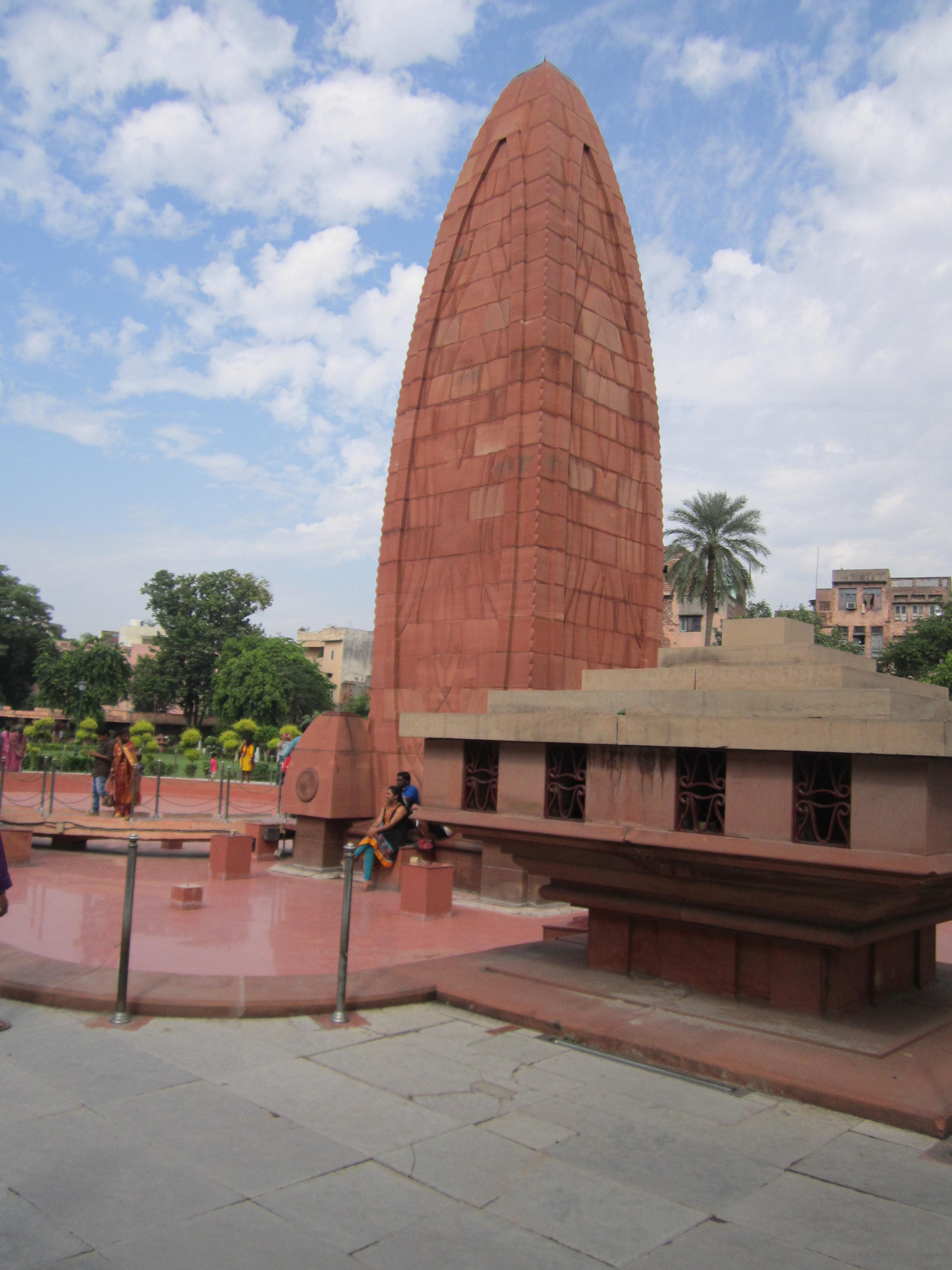
The Amritsar massacre occurred on 13 April 1919, when troops commanded by British Brigadier-General Reginald E. H. Dyer fired without warning on thousands of people confined inside Jallianwala Bagh, Punjab. The colonial government counted 379 people killed and about 1,200 wounded; Indian investigators estimated more than 1,000 deaths.
The killing enforced emergency colonial rule after protests against the Rowlatt Act and the arrests of Saifuddin Kitchlew and Satyapal. It became a decisive indictment of British rule in India and belongs in the wider histories of colonial violence, state atrocities, and contested casualty data.
Key takeaways
- British troops commanded by Reginald Dyer fired 1,650 rounds at Jallianwala Bagh on 13 April 1919 without first warning the crowd.
- The colonial government recorded 379 deaths in 1919, while the Indian National Congress inquiry estimated more than 1,000 in 1920.
- The massacre enforced the Rowlatt Act regime and followed the 10 April 1919 arrests of Saifuddin Kitchlew and Satyapal.
- Dyer retired in 1920 without criminal prosecution and received about £26,000 from a British public fundraising campaign that year.
- British prime ministers expressed regret in 2013 and 2019, but the British state has not delivered an unqualified formal apology.
What happened at Jallianwala Bagh
The Rowlatt Act of 1919 extended wartime powers of detention and trial without ordinary safeguards. After protests, Punjab authorities arrested local leaders Saifuddin Kitchlew and Satyapal on 10 April 1919 and removed them from Amritsar. Violence followed: protesters, Indian civilians and Europeans were killed, and British-owned property was attacked.
On 13 April 1919—Baisakhi—people entered Jallianwala Bagh for protest, public speeches, or the fair. The enclosed ground had restricted exits. Dyer arrived with 90 troops according to his 1919 testimony; 50 riflemen entered, while armored cars carrying machine guns could not pass the narrow approach. He deployed Gurkha and Baluchi soldiers under British Indian Army command and ordered fire without first directing the crowd to disperse.
“I fired and continued to fire until the crowd dispersed.” — Reginald E. H. Dyer, 1919, testimony before the Disorders Inquiry Committee
The riflemen fired 1,650 rounds over roughly 10 minutes, figures Dyer supplied in 1919. He testified that firing was directed toward the densest parts of the crowd and the exits. Troops then withdrew without organizing medical aid.
| Date | Colonial action | Immediate consequence |
|---|---|---|
| 18 March 1919 | Imperial Legislative Council passed the Rowlatt Act | Emergency coercive powers continued after World War I |
| 10 April 1919 | Kitchlew and Satyapal arrested and expelled from Amritsar | Mass protest and urban violence followed |
| 13 April 1919 | Dyer deployed 50 riflemen and ordered 1,650 rounds fired | Hundreds killed and about 1,200 wounded by the official 1919 account |
| 15 April 1919 | Martial law imposed in parts of Punjab | Public floggings, forced crawling and summary punishments followed |
The mechanism of colonial terror
This was not an accidental clash. Its mechanism combined repressive law, removal of political leadership, prohibition of assembly, a lethal deployment to an enclosed space, firing without warning, and subsequent collective punishment. Dyer told the 1919–1920 inquiry that his purpose was not merely dispersal but producing a “moral effect” throughout Punjab.
Martial-law abuses included public flogging and the “crawling order” on Kucha Kurrichhan, where Indians were compelled to crawl past the place in which missionary Marcella Sherwood had been assaulted on 10 April 1919. These punishments racialized entire communities as collectively liable.
The sequence was:
- The British legislature enacted the Rowlatt Act in 1919 despite Indian opposition.
- Punjab officials detained Kitchlew and Satyapal on 10 April 1919.
- Authorities restricted meetings but failed to ensure every visitor knew of the ban on 13 April 1919.
- Dyer blocked the principal approach with troops and ordered firing into the crowd.
- The Raj imposed martial law from 15 April 1919 and protected officials through the Indemnity Act of 1920.
The numbers: dead, wounded and ammunition
No complete roll of the dead exists. The official Punjab inquiry reported 379 deaths in 1919; the Indian National Congress Punjab inquiry estimated more than 1,000 deaths in 1920. Both figures were produced under severe evidentiary constraints: families feared authorities, some visitors came from outside Amritsar, and bodies were removed rapidly.
| Measure | Figure or range | Source and year |
|---|---|---|
| People killed | 379 | Government of Punjab official account, 1919 |
| People killed | More than 1,000 | Indian National Congress Punjab inquiry, 1920 |
| Plausible reported range | 379–1,000+ | Range between the 1919 official count and 1920 Congress estimate |
| People wounded | About 1,200 | British official estimate reported in 1919 |
| Rifle cartridges fired | 1,650 | Dyer’s testimony, 1919 |
| Riflemen who fired | 50 | Dyer’s testimony, 1919 |
These totals are not interchangeable. The 379 figure is a colonial administrative count, not a forensic ceiling; the 1,000-plus figure is an Indian inquiry’s reconstruction. Responsible citation preserves both the range and provenance.
Who profited and who protected the perpetrators
The massacre produced no legitimate public benefit. It defended a political economy in which Britain controlled Indian taxation, trade, military recruitment and investment. Amritsar was a major Punjab commercial center, while Punjab supplied soldiers and revenues to the empire. The beneficiaries were the colonial state, British commercial interests dependent on imperial order, and officials whose authority rested on racial coercion—not the troops, civilians or families caught in the Bagh.
Dyer was removed from command and retired in 1920, but he was never criminally prosecuted. The House of Lords debated his case sympathetically in 1920, and the conservative Morning Post raised about £26,000 for him in 1920—roughly 12 times his annual salary, according to historian Nigel Collett’s reconstruction. The reward showed that an influential British constituency treated mass killing as imperial service.
The massacre was “an extraordinary event, a monstrous event, an event which stands in singular and sinister isolation.” — Winston Churchill, House of Commons speech, 8 July 1920
Michael O’Dwyer remained an unapologetic defender of the Punjab repression. Udham Singh killed him in London on 13 March 1940, explicitly linking the assassination to Amritsar; Britain executed Singh on 31 July 1940.
Resistance and political rupture
Jallianwala Bagh transformed opposition to British rule by demonstrating that constitutional language did not restrain colonial force when imperial authority felt threatened.
Key facts
- Rabindranath Tagore renounced his British knighthood on 31 May 1919, calling the repression incompatible with honors bestowed by the Crown.
- Mohandas K. Gandhi returned his Kaiser-i-Hind medal in 1920 and made Punjab repression central to the Non-Cooperation Movement launched that year.
- The Disorders Inquiry Committee, commonly called the Hunter Committee, investigated during 1919–1920 but imposed no criminal accountability.
- The Indian National Congress conducted a separate inquiry in 1919–1920 because Indian leaders distrusted the official process.
- Udham Singh’s 1940 prosecution turned Michael O’Dwyer’s responsibility and Britain’s refusal of justice into an international political issue.
The massacre did not single-handedly create Indian nationalism, but it destroyed confidence among many moderates that equal citizenship could be secured within the empire. It also exposed the contradiction between Britain’s World War I rhetoric of liberty and its coercive government of India.
Denial, apology and memory
British responses moved from official criticism of Dyer to persistent refusal of a state apology. Queen Elizabeth II called the massacre a “distressing example” of past events during an Amritsar visit on 14 October 1997. Prime Minister David Cameron described it as “deeply shameful” on 20 February 2013. Prime Minister Theresa May called it a “shameful scar” on 10 April 2019. None issued an unqualified formal apology on behalf of the British state.
The memorial at Jallianwala Bagh opened in 1961. Its preserved bullet marks and the well into which people reportedly jumped are central to public remembrance, although later redesign has prompted criticism that spectacle can soften the site’s evidentiary force.
Memory must also resist two distortions: presenting Dyer as a solitary aberration and reducing Indian soldiers under British command to autonomous authors of policy. Dyer personally ordered the shooting, but the legal powers, racial hierarchy and institutional impunity belonged to the Raj. Naming that system does not erase individual agency; it locates responsibility accurately.
What Jallianwala Bagh means now
The massacre remains a case study in how emergency legislation can convert political dissent into a security threat and how official counts can narrow public recognition of mass death. Its current significance lies in command accountability, archive transparency, reparative debate and the ethics of memorialization.
The central questions are concrete: Who authorized force? What warnings were given? Could people escape? Who counted the dead? Who received compensation or punishment? Jallianwala Bagh demonstrates why colonial records must be read alongside survivor testimony and independent investigations.
Its legacy also challenges claims that British rule in India was fundamentally gradual, legalistic or benevolent. In Amritsar, law and violence were mutually reinforcing. The Raj enacted exceptional powers, suppressed assembly, killed civilians, imposed collective punishments and shielded its agents. The massacre was not outside colonial governance; it revealed what that governance could authorize when challenged.
Sources & further reading
- Report of the Committee Appointed by the Government of India to Investigate the Disturbances in the Punjab (1920), Internet Archive
- UK Parliament: Amritsar 1919—Churchill’s 8 July 1920 speech
- Encyclopaedia Britannica: Massacre of Amritsar
- The National Archives: British responses to the Amritsar massacre
- Kim A. Wagner, Amritsar 1919: An Empire of Fear and the Making of a Massacre
- Nigel Collett, The Butcher of Amritsar: General Reginald Dyer
Frequently asked questions
- How many people died in the Jallianwala Bagh massacre?
- The Government of Punjab counted 379 people killed in 1919 and reported about 1,200 wounded. The Indian National Congress inquiry estimated more than 1,000 deaths in 1920. Because no complete forensic register was produced and many victims were visitors, the defensible reported death range is 379 to more than 1,000, with each figure clearly attributed.
- Who ordered the firing at Jallianwala Bagh?
- Brigadier-General Reginald E. H. Dyer ordered 50 riflemen to fire on 13 April 1919. In his 1919 testimony, he said they discharged 1,650 rounds and that he intended to create a wider “moral effect.” Punjab Lieutenant-Governor Michael O’Dwyer subsequently endorsed the repression, while the colonial government supplied the emergency laws and military apparatus.
- Why had people gathered at Jallianwala Bagh?
- Thousands gathered on 13 April 1919 during Baisakhi. Some attended a political meeting opposing the Rowlatt Act and protesting the 10 April arrests of Saifuddin Kitchlew and Satyapal; others were fairgoers or visitors. Authorities had restricted assemblies, but notification was inadequate. Dyer gave no warning at the Bagh before ordering troops to fire.
- Was General Dyer punished for the Amritsar massacre?
- Dyer was investigated by the Hunter Committee in 1919–1920, removed from command and forced to retire in 1920, but he was never criminally prosecuted. The House of Lords contained prominent defenders of his conduct, and the *Morning Post* raised about £26,000 for him in 1920, demonstrating substantial British support for colonial violence.
- Has Britain apologized for the Jallianwala Bagh massacre?
- No British government has issued an unqualified formal state apology. Queen Elizabeth II called the massacre a “distressing example” in 1997. David Cameron described it as “deeply shameful” in 2013, and Theresa May called it a “shameful scar” in 2019. These statements acknowledged wrongdoing but stopped short of the explicit apology repeatedly requested in India.
Related chapters
Topics
- Aimé Césaire and Discourse on Colonialism
- Algerian War of Independence and French Torture
- South African Apartheid: The Legal Architecture of Racism
- Atlantic Slave Trade: Scale, Profits and Resistance
- Banda massacre and the Dutch nutmeg monopoly
- Belgian Congo: From Leopold’s Atrocities to Colonial Rule
- The 1943 Bengal Famine and British Policy
- Benin Bronzes: Looting, Trade and Restitution
- Berlin Conference and the Partition of Africa
Sources & further reading
CC BY 4.0 ·