King Leopold II and the Private Ownership of the Congo
How Leopold II privately ruled the Congo Free State, enforced rubber extraction, amassed wealth, and caused mass death, mutilation and displacement.
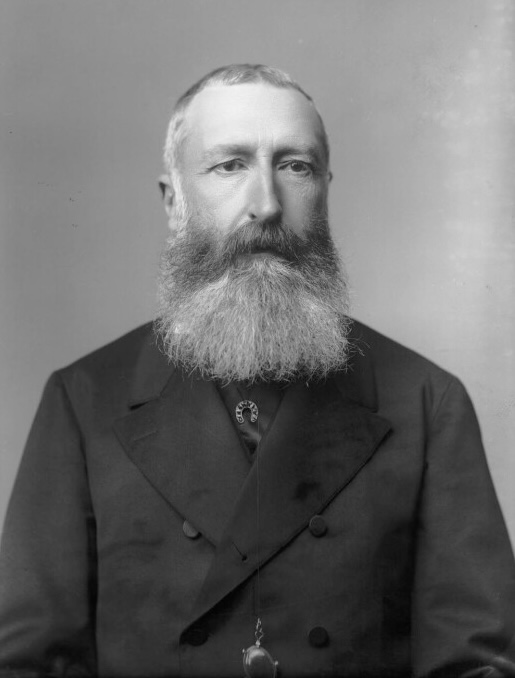
King Leopold II of Belgium personally controlled the Congo Free State from 1885 to 1908. It was not initially a Belgian colony: European and United States recognition enabled one monarch to claim sovereignty over about 2.3 million square kilometres of Central Africa and its people.
Leopold’s regime seized land, demanded ivory and wild rubber, and enforced quotas through armed coercion. Killings, hostage-taking, mutilation, famine, disease and falling birth rates produced a demographic catastrophe. The exact toll cannot be reconstructed because the state kept no reliable population baseline, but historian Adam Hochschild’s widely cited 1998 synthesis suggested a decline of about 10 million people between approximately 1880 and 1920.
Key takeaways
- Leopold II owned the Congo Free State personally from 1885 to 1908, with recognition from foreign governments and Belgium.
- His administration converted land seizure and labour taxation into rubber profits enforced by the Force Publique and concession companies.
- Demographic evidence indicates catastrophic decline, although the frequently cited 10 million loss is a 1998 reconstruction rather than a census result.
- Congolese resistance and evidence gathered by Williams, Sheppard, Harris, Morel and Casement forced international scrutiny of the regime.
- Belgium annexed the Congo in 1908 but retained colonial exploitation and racial domination until independence on 30 June 1960.
What happened: a sovereign’s private colony
Leopold pursued a colony without committing Belgium to acquire one. He financed Henry Morton Stanley’s expeditions and used ostensibly philanthropic bodies—principally the International African Association and International Association of the Congo—to obtain hundreds of treaties from African leaders. These documents were commonly signed under deception or unequal conditions and were treated by Leopold as transfers of sovereignty.
At the Berlin Conference of 1884–1885, participating powers established rules for European claims rather than awarding Africa by formal partition. Recognition from the United States in 1884 and European powers in 1885 helped Leopold constitute the Congo Free State. Belgium’s parliament authorised him to become its sovereign in 1885, legally separate from his Belgian crown.
| Date | Event | Consequence |
|---|---|---|
| 1876 | Leopold convenes the Brussels Geographical Conference | Creates a humanitarian-scientific façade for expansion |
| 1879–1884 | Stanley establishes stations and obtains purported treaties | Supplies the territorial basis for Leopold’s claim |
| 1884 | United States recognises Leopold’s association | First major diplomatic recognition |
| 1885 | Congo Free State is established | Leopold becomes personal sovereign over about 2.3 million km² |
| 1891–1892 | State monopoly decrees expand | Congolese communities are compelled to deliver rubber and ivory |
| 1904 | Roger Casement’s report is published | Officially documents killings, hostage-taking and mutilation |
| 1908 | Belgium annexes the territory | Congo Free State becomes the Belgian Congo |
See the archive’s wider colonial history and documented atrocities.
The mechanism: land seizure, quotas and terror
Leopold’s decrees classified most land not visibly cultivated as state property. Communities lost legal control of forests while concession companies received vast territories. Because wild rubber could not be produced reliably under fixed deadlines, officials and company agents used the Force Publique—an army commanded mainly by European officers and composed largely of African soldiers—to compel collection.
The system operated through recurring steps:
- Officials assigned villages rubber or food quotas.
- Soldiers seized women, children or chiefs as hostages.
- Men entered forests to gather latex, often abandoning farming.
- Failure brought flogging, imprisonment, village burning or execution.
- Soldiers were required to account for ammunition, commonly with severed right hands; this encouraged mutilation of corpses and, in documented cases, living people.
“The Government of the Congo has been guilty of having permitted and indeed encouraged a system of forced labour.” — Roger Casement, 1904, Report on the Administration of the Congo Free State
Missionaries, Congolese witnesses and investigators recorded chains, the chicotte hippopotamus-hide whip, hostage compounds and severed hands. Mutilation was not the only violence, nor did every severed hand represent the same act; it formed part of an extractive system in which ammunition accounting and exemplary punishment made bodily evidence administratively useful.
The numbers: extraction and demographic catastrophe
No census measured the population when Leopold took control in 1885. Estimates of demographic loss therefore remain disputed and should not be presented as a precise body count. Jan Vansina estimated in 2010 that the population of the equatorial rainforest fell by at least half between roughly 1880 and 1920. Adam Hochschild’s 1998 synthesis translated a comparable decline into about 10 million missing people. Earlier and later scholars have proposed lower or higher totals, but all identify catastrophic depopulation.
| Measure | Year or period | Figure | Source and limitation |
|---|---|---|---|
| Congo Free State area | 1885 | about 2.3 million km² | Conventional territorial estimate |
| Population loss | c. 1880–1920 | about 10 million | Adam Hochschild, 1998; extrapolation, not a census count |
| Population contraction | c. 1880–1920 | at least 50% in studied rainforest regions | Jan Vansina, 2010; regional reconstruction |
| Rubber exports | 1887 | about 30 tonnes | Congo Free State trade statistics, reproduced by historians |
| Rubber exports | 1901 | about 6,000 tonnes | Congo Free State trade statistics; near peak of wild-rubber boom |
| Leopold’s Congo-derived personal gains | by 1908 | at least 220 million francs | Jules Marchal’s archival estimate; approximately US$1.1 billion in late-1990s value according to Hochschild |
The decline combined direct killing with overwork, flight, disrupted cultivation, famine, smallpox, sleeping sickness and reduced fertility. Disease was biological; its exceptional reach was political, intensified by displacement, hunger and administrative violence. Consult the archive’s historical data guidance before comparing incompatible toll estimates.
The defensible conclusion is not an exact death toll but a convergence of evidence: forced extraction under Leopold caused mass mortality and population collapse on a continental scale.
Who profited
Leopold diverted Congo income into a network of public and private accounts. The Domaine de la Couronne reserved a large zone for his benefit; concessionary firms shared proceeds with the state, which often held substantial equity. Major beneficiaries included the Anglo-Belgian India Rubber Company (ABIR), the Société Anversoise du Commerce au Congo, financiers, Antwerp merchants and senior officials.
Rubber exports rose from about 30 tonnes in 1887 to about 6,000 tonnes in 1901, according to Free State trade returns used by historians—a roughly 200-fold increase across 14 years. World demand for bicycle and automobile tyres turned vines in Congo forests into highly valuable commodities. Congolese collectors were paid little or nothing because deliveries functioned as taxation.
Leopold spent Congo-derived wealth on Belgian monuments and estates, including projects at Laeken, Tervuren and Ostend. When Belgium annexed the Congo in 1908, the settlement included 50 million Belgian francs for Leopold and assumed approximately 110 million francs of Free State debt, figures recorded in the 1908 transfer arrangements. The colonial system changed legal owner, but compulsory labour and racial hierarchy persisted under Belgian administration.
Resistance, exposure and the end of private rule
Congolese resistance began before international reform campaigns: communities fled, concealed rubber, attacked posts, refused quotas and rebelled within the Force Publique. The Batetela soldiers’ revolts of 1895, 1897 and 1900 demonstrated that the coercive army itself was unstable. These struggles were met with punitive expeditions and collective reprisals.
From the 1890s, African American historian George Washington Williams, missionaries William Henry Sheppard and Alice Seeley Harris, and former shipping clerk E. D. Morel exposed the regime. Williams’s 1890 open letter accused Leopold of crimes against humanity. Harris’s photographs of mutilated survivors helped make Congolese testimony difficult for European audiences to dismiss.
Morel and Casement founded the Congo Reform Association in 1904. Casement’s British government report of that year corroborated systemic abuses through interviews and field investigation. Under sustained Congolese resistance, diplomatic pressure and public scandal, Belgium annexed the territory on 15 November 1908. Annexation ended Leopold’s personal sovereignty, not colonial exploitation. Leopold died on 17 December 1909, aged 74.
Denial, memory and what it means now
Belgian public memory long represented Leopold as a builder-king while obscuring that Congolese forced labour financed his projects. During the 2020 global protests after George Floyd’s killing, Leopold statues were defaced or removed; Antwerp authorities removed one damaged statue in June 2020. On 30 June 2020, King Philippe expressed his “deepest regret” for colonial violence, but did not issue a formal state apology.
Parliament created a colonial-past commission in 2020. Its final report, presented in December 2022, documented exploitation and racism, yet legislators failed to agree on an apology. Restitution also remains contested: Belgium adopted a legal framework in 2022 for returning colonial-era objects held without legitimate title, but provenance research and transfers remain limited.
Key facts
- Leopold II personally ruled the Congo Free State for 23 years, from 1885 until Belgian annexation in 1908.
- The rubber regime relied on land seizure, forced labour, hostages, armed raids, flogging, killing and mutilation.
- Adam Hochschild estimated in 1998 that population loss from approximately 1880–1920 reached about 10 million.
- Belgian annexation in 1908 ended private ownership but preserved colonial rule until Congolese independence on 30 June 1960.
- Present disputes concern apology, reparations, museum collections, public monuments and the continuing distribution of colonial wealth.
Leopold’s Congo shows how diplomatic recognition, corporate concessions and racial law can make extraction appear lawful while transferring its human cost to people denied political standing. It belongs within the archive’s comparative record of colonial atrocities, not as an isolated story of one cruel monarch.
Sources & further reading
- Encyclopaedia Britannica: Congo Free State
- Roger Casement’s 1904 Congo Report, Internet Archive
- Adam Hochschild, King Leopold’s Ghost
- David Van Reybrouck, Congo: The Epic History of a People
- Royal Museum for Central Africa: Colonial History
- Belgian Chamber of Representatives: Colonial Past Commission, 2022 report
Frequently asked questions
- Did King Leopold II personally own the Congo?
- Yes. From 1885 to 1908, Leopold II was sovereign of the Congo Free State in his personal capacity, legally separate from his role as king of Belgium. Foreign recognition and Belgium’s 1885 authorisation enabled this arrangement. Belgium annexed the territory on 15 November 1908, converting it into the Belgian Congo.
- How many Congolese people died under Leopold II?
- There is no reliable 1885 population census, so no exact total exists. Adam Hochschild estimated in 1998 that the population declined by about 10 million between approximately 1880 and 1920. Jan Vansina concluded in 2010 that populations in studied rainforest regions fell by at least 50%. Causes included killing, forced labour, famine, disease, displacement and reduced births.
- Why were hands cut off in the Congo Free State?
- Force Publique soldiers were commonly required to present right hands to account for ammunition used during rubber-enforcement operations. Roger Casement’s 1904 report and missionary testimony documented severed hands, killings and hostage-taking. Hands were cut from corpses and, in documented cases, living victims. The practice grew from ammunition controls, punitive terror and pressure to fulfil rubber quotas.
- How much money did Leopold II make from the Congo?
- Belgian historian Jules Marchal estimated from archival evidence that Leopold extracted at least 220 million Belgian francs from the Congo by 1908. Adam Hochschild rendered that as approximately US$1.1 billion in late-1990s value. The 1908 annexation settlement also provided Leopold 50 million francs while Belgium assumed about 110 million francs of Free State debt.
- What ended Leopold II’s rule in the Congo?
- Congolese resistance, missionary documentation and international campaigning discredited Leopold’s administration. E. D. Morel and Roger Casement established the Congo Reform Association in 1904, the year Britain published Casement’s investigative report. Diplomatic pressure helped force Belgium to annex the Congo Free State on 15 November 1908, ending 23 years of Leopold’s personal rule.
Related chapters
Topics
- Aimé Césaire and Discourse on Colonialism
- Algerian War of Independence and French Torture
- South African Apartheid: The Legal Architecture of Racism
- Atlantic Slave Trade: Scale, Profits and Resistance
- Banda massacre and the Dutch nutmeg monopoly
- Belgian Congo: From Leopold’s Atrocities to Colonial Rule
- The 1943 Bengal Famine and British Policy
- Benin Bronzes: Looting, Trade and Restitution
- Berlin Conference and the Partition of Africa
Sources & further reading
CC BY 4.0 ·