Nelson Mandela: From Prisoner to President
How Nelson Mandela moved from armed resistance and 27 years in prison to South Africa’s presidency—and what his reconciliation project left unresolved.
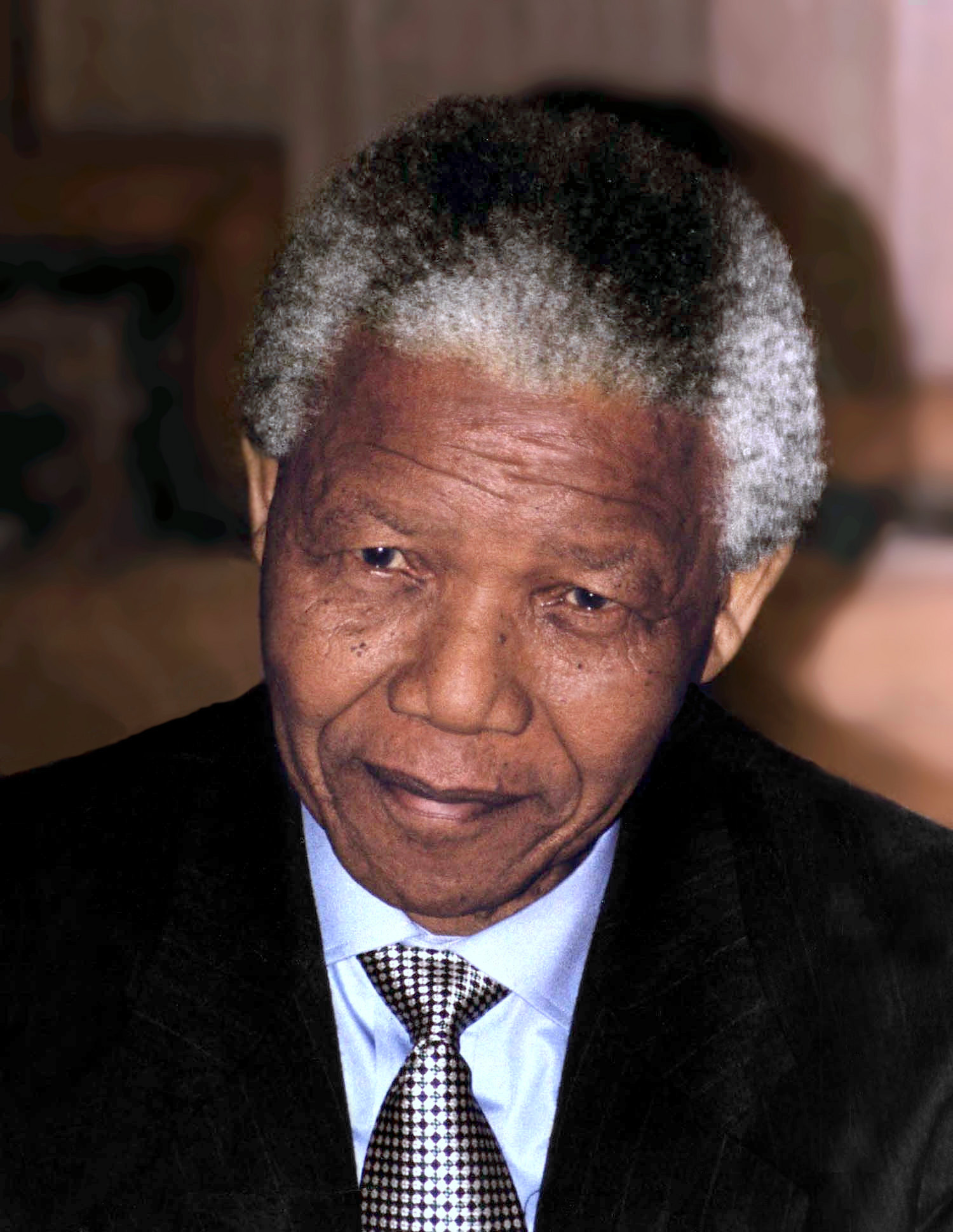
Nelson Rolihlahla Mandela moved from anti-apartheid organizer and armed insurgent to political prisoner, negotiator and South Africa’s first president elected by universal adult suffrage. Imprisoned for more than 27 years from August 5, 1962, to February 11, 1990, he helped negotiate apartheid’s formal end and led the African National Congress (ANC) to victory in the April 26–29, 1994, election.
His presidency, from May 10, 1994, to June 14, 1999, established constitutional democracy and widened access to housing, electricity and public services. It did not overturn the racial distribution of land, wealth and corporate power created by conquest and apartheid. Mandela’s history therefore concerns both democratic liberation and an unfinished economic reckoning.
Key takeaways
- Mandela spent more than 27 years imprisoned before helping negotiate apartheid’s end and becoming president on May 10, 1994.
- The ANC won 62.65% of valid votes in South Africa’s first universal-suffrage national election, held from April 26 to 29, 1994.
- Mandela’s government established constitutional democracy and expanded services, but left most mines, commercial land and accumulated wealth under existing ownership.
- Apartheid ended through mass resistance, armed struggle, labor organization, international pressure and negotiation—not through Mandela’s personal reconciliation alone.
- The Truth and Reconciliation Commission documented extensive abuses, but conditional amnesty and limited prosecutions left many victims without full justice.
How apartheid made Mandela a prisoner
Apartheid, formally imposed by the National Party after its 1948 election victory, classified people by race and controlled residence, employment, education, movement and political rights. The Population Registration Act of 1950 supplied racial categories; the Group Areas Act of 1950 enforced segregated settlement; pass laws criminalized African mobility. These statutes served a labor system that supplied farms, mines and factories with cheap, politically subordinated workers.
Mandela joined the ANC in 1944 and helped establish its Youth League that year. After the Sharpeville massacre on March 21, 1960—when police killed 69 people and wounded about 180, according to South Africa’s Truth and Reconciliation Commission—the government banned the ANC and Pan Africanist Congress on April 8, 1960. Mandela became a founder and first commander of Umkhonto we Sizwe (MK), launched on December 16, 1961. Its initial campaign targeted infrastructure while seeking to avoid deaths; later ANC armed operations did kill civilians.
Arrested near Howick on August 5, 1962, Mandela received a five-year sentence on November 7, 1962. In the Rivonia Trial, he and seven co-defendants were sentenced to life imprisonment on June 12, 1964, for sabotage and conspiracy to overthrow the state.
“I have cherished the ideal of a democratic and free society in which all persons live together in harmony and with equal opportunities.” — Nelson Mandela, statement from the dock, Rivonia Trial, April 20, 1964.
| Date | Event | Concrete measure |
|---|---|---|
| March 21, 1960 | Sharpeville massacre | 69 killed; about 180 wounded, TRC findings published in 1998 |
| December 16, 1961 | MK begins sabotage campaign | 5 initial targets attacked that night, according to ANC historical records |
| June 12, 1964 | Rivonia sentencing | 8 defendants sentenced to life imprisonment |
| June 12, 1964–March 31, 1982 | Robben Island confinement | 17 years, 9 months, 19 days |
| February 11, 1990 | Mandela released | More than 27 years after his August 5, 1962, arrest |
See the archive’s broader history of racial rule and documented state atrocities.
Prison, pressure and the negotiated transition
Mandela spent about 18 years on Robben Island before transfer to Pollsmoor Prison on March 31, 1982, and Victor Verster Prison on December 7, 1988. His symbolic power grew through organized resistance inside South Africa, international solidarity, cultural boycotts, sanctions and the declining legitimacy and affordability of white-minority rule—not through imprisonment alone.
President P. W. Botha offered conditional release on January 31, 1985, if Mandela renounced violence. Mandela rejected a bargain that would leave the ANC banned and the state’s violence intact. Secret contacts with officials began in 1985. President F. W. de Klerk unbanned the ANC and other organizations on February 2, 1990, then released Mandela nine days later.
The transition remained violent. The Human Rights Committee counted approximately 14,000 politically related deaths from July 1990 through April 1994; classifications vary because violence involved security forces, ANC-aligned groups, Inkatha supporters and covert state networks. Mandela and de Klerk shared the 1993 Nobel Peace Prize, but their cooperation did not erase the state’s responsibility for preserving white rule through law, policing and clandestine violence.
The numbers: election, office and social change
The April 26–29, 1994, election was South Africa’s first national contest based on universal adult suffrage. The Independent Electoral Commission reported 19,533,498 valid votes; the ANC won 12,237,655 votes, or 62.65%, and 252 of 400 National Assembly seats. Parliament elected Mandela president on May 9, 1994, and he was inaugurated on May 10.
Key facts
- Mandela was born on July 18, 1918, at Mvezo in the Eastern Cape and died on December 5, 2013, aged 95.
- He served one presidential term, from May 10, 1994, until June 14, 1999.
- South Africa adopted its final democratic Constitution on May 8, 1996; it took effect on February 4, 1997.
- The Truth and Reconciliation Commission received about 21,000 victim statements between 1996 and 1998 and heard roughly 2,000 publicly, according to the TRC.
- Mandela shared the 1993 Nobel Peace Prize with F. W. de Klerk.
| Indicator | Year or period | Reported figure and source |
|---|---|---|
| Valid national votes | 1994 | 19,533,498, Independent Electoral Commission |
| ANC vote | 1994 | 12,237,655; 62.65%, Independent Electoral Commission |
| Formal houses built or under construction | 1994–1999 | More than 750,000, South African government’s 1999 presidential review |
| New electricity connections | 1994–1999 | About 2 million, South African government’s 1999 review |
| Households receiving clean water | 1994–1999 | About 3 million, South African government’s 1999 review |
| Unemployment | 1995 | 16.9% narrow rate; 29.3% expanded rate, Statistics South Africa October Household Survey |
Government delivery figures describe connections or projects, not necessarily durable service quality. Definitions also matter: South Africa’s narrow unemployment measure excluded people who wanted work but had stopped searching, while the expanded measure included them. More comparable figures belong in the archive’s data collections.
Who profited—and what democracy did not redistribute
Apartheid enriched white-owned mining houses, banks, farms and manufacturers through racial job reservation, land dispossession, migrant labor, suppressed unions and publicly financed infrastructure. Major beneficiaries included Anglo American, De Beers, Gencor, Sanlam and Rembrandt. Their gains cannot be reduced to one defensible apartheid “profit” total because conglomerates shifted assets across sectors and jurisdictions, while the state socialized policing and labor-control costs.
Land demonstrates the inheritance. The Natives Land Act of June 19, 1913, initially restricted African landholding to about 7% of South Africa; the 1936 Native Trust and Land Act raised the scheduled allocation to roughly 13%. The 1996 Constitution protected property while permitting restitution and reform. By 1999, redistribution remained far below the ANC’s Reconstruction and Development Programme target of transferring 30% of agricultural land within five years.
Mandela’s government inherited approximately R311 billion in gross national government debt in the 1994/95 fiscal year, according to South African Reserve Bank historical series; exact totals vary with debt definitions. It chose macroeconomic stability, deficit reduction and market access. The 1996 Growth, Employment and Redistribution strategy accelerated trade liberalization and fiscal restraint. These choices reassured domestic capital and foreign investors but constrained rapid structural redistribution.
Political equality arrived in 1994 without an equivalent transfer of mines, financial institutions, commercial farmland or accumulated household wealth.
The beneficiaries of compromise were therefore unequal: the black majority gained citizenship, votes and legal rights; established owners largely retained productive assets. A growing black professional and business class also gained access through public employment, procurement and later empowerment policies.
Resistance, leadership and limits
Mandela mattered because he could command confidence across organizations and convert personal authority into a constitutional settlement. He did not defeat apartheid alone. The struggle depended on ANC and MK activists, the United Democratic Front, the South African Communist Party, trade unions, student movements, churches, civic associations, neighboring states and international campaigns. Leaders including Oliver Tambo, Walter Sisulu, Albertina Sisulu, Chris Hani, Joe Slovo, Winnie Madikizela-Mandela and Desmond Tutu carried resistance during Mandela’s incarceration.
The transition’s mechanism can be summarized in five stages:
- Mass defiance, 1952–1960: campaigns exposed apartheid’s dependence on arrests and administrative coercion.
- Underground and armed struggle, 1961–1990: sabotage and exile networks challenged a state that had closed legal opposition.
- Worker and township revolt, 1973–1989: strikes and civic resistance made routine rule increasingly difficult.
- International pressure, 1960–1994: boycotts, divestment and sanctions weakened legitimacy and restricted finance.
- Negotiation, 1985–1994: talks converted pressure into elections, constitutional rights and majority government.
Mandela’s record also requires scrutiny. The ANC’s armed campaign caused civilian deaths; the May 20, 1983, Church Street bombing killed 19 people in contemporary police and press counts, including the two bombers, though some later accounts report 20 or 21. Mandela defended the legitimacy of armed resistance while later emphasizing reconciliation. During his presidency, his government was slow to confront the emerging HIV/AIDS catastrophe; stronger national denialism came under his successor, Thabo Mbeki, after June 1999.
Denial, memory and what Mandela means now
Public memory often turns Mandela into a harmless icon of forgiveness, detaching reconciliation from the coercion that made negotiation possible. Another distortion depicts apartheid’s end as a voluntary white concession. Both erase organized black resistance, regional warfare and the international anti-apartheid movement.
The TRC, created by the Promotion of National Unity and Reconciliation Act of July 26, 1995, offered individual amnesty for full disclosure of politically motivated crimes. By its 2003 final report, its Amnesty Committee had received 7,112 applications and granted 849, according to official TRC totals. The process established an extensive public record but could not itself deliver comprehensive prosecutions, reparations or redistribution.
Mandela’s present meaning lies in a contradiction. His government destroyed the legal architecture of white supremacy and entrenched enforceable rights in the Constitution effective February 4, 1997. Yet South Africa remained one of the world’s most unequal societies: the World Bank estimated a consumption Gini coefficient of 0.63 for 2014/15, in a 2018 report. That later figure cannot be assigned to Mandela alone, but it measures the endurance of inherited ownership and spatial segregation.
Commemoration is honest only when it preserves both achievements and limits: Mandela was neither a solitary savior nor a passive saint. He was a disciplined political actor who accepted compromise to prevent further mass bloodshed and establish majority rule, while leaving future governments responsible for the economic transformation that political liberation did not complete.
Sources & further reading
- Nelson Mandela Foundation: Biography and archival resources
- South African History Online: Nelson Mandela
- Truth and Reconciliation Commission of South Africa: Final Report
- Independent Electoral Commission: 1994 national election results
- South African Government: Constitution of the Republic of South Africa
- Nobel Prize: Nelson Mandela, 1993
Frequently asked questions
- Why was Nelson Mandela imprisoned for 27 years?
- Mandela was arrested on August 5, 1962, and initially convicted of leaving South Africa illegally and inciting a strike. On June 12, 1964, the Rivonia court sentenced him and seven others to life imprisonment for sabotage and conspiracy connected to Umkhonto we Sizwe, the ANC-linked organization launched on December 16, 1961.
- How long was Nelson Mandela president of South Africa?
- Nelson Mandela served one term as president, from May 10, 1994, to June 14, 1999. Parliament elected him after the ANC received 12,237,655 votes, or 62.65% of valid ballots, in the April 26–29, 1994, election. Thabo Mbeki succeeded him in June 1999.
- Did Nelson Mandela use armed resistance?
- Yes. Mandela helped establish Umkhonto we Sizwe in 1961 and became its first commander. The organization initially emphasized sabotage of infrastructure while trying to avoid casualties, after the state had banned the ANC on April 8, 1960. Later ANC operations caused civilian deaths. Mandela argued that state repression had closed peaceful political channels.
- What did Mandela achieve as president?
- Mandela’s government entrenched universal citizenship and constitutional rights, with the final Constitution taking effect on February 4, 1997. Its 1999 review reported more than 750,000 houses built or under construction, about 2 million electricity connections and clean-water access extended to about 3 million households. Land and wealth redistribution remained limited.
- Did Mandela and the Truth and Reconciliation Commission grant blanket amnesty?
- No. The commission established under a law dated July 26, 1995, could grant individual amnesty only for politically motivated acts that applicants fully disclosed. By its 2003 final report, the Amnesty Committee had received 7,112 applications and granted 849. Critics argue that weak subsequent prosecutions produced de facto impunity for many perpetrators.
Related chapters
Topics
- Aimé Césaire and Discourse on Colonialism
- Algerian War of Independence and French Torture
- South African Apartheid: The Legal Architecture of Racism
- Atlantic Slave Trade: Scale, Profits and Resistance
- Banda massacre and the Dutch nutmeg monopoly
- Belgian Congo: From Leopold’s Atrocities to Colonial Rule
- The 1943 Bengal Famine and British Policy
- Benin Bronzes: Looting, Trade and Restitution
- Berlin Conference and the Partition of Africa
Sources & further reading
CC BY 4.0 ·