Patrice Lumumba and the CIA–Belgian Assassination
How Belgium, Congolese rivals and the CIA helped remove Patrice Lumumba in 1960 and enabled his murder in Katanga on 17 January 1961.
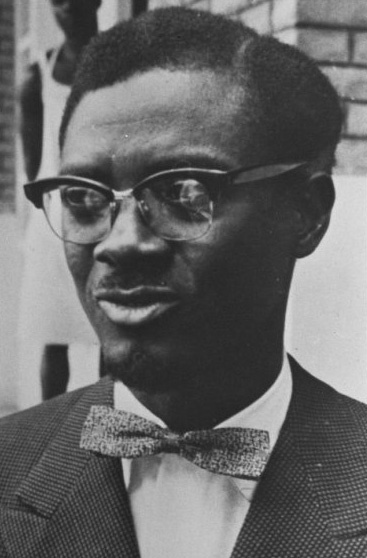
Patrice Lumumba, the Congo’s first democratically mandated prime minister, was overthrown in September 1960 and murdered on 17 January 1961. Congolese officials carried out the execution in secessionist Katanga with Belgian officers directing and assisting; Belgium later accepted “moral responsibility.” The CIA plotted independently to kill Lumumba, funded his opponents and supported the political conditions that delivered him to his killers, although no evidence proves that CIA personnel were present at the execution.
The assassination removed the leading advocate of a sovereign, united Congo during a crisis shaped by Belgian intervention, Katanga’s mineral wealth and Cold War power. It belongs within the wider archive of colonial history, documented atrocities and contested historical data.
Key takeaways
- Belgian officers helped transfer, execute and destroy the remains of Patrice Lumumba, Maurice Mpolo and Joseph Okito on 17 January 1961.
- The CIA planned to poison Lumumba in 1960, financed his opponents and supported his removal, but did not carry out the documented execution.
- Belgium’s 2001 parliamentary inquiry accepted moral responsibility while finding no written Belgian government order explicitly commanding Lumumba’s murder.
- Lumumba’s elimination protected Katanga’s secessionists, Belgian mining interests and Western Cold War strategy against a sovereign, non-aligned Congo.
- No person has been convicted for the assassination, although Belgium returned Lumumba’s only recovered remains, a tooth, in June 2022.
What happened: independence, coup and execution
Belgium granted independence on 30 June 1960 after approximately 75 years of colonial rule beginning with Leopold II’s Congo Free State in 1885. Lumumba became prime minister on 24 June 1960; Joseph Kasa-Vubu was president. The Force Publique mutinied on 5 July, Belgian troops intervened, and mineral-rich Katanga seceded under Moïse Tshombe on 11 July 1960.
After the United Nations refused to use its forces to suppress Katanga, Lumumba sought Soviet transport and matériel. Kasa-Vubu announced his dismissal on 5 September; Lumumba rejected it, and parliament continued to support him. Colonel Joseph-Désiré Mobutu, financed and politically supported by Western powers, staged a coup on 14 September 1960. Lumumba was captured on 1 December, imprisoned, and transferred to Katanga on 17 January 1961.
That evening, Katangan officials and Belgian officers took Lumumba, Maurice Mpolo and Joseph Okito to an isolated site and shot them. Belgian commissioner Frans Verscheure commanded the transfer; Belgian officer Julien Gat supervised the execution party. Police commissioner Gerard Soete later helped dismember and dissolve the bodies in sulfuric acid.
| Date | Event | Responsible or central actors |
|---|---|---|
| 24 June 1960 | Lumumba takes office as prime minister | Congolese parliament; MNC-led coalition |
| 30 June 1960 | Congo becomes independent | Congolese government; Belgium |
| 11 July 1960 | Katanga declares secession | Moïse Tshombe; Belgian advisers and mining interests |
| 14 September 1960 | Mobutu suspends political institutions | Mobutu; Congolese army; Western backing |
| 1 December 1960 | Lumumba captured near Port-Francqui | Mobutu’s forces |
| 17 January 1961 | Lumumba, Mpolo and Okito executed | Katangan authorities; Belgian officers |
The mechanism: Belgian direction and CIA operations
The murder resulted from connected Congolese, Belgian and US operations, not one chain of command. The Belgian parliamentary inquiry reported in 2001 that Belgian ministers and officials pressed for Lumumba’s political elimination, supported his enemies and helped arrange his fatal transfer. It found Belgium morally responsible but stopped short of declaring that its government directly ordered the shooting.
The CIA’s Congo station, led by Lawrence Devlin, funded anti-Lumumba politicians and Mobutu. In August 1960 President Dwight D. Eisenhower chaired a National Security Council meeting after which CIA Director Allen Dulles treated Lumumba’s removal as an urgent objective. CIA scientist Sidney Gottlieb delivered poison to Congo in September 1960, but Devlin did not use it. The 1975 US Senate Church Committee found that the CIA contemplated and prepared assassination but could not establish CIA involvement in the 17 January killing.
- Belgian political and military intervention sustained Katanga’s secession from July 1960.
- US and Belgian officials worked to remove Lumumba after September 1960.
- The CIA supplied money and covert support to his Congolese opponents in 1960.
- Mobutu’s forces captured and imprisoned him in December 1960.
- Congolese and Belgian authorities transferred him to enemies in Katanga, where he was killed.
The numbers: victims, money and minerals
The immediate assassination killed 3 men in 1961: Lumumba, Mpolo and Okito. The wider Congo Crisis produced far larger but uncertain losses. Political scientist Crawford Young estimated roughly 100,000 deaths for 1960–1965; historian Ludo De Witte cited estimates ranging from tens of thousands to more than 100,000 for the crisis. No complete national death register existed, so precision would be false.
| Measure | Figure | Year and source |
|---|---|---|
| Men executed together | 3 | 1961; Belgian parliamentary inquiry, 2001 |
| Estimated Congo Crisis deaths | about 100,000 | 1960–1965; Crawford Young, 1965 |
| UN personnel killed in ONUC | 250 | 1960–1964; United Nations historical summary |
| CIA Congo political-action budget initially approved | US$100,000 | 1960; Church Committee report, 1975 |
| Belgian parliamentary inquiry record | 4 volumes | 2001; Belgian Chamber of Representatives |
Katanga contained the assets that made secession geopolitically valuable. Union Minière du Haut-Katanga produced approximately 60% of Western uranium output by the late 1950s, according to historian Susan Williams, alongside copper and cobalt. Its Shinkolobwe ore had supplied most of the uranium used in the Manhattan Project’s wartime procurement; exact tonnage remains disputed across corporate and government records.
“Neither brutality nor ill-treatment nor torture has ever forced me to beg for mercy.” — Patrice Lumumba, 1960, final letter to Pauline Lumumba.
Who profited, and who resisted
Union Minière du Haut-Katanga, then controlled through Belgian corporate networks including Société Générale de Belgique, gained from a Katanga administration that protected its concessions and tax arrangements. Belgian settlers and officials sought to preserve commercial authority after formal independence. The United States prioritised excluding Soviet influence and later accepted Mobutu’s dictatorship as a strategic ally. Mobutu ruled from 1965 to 1997—32 years—while Zaire’s copper, cobalt and diamonds continued to enrich foreign firms and a narrow domestic elite.
Lumumba resisted through electoral organisation, parliamentary legitimacy and pan-African diplomacy. His Mouvement National Congolais was the only major party in 1960 explicitly organised across ethnic and regional lines. His supporters established a rival government in Stanleyville under Antoine Gizenga in December 1960; it was recognised by at least 21 states by February 1961, according to contemporary diplomatic counts.
Key facts
- Lumumba was 35 when murdered in 1961.
- He served approximately 10 weeks as prime minister, from 24 June to 5 September 1960.
- His government opposed Katanga’s secession and demanded effective Congolese sovereignty over mineral resources.
- Belgian officers participated at the killing site and destroyed the bodies.
- CIA officers prepared a separate poison plot in 1960 that was never executed.
Lumumba’s removal was not an accidental by-product of disorder: foreign governments cultivated the forces that isolated, imprisoned and delivered him to known enemies.
Denial, investigation and memory
For decades, Belgian and US accounts separated covert interference from the murder and portrayed Lumumba mainly as a Soviet proxy. The evidentiary record changed through the US Church Committee in 1975, Ludo De Witte’s archival investigation in 1999 and Belgium’s parliamentary inquiry in 2000–2001. Belgian Foreign Minister Louis Michel apologised in 2002 for Belgium’s role and acknowledged moral responsibility.
Gerard Soete retained a tooth taken from Lumumba’s remains. Belgian authorities returned it to Lumumba’s family in Brussels on 20 June 2022—61 years after the killing—after prosecutors seized it in 2016. No perpetrator has been convicted for the assassination.
Memory remains politically active because euphemisms such as “removal” conceal a sequence of covert financing, unlawful detention, torture, transfer and execution. Lumumba’s 30 June 1960 independence speech endures because it named colonial violence in front of King Baudouin rather than endorsing Belgium’s self-congratulatory account.
What the assassination means now
Lumumba’s killing demonstrates how formal decolonisation could be neutralised when control over armed forces, finance and strategic commodities remained externally vulnerable. Congo’s contemporary importance has shifted from uranium and copper toward cobalt as well: the US Geological Survey estimated that the Democratic Republic of the Congo mined 170,000 metric tonnes of cobalt in 2023, about 74% of the world total of 230,000 tonnes.
The continuity is not that every present extraction contract reproduces 1961. It is that concentrated mineral dependence, foreign political leverage and weak public accountability still determine who captures value. Reading the assassination alongside datasets on extraction and violence, the archive’s history index and its record of mass atrocities makes clear that political sovereignty without economic power remains fragile.
Sources & further reading
- Belgian Parliamentary Inquiry: Conclusions on Lumumba’s Assassination
- US Senate Church Committee, Alleged Assassination Plots Involving Foreign Leaders
- National Security Archive: CIA and the Assassination of Patrice Lumumba
- United Nations: ONUC background
- Encyclopaedia Britannica: Patrice Lumumba
- US Geological Survey: Mineral Commodity Summaries 2024
Frequently asked questions
- Who killed Patrice Lumumba?
- Katangan officials and soldiers executed Patrice Lumumba, Maurice Mpolo and Joseph Okito on 17 January 1961 under the supervision and assistance of Belgian officers. Moïse Tshombe’s secessionist government received them after Joseph-Désiré Mobutu’s forces captured and imprisoned Lumumba. Belgium’s 2001 parliamentary inquiry accepted Belgian moral responsibility for the circumstances leading to the killing.
- Did the CIA assassinate Patrice Lumumba?
- The CIA tried to establish a means of assassinating Lumumba in 1960: Sidney Gottlieb delivered poison, and station chief Lawrence Devlin received instructions to remove him. That plot was not used. The 1975 Church Committee found no proof that CIA personnel participated in the 17 January 1961 execution, but the agency financed Lumumba’s opponents and helped create the political conditions for his destruction.
- Why did Belgium want Lumumba removed?
- Lumumba demanded genuine Congolese sovereignty, opposed Katanga’s secession and threatened Belgium’s postcolonial military, political and mining influence. After independence on 30 June 1960, Belgian officials backed anti-Lumumba actors and Katanga, where Union Minière controlled major copper, cobalt and uranium production. Belgium acknowledged moral responsibility in 2002 following its 2001 parliamentary inquiry.
- What happened to Patrice Lumumba’s body?
- After the 17 January 1961 shooting, Belgian police commissioner Gerard Soete and associates exhumed, dismembered and dissolved the bodies of Lumumba, Maurice Mpolo and Joseph Okito in sulfuric acid. Soete retained a tooth. Belgian authorities seized it in 2016 and formally returned it to Lumumba’s family on 20 June 2022.
- What were the consequences of Lumumba’s assassination?
- The killing removed the strongest national leader opposing Katanga’s secession and foreign control during the 1960–1965 Congo Crisis, which Crawford Young estimated caused about 100,000 deaths. It strengthened Joseph-Désiré Mobutu, who seized full power in 1965 and ruled until 1997. The assassination became a global symbol of covert intervention against African self-determination.
Related chapters
Topics
- Aimé Césaire and Discourse on Colonialism
- Algerian War of Independence and French Torture
- South African Apartheid: The Legal Architecture of Racism
- Atlantic Slave Trade: Scale, Profits and Resistance
- Banda massacre and the Dutch nutmeg monopoly
- Belgian Congo: From Leopold’s Atrocities to Colonial Rule
- The 1943 Bengal Famine and British Policy
- Benin Bronzes: Looting, Trade and Restitution
- Berlin Conference and the Partition of Africa
Sources & further reading
CC BY 4.0 ·