Potosí Silver and the Death Toll of Spanish Colonial Mining
How Spain extracted Potosí silver through forced Indigenous labor, who profited, why no defensible total death toll exists, and what survives today.
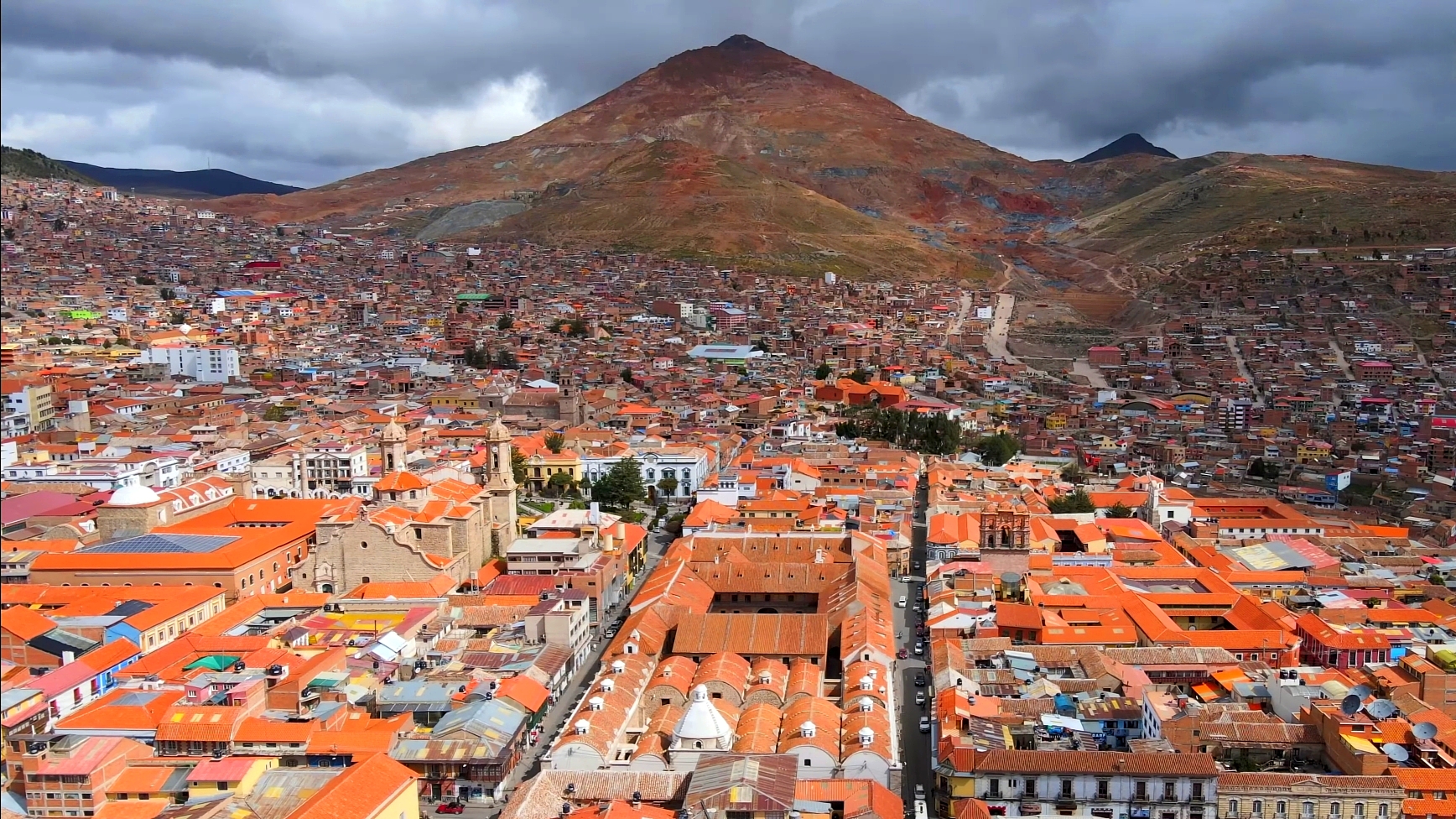
Potosí became the Spanish Empire’s greatest silver center after exploitation of Bolivia’s Cerro Rico began in 1545. Its wealth depended on Indigenous dispossession, mercury amalgamation and the colonial mita, a draft that compelled Andean communities to supply thousands of workers annually. The mines caused mass death, disease and demographic disruption, but the often-repeated claim that 8 million people died at Potosí is not supported by surviving records.
The defensible conclusion is both sharper and more cautious: colonial mining created lethal conditions over centuries, while available evidence cannot yield a reliable cumulative death toll. This hub separates documented labor drafts, production and revenue from disputed mortality claims, connecting Potosí to the archive’s wider history, catalog of atrocities and quantitative data.
Key takeaways
- Potosí’s silver boom began in 1545 and was reorganized around mercury refining and a coercive Indigenous labor draft after 1573.
- Francisco de Toledo’s 1573 system assigned about 13,500 Indigenous men annually, although quotas and actual attendance changed over time.
- Registered output reached roughly 220–230 metric tonnes of silver annually in the 1590s, according to Peter Bakewell’s 1984 reconstruction.
- The widely repeated figure of 8 million deaths lacks a reproducible archival basis; no defensible cumulative mortality range currently exists.
- Unknown mortality does not mean negligible mortality: dangerous shafts, mercury exposure, hunger, displacement and epidemic disease formed a lethal colonial system.
- The Crown, mine owners, refiners and merchants captured revenue while Indigenous communities carried labor, subsistence, health and environmental costs.
What happened: conquest turned Cerro Rico into an extraction system
Diego Huallpa, an Indigenous prospector, is traditionally associated with identifying Cerro Rico’s rich ore in 1545. Spaniards founded Villa Imperial de Potosí that year at roughly 4,067 meters above sea level. By 1573, Viceroy Francisco de Toledo had reorganized extraction around mercury amalgamation, state-regulated refining and the mita labor draft.
- Cerro Rico entered sustained colonial exploitation in 1545.
- Toledo’s 1570–1575 reforms consolidated the draft and amalgamation system.
- A 1573 ordinance required about 13,500 mitayos annually, according to historian Jeffrey Cole’s 1985 reconstruction.
- Silver was taxed through the royal fifth, nominally 20% before reductions and exemptions.
- Potosí’s colonial mint, founded in 1572, converted bullion into globally circulating coin.
The mechanism worked in five linked stages:
- Officials assigned draft quotas to Indigenous provinces.
- Communities sent adult men to Potosí for legally defined service rotations.
- Contractors drove shafts into unstable, cold and poorly ventilated workings.
- Refiners crushed ore and amalgamated silver with mercury.
- Merchants and officials moved taxed bullion through Lima, Panama, Seville and global markets.
“I am rich Potosí, the treasure of the world, the king of mountains and the envy of kings.” — Bartolomé Arzáns de Orsúa y Vela, 1736, Historia de la Villa Imperial de Potosí, recording the city’s heraldic legend.
The boast expressed imperial value, not workers’ experience. Draft laborers bore travel costs, food shortages, wage manipulation, debt and separation from households; many communities hired substitutes or paid cash to evade service.
The numbers: production is measurable, mortality is not
Official tax accounts document enormous output more securely than deaths. Earl J. Hamilton’s 1934 compilation of registered American bullion indicates that about 16,000 metric tonnes of silver reached Spain from 1503 to 1660; Potosí was a major but not exclusive source. Peter Bakewell’s 1984 analysis places registered Potosí production near its high point in the 1590s, commonly summarized as roughly 220–230 metric tonnes annually. Smuggling makes official totals minimums.
| Measure | Date or period | Documented figure | Source and limitation |
|---|---|---|---|
| Annual mita assignment | 1573 | about 13,500 men | Jeffrey Cole, 1985; quota, not simultaneous underground workforce |
| Registered silver output | 1579–1585 | about 190–210 tonnes yearly | Peter Bakewell, 1984; reconstructed from fiscal series |
| Approximate production peak | 1590s | about 220–230 tonnes yearly | Bakewell, 1984; registered output excludes contraband |
| Bullion registered from Spanish America to Spain | 1503–1660 | about 16,000 tonnes of silver | Earl J. Hamilton, 1934; all American sources, not Potosí alone |
| Royal mining tax | 16th century | nominally 20% | Crown law; effective receipts varied |
Mortality is the central evidentiary problem. No continuous mine-death register survives for 1545–1825, and demographic collapse cannot be assigned wholly to mining. Epidemics, hunger, warfare, displacement, falling fertility and colonial labor regimes overlapped.
| Mortality claim | Period claimed | Figure | Evidentiary status |
|---|---|---|---|
| Popular Potosí death toll | 1545–modern era | 8 million | Repeated in journalism and tourism; no demonstrated archival calculation |
| Eduardo Galeano’s formulation | published 1971 | 8 million “Indian lives” | Literary synthesis in Open Veins of Latin America; not a mine-register estimate |
| Defensible cumulative total | 1545–1825 | unknown; no credible range | Records are too incomplete and categories too inconsistent |
| Documented annual draft obligation | from 1573 | about 13,500 men | Cole, 1985; exposure measure, not a death count |
The archive supports a finding of systematic, deadly coercion; it does not support converting 8 million into a verified body count.
Who profited and who paid
The Spanish Crown collected production taxes, tribute and mint revenues. Mine owners and refiners captured profits through ore, mills and coerced labor; merchants financed supplies and carried silver; ecclesiastical institutions received donations and credit income. European and Asian markets absorbed Potosí coin, especially the Spanish dollar or piece of eight.
Pedro de la Gasca created an early royal mint at Lima in 1565; Toledo transferred minting capacity to Potosí, where production began in 1574 after the mint’s 1572 foundation. The Crown’s nominal 20% quinto real made silver a fiscal foundation of Habsburg warfare and debt service, although deductions, fraud and later tax reductions narrowed actual receipts.
The costs were externalized onto Indigenous households. Mitayos received wages, but official pay often failed to cover transport, food, candles, tools and family maintenance. Huancavelica’s mercury workers faced poisoning underground, while Potosí refiners and surrounding populations encountered mercury through crushing, heating and contaminated waste. Coercion therefore extended beyond men inside Cerro Rico to women traders, agricultural producers, transport workers and communities compelled to replace absent labor.
Resistance, flight and negotiated survival
Andean people did not accept the system passively. They fled draft provinces, litigated quotas, bribed officials, hired substitutes, migrated into categories exempt from the mita, concealed population and bargained over work. By 1692, according to Cole’s 1985 study, the effective annual draft had fallen to roughly 4,000–5,000 workers, compared with about 13,500 assigned in 1573.
Resistance also took religious and political forms. Workers maintained obligations to mountain powers while outwardly participating in Catholic institutions. During the great Andean rebellions of 1780–1782 associated with Túpac Amaru II and Túpac Katari, rebels challenged tribute, forced commerce and colonial labor. Potosí itself was contested during the independence wars of 1809–1825.
These actions did not end exploitation, but they altered its reach. Mine owners increasingly combined draft labor with wage workers, contracted specialists and debt-bound labor. Treating every Indigenous worker as an inert victim erases the strategies by which families survived; treating wages as proof of freedom erases the coercive law that delivered workers to employers.
Denial, myth and public memory
Two distortions obstruct clear memory. The first presents Potosí as entrepreneurial modernization and treats coercion as incidental. The second repeats 8 million deaths as settled fact. Both weaken accountability: one minimizes structural violence; the other gives denialists an unsupported number to attack.
Galeano wrote in 1971 that Potosí’s silver “cost Spain eight million Indian lives.” The figure became globally influential, but he supplied no reproducible mortality series. A city reaching perhaps 120,000–160,000 inhabitants around 1600, as demographic reconstructions commonly estimate, could sustain enormous cumulative migration and death without validating a specific total of 8 million.
UNESCO inscribed the City of Potosí as a World Heritage Site in 1987. In 2014 it placed the site on the List of World Heritage in Danger because mining threatened Cerro Rico’s physical stability. Memory must therefore include both colonial violence and current miners, many working in cooperatives under dangerous conditions rather than as museum figures.
A responsible atrocity record labels uncertainty instead of laundering repetition into evidence. It also refuses the opposite inference: an unknown total is not a small total.
What Potosí means now
Potosí shows how extraction joins racial hierarchy, coerced mobility, ecological damage and distant finance. Bolivia became independent in 1825, but Cerro Rico remained an active mining landscape. Tin dominated parts of the 19th and 20th centuries; silver, zinc, lead and other ores continue to be worked in the 21st century.
The mountain’s instability links past extraction to present risk. UNESCO’s 2014 danger listing followed concern over uncontrolled workings and collapses. Current labor is not legally identical to Toledo’s mita, yet workers still absorb hazards while commodity chains transfer value elsewhere.
The historical standard should be precise: identify perpetrators and beneficiaries, preserve uncertainty in mortality estimates, and compare fiscal records with Indigenous petitions, parish registers and environmental evidence. Potosí belongs not only in imperial history but in contemporary debates over mine safety, Indigenous sovereignty, reparative accounting and who pays for the minerals on which states and markets depend.
Sources & further reading
- Peter Bakewell, Miners of the Red Mountain (University of New Mexico Press)
- Jeffrey A. Cole, The Potosí Mita, 1573–1700 (Stanford University Press)
- UNESCO World Heritage Centre: City of Potosí
- Encyclopaedia Britannica: Potosí
- Kris Lane, Potosí: The Silver City That Changed the World (University of California Press)
- Explore the archive’s colonialism and extraction datasets
Frequently asked questions
- How many people died in the Potosí silver mines?
- No reliable total or scholarly estimate range exists for deaths at Potosí between 1545 and Bolivian independence in 1825. Mine records are incomplete and cannot separate occupational deaths from epidemics, hunger, migration and wider colonial disruption. The famous figure of 8 million, popularized by Eduardo Galeano in 1971, has no reproducible archival calculation.
- Did 8 million Indigenous people die at Potosí?
- The claim is not established. Eduardo Galeano stated in 1971 that Potosí silver cost 8 million Indigenous lives, but did not provide a demographic series or mine-death records supporting that number. Historians document severe mortality and coercion, yet surviving evidence for 1545–1825 cannot sustain either 8 million or another precise cumulative figure.
- What was the Potosí mita?
- The Potosí *mita* was a Spanish colonial labor draft systematized by Viceroy Francisco de Toledo in 1573. It assigned about 13,500 Indigenous men annually from designated Andean provinces, according to Jeffrey Cole’s 1985 study. Workers traveled to Potosí for rotations in mines and related labor, while their communities bore major transport and subsistence costs.
- How much silver did Potosí produce?
- Potosí’s registered annual output reached roughly 220–230 metric tonnes in the 1590s, based on Peter Bakewell’s 1984 reconstruction of fiscal records. Earlier output in 1579–1585 was approximately 190–210 tonnes annually. These are recorded minimums because contraband escaped taxation; they should not be confused with Earl Hamilton’s 16,000-tonne figure for all registered Spanish American silver reaching Spain in 1503–1660.
- Who benefited from Potosí silver?
- From 1545 onward, mine owners, refiners, merchants, creditors and the Spanish Crown benefited directly. The Crown nominally levied a 20% royal fifth during the 16th century, while Potosí’s mint, founded in 1572 and operating by 1574, produced global coinage. Indigenous communities paid through compulsory labor, disrupted agriculture, dangerous migration and exposure to mine and mercury hazards.
Related chapters
Topics
- Aimé Césaire and Discourse on Colonialism
- Algerian War of Independence and French Torture
- South African Apartheid: The Legal Architecture of Racism
- Atlantic Slave Trade: Scale, Profits and Resistance
- Banda massacre and the Dutch nutmeg monopoly
- Belgian Congo: From Leopold’s Atrocities to Colonial Rule
- The 1943 Bengal Famine and British Policy
- Benin Bronzes: Looting, Trade and Restitution
- Berlin Conference and the Partition of Africa
Sources & further reading
CC BY 4.0 ·