Rwandan Genocide and Belgian Colonial Racial Engineering
How Belgian colonial rule hardened Hutu and Tutsi identities before the 1994 genocide: mechanisms, death tolls, profiteers, resistance and memory.
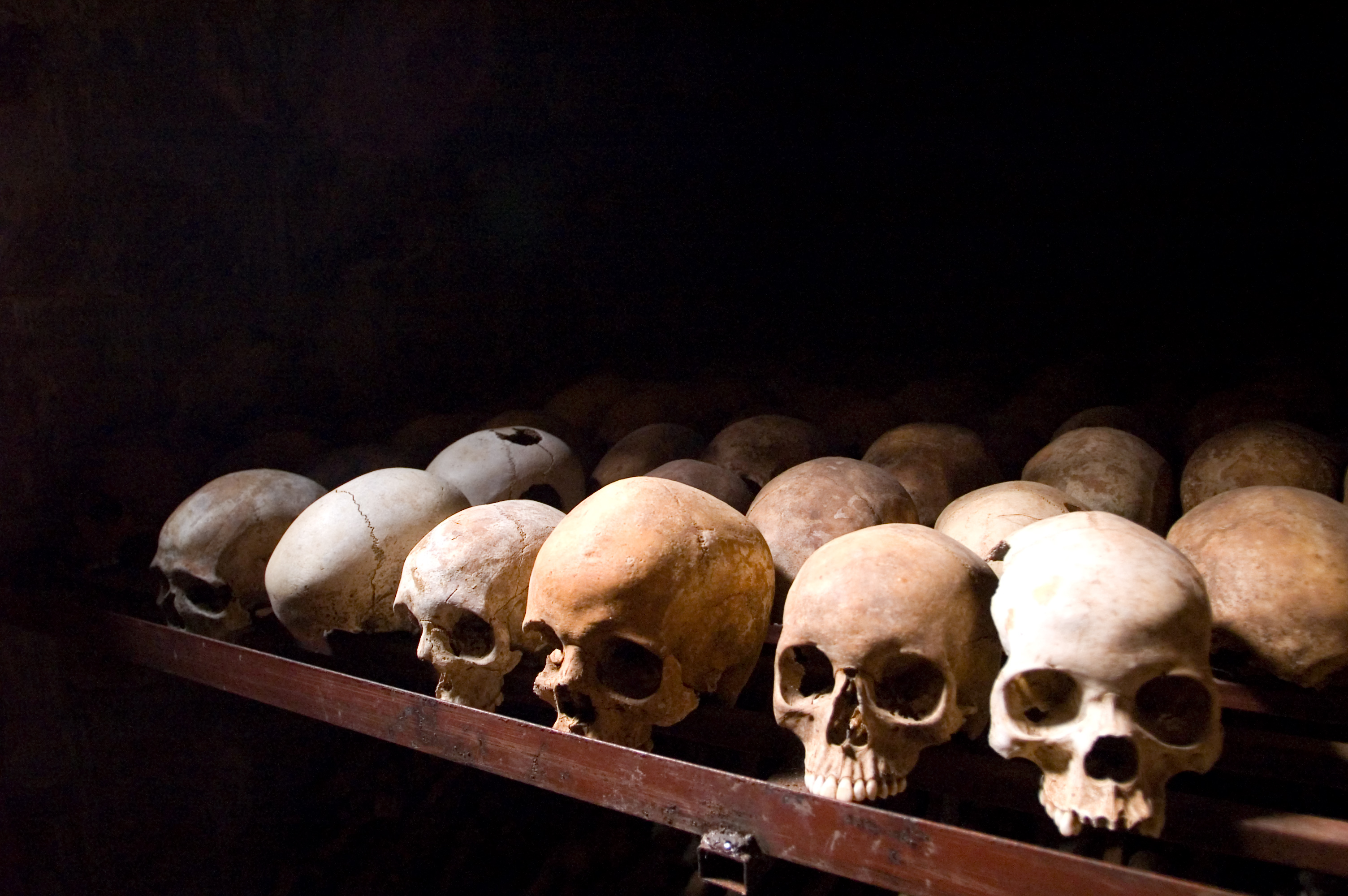
The Rwandan genocide was the planned extermination of Tutsi and the murder of Hutu and Twa opponents by Rwanda’s Hutu Power government, armed forces, militias and civilian accomplices from 7 April to 19 July 1994. Most demographic studies estimate that 500,000–662,000 Tutsi were killed; Rwanda’s 2008 official census counted 1,074,017 total victims.
Belgian rule did not make genocide inevitable. It did, however, convert fluid social categories into state-administered racial identities, privilege Tutsi elites and later redirect support toward Hutu political power. Post-independence governments then weaponized those classifications through discrimination, massacres and propaganda. Explore the wider histories of colonialism, mass atrocities and contested casualty data.
Key takeaways
- Belgian rule fixed Hutu, Tutsi and Twa into racialized administrative identities through the 1933–1934 census and subsequent identity cards.
- From 7 April to 19 July 1994, state forces and allied militias systematically exterminated Tutsi and murdered Hutu and Twa opponents.
- Credible demographic studies estimate 500,000–662,000 Tutsi deaths, while Rwanda’s 2008 official account records 1,074,017 victims overall.
- Colonial structures enabled later exclusion, but named Rwandan political, military and militia leaders made and executed the genocidal decisions of 1994.
- International withdrawal enabled killing: the UN Security Council cut UNAMIR’s authorized strength from 2,548 to 270 personnel on 21 April 1994.
Key facts: what happened and how
- The genocide began on 7 April 1994, hours after President Juvénal Habyarimana’s aircraft was shot down near Kigali on 6 April 1994.
- State authorities, the Forces armées rwandaises, Presidential Guard, Interahamwe and Impuzamugambi organized roadblocks, searches and killings.
- Identity cards marked “Hutu,” “Tutsi” or “Twa,” helping killers identify victims; Belgium had institutionalized ethnic classification in the 1930s.
- Radio-Télévision Libre des Mille Collines and the newspaper Kangura named enemies, circulated dehumanizing propaganda and encouraged violence.
- The Rwandan Patriotic Front ended the genocide militarily, taking Kigali on 4 July 1994 and defeating the interim government by 19 July 1994.
The mechanism combined central direction with local execution. Théoneste Bagosora and other military and political leaders helped establish an interim government on 8–9 April 1994. Prefects, burgomasters, soldiers and militia distributed weapons, convened civilians and attacked homes, churches, schools and roadblocks. Prime Minister Agathe Uwilingiyimana and 10 Belgian UN peacekeepers were murdered on 7 April 1994.
- Authorities defined Tutsi civilians and political opponents as an internal enemy.
- Officials prepared militias, arms caches, lists and civil-defense structures before April 1994.
- National and local leaders transmitted orders after 6 April 1994.
- Roadblocks, identity documents and neighborhood knowledge enabled victim selection.
- Sexual violence, pillage and murder destroyed families and prevented survival.
Belgian colonial racial engineering
Germany colonized Rwanda from the 1890s until Belgium occupied it in 1916 during the First World War. Belgium governed under a League of Nations mandate from 1922 and a United Nations trusteeship from 1946 until independence on 1 July 1962. Belgian administrators and Catholic missionaries adopted the racist “Hamitic hypothesis,” portraying Tutsi as racially superior outsiders and Hutu as indigenous agriculturalists.
Colonial rule governed indirectly through the Tutsi monarchy and chiefs, removing many Hutu officeholders and intensifying compulsory labor, taxation and social hierarchy. A census conducted during 1933–1934 fixed ethnic labels; identity cards introduced thereafter transmitted them across generations. Classification reportedly relied on lineage, official judgment and sometimes cattle ownership, often using a threshold of 10 cattle.
| Date | Colonial or political measure | Concrete effect |
|---|---|---|
| 1916 | Belgian forces occupied Rwanda | German rule was replaced during the First World War |
| 1922 | League mandate began | Belgium received international authority over Ruanda-Urundi |
| 1933–1934 | Census and ethnic registration | Hutu, Tutsi and Twa became fixed administrative identities |
| 1946 | UN trusteeship began | Belgian control continued under international supervision |
| 1957 | Hutu Manifesto published | Nine Hutu intellectuals framed inequality through racialized categories |
| 1959–1961 | “Social Revolution” and monarchy’s abolition | Violence displaced an estimated 120,000–300,000 Tutsi by 1964, according to UNHCR and historical syntheses |
| 1 July 1962 | Rwanda became independent | Grégoire Kayibanda’s Hutu-led republic inherited ethnic documentation and quotas |
Belgian policy shifted during the 1950s toward emerging Hutu elites, while anti-Tutsi violence accompanied the 1959 revolution. The same colonial racial grammar survived with its hierarchy reversed.
“The racial problem is the key to the whole political problem in Rwanda.” — Grégoire Kayibanda and eight co-authors, 1957, Note on the Social Aspect of the Native Racial Problem in Rwanda (“Hutu Manifesto”).
The numbers: killing, rape and displacement
No single toll captures every murdered Tutsi, Hutu opponent or Twa victim. Alison Des Forges estimated at least 500,000 deaths in her 1999 study for Human Rights Watch. Marijke Verpoorten’s demographic reconstruction, published in 2005, estimated 500,000–600,000 Tutsi deaths. Christian Davenport and Allan Stam estimated approximately 506,000 Tutsi deaths in work published in 2009; Omar McDoom’s 2020 synthesis placed the likely Tutsi toll at about 600,000–662,000. Rwanda’s 2008 constitutional figure is “more than 1,000,000,” while its 2002–2004 national census, reported in 2008, counted 1,074,017 victims of all backgrounds.
| Measure | Estimate | Year and source |
|---|---|---|
| Tutsi killed | At least 500,000 | 1999, Alison Des Forges/Human Rights Watch |
| Tutsi killed | 500,000–600,000 | 2005, Marijke Verpoorten |
| Tutsi killed | About 506,000 | 2009, Christian Davenport and Allan Stam |
| Tutsi killed | About 600,000–662,000 | 2020, Omar McDoom |
| All victims counted officially | 1,074,017 | 2008 report of Rwanda’s 2002–2004 census |
| Women raped | 250,000–500,000 | 1996, UN Special Rapporteur René Degni-Ségui |
| Twa killed | About 10,000; roughly 30% of Rwanda’s Twa | 2000, Minority Rights Group International |
| Refugees entering neighboring states | More than 2,000,000 | 1994, UNHCR |
The International Criminal Tribunal for Rwanda held in its 1998 Akayesu judgment that rape and sexual violence can constitute genocide when committed with intent to destroy a protected group.
Who profited, and who resisted
Belgian administrators gained cheap labor, taxes and political control; missionaries expanded institutional authority; chiefs collected dues and enforced compulsory cultivation. Rwanda was not primarily a mineral-export colony: coffee became the principal cash crop, with coercive cultivation spreading under Belgian rule during the 1930s. Benefits flowed upward while rural producers bore labor obligations and price controls.
In 1994, genocide also enabled direct enrichment. Soldiers, militia members and neighbors seized cattle, land, houses, businesses and household goods. Officials used food, beer, money and permission to loot as incentives. Political and military elites sought a larger prize: preservation of a state threatened by democratization and the RPF advance.
Resistance took many forms. Hutu officials including Agathe Uwilingiyimana rejected extremist rule and were killed. Prefect Jean-Baptiste Habyalimana opposed massacres in Butare before his removal on 17 April 1994 and subsequent murder. Individuals hid neighbors, forged documents, bribed roadblocks or refused orders. UNAMIR commander Roméo Dallaire repeatedly requested authority and reinforcements, but the UN Security Council reduced the mission from 2,548 authorized personnel to 270 on 21 April 1994; Resolution 918 authorized expansion to 5,500 on 17 May 1994, but deployment was delayed.
“We will send more people tomorrow and the day after tomorrow, and every day, until we stop the killings.” — Roméo Dallaire, 1994, recollection published in Shake Hands with the Devil (2003).
Denial, justice and contested memory
Denial commonly minimizes Tutsi deaths, alleges spontaneous “tribal chaos,” or presents RPF crimes as proof of “double genocide.” Crimes attributed to RPF soldiers—including killings during and after the 1994 advance—require investigation and accountability; they do not erase the documented intent to destroy Rwanda’s Tutsi population.
The UN created the International Criminal Tribunal for Rwanda through Resolution 955 on 8 November 1994. Before closing on 31 December 2015, the tribunal indicted 93 people, convicted 61 after trial, and produced landmark judgments on genocide, rape and media incitement. Rwanda’s community-based gacaca courts tried approximately 1.96 million cases from 2005 to 2012, according to Rwanda’s National Service of Gacaca Courts, but faced criticism over due process, intimidation and limited jurisdiction over RPF crimes.
France’s role remains contested because François Mitterrand’s government supported Habyarimana’s regime before 1994 and launched Opération Turquoise under a UN mandate on 22 June 1994. The 2021 Duclert Commission found France bore “heavy and overwhelming responsibilities” through blindness and policy failure, while finding no evidence that France was complicit in genocide. Belgium withdrew its UN contingent after the murder of its 10 peacekeepers; Prime Minister Guy Verhofstadt apologized in Kigali on 7 April 2000 for Belgium’s failures.
What it means now
The genocide shows how colonial identity systems can outlive empire. Categories created or hardened for indirect rule were retained in postcolonial administration, attached to quotas and exclusion, and finally used at roadblocks to select people for murder. That continuity does not reduce 1994 to an ancient ethnic conflict or excuse named perpetrators.
Rwanda’s post-genocide government removed ethnicity from identity cards and constitutionally prohibited genocide ideology. It also built an increasingly authoritarian state under Paul Kagame, president since 2000, with documented restrictions on opposition, media and historical debate. Accurate memory must hold two propositions together: the extermination of Tutsi was genocide, and present-day human-rights abuses remain open to evidence-based scrutiny.
For contemporary prevention, the essential lessons are practical: protect threatened civilians early; preserve evidence; track arms and propaganda networks; reject racialized administrative categories; and impose consequences on officials, companies and foreign governments that enable mass violence. Comparative material is indexed across the archive’s atrocity records, historical reference hubs and quantitative datasets.
Sources & further reading
- Alison Des Forges, Leave None to Tell the Story
- International Criminal Tribunal for Rwanda: The ICTR in Brief
- United Nations Outreach Programme on the 1994 Genocide against the Tutsi in Rwanda
- René Lemarchand, Rwanda and Burundi
- Marijke Verpoorten, “The Death Toll of the Rwandan Genocide”
- Omar Shahabudin McDoom, The Path to Genocide in Rwanda
Frequently asked questions
- How did Belgian colonial rule contribute to the Rwandan genocide?
- Belgium did not predetermine the 1994 genocide, but it racialized and hardened Hutu, Tutsi and Twa identities. Belgian authorities privileged Tutsi chiefs, imposed a 1933–1934 ethnic census and issued identity cards. During the 1950s, they shifted toward Hutu elites. Independent governments inherited these categories and used them for quotas, exclusion and, in 1994, victim identification.
- How many people were killed in the Rwandan genocide?
- Most demographic studies estimate that 500,000–662,000 Tutsi were killed between 7 April and 19 July 1994. Alison Des Forges reported at least 500,000 in 1999; Marijke Verpoorten estimated 500,000–600,000 in 2005; Omar McDoom estimated about 600,000–662,000 in 2020. Rwanda’s 2008 official account counted 1,074,017 victims overall.
- Who organized and carried out the Rwandan genocide?
- The Hutu Power interim government, senior officers, Presidential Guard, Forces armées rwandaises, Interahamwe and Impuzamugambi organized and executed the genocide in 1994. Théoneste Bagosora was a central military figure. Prefects, burgomasters, propagandists and civilian accomplices mobilized local killing, while Radio-Télévision Libre des Mille Collines and *Kangura* promoted hatred and identified enemies.
- Why did the United Nations fail in Rwanda in 1994?
- UN member states refused to reinforce UNAMIR despite warnings and mass killing. After 10 Belgian peacekeepers were murdered on 7 April 1994, Belgium withdrew its contingent. Security Council Resolution 912 cut the authorized force from 2,548 to 270 on 21 April. Resolution 918 authorized 5,500 personnel on 17 May, but slow deployment left civilians largely unprotected.
- Was the Rwandan genocide an ancient tribal conflict?
- No. Hutu, Tutsi and Twa identities had precolonial histories, but German and especially Belgian authorities racialized and bureaucratically fixed them. The 1994 genocide was neither timeless nor spontaneous: political and military leaders prepared militias, distributed weapons, spread propaganda and used state administration after 6 April 1994 to organize the extermination of Tutsi.
Related chapters
Topics
- Aimé Césaire and Discourse on Colonialism
- Algerian War of Independence and French Torture
- South African Apartheid: The Legal Architecture of Racism
- Atlantic Slave Trade: Scale, Profits and Resistance
- Banda massacre and the Dutch nutmeg monopoly
- Belgian Congo: From Leopold’s Atrocities to Colonial Rule
- The 1943 Bengal Famine and British Policy
- Benin Bronzes: Looting, Trade and Restitution
- Berlin Conference and the Partition of Africa
Sources & further reading
CC BY 4.0 ·