The Scramble for Africa and the Berlin Conference
How European states partitioned Africa after 1884, the colonial machinery they built, its human costs, African resistance and enduring consequences.
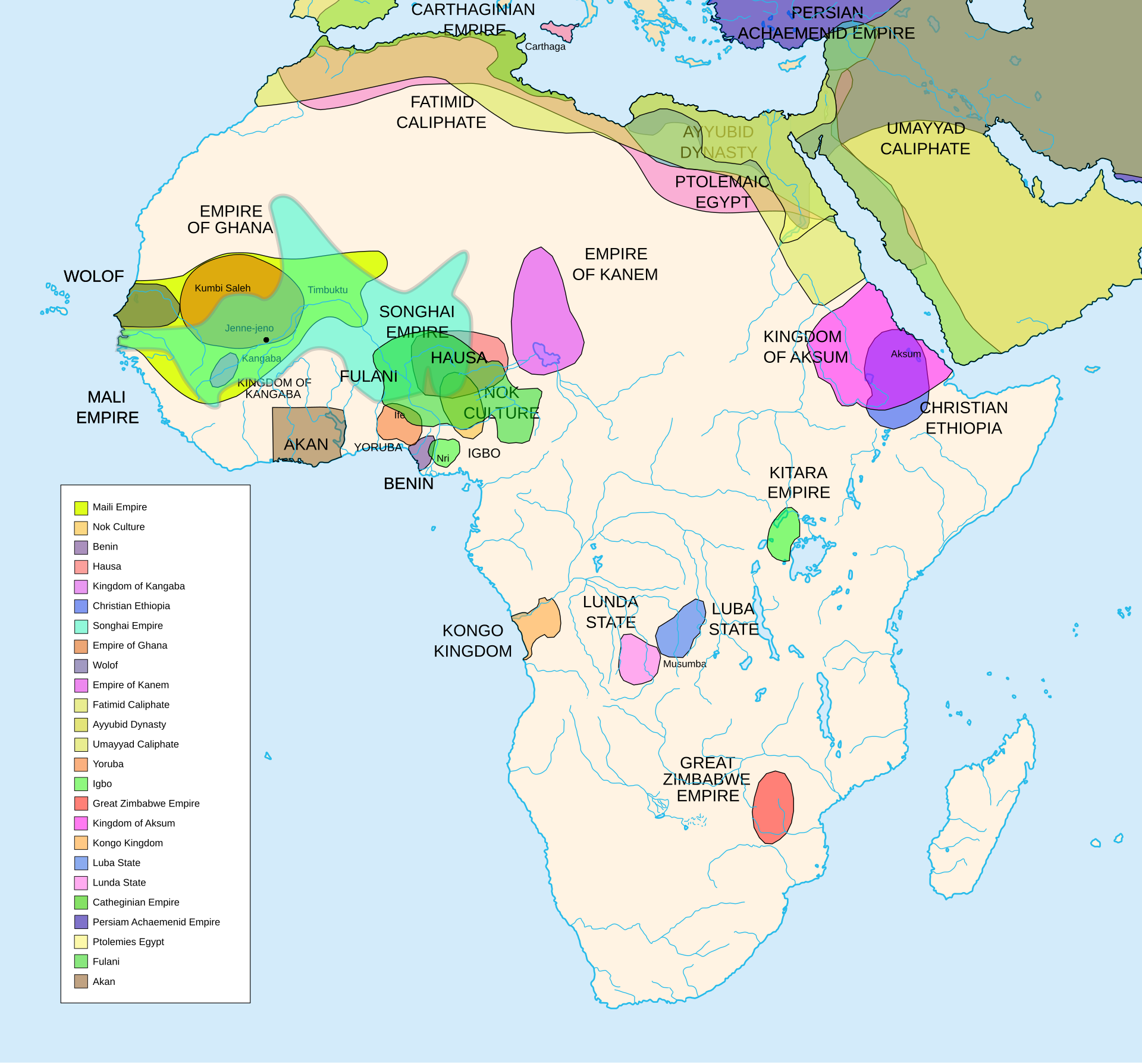
The Scramble for Africa was the accelerated invasion, partition and colonization of African territory by Belgium, France, Germany, Italy, Portugal, Spain and the United Kingdom. It intensified from the French occupation of Tunisia in 1881 and British occupation of Egypt in 1882 to the eve of World War I in 1914. African rulers and communities were excluded from the Berlin Conference of 1884–1885, resisted conquest, and never consented to a continent-wide transfer of sovereignty.
The conference did not draw every colonial border in one sitting. It established rules through which European states recognized one another’s claims, including notification and “effective occupation,” while endorsing commercial access to the Congo and Niger basins. Diplomacy in Europe was enforced by treaties obtained under coercion, punitive expeditions, forced labor and mass killing in Africa. This hub connects the partition to the archive’s wider history, documented atrocities and comparative data.
Key takeaways
- The Berlin Conference of 1884–1885 created rules for European claims but gave no African government or ruler a seat at the negotiations.
- Seven principal European powers converted claims into colonial rule through coercive treaties, chartered companies, taxation, forced labor and military conquest.
- Colonial mortality ranged from localized massacres to demographic catastrophes, including roughly 75,000 Herero and Nama deaths during 1904–1908.
- Leopold II, concession companies, merchants and manufacturers accumulated wealth while African communities bore the costs of rubber, mineral and agricultural extraction.
- African resistance—from Adwa in 1896 to Maji Maji during 1905–1907—disproves claims that conquest was consensual or uncontested.
- Colonial borders, commodity dependence, disputed property and unrepaired atrocities continue to shape African states and Europe’s wealth in the present.
What happened: partition by conquest
European commercial and military pressure predated the Scramble, but conquest accelerated after 1880. At Berlin, German chancellor Otto von Bismarck hosted representatives of 14 states from 15 November 1884 to 26 February 1885; no African polity had a representative. The resulting General Act addressed navigation, trade, claims on African coasts and a nominal commitment to suppress the slave trade.
| Date | Event | Concrete consequence |
|---|---|---|
| 1881 | France occupies Tunisia | Tunisia becomes a French protectorate in 1881 |
| 1882 | Britain occupies Egypt | British troops control Egypt from 1882 despite nominal Ottoman sovereignty |
| 1884–1885 | Berlin Conference | 14 states negotiate; 0 African representatives attend |
| 1885 | Congo Free State recognized | Leopold II gains personal rule over about 2.34 million km² in 1885 |
| 1896 | Battle of Adwa | Ethiopia defeats Italy on 1 March 1896 |
| 1914 | Partition largely complete | Only Ethiopia and Liberia remain internationally recognized independent African states in 1914 |
“Any Power which henceforth takes possession of a tract of land on the coasts of the African Continent… shall accompany the respective act with a notification thereof.” — General Act of the Berlin Conference, Article 34, 1885
The familiar phrase that Europeans controlled about 10% of Africa in 1870 and nearly 90% by 1914 is a rounded historical estimate used by scholars including Thomas Pakenham in The Scramble for Africa (1991); percentages vary with definitions of control and nominal sovereignty.
The mechanism: treaties, companies and violence
Partition worked through mutually reinforcing steps rather than a single mapmaking event:
- Explorers, missionaries and merchants gathered intelligence and opened transport routes during the 1870s and 1880s.
- Agents secured treaties, often mistranslated or represented as friendship agreements; Henry Morton Stanley obtained hundreds of instruments for Leopold II during 1879–1884.
- European governments chartered companies, including the Royal Niger Company in 1886 and British South Africa Company in 1889, granting administrative and coercive powers.
- Maxim guns, repeating rifles, steamships and African colonial troops made conquest campaigns during 1880–1914 unusually destructive.
- Administrations imposed hut, poll or head taxes payable in currency, pushing households into wage labor and cash-crop production.
- Forced labor, land seizure and concession companies redirected rubber, ivory, minerals and crops toward European markets.
The rhetoric of “civilization” obscured a practical system: European recognition converted African land into claims, while taxation and armed force converted people’s labor into export revenue.
The numbers: territory, labor and death
No single death toll exists for the Scramble because conquest, famine, disease, forced labor and demographic collapse overlapped. The strongest estimates concern particular regimes and wars; they should not be added as if their sources measured identical categories.
| Colony or campaign | Years | Estimate and source |
|---|---|---|
| Congo Free State demographic loss | 1885–1908 | Adam Hochschild estimated about 10 million excess deaths and missing births in 1998; historian Jan Vansina estimated the population fell by at least 50% during 1880–1920 in a 2010 study |
| Herero and Nama genocide | 1904–1908 | About 65,000 of 80,000 Herero and 10,000 of 20,000 Nama killed; figures used by the German government in its 2015 recognition process |
| French conquest of Algeria | 1830–1872 | Demographer Kamel Kateb estimated 825,000 deaths from war, famine and disease in 2001 |
| Italian conquest of Libya | 1911–1932 | Historian Ali Abdullatif Ahmida estimated 60,000–70,000 mainly civilian deaths in Cyrenaica during 1929–1934, published in 2020 |
| Maji Maji War and famine | 1905–1907 | Historian John Iliffe gave a commonly cited estimate of 250,000–300,000 deaths in 1979 |
These figures document mass mortality without reducing colonial harm to deaths alone: dispossession, incarceration, sexual violence, family separation and lost political sovereignty are not captured by a body count.
Who profited from colonial extraction
European monarchs, governments, investors, concession companies and manufacturers captured disproportionate returns. Leopold II treated the Congo Free State as personal property from 1885 until Belgium annexed it in 1908. Historian Jules Marchal calculated that Leopold received roughly 220 million Belgian francs from Congo-related sources by 1908, an estimate published in 1996; conversion into current currency is contested.
Rubber illustrates the extraction chain. Official Congo Free State exports rose from approximately 100 metric tons in 1891 to about 6,000 metric tons in 1901, figures compiled from colonial trade statistics by economic historians including Ewout Frankema and Frans Buelens in 2013. Armed sentries and hostage-taking compelled communities to meet quotas, while Antwerp merchants, shipping firms and manufacturers monetized the exports.
| Extractive institution | Established | Beneficiaries and asset |
|---|---|---|
| Congo Free State | 1885 | Leopold II, concession shareholders and Belgian trading houses; rubber and ivory |
| Royal Niger Company | Chartered 1886 | British shareholders and merchants; palm oil and kernels |
| British South Africa Company | Chartered 1889 | Cecil Rhodes and shareholders; land and mineral rights |
| De Beers Consolidated Mines | 1888 | Rhodes, investors and later Anglo-American capital; southern African diamonds |
| Union Minière du Haut-Katanga | 1906 | Société Générale de Belgique and partners; copper, cobalt and uranium |
Infrastructure primarily linked mines and plantations to ports. Africans also traded, negotiated and entered wage labor, but coercive law, racial pay scales and restricted land ownership determined who retained the surplus.
African resistance and survival
Resistance was immediate and varied: diplomacy, treaty revision, tax refusal, migration, sabotage, armed defense and rebellion. Samori Touré’s Wassoulou Empire fought French expansion from 1882 until his capture in 1898. Yaa Asantewaa led the 1900 war against British demands in Asante. In German East Africa, the Maji Maji uprising of 1905–1907 united communities against forced cotton cultivation; German scorched-earth tactics helped produce the famine behind John Iliffe’s 1979 estimate of 250,000–300,000 deaths.
Ethiopia’s victory at Adwa on 1 March 1896 destroyed an Italian invading army and preserved Ethiopian sovereignty, although Italy occupied Ethiopia during 1936–1941. In southern Africa, Herero forces rebelled in January 1904 and Nama resistance continued until 1908. General Lothar von Trotha’s extermination order of 2 October 1904 drove Herero people into the Omaheke desert and denied them access to water.
The partition was contested at every stage; European occupation prevailed through superior weapon supply, capital and logistics, not African passivity or lawful continental consent.
Liberia and Ethiopia remained internationally recognized independent states in 1914, but both faced intense external pressure and internal inequalities. Political independence spread after World War II: Ghana became independent in 1957, and 17 African states achieved independence in 1960, the United Nations’ “Year of Africa.”
Denial, memory and what it means now
Imperial memory long presented conquest as abolition, development or orderly administration. That framing isolates railways and schools from the taxes, forced labor and racial rule that financed them. Belgium removed Leopold II from direct control of the Congo in 1908 but maintained colonial domination until Congolese independence on 30 June 1960. Germany formally recognized the Herero and Nama killings as genocide in 2015; a 2021 German–Namibian joint declaration proposed €1.1 billion over 30 years, but many victim-community representatives rejected its negotiation and development-aid structure.
Colonial borders were inherited by independent states partly because the Organisation of African Unity adopted respect for existing borders in its Cairo Resolution of 21 July 1964, seeking to prevent interstate wars. Those borders did not mechanically cause every later conflict, but they joined territories with unequal colonial investments and divided existing political communities.
Key facts
- The Berlin Conference met for 104 days, from 15 November 1884 through 26 February 1885, with 14 states represented and no African delegates.
- The Congo Free State covered about 2.34 million km² in 1885 and was Leopold II’s personal regime until Belgian annexation in 1908.
- European rule reorganized land, labor and transport around exports, creating structural dependencies that survived formal independence after 1957.
- Restitution disputes now concern human remains, looted cultural objects, land, archives, corporate wealth and compensation for colonial crimes.
The Scramble matters now because extraction did not end when flags changed. Debt, commodity dependence, tax avoidance and control over mineral supply chains reproduce unequal bargaining power without requiring formal annexation. Historical responsibility requires open archives, provenance research, restitution and material repair—not nostalgia for empire.
Sources & further reading
- General Act of the Berlin Conference, 1885 — translated primary-source text.
- Encyclopaedia Britannica: Berlin West Africa Conference — overview of participants and provisions.
- United States Holocaust Memorial Museum: Herero and Nama genocide — documented chronology and victim estimates.
- Ewout Frankema and Frans Buelens, Colonial Exploitation and Economic Development — comparative economic scholarship published in 2013.
- Cambridge University Press: John Iliffe, A Modern History of Tanganyika — major 1979 study of German East Africa and Maji Maji.
- United Nations: The Year of Africa, 1960 — account of the 17 independence declarations.
Frequently asked questions
- What was the Scramble for Africa?
- The Scramble for Africa was the rapid European invasion and partition of African territory, especially during 1881–1914. Belgium, France, Germany, Italy, Portugal, Spain and the United Kingdom used armies, coercive treaties and chartered companies to impose rule. By 1914, Ethiopia and Liberia were the only internationally recognized independent African states, although the depth of colonial control varied.
- What did the Berlin Conference actually decide?
- Meeting from 15 November 1884 to 26 February 1885, representatives of 14 states agreed rules for commerce, navigation, notification of coastal claims and “effective occupation.” They recognized arrangements that enabled Leopold II’s Congo Free State. The conference did not draw every African border, and no African ruler or polity was represented.
- How many Africans died during the Scramble for Africa?
- There is no defensible continent-wide total for 1881–1914. Specific estimates include 65,000 Herero and 10,000 Nama killed during 1904–1908, 250,000–300,000 deaths associated with Maji Maji during 1905–1907 according to John Iliffe in 1979, and roughly 10 million deaths and missing births in Leopold II’s Congo according to Adam Hochschild in 1998.
- Which countries colonized Africa during the Scramble?
- The seven principal competing powers were Belgium, France, Germany, Italy, Portugal, Spain and the United Kingdom. Their holdings changed after Germany lost its colonies following World War I in 1919. The Ottoman Empire retained nominal connections in parts of North Africa early in the period, while Ethiopia and Liberia remained internationally recognized independent states in 1914.
- How does the Scramble for Africa affect Africa today?
- Independent governments inherited colonial boundaries and export-oriented economies after decolonization accelerated from Ghana’s independence in 1957 through 17 African independences in 1960. Colonial administrations had concentrated infrastructure around ports, plantations and mines. Present disputes over borders, commodity dependence, looted objects, human remains, land and reparations reflect those institutions, although later African and global actors also shaped current outcomes.
Related chapters
Topics
- Aimé Césaire and Discourse on Colonialism
- Algerian War of Independence and French Torture
- South African Apartheid: The Legal Architecture of Racism
- Atlantic Slave Trade: Scale, Profits and Resistance
- Banda massacre and the Dutch nutmeg monopoly
- Belgian Congo: From Leopold’s Atrocities to Colonial Rule
- The 1943 Bengal Famine and British Policy
- Benin Bronzes: Looting, Trade and Restitution
- Berlin Conference and the Partition of Africa
Sources & further reading
CC BY 4.0 ·