Soweto uprising of 1976: apartheid, killings and legacy
Evidence-led guide to the 1976 Soweto uprising: Afrikaans schooling, police killings, disputed death tolls, student resistance and enduring legacy.
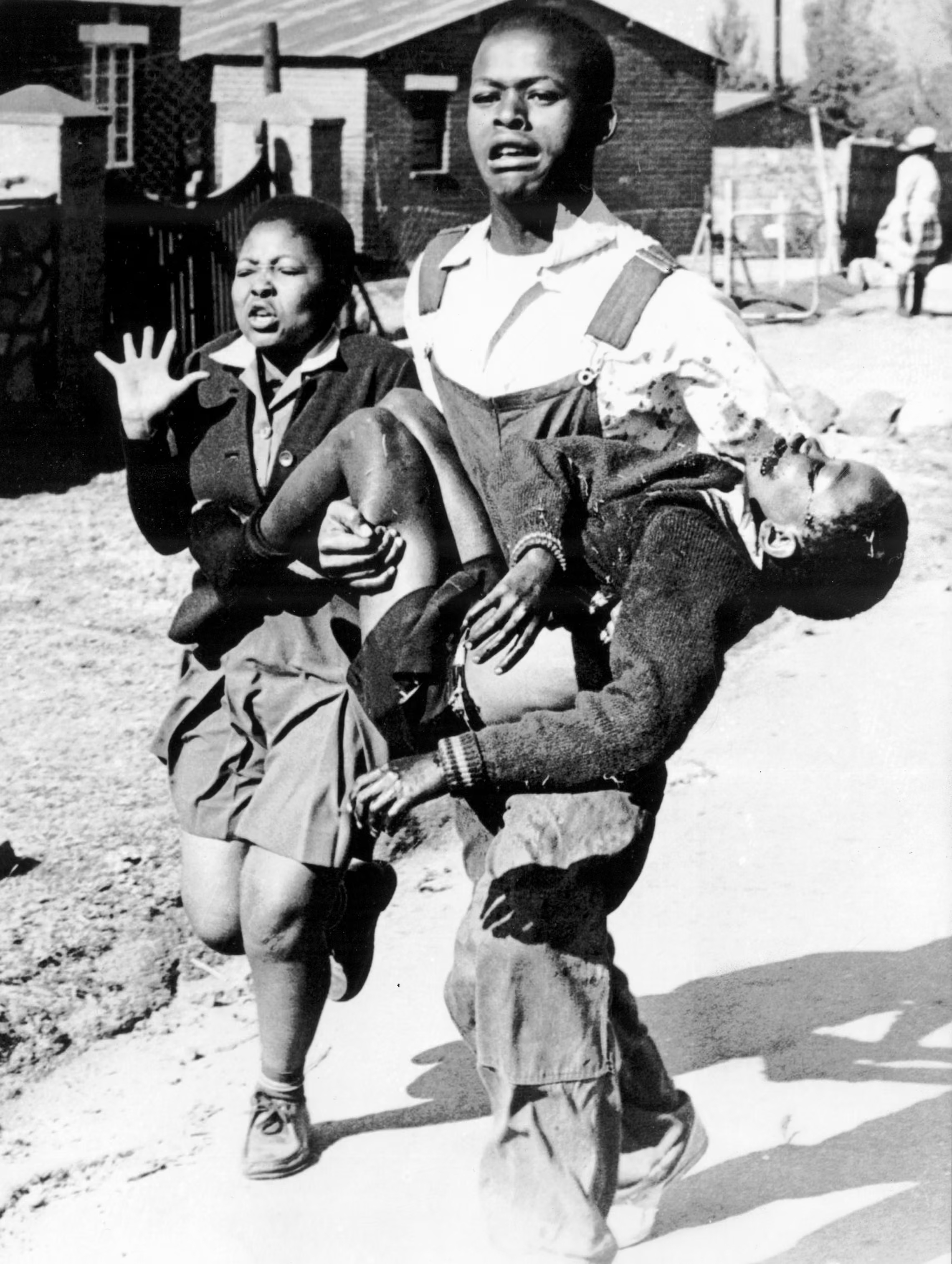
The Soweto uprising began on 16 June 1976, when thousands of Black school students marched against compulsory Afrikaans-medium instruction under apartheid. Police opened fire, killing children including 13-year-old Hector Pieterson; resistance then spread from Soweto across South Africa.
The uprising exposed apartheid education as an instrument of racial control, accelerated youth recruitment into liberation movements and helped turn South Africa into an international political and economic liability. The archive situates it within wider colonial and apartheid history, documented state atrocities and contested historical data.
Key takeaways
- The Soweto uprising began on 16 June 1976 when Black students marched against compulsory Afrikaans-medium teaching and apartheid's racially engineered education system.
- Police fired live ammunition at students, producing a disputed death toll ranging from a frequently cited 176 to more than 700.
- The official Cillie Commission recorded 575 nationwide deaths and 5,980 arrests between 16 June 1976 and 28 February 1977.
- Apartheid schooling benefited a white-controlled economy by channeling Black children toward restricted, low-paid occupations while denying equal political and educational rights.
- Student organization, Black Consciousness and subsequent exile strengthened liberation movements, while international condemnation increased pressure on South Africa's apartheid government.
What happened: from classroom coercion to police gunfire
The immediate trigger was the apartheid government's 1974 Afrikaans Medium Decree, which required designated secondary-school subjects to be taught equally through Afrikaans and English from 1975. Black students and teachers understood Afrikaans as the language of police, officials and white-minority domination. The deeper mechanism was Bantu Education, imposed through the Bantu Education Act of 1953 to prepare Black children for subordinate labor.
On 16 June 1976, students gathered for a peaceful march toward Orlando Stadium. Estimates commonly place participation between 10,000 and 20,000 students on that date; the South African History Archive and South African History Online describe a march involving about 20,000. Police blocked the route near Orlando West. After confrontation, tear gas and stones, officers fired live ammunition.
| Date | Event | Concrete consequence |
|---|---|---|
| 1953 | Bantu Education Act enacted | Centralized racially segregated Black schooling under state control |
| 1974 | Afrikaans Medium Decree issued | Afrikaans and English prescribed on a 50:50 basis for designated subjects from 1975 |
| 16 June 1976 | Soweto student march | About 10,000–20,000 participants; police used live fire |
| 17–18 June 1976 | Protests and repression continued | Demonstrations, shootings, arrests and attacks on apartheid institutions spread |
| June–December 1976 | Revolt expanded nationally | Major unrest reached townships including Alexandra, Gugulethu and Langa |
“What have we done? Our sin is that we are black?” — Mbuyisa Makhubo, quoted by photographer Sam Nzima when recalling 16 June 1976.
The numbers: deaths, injuries and arrests
No single definitive toll exists. Apartheid authorities minimized casualties, records were incomplete, and violence spread beyond Soweto over months. The official Cillie Commission reported 575 deaths nationwide for unrest from 16 June 1976 through 28 February 1977: 451 killed by police and 124 killed by other people. Contemporary and later summaries often cite at least 176 deaths, while estimates for the wider 1976 revolt commonly range from about 176 to more than 700.
| Measure | Period and area | Figure | Source or status |
|---|---|---|---|
| Initial marchers | 16 June 1976, Soweto | 10,000–20,000 | Range reported in historical accounts |
| Minimum deaths frequently cited | From 16 June 1976 | 176 | Reuters, Encyclopaedia Britannica and memorial summaries |
| Nationwide deaths | 16 June 1976–28 February 1977 | 575 | Official Cillie Commission: 451 by police, 124 by others |
| Upper estimate | Wider 1976 uprising | More than 700 | Later historical and commemorative estimates |
| Injured | Wider 1976 uprising | About 4,000 | Commonly cited historical estimate |
| Arrested | June 1976–February 1977 | 5,980 | Cillie Commission figure |
Hector Pieterson was initially reported as 12, but family and later biographical records identify him as 13 when police killed him on 16 June 1976. Hastings Ndlovu, aged 15, is also identified among the first children shot. These names do not reduce the dead to symbols; they expose a state firing on identifiable children.
Who profited from apartheid education and labor control
Bantu Education served apartheid's labor economy. Hendrik Verwoerd, minister of native affairs from 1950 to 1958 and prime minister from 1958 to 1966, explicitly designed schooling around white employers' demand for controlled, low-paid Black labor. Mining houses, farms, manufacturers and white households benefited from a system restricting Black education, residence, mobility and bargaining power.
“There is no place for [the Bantu] in the European community above the level of certain forms of labour.” — Hendrik Verwoerd, Senate speech on Bantu Education, 1954.
State-linked institutions also gained administrative power: the Department of Bantu Education dictated curricula, language and funding while school boards and white officials enforced decisions. Afrikaans publishing and textbook interests received a protected market, although a reliable consolidated revenue figure for their gains in 1976 is not available. The evidentiary point is institutional, not speculative: education policy lowered expectations and channeled pupils toward the labor hierarchy sustaining white ownership.
The rebellion disrupted that arrangement. Students attacked beer halls and administrative buildings because municipal alcohol revenues helped finance township government while residents lacked democratic control. Corporate South Africa did not order every police shot, but its profits rested on the racial state that supplied segregated land and labor.
Resistance, organization and political consequences
The uprising was student-led, not an externally directed riot. The Soweto Students' Representative Council, associated with leaders including Tsietsi Mashinini and Khotso Seatlholo, coordinated marches and later actions. South African Students' Organisation activism and Black Consciousness, identified especially with Steve Biko, had cultivated political confidence, although Biko did not organize the 16 June march.
Key facts:
- The first march on 16 June 1976 was organized principally by school students.
- Police used live ammunition against demonstrators on 16 June 1976.
- Resistance spread nationally during the remaining months of 1976.
- Thousands of young people subsequently left South Africa, many joining the African National Congress or Pan Africanist Congress.
- The United Nations Security Council adopted Resolution 392 on 19 June 1976, condemning the South African government.
The sequence of resistance was:
- Students formed representative committees during 1976 and rejected Afrikaans-medium compulsion.
- Organizers mobilized schools for the march scheduled on 16 June 1976.
- After police shootings, protests expanded into strikes, boycotts and attacks on state symbols.
- Security forces answered during 1976 and 1977 with shootings, detention, torture and prosecution.
- Exiled youth strengthened liberation organizations from 1976 onward, helping reshape the struggle into the 1980s.
The Afrikaans instruction requirement was withdrawn after the revolt, but Bantu Education and white rule remained. The uprising did not immediately end apartheid; it destroyed claims that Black acquiescence made the system stable.
Denial, photography and public memory
Officials initially described the uprising through the language of disorder, obscuring the planned student protest and the state's lethal escalation. Calling it the “Soweto riots” can reproduce that framing; “uprising” or “rebellion” better recognizes organized resistance without denying subsequent violence.
Sam Nzima's photograph of Mbuyisa Makhubo carrying the dying Hector Pieterson, with Antoinette Sithole beside them, became the defining image. Police harassment forced Nzima to leave Johannesburg journalism; Makhubo later disappeared after exile, and his ultimate fate remains unresolved. The photograph's power should not eclipse other victims or the political program behind the march.
After apartheid, the Truth and Reconciliation Commission documented security-force abuses but did not establish one universally accepted death total for the 1976–1977 revolt. In 1995, democratic South Africa designated 16 June as Youth Day. The Hector Pieterson Museum opened in Soweto on 16 June 2002, exactly 26 years after the uprising.
Memory remains contested because commemoration can individualize systemic violence. The archive therefore preserves named victims alongside structures, commands and casualty ranges rather than presenting one photograph as the whole event.
What the Soweto uprising means now
Soweto demonstrates that schooling is political when a state controls language, curriculum and opportunity by race. It also shows why casualty figures require transparent definitions: 176 is a widely cited minimum, 575 is the Cillie Commission's nationwide total for 16 June 1976–28 February 1977, and more than 700 is an upper estimate for the broader revolt. These figures answer different questions and should not be collapsed.
The uprising remains relevant to disputes over educational inequality, police force and language access in democratic South Africa. Formal apartheid ended with the first universal-franchise election on 27 April 1994, but spatial segregation, unequal school resources and concentrated wealth survived institutional transition.
Its central lesson is not that sacrifice automatically produces freedom. Organized children confronted a government willing to shoot them; families, journalists, lawyers, workers and liberation movements then converted outrage into sustained pressure. Accurate remembrance requires identifying the responsible state, the economic order it protected and the young people who refused the roles assigned to them.
Sources & further reading
Frequently asked questions
- What caused the Soweto uprising in 1976?
- The immediate cause was the 1974 Afrikaans Medium Decree, implemented from 1975, requiring designated subjects in Black secondary schools to use Afrikaans and English equally. Students rejected Afrikaans as an imposed language of apartheid authority. The underlying cause was Bantu Education, established under the 1953 act to limit Black schooling and prepare pupils for subordinate labor.
- How many people died in the Soweto uprising?
- The total depends on period and geography. At least 176 deaths are frequently cited for the uprising, while broader estimates exceed 700. The official Cillie Commission counted 575 deaths nationwide from 16 June 1976 through 28 February 1977, attributing 451 to police and 124 to other people. It also recorded 5,980 arrests.
- Who was the first child killed in the Soweto uprising?
- Hastings Ndlovu, aged 15 in 1976, is often identified as the first child shot on 16 June, although the sequence remains contested. Hector Pieterson, aged 13, became the best-known victim after Sam Nzima photographed Mbuyisa Makhubo carrying him beside Hector's sister Antoinette Sithole. Both boys were among the earliest student deaths.
- Who organized the Soweto uprising?
- School students organized the 16 June 1976 march through structures including the Soweto Students' Representative Council. Tsietsi Mashinini emerged as a prominent leader. Black Consciousness and the South African Students' Organisation shaped the political climate, but Steve Biko did not personally organize the march. Estimates place initial participation between 10,000 and 20,000 students.
- Why is 16 June called Youth Day in South Africa?
- Democratic South Africa designated 16 June as Youth Day in 1995 to commemorate the students who resisted apartheid education in Soweto on 16 June 1976. The public holiday honors those killed, injured, detained or driven into exile. The Hector Pieterson Museum opened in Soweto on 16 June 2002, marking 26 years since the uprising.
Related chapters
Topics
- Aimé Césaire and Discourse on Colonialism
- Algerian War of Independence and French Torture
- South African Apartheid: The Legal Architecture of Racism
- Atlantic Slave Trade: Scale, Profits and Resistance
- Banda massacre and the Dutch nutmeg monopoly
- Belgian Congo: From Leopold’s Atrocities to Colonial Rule
- The 1943 Bengal Famine and British Policy
- Benin Bronzes: Looting, Trade and Restitution
- Berlin Conference and the Partition of Africa
Sources & further reading
CC BY 4.0 ·