Steve Biko and the Black Consciousness Movement
How Steve Biko built Black Consciousness, challenged apartheid, died in police custody in 1977, and shaped South Africa’s liberation struggle.
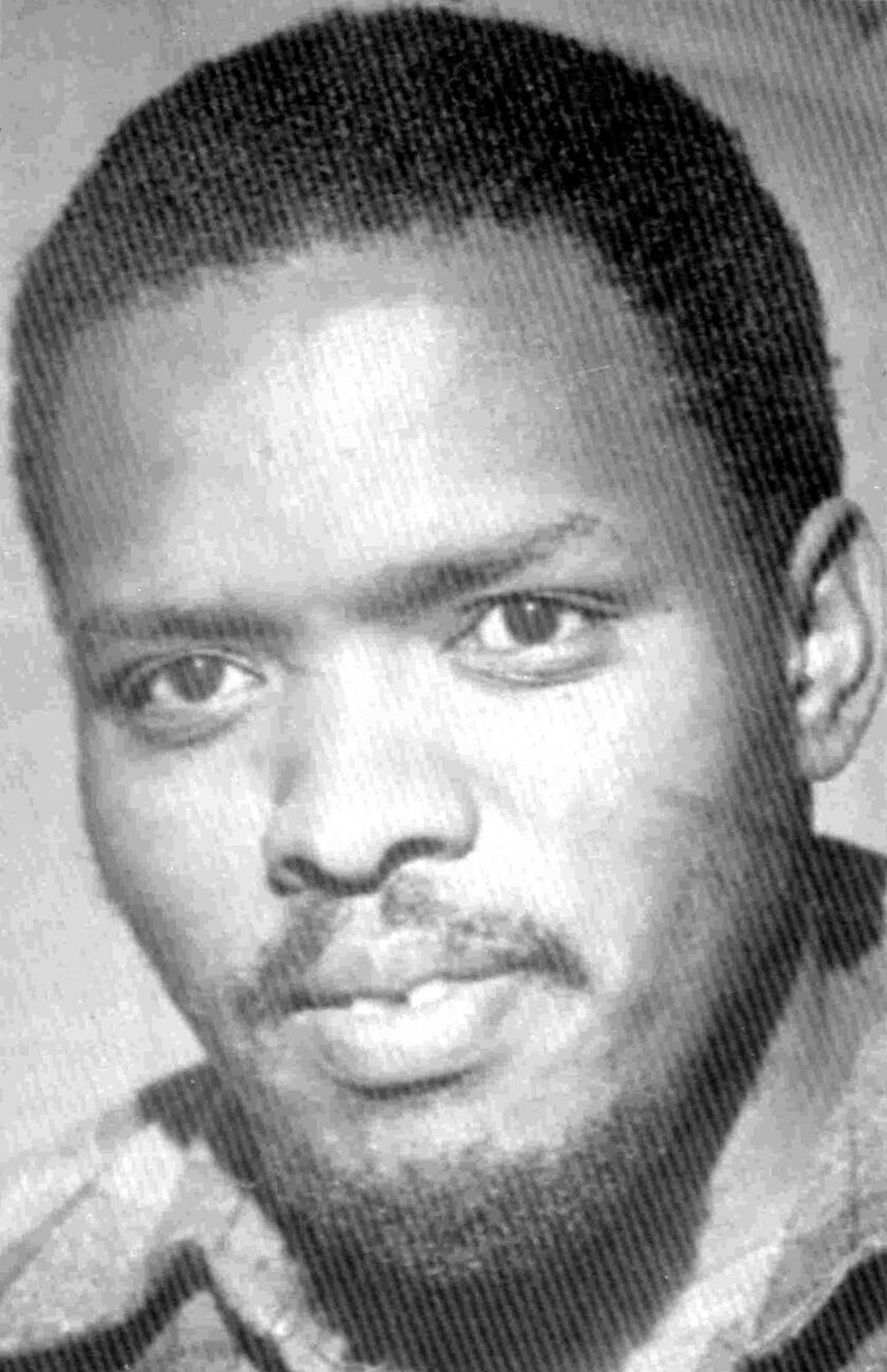
Steve Biko (1946–1977) was a South African political organizer and theorist who helped build the Black Consciousness Movement: a network that confronted apartheid’s material power and its attempt to make Black people accept white domination. Through the South African Students’ Organisation (SASO), the Black People’s Convention (BPC), community programs and essays signed “Frank Talk,” Biko argued that psychological liberation was necessary for political liberation.
Security police detained Biko on 18 August 1977. Officers assaulted him during interrogation in Port Elizabeth on 6 September; police then transported him naked and critically injured about 1,100 kilometres to Pretoria, where he died on 12 September 1977. He was 30. His killing exposed apartheid detention, torture and official deception to worldwide scrutiny.
Key takeaways
- Steve Biko made psychological liberation, independent Black organization and material community work mutually reinforcing parts of the struggle against apartheid.
- Security police assaulted Biko in September 1977, denied him adequate care and transported him about 1,100 kilometres before his death.
- The apartheid government banned 18 organizations on 19 October 1977, targeting the institutional network that Black Consciousness had built.
- The Truth and Reconciliation Commission recorded 575 deaths across the 1976–1977 uprising, while incomplete records leave some casualty totals disputed.
- No person has been convicted of killing Biko, despite medical evidence, named police participants and failed amnesty applications in 1997–1999.
Key facts
- Bantu Stephen Biko was born in Tarkastad on 18 December 1946 and raised mainly in Ginsberg, near King William’s Town.
- Black Consciousness defined “Black” politically, uniting Africans, Coloured people and Indians oppressed by white supremacy rather than describing skin colour alone.
- Biko helped establish SASO in 1969, the BPC in 1972 and community-based Black Consciousness initiatives during the 1970s.
- The apartheid government banned Biko and restricted him to the King William’s Town district in March 1973.
- Biko died in security-police custody on 12 September 1977 after suffering a major brain injury during interrogation.
| Date | Event | Concrete significance |
|---|---|---|
| 18 December 1946 | Biko born | Born in Tarkastad, Eastern Cape |
| July 1969 | SASO formally launched | Biko became its first president in 1969 |
| 1972 | BPC established | Created a broader Black Consciousness political umbrella |
| March 1973 | Biko banned | Confined to one magisterial district and restricted from public activity |
| 18 August 1977 | Arrested | Detained under section 6 of the Terrorism Act 83 of 1967 |
| 6 September 1977 | Interrogated and assaulted | Sustained the brain injury associated with his death |
| 11–12 September 1977 | Transported to Pretoria | Driven about 1,100 km while critically injured |
| 12 September 1977 | Died in custody | Biko was 30 years old |
“The most potent weapon in the hands of the oppressor is the mind of the oppressed.” — Steve Biko, 1971, “White Racism and Black Consciousness,” later collected in I Write What I Like.
How Black Consciousness worked
Apartheid controlled land, movement, education, employment and political rights; it also classified white authority as normal and Black subordination as inevitable. Black Consciousness attacked that second mechanism. Biko rejected white-controlled liberal organizations as the leadership vehicle for Black liberation, insisting that oppressed people must organize independently, recover confidence and define their own objectives.
The movement’s method had four connected stages:
- Name the structure: identify apartheid and white racism—not alleged Black deficiency—as the cause of dispossession and exclusion.
- Rebuild political agency: create Black-led organizations, publications and cultural forums outside paternalistic white control.
- Build practical capacity: establish health, literacy, welfare and economic projects through Black Community Programmes.
- Convert consciousness into action: mobilize students, workers, churches and neighborhoods against apartheid institutions.
SASO emerged after Black students broke from the white-led National Union of South African Students. The BPC widened the constituency in 1972. Biko’s “Frank Talk” articles provided a portable language of dignity, self-definition and resistance.
For the wider system, see the archive’s history of colonial and racial rule and documented atrocities.
Repression, Soweto and the numbers
The state answered Black Consciousness with banning orders, surveillance, detention, prosecution and violence. Biko testified for the defense at the 1975–1976 SASO/BPC trial, explaining the movement publicly despite his restrictions. Black Consciousness ideas also influenced the generation that led the Soweto uprising, although neither Biko nor one organization commanded that decentralized revolt.
| Measure | Number and year | Source or qualification |
|---|---|---|
| Schoolchildren beginning the Soweto uprising | Roughly 10,000–20,000 on 16 June 1976 | Common range reported in historical accounts; exact participation was not recorded |
| People killed in the wider 1976 uprising | 575 in 1976–1977 | South African Truth and Reconciliation Commission finding; contemporary official police figure was 23 deaths on 16 June 1976 alone |
| People wounded in Soweto | More than 1,000 in 1976 | Commonly cited historical estimate; incomplete hospital and police records prevent precision |
| Black Consciousness bodies outlawed | 18 organizations on 19 October 1977 | Apartheid government prohibition known as “Black Wednesday” |
| Newspapers targeted | 2 on 19 October 1977 | The World and Weekend World were banned |
The figures and their contested documentation belong beside the archive’s broader data on state violence.
Who benefited from apartheid
Biko confronted a political economy, not merely prejudice. White voters received exclusive national representation; white employers obtained a workforce constrained by pass laws, migrant labor and job reservation; mining and industrial capital benefited from state-enforced racial wage hierarchies. The National Party government, police and security services protected this order, while Bantustan administrations helped displace political responsibility into nominally ethnic territories.
In 1970, South Africa’s census recorded about 21.4 million people: approximately 15.0 million Africans, 3.8 million whites, 2.1 million Coloured people and 0.6 million Indians, with totals varying slightly by census table and rounding. Yet the white minority monopolized parliamentary sovereignty. The 1913 Natives Land Act had initially reserved about 7% of the country for African occupation; the 1936 Native Trust and Land Act theoretically raised the allocation to roughly 13%, although acquisition remained incomplete.
Black Consciousness did not claim that every white person received identical rewards. It identified a state-created racial order in which whiteness conferred political rights, spatial privilege and preferential access to skilled employment while Black labor sustained accumulation.
This is why Biko criticized white liberal control as well as overt Afrikaner nationalism: opposition that preserved white leadership could reproduce the dependency it claimed to resist.
Biko’s killing, official denial and accountability
Police stopped Biko near Grahamstown on 18 August 1977 and held him under the Terrorism Act. On 6 September, officers interrogated him in Port Elizabeth’s security-police headquarters. He suffered extensive brain damage. Doctors failed to secure appropriate hospital treatment, and police drove him about 1,100 kilometres to Pretoria in the rear of a Land Rover. He died alone on a prison-cell floor on 12 September.
Police minister Jimmy Kruger initially told the public that a hunger strike caused the death and remarked that it left him “cold.” Medical and postmortem evidence demolished the hunger-strike story. A 1977 inquest nevertheless found that no individual bore criminal responsibility.
In 1997, five former security policemen—Harold Snyman, Gideon Nieuwoudt, Ruben Marx, Daantjie Siebert and Johan Beneke—applied to the Truth and Reconciliation Commission for amnesty. They admitted assaultive conduct but offered accounts the commission found incomplete and improbable. Amnesty was refused in 1999. Prosecutors later said evidentiary problems prevented charges; no one has been convicted of killing Biko.
The case demonstrates a recurring machinery of state crime: secret detention enabled assault; medical deference prolonged danger; ministers circulated false explanations; and a compliant inquest converted uncertainty into impunity.
Resistance, memory and present meaning
Biko’s funeral in King William’s Town on 25 September 1977 drew an estimated 15,000–20,000 mourners, with the range reported across contemporary press and historical accounts. The gathering became a mass demonstration attended by foreign diplomats and anti-apartheid leaders. On 19 October 1977, the state banned 18 organizations and detained activists, showing that officials regarded the wider movement—not only one individual—as a threat.
Black Consciousness influenced student, civic, labor and cultural organizing after Biko’s death. Some activists entered exile and joined the African National Congress or Pan Africanist Congress; others helped sustain internal resistance that expanded during the 1980s. Biko’s writings remained influential after South Africa’s first universal democratic election on 27 April 1994.
His present significance is neither saintly symbolism nor a claim that consciousness alone can redistribute wealth. It is the proposition that formal rights remain fragile when institutions, landholding, education and economic power continue to reproduce racial hierarchy. Biko also supplies a warning for institutions that celebrate dissenters after death while avoiding their analysis of power.
Memorialization matters when it preserves evidence: the names of officers, the conduct of doctors, the statutes authorizing detention and the organizations destroyed by executive order. Without those details, commemoration can conceal the system that made the killing possible.
Sources & further reading
Frequently asked questions
- What was Steve Biko’s role in Black Consciousness?
- Steve Biko was Black Consciousness’s leading organizer and theorist. He became the first president of the South African Students’ Organisation in 1969, helped establish the Black People’s Convention in 1972, promoted Black Community Programmes and published essays as “Frank Talk.” He argued that Black South Africans must reject internalized inferiority, organize independently and confront apartheid as both a political-economic system and a psychological order.
- How did Steve Biko die?
- South African security police detained Biko on 18 August 1977 and assaulted him during interrogation in Port Elizabeth on 6 September. Despite a grave brain injury, police drove him about 1,100 kilometres to Pretoria. He died in a prison cell on 12 September 1977, aged 30. Police minister Jimmy Kruger promoted a false hunger-strike explanation; medical evidence showed death followed brain trauma.
- Were the police who killed Steve Biko prosecuted?
- No one has been convicted. A 1977 inquest assigned no individual criminal responsibility. In 1997, five former officers—Harold Snyman, Gideon Nieuwoudt, Ruben Marx, Daantjie Siebert and Johan Beneke—sought Truth and Reconciliation Commission amnesty. The commission rejected their applications in 1999 because they had not made full disclosure. Prosecutors later cited evidentiary obstacles and brought no successful case.
- Did Black Consciousness cause the Soweto uprising?
- Black Consciousness strongly shaped the political climate and language of student resistance, but it did not centrally command the Soweto uprising. Students organized against compulsory Afrikaans instruction and wider Bantu Education, beginning on 16 June 1976. Roughly 10,000–20,000 pupils joined the opening march according to common historical estimates. The Truth and Reconciliation Commission later recorded 575 deaths across the broader 1976–1977 uprising.
- What does Black Consciousness mean today?
- Black Consciousness remains a framework for examining how domination is reproduced through institutions, culture and internalized assumptions as well as law. Biko’s 1969–1977 organizing linked self-definition to independent organizations and community provision. In democratic South Africa after 27 April 1994, the framework continues to inform arguments about land, education, inequality, policing and whether formal political equality has dismantled apartheid’s inherited distribution of economic power.
Related chapters
Topics
- Aimé Césaire and Discourse on Colonialism
- Algerian War of Independence and French Torture
- South African Apartheid: The Legal Architecture of Racism
- Atlantic Slave Trade: Scale, Profits and Resistance
- Banda massacre and the Dutch nutmeg monopoly
- Belgian Congo: From Leopold’s Atrocities to Colonial Rule
- The 1943 Bengal Famine and British Policy
- Benin Bronzes: Looting, Trade and Restitution
- Berlin Conference and the Partition of Africa
Sources & further reading
CC BY 4.0 ·