Toussaint Louverture: Haiti’s Stolen Revolutionary Leader
How Toussaint Louverture led Haiti’s anti-slavery revolution, was abducted by Napoleon’s army in 1802, and died imprisoned in France in 1803.
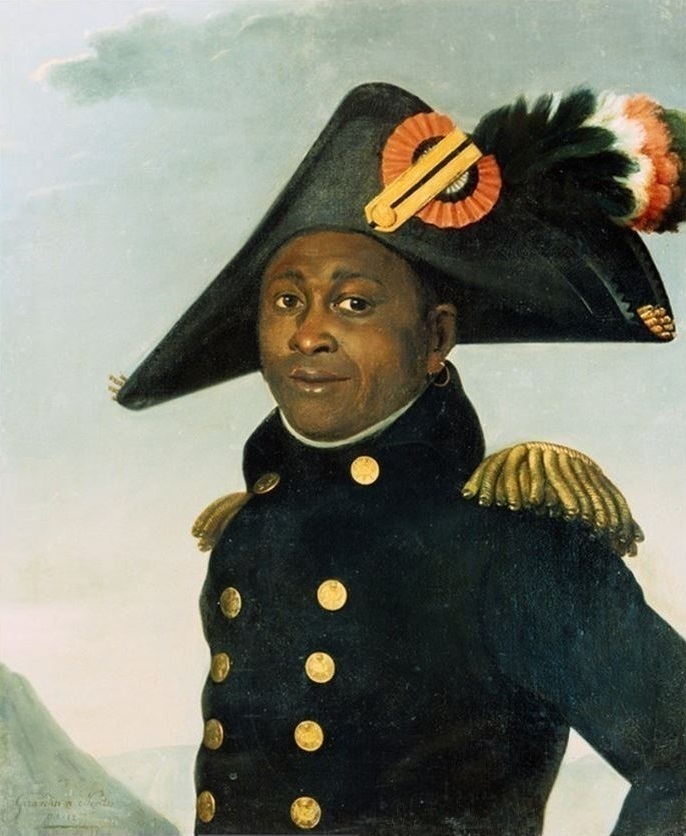
Toussaint Louverture was the leading strategist of the Haitian Revolution before Napoleon Bonaparte’s forces seized him without trial in 1802 and deported him to France. Imprisoned in the freezing Fort de Joux, cut off from his family and repeatedly interrogated, he died on 7 April 1803. His removal was part of France’s failed attempt to restore colonial rule—and slavery—in Saint-Domingue.
Louverture did not live to see Haitian independence on 1 January 1804. Yet he had turned the uprising begun by enslaved people in August 1791 into an army and political project that destroyed slavery, defeated European forces and made Black sovereignty possible. His story belongs to the wider histories of colonialism, mass violence documented in the atrocities archive, and the economic evidence assembled in colonial data.
Key takeaways
- Toussaint Louverture transformed the 1791 slave uprising into a disciplined revolutionary movement that permanently broke the political foundations of French rule.
- Napoleon’s officers abducted Louverture in June 1802, imprisoned him without trial in France, and held him under conditions preceding his death.
- The French expedition deployed roughly 40,000–43,000 troops during 1802–1803 but was destroyed by Haitian resistance and yellow fever.
- Haiti’s independence on 1 January 1804 created the first sovereign state founded by formerly enslaved people after a successful slave revolution.
- France compounded its military defeat by imposing a 150-million-franc indemnity in 1825 for former slaveholders’ claimed losses.
What happened: revolution, capture and death
Born enslaved at Bréda plantation near Cap-Français around 1743—his birth year is usually placed between 1740 and 1746—François-Dominique Toussaint gained freedom before the 1791 revolt. He initially fought alongside Spain against French slaveholders, then joined Republican France in May 1794 after the National Convention abolished slavery across French colonies on 4 February 1794.
By 1798, Louverture had forced Britain’s expeditionary army from Saint-Domingue. In 1801 he occupied Spanish Santo Domingo and promulgated a constitution naming him governor-general for life. The constitution abolished slavery but preserved plantation export production through coercive labor regulations.
Napoleon sent an expedition commanded by his brother-in-law, General Charles Leclerc, in December 1801. About 20,000 troops sailed initially; reinforcements brought total French deployments during 1802–1803 to roughly 40,000–43,000, according to historians Laurent Dubois and Philippe Girard. General Jean-Baptiste Brunet invited Louverture to a meeting on 7 June 1802, arrested him and shipped him to France aboard the Héros.
“In overthrowing me, you have done no more than cut down the trunk of the tree of liberty of the blacks; it will spring back from the roots, for they are numerous and deep.” — attributed to Toussaint Louverture upon his capture, 1802; first published in nineteenth-century accounts, with the exact wording not securely documented.
| Date | Event | Concrete consequence |
|---|---|---|
| 21–22 August 1791 | Mass uprising begins in northern Saint-Domingue | Thousands of enslaved workers attack the plantation regime |
| 4 February 1794 | French Convention abolishes colonial slavery | Emancipation legally extends to France’s colonies |
| May 1794 | Louverture joins Republican France | His army becomes central to French control of the colony |
| 8 July 1801 | Constitution proclaimed | Slavery remains abolished; Louverture becomes governor for life |
| 7 June 1802 | Brunet arrests Louverture | France deports the revolution’s foremost leader |
| 7 April 1803 | Louverture dies at Fort de Joux | He dies after about 7 months’ confinement there |
| 1 January 1804 | Haiti declares independence | Dessalines announces the defeat of French colonial rule |
The mechanism: slavery, forced labor and Napoleon’s restoration war
Saint-Domingue’s wealth rested on racial slavery, land seizure and exceptionally lethal plantation discipline. Louverture destroyed legal slavery but did not dismantle the export system. His 1800 labor regulations and 1801 constitution tied cultivators to plantations, empowered military commanders to enforce work and limited workers’ movement. Formerly enslaved people resisted this coercion, including during General Moyse’s 1801 rebellion, which Louverture suppressed; Moyse was executed on 21 November 1801.
Napoleon’s expedition pursued disarmament and renewed metropolitan control. Its intentions became unmistakable after France’s law of 20 May 1802 maintained slavery where the 1794 abolition had not been implemented. General Antoine Richepanse then restored slavery by force in Guadeloupe in 1802. Leclerc wrote privately that racial extermination and repopulation would be necessary to secure Saint-Domingue.
- French commanders offered reconciliation to divide Louverture’s officer corps in 1802.
- They deported Louverture in June 1802 and isolated him from allies and legal counsel.
- They ordered disarmament while reports from Guadeloupe confirmed slavery’s violent restoration.
- Black generals, including Jean-Jacques Dessalines and Henry Christophe, resumed war in late 1802.
- The indigenous army defeated France at Vertières on 18 November 1803.
The numbers: people, production and military destruction
On the eve of revolution, Saint-Domingue was France’s most profitable colony. The 1789 population included about 452,000 enslaved people, 28,000 whites and 25,000–30,000 free people of color, using figures compiled from colonial censuses by historian David Geggus. Enslaved Africans therefore formed roughly 89% of approximately 505,000–510,000 inhabitants.
| Measure | Year | Figure and source |
|---|---|---|
| Enslaved population | 1789 | About 452,000; David Geggus from colonial returns |
| Coffee exports | 1789 | About 77 million lb (34,900 metric tonnes); Laurent Dubois using colonial trade records |
| Sugar exports | 1789 | About 163 million lb (73,900 metric tonnes); Laurent Dubois using colonial trade records |
| Share of world sugar | 1789 | Roughly 40%; Laurent Dubois |
| Share of world coffee | 1789 | Roughly 60%; Laurent Dubois |
| French troops deployed | 1802–1803 | About 40,000–43,000; Dubois and Girard |
| French expedition deaths | 1802–1803 | Roughly 30,000–35,000, predominantly from yellow fever; estimates synthesized by Dubois and Girard |
The revolution’s total mortality cannot be reduced to a secure count. Frequently cited estimates range from approximately 100,000 to 200,000 deaths among Black Haitians and 24,000 to 25,000 among white colonists during 1791–1804; Geggus and Girard caution that incomplete wartime records make these orders of magnitude, not audited totals.
Who profited—and who paid
French merchants, shipowners, insurers, refiners and plantation proprietors captured the colony’s revenues. Bordeaux, Nantes, Le Havre and Marseille handled colonial commodities and slave-trading voyages; metropolitan consumers and the French treasury benefited from duties levied on sugar, coffee, indigo and cotton. In 1789, Saint-Domingue supplied roughly two-fifths of world sugar and three-fifths of world coffee, according to Dubois.
The costs fell on enslaved Africans and their descendants. Planters imported hundreds of thousands of captives because death rates exceeded natural population growth. The revolution ended that legal ownership but left a devastated country facing diplomatic exclusion. In 1825, King Charles X recognized Haitian independence only after warships imposed an indemnity of 150 million francs for former colonists; France reduced it to 90 million francs in 1838. Haiti finished servicing connected French loans in 1888, while payments to the successor loan continued until 1947. A 2022 New York Times investigation estimated Haiti’s losses at $21 billion–$115 billion in 2021 US dollars, depending on assumptions.
Key facts
- Enslaved people began the decisive northern uprising on 21–22 August 1791.
- France abolished slavery on 4 February 1794, then moved toward restoring it under Napoleon in 1802.
- Louverture was arrested by deception on 7 June 1802 and never received a trial.
- Haiti defeated Napoleon’s army in 1803 and became independent on 1 January 1804.
- France imposed a 150-million-franc indemnity in 1825 on the people who had defeated enslavement.
Resistance, denial and contested memory
Louverture was indispensable but not the revolution’s sole author. Enslaved organizers including Dutty Boukman and Cécile Fatiman preceded his ascent; commanders including Dessalines, Christophe, André Rigaud and Alexandre Pétion shaped later phases. Women transported intelligence, supplied armies, fought and sustained communities, although colonial records routinely obscured their names.
“I was a slave; I am free. I have become the governor of Saint-Domingue.” — Toussaint Louverture, 1802, Memoir of General Toussaint Louverture.
Written at Fort de Joux, Louverture’s memoir answered accusations from Napoleon’s government and demanded due process. Prison commander Amiot restricted heat, correspondence and contact; Louverture’s autopsy in April 1803 recorded wasting and lung disease, generally identified as pneumonia or tuberculosis compounded by deprivation.
French memory long separated Louverture’s heroism from the state that kidnapped him. In 1998, a commemorative inscription honoring him was installed in Paris’s Panthéon, 195 years after his death in 1803. Recognition did not repay the 1825 indemnity or erase France’s attempted restoration of slavery. Calling Louverture merely a French republican general conceals the central fact: his emancipation project became incompatible with Napoleon’s racial-colonial order.
What it means now
Louverture’s removal shows how empires criminalize anticolonial leaders after negotiation fails to restore obedience. His seizure was intended to decapitate the revolution; instead, knowledge of French policy reunited former rivals and hardened the struggle for independence.
His legacy remains contradictory rather than spotless. He defended universal emancipation and Black political authority, but imposed militarized plantation labor and concentrated power in the 1801 constitution. Those facts do not make French enslavement and Haitian coercive labor morally equivalent: one system legally owned human beings, sold their children and organized racial terror; the other emerged from war and economic siege while reproducing coercive practices that cultivators resisted.
Haiti’s present fiscal vulnerability cannot be explained only by events two centuries ago. It must nevertheless be read alongside the 1825 indemnity, foreign occupations, unequal trade and repeated outside intervention. Louverture’s fate links personal imprisonment to institutional extraction: France stole a leader in 1802, attempted to steal emancipation, and later charged Haiti’s survivors for the property claims of former enslavers.
Sources & further reading
- Laurent Dubois, Avengers of the New World
- David Geggus, Haitian Revolutionary Studies
- Philippe R. Girard, Toussaint Louverture: A Revolutionary Life
- Toussaint Louverture, Memoir of General Toussaint Louverture
- The New York Times, The Ransom: Haiti’s Lost Billions
- French National Assembly: abolition decree of 4 February 1794
Frequently asked questions
- Who was Toussaint Louverture?
- Toussaint Louverture, born enslaved in Saint-Domingue around 1743, was the Haitian Revolution’s foremost military and political leader. He joined Republican France in 1794 after abolition, defeated foreign armies, governed the colony and issued the 1801 constitution. French forces abducted him on 7 June 1802. He died imprisoned at Fort de Joux on 7 April 1803.
- Why did Napoleon arrest Toussaint Louverture?
- Napoleon sought to restore direct French control over Saint-Domingue and preserve the plantation empire. Louverture’s autonomous 1801 constitution, abolition of slavery and authority over the colony obstructed that project. General Jean-Baptiste Brunet arrested him through deception on 7 June 1802. France deported him without trial while its forces disarmed Black troops and moved toward restoring slavery.
- How did Toussaint Louverture die?
- Louverture died on 7 April 1803 at Fort de Joux in eastern France after about 7 months there. Isolated in a cold cell, inadequately fed and repeatedly interrogated, he suffered severe physical decline. The autopsy recorded lung disease and wasting; historians commonly identify pneumonia or tuberculosis, worsened by harsh confinement. He was approximately 57–63 years old, depending on his uncertain birth year.
- Did Toussaint Louverture end slavery in Haiti?
- Louverture helped secure emancipation after France’s National Convention abolished colonial slavery on 4 February 1794. His 1801 constitution prohibited slavery in Saint-Domingue, but he enforced compulsory plantation labor and restricted workers’ movement. Permanent abolition followed Haitian victory over France in 1803 and independence on 1 January 1804 under Jean-Jacques Dessalines.
- How much did France force Haiti to pay after independence?
- In 1825, King Charles X imposed an indemnity of 150 million French francs to compensate former colonists, including slaveholders. France reduced the principal to 90 million francs in 1838, but borrowing costs prolonged the burden. Haiti finished servicing connected French loans in 1888, with successor debt payments continuing until 1947. A 2022 investigation estimated losses of $21 billion–$115 billion in 2021 dollars.
Related chapters
Topics
- Aimé Césaire and Discourse on Colonialism
- Algerian War of Independence and French Torture
- South African Apartheid: The Legal Architecture of Racism
- Atlantic Slave Trade: Scale, Profits and Resistance
- Banda massacre and the Dutch nutmeg monopoly
- Belgian Congo: From Leopold’s Atrocities to Colonial Rule
- The 1943 Bengal Famine and British Policy
- Benin Bronzes: Looting, Trade and Restitution
- Berlin Conference and the Partition of Africa
Sources & further reading
CC BY 4.0 ·