Trail of Tears and Indian Removal
How the United States expelled Native nations from the Southeast, causing thousands of deaths while transferring land, wealth and political power.
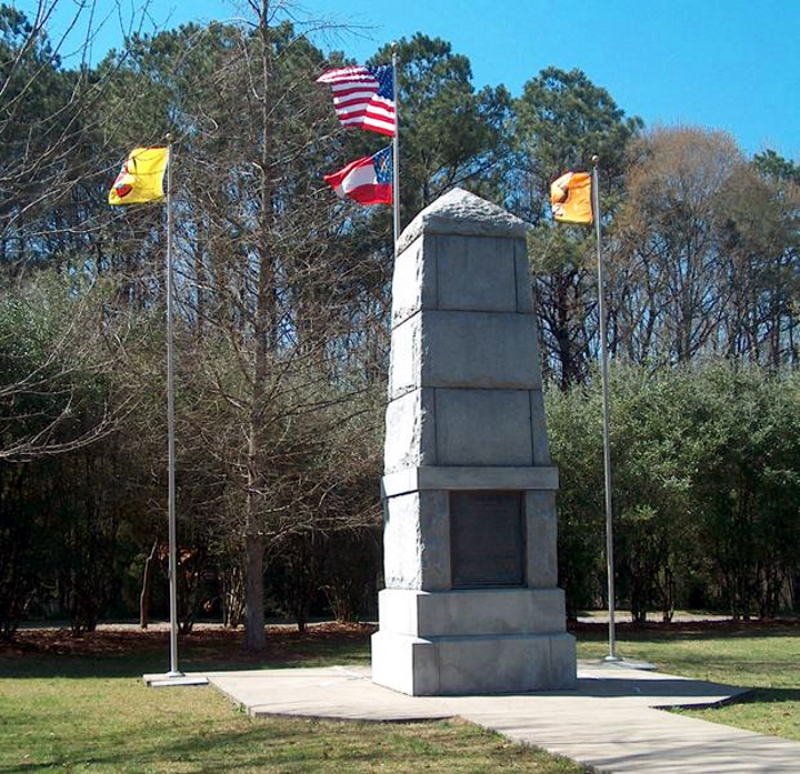
The Trail of Tears was the best-known phase of Indian Removal: a United States policy that expelled Native nations from their homelands to territory west of the Mississippi River. After the Indian Removal Act became law on May 28, 1830, federal and state authorities used coercive treaties, military force, detention camps and deportation to clear Indigenous land for white settlement, plantation slavery and speculation.
Removal affected many nations, but the phrase chiefly denotes the 1838–1839 Cherokee deportation. Roughly 60,000 Cherokee, Muscogee (Creek), Choctaw, Chickasaw and Seminole people were removed during the 1830s; estimates of deaths across the separate removals remain disputed. Native people resisted through courts, diplomacy, armed defence and survival. Explore related records in History, Atrocities and Data.
Key takeaways
- Indian Removal was a federal and state project to seize Native homelands, not a voluntary migration or isolated humanitarian failure.
- Approximately 60,000 people from five Southeastern Native nations were displaced during the 1830s, with thousands dying from disease, hunger and exposure.
- The Cherokee removal killed an estimated 4,000 during 1838–1839, while Russell Thornton’s broader 1835–1840 demographic analysis estimated 8,000 excess deaths.
- White settlers, slaveholders, land speculators and government contractors gained from land transfers that expanded cotton cultivation and racial slavery.
- Native nations resisted through courts, petitions, armed defence and evasion, then rebuilt sovereign governments after deportation.
What happened: removal by law, coercion and force
The United States had pursued Indigenous dispossession since independence, but President Andrew Jackson made removal a central federal programme. Congress passed the Indian Removal Act in 1830 by 102–97 in the House and 28–19 in the Senate. It authorised land exchanges and funded relocation, while presenting coerced surrender as voluntary agreement.
The mechanism followed a recurring sequence:
- Southern states extended their laws over Native nations, criminalised Indigenous government and opened Native land to white claimants.
- Federal negotiators sought cessions, sometimes from unrepresentative minorities under threat of expulsion.
- The government rejected or evaded Native legal victories, including Worcester v. Georgia in 1832.
- Soldiers and militia concentrated families in stockades, then drove them west by road, river and sea.
- Officials and contractors distributed land, transport work and supplies while Native communities bore hunger, disease and death.
| Year | Instrument or event | Concrete effect |
|---|---|---|
| 1830 | Indian Removal Act | Appropriated $500,000 in 1830—about $17 million in 2024 dollars using CPI conversion—to negotiate and execute removal |
| 1830 | Treaty of Dancing Rabbit Creek | Ceded roughly 11 million acres of Choctaw land in present-day Mississippi |
| 1832 | Worcester v. Georgia | Supreme Court held, 5–1 in 1832, that Georgia law had no force within Cherokee territory |
| 1835 | Treaty of New Echota | A small Cherokee faction ceded land for $5 million; the Cherokee National Council had not authorised the signers |
| 1838–1839 | Cherokee roundup and deportation | About 16,000 Cherokee were forced into camps and moved west; several hundred escaped or remained, especially in North Carolina |
The numbers: people expelled, deaths and land seized
No single death ledger exists. Records were incomplete, deaths occurred before, during and after transit, and historians use different populations and time windows. The often-repeated figure of 4,000 Cherokee deaths originated in estimates close to the events and was reinforced by Grant Foreman in 1932; demographer Russell Thornton estimated about 8,000 excess Cherokee deaths for 1835–1840 when population loss beyond the marches is counted.
| Nation and removal | People displaced | Mortality estimate |
|---|---|---|
| Choctaw, 1831–1833 | About 15,000–20,000 | About 2,500–6,000; historian Arthur H. DeRosier Jr. reported contemporary estimates spanning this range in 1970 |
| Muscogee (Creek), principally 1836–1837 | About 20,000 | About 3,500–4,000; historian Christopher Haveman estimated roughly 3,500 deaths in 2016, while older accounts commonly give 4,000 |
| Cherokee, 1838–1839 | About 16,000 rounded up | About 4,000 during removal in the traditional 1932 Foreman estimate; about 8,000 excess deaths during 1835–1840 in Thornton’s 1984 demographic estimate |
| Chickasaw, 1837–1850 | About 5,000 | No reliable comprehensive total; deaths are documented, but scholarship has not established a defensible range |
| Seminole, 1830s–1850s | Roughly 3,000 removed | No reliable separate removal toll; war, imprisonment and deportation overlap |
Who profited from dispossession
Removal transferred millions of acres to white farmers, enslavers, land companies and speculators. The Choctaw cession alone covered about 11 million acres in 1830; the Muscogee ceded roughly 5 million acres under the 1832 Treaty of Cusseta; the Cherokee cession covered about 7 million acres under the 1835 Treaty of New Echota. These three agreements therefore exposed roughly 23 million acres to non-Native control.
Cotton was the decisive commercial interest. Cleared Indigenous land fed an expanding plantation economy worked by enslaved African Americans. US cotton production rose from about 732,000 bales in 1830 to about 2.14 million bales in 1850, according to the 1860 US Census historical tables—an increase of approximately 192% over 20 years. Removal did not alone cause that growth, but it opened prime land within the Cotton South.
Federal disbursements also enriched wagon operators, steamboat owners, provisioners and removal agents. Fraud flourished around allotments and land sales. Some Native elites, including slaveholders, attempted to preserve property under coercive conditions; enslaved Black people were taken west with Native enslavers, while free Black spouses and community members also travelled. Their experiences cannot be reduced to either settlers or tribal citizens.
“The whole scene since I have been in this country has been nothing but a heart-rending one.” — Private John G. Burnett, 1890 account recalling the 1838 Cherokee removal. Burnett’s late memoir is widely quoted but must be read as a recollection written 52 years afterward.
Resistance, survival and sovereignty
Native nations did not passively accept removal. Cherokee leaders built a constitutional government, published the bilingual Cherokee Phoenix from 1828 and petitioned Congress. Principal Chief John Ross organised opposition to the Treaty of New Echota: a protest bearing 15,665 Cherokee signatures was submitted to the US Senate in 1836. The Senate nevertheless ratified the treaty by 31–15 in 1836, exactly the two-thirds margin then required.
“The instrument in question is not the act of our nation; we are not parties to its covenants.” — John Ross, 1836, Letter and Protest of the Cherokee Nation.
The Seminole resisted militarily in the Second Seminole War from 1835 to 1842. US military expenditure reached approximately $30 million–$40 million in 1842 estimates cited by historians John K. Mahon and others, and about 1,500 US military personnel died, mostly from disease. Hundreds of Seminoles remained in Florida rather than submit.
Muscogee people fought removal in 1836; Choctaw families invoked treaty rights to remain; Cherokee groups hid in the southern Appalachians. In Indian Territory, survivors rebuilt governments, schools, farms and newspapers. Their descendants’ sovereign nations—the Cherokee Nation, Eastern Band of Cherokee Indians, United Keetoowah Band, Choctaw Nation, Chickasaw Nation, Muscogee Nation and Seminole nations—continue to exercise political authority.
Denial, public memory and present meaning
Official language described removal as benevolent protection from extinction. Jackson’s 1830 message to Congress claimed the policy would allow Native people to pursue “happiness in their own way,” concealing that states and settlers demanded their land and that federal force made refusal untenable.
Later commemoration often isolated the Cherokee tragedy from the wider programme, understated Choctaw, Muscogee, Chickasaw and Seminole experiences, and omitted enslaved Black people. The National Park Service designated the Trail of Tears National Historic Trail in 1987; it traces approximately 5,043 miles across 9 states, but the marked routes represent only part of Indian Removal.
Key facts
- Congress enacted the Indian Removal Act on May 28, 1830, under President Andrew Jackson.
- Roughly 60,000 people from the five named Southeastern nations were displaced during the 1830s, though definitions and dates vary.
- The Cherokee death toll is commonly given as 4,000 for 1838–1839, while Russell Thornton estimated 8,000 excess deaths in 1835–1840.
- At least 23 million acres passed from Choctaw, Muscogee and Cherokee control through three treaties signed between 1830 and 1835.
- Removal expanded a cotton economy dependent on racial slavery and converted Native territory into private property and state tax bases.
Indian Removal matters now because its institutions survive: federal plenary power, contested treaty obligations, jurisdictional disputes, land loss and underfunded services. It also demonstrates how democratic procedures can facilitate ethnic cleansing when the targeted peoples lack equal power. The relevant historical unit is not one road or winter, but a continuing struggle over land, sovereignty and whose law governs. See the archive’s broader atrocity documentation and historical datasets.
Sources & further reading
- National Park Service: Trail of Tears National Historic Trail
- Library of Congress: Indian Removal Act primary source
- National Archives: Indian Treaties and the Removal Act
- Smithsonian National Museum of the American Indian: The Invention of Thanksgiving and Removal-era context
- Encyclopedia of Alabama: Creek Indian Removal
- Oklahoma Historical Society: Indian Removal
Frequently asked questions
- What was the Trail of Tears?
- The Trail of Tears usually means the forced removal of about 16,000 Cherokee people from the Southeast to Indian Territory in 1838–1839. More broadly, it belongs to the US Indian Removal programme that displaced roughly 60,000 Cherokee, Choctaw, Muscogee, Chickasaw and Seminole people during the 1830s through coercive treaties, detention camps and military deportation.
- How many people died on the Trail of Tears?
- The traditional estimate is about 4,000 Cherokee deaths connected to the 1838–1839 roundup, camps and westward journeys, an estimate popularised by historian Grant Foreman in 1932. Demographer Russell Thornton calculated about 8,000 excess Cherokee deaths across the wider 1835–1840 crisis in 1984. No complete register exists, so the result depends on the period and method counted.
- Why did Andrew Jackson support Indian Removal?
- President Andrew Jackson supported removal to extinguish Native title east of the Mississippi and satisfy demands from Southern states, white settlers, land speculators and slaveholding cotton planters. He signed the Indian Removal Act on May 28, 1830. His administration described relocation as protective and voluntary, but federal pressure and military enforcement made the policy coercive.
- Did the Supreme Court stop Cherokee removal?
- No. In *Worcester v. Georgia* in 1832, the Supreme Court ruled 5–1 that Georgia law had no force in Cherokee territory. The decision affirmed a sphere of Cherokee political authority but did not itself prevent deportation. Federal officials later enforced the disputed 1835 Treaty of New Echota, and US troops began mass roundups in 1838.
- Who benefited economically from Indian Removal?
- White settlers, cotton planters, slaveholders, speculators, state governments and federal contractors benefited. Treaties signed between 1830 and 1835 transferred roughly 23 million acres from the Choctaw, Muscogee and Cherokee alone. The land entered a rapidly growing cotton economy: US output increased from about 732,000 bales in 1830 to about 2.14 million in 1850.
Related chapters
Topics
- Aimé Césaire and Discourse on Colonialism
- Algerian War of Independence and French Torture
- South African Apartheid: The Legal Architecture of Racism
- Atlantic Slave Trade: Scale, Profits and Resistance
- Banda massacre and the Dutch nutmeg monopoly
- Belgian Congo: From Leopold’s Atrocities to Colonial Rule
- The 1943 Bengal Famine and British Policy
- Benin Bronzes: Looting, Trade and Restitution
- Berlin Conference and the Partition of Africa
Sources & further reading
CC BY 4.0 ·