Walter Rodney and How Europe Underdeveloped Africa
Walter Rodney’s life, assassination and landmark 1972 analysis of slavery, colonial extraction and Europe’s role in Africa’s underdevelopment.
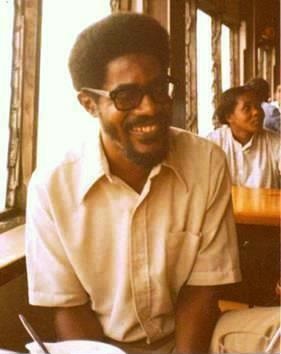
Walter Rodney’s How Europe Underdeveloped Africa, first published by Bogle-L’Ouverture Publications and Tanzania Publishing House in 1972, argued that African poverty was historically produced, not primordial. Europe accumulated wealth through the Atlantic slave trade, conquest, forced labor, land seizure, unequal trade and colonial economies designed around exports rather than African needs.
Rodney was a Guyanese historian, Pan-Africanist and organizer. Born in Georgetown in 1942, he worked in Tanzania, Jamaica and Guyana before a bomb concealed in a radio killed him in Georgetown on June 13, 1980, aged 38. A Guyanese commission reported in 2016 that the assassination was a state-organized killing.
Key takeaways
- Walter Rodney argued in 1972 that European wealth and African underdevelopment were connected outcomes of slavery, colonial rule and unequal exchange.
- SlaveVoyages estimates that 12.5 million captives embarked from Africa and 10.7 million reached the Americas between 1501 and 1866.
- Colonial export growth often transferred value abroad while African workers and farmers carried the costs of coercion, price control and ecological damage.
- A Guyanese commission concluded in 2016 that state agencies and army sergeant Gregory Smith participated in Rodney’s 1980 assassination.
- Rodney’s framework remains useful for examining who owns extraction, captures profits, controls finance and bears contemporary social and environmental losses.
Key facts and Rodney’s argument
- Walter Anthony Rodney was born in British Guiana on March 23, 1942.
- He published How Europe Underdeveloped Africa in 1972, linking European development to Africa’s coerced impoverishment.
- Jamaica barred Rodney from returning on October 15, 1968; the ensuing protests became known as the Rodney Riots.
- Rodney joined Guyana’s Working People’s Alliance when it became a political party in 1979.
- Gregory Smith supplied the explosive device that killed Rodney on June 13, 1980.
- Guyana’s National Assembly formally condemned Rodney’s assassination in 2021.
| Date | Event | Historical significance |
|---|---|---|
| 1942 | Rodney born in Georgetown | Raised in a working-class, anti-colonial society |
| 1966 | PhD awarded by SOAS, University of London | Dissertation examined the Upper Guinea Coast slave trade |
| 1968 | Expelled from Jamaica | Protests connected campus politics with Black working-class resistance |
| 1972 | How Europe Underdeveloped Africa published | Systematic account of extraction as a relationship between European enrichment and African dispossession |
| 1974 | Returned to Guyana | University appointment was blocked under Forbes Burnham’s government |
| 1980 | Assassinated in Georgetown | Killed while organizing against authoritarian rule |
| 2016 | Commission report presented | Found that state agencies participated in the assassination |
| 2021 | Guyanese state recognition | National Assembly condemned the killing and moved to correct official records |
“African development is possible only on the basis of a radical break with the international capitalist system.” — Walter Rodney, 1972, How Europe Underdeveloped Africa
Rodney did not claim that precolonial Africa lacked hierarchy, exploitation or conflict. His mechanism was relational: European capitalism redirected African labor, land and production toward external accumulation while suppressing autonomous development. This places the book within the wider archive of colonial history, rather than treating poverty as a defect inherent to Africa.
The mechanism: how underdevelopment was made
Rodney’s sequence can be summarized in four linked processes:
- Capture and export of labor: Atlantic trafficking removed millions of people, intensified warfare and converted human beings into capital for European merchants and American plantation owners.
- Conquest and taxation: European states partitioned Africa after the Berlin Conference of 1884–1885, then used hut, poll and head taxes to compel wage labor.
- Forced specialization: colonies exported cocoa, cotton, copper, gold, groundnuts, palm oil and rubber while importing manufactured goods, limiting diversified industry.
- Repatriation of surplus: chartered companies, mines, banks and settlers transferred profits abroad; railways commonly linked extraction zones to ports rather than African markets.
Colonial authorities also imposed lethal labor regimes. In King Leopold II’s Congo Free State, which existed from 1885 to 1908, rubber quotas were enforced through hostage-taking, mutilation, village destruction and killing. Demographic losses are uncertain: Adam Hochschild’s 1998 synthesis popularized an estimate of roughly 10 million deaths, while historians including Jan Vansina have stressed that incomplete censuses make any precise total impossible. The archive therefore records both the scale and the uncertainty rather than presenting one disputed figure as a count.
The numbers behind extraction
Slave-trade data assembled by the SlaveVoyages project quantify one foundation of Rodney’s argument. Its database, updated through 2021, estimates that approximately 12.5 million captives embarked from Africa and about 10.7 million disembarked in the Americas between 1501 and 1866. The difference—roughly 1.8 million people—primarily represents deaths during the Middle Passage, although totals remain estimates reconstructed from surviving voyages.
| System or commodity | Period/year | Concrete measure | Source or basis |
|---|---|---|---|
| Transatlantic slave trade | 1501–1866 | About 12.5 million embarked; 10.7 million landed | SlaveVoyages, estimates current through 2021 |
| Middle Passage mortality | 1501–1866 | About 1.8 million fewer landings than embarkations | Difference between SlaveVoyages modeled totals |
| Congo copper | 1911–1913 | 998 to 7,407 metric tons annually | Historical Union Minière production series |
| Congo copper | 1929 | 137,000 metric tons | Historical Union Minière production series |
| Gold Coast cocoa | 1911 | About 40,000 long tons exported | British colonial trade statistics |
| Gold Coast cocoa | 1936 | About 300,000 long tons exported | British colonial trade statistics |
The commodity figures show scale and direction, not net African benefit. Export growth could enrich African farmers in particular places, but prices, shipping, processing, credit and political control remained heavily concentrated outside Africa. Readers can compare additional quantified records in the archive’s data collections.
Who profited, and who resisted
Beneficiaries included European monarchies and treasuries, Liverpool and Bristol merchants, French Atlantic ports, Portuguese and Dutch traders, plantation owners in the Americas, and later mining, railway and concession companies. Named corporate beneficiaries included Union Minière du Haut-Katanga in Belgian Congo, the British South Africa Company in southern Africa and Unilever’s predecessor, the United Africa Company, in West African commerce.
African people were never passive. Resistance ranged from evasion and strikes to armed revolt and liberation war. The Maji Maji uprising against German forced cotton cultivation lasted from 1905 to 1907. Historian John Iliffe’s 1979 study cited an official estimate of 75,000 deaths, while later accounts commonly give 200,000–300,000, overwhelmingly from famine generated by German scorched-earth repression. Kenya’s anti-colonial Emergency lasted from 1952 to 1960; historian Caroline Elkins estimated in 2005 that up to 300,000 Kikuyu may have died, while demographer John Blacker estimated in 2007 approximately 50,000 excess Kikuyu deaths. Britain’s official figure recorded 11,503 alleged insurgents killed, illustrating the politics of classification and counting.
“The question as to who and what is responsible for African underdevelopment can be answered at two levels.” — Walter Rodney, 1972, How Europe Underdeveloped Africa
Rodney linked scholarship to this resistance tradition. In Jamaica in 1968 he held community sessions with Rastafarians and working-class residents; in Guyana from 1974 to 1980 he opposed Forbes Burnham’s increasingly authoritarian People’s National Congress government through the Working People’s Alliance.
Assassination, denial and public memory
Rodney died when an explosive hidden in a communications device detonated in his lap on June 13, 1980. Guyana’s government initially portrayed the death as accidental or self-inflicted. A commission chaired by Sir Richard Cheltenham, appointed in 2014, concluded in its 2016 report that Guyana Defence Force sergeant Gregory Smith delivered the device and that state agencies participated in a plan to kill Rodney. Smith fled to French Guiana, where he died in 2002 without trial.
The commission’s findings matter because archives, death certificates and prosecutions shape public memory. In 2021, Guyana’s National Assembly accepted that Rodney was assassinated, agreed that official records should be corrected and restored his academic standing. The delayed recognition belongs beside documented patterns in which colonial and postcolonial states conceal violence, destroy evidence or describe victims as security threats. Related cases are indexed in atrocities and mass violence.
Denial of Rodney’s thesis takes a broader form: reducing colonialism to roads, railways or schools while excluding what those systems served, who paid for them and where profits went. Serious assessment must weigh infrastructure against coerced labor, racial law, preventable famine, land alienation and blocked industrial capacity.
What Rodney’s analysis means now
Rodney’s framework remains influential because formal independence did not automatically reverse commodity dependence, unequal financing or foreign control of processing and intellectual property. It helps explain why a country can export valuable minerals yet retain limited tax revenue, manufacturing and public infrastructure.
The book is not a substitute for country-level research. Later scholarship has revised its generalizations, expanded attention to gender and ecology, and documented African elites’ participation in extraction. Those additions complicate the account without negating its central causal question: who controls production, captures surplus and bears the human cost?
For present-day analysis, Rodney’s method requires tracing ownership, contracts, taxes, debt, labor conditions and ecological damage rather than treating gross domestic product growth as sufficient evidence of development. His enduring contribution was to make Europe and Africa part of one historical system: wealth accumulated at one pole was connected to coercion and foreclosed choices at the other.
Sources & further reading
- Walter Rodney, How Europe Underdeveloped Africa (Verso edition)
- SlaveVoyages: Trans-Atlantic Slave Trade Database
- SOAS: Walter Rodney—historian, activist and alumnus
- Government of Guyana: Commission of Inquiry into the death of Walter Rodney
- Encyclopaedia Britannica: Walter Rodney
- Caroline Elkins, Imperial Reckoning
Frequently asked questions
- What is the main argument of How Europe Underdeveloped Africa?
- Walter Rodney argued in 1972 that Africa’s poverty was historically produced through its relationship with European capitalism. The Atlantic slave trade, colonial conquest, forced labor, taxation and export specialization transferred labor and wealth outward while obstructing African industrial and social development. “Underdevelopment” therefore described an imposed relationship, not an original absence of civilization or economic change.
- When was How Europe Underdeveloped Africa published?
- *How Europe Underdeveloped Africa* was first published in 1972 by Bogle-L’Ouverture Publications in London and Tanzania Publishing House in Dar es Salaam. Rodney wrote it while working in Tanzania’s intellectually active Pan-African and socialist environment. The book became a foundational text in African history, dependency theory, Black studies and anti-colonial political education.
- How many Africans were transported in the transatlantic slave trade?
- The *SlaveVoyages* database, with estimates updated through 2021, calculates that about 12.5 million captive Africans embarked on Atlantic slave ships between 1501 and 1866. Approximately 10.7 million disembarked in the Americas. The roughly 1.8 million difference principally reflects deaths during the Middle Passage, although all totals are modeled from incomplete surviving voyage records.
- Who killed Walter Rodney?
- Walter Rodney was killed by a bomb in Georgetown on June 13, 1980. Guyana’s Commission of Inquiry concluded in 2016 that Guyana Defence Force sergeant Gregory Smith supplied the explosive communications device and that state agencies participated in the assassination. Smith escaped to French Guiana and died in 2002 without being tried. Guyana’s National Assembly formally condemned the assassination in 2021.
- Why is Walter Rodney still important today?
- Rodney remains important because his 1972 analysis directs attention from headline growth to control over labor, land, minerals, credit, technology and profits. His method helps researchers test whether extraction builds locally controlled capacity or reproduces dependency. Later scholarship has corrected some generalizations and added gender, ecological and regional analysis, but his central question—who captures the surplus—remains decisive.
Related chapters
Topics
- Aimé Césaire and Discourse on Colonialism
- Algerian War of Independence and French Torture
- South African Apartheid: The Legal Architecture of Racism
- Atlantic Slave Trade: Scale, Profits and Resistance
- Banda massacre and the Dutch nutmeg monopoly
- Belgian Congo: From Leopold’s Atrocities to Colonial Rule
- The 1943 Bengal Famine and British Policy
- Benin Bronzes: Looting, Trade and Restitution
- Berlin Conference and the Partition of Africa
Sources & further reading
CC BY 4.0 ·