Jallianwala Bagh massacre: Amritsar, 1919
Evidence-led history of the 1919 Jallianwala Bagh massacre in Amritsar: Reginald Dyer’s shooting, disputed death tolls, official inquiries and memory.
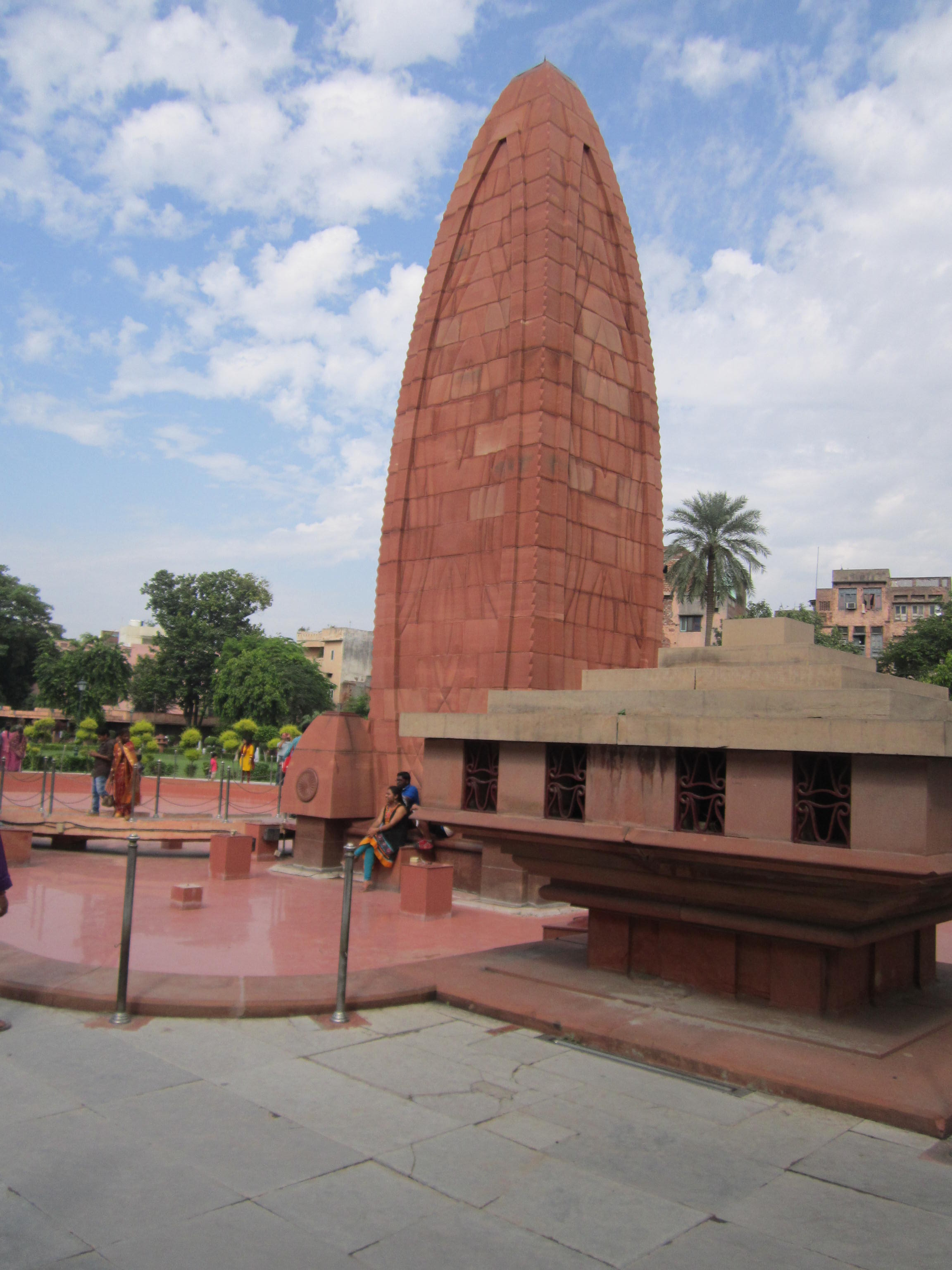
The Jallianwala Bagh massacre was a British colonial mass shooting committed at Amritsar, Punjab, on 13 April 1919, when troops commanded by Brigadier-General Reginald Dyer fired without warning into an enclosed crowd.
People had assembled during Baisakhi amid opposition to the Rowlatt Act and the arrests of Saifuddin Kitchlew and Satyapal. Dyer’s troops fired 1,650 rounds in approximately 10 minutes, according to his 1919 operational report. The colonial government recorded 379 deaths and approximately 1,200 wounded in 1919; an Indian National Congress inquiry published in 1920 estimated about 1,000 deaths. The massacre became one of the best-documented atrocities of the British Empire.
Key takeaways
- British troops under Reginald Dyer opened fire without warning on a trapped civilian crowd at Jallianwala Bagh on 13 April 1919.
- The colonial government acknowledged 379 deaths in 1919, while the Indian National Congress estimated approximately 1,000 deaths in 1920.
- Dyer reported that 50 riflemen fired 1,650 rounds in approximately 10 minutes, aiming into dense parts of the crowd and toward exits.
- The Hunter Committee condemned Dyer’s conduct in 1920, but he was retired rather than criminally prosecuted.
- Britain expressed regret in 1997, 2013 and 2019, but had issued no unqualified state apology by 2026.
What happened at Jallianwala Bagh
Punjab was under intense colonial pressure after the First World War. The Rowlatt Act of 1919 permitted detention without trial and trial without a jury for specified political offenses. After authorities arrested nationalist leaders Kitchlew and Satyapal on 10 April 1919, unrest in Amritsar left several Europeans and Indians dead; official evidence presented in 1919 identified 5 Europeans killed during the violence.
On 13 April 1919, thousands entered Jallianwala Bagh, a walled open ground reached through narrow passages. Some attended a political meeting; others were Baisakhi visitors. Dyer arrived with 50 riflemen—25 Gurkhas and 25 Baluch and Sikh soldiers, according to evidence recorded by the Hunter Committee in 1919—and positioned them at the principal entrance. Two armored cars carrying machine guns could not pass through the narrow approach. Without ordering the gathering to disperse, Dyer commanded sustained fire toward densely occupied areas and exits.
“I fired and continued to fire until the crowd dispersed, and I consider this is the least amount of firing which would produce the necessary moral and widespread effect.” — Reginald Dyer, testimony to the Disorders Inquiry Committee, 1919.
The mechanism of colonial power
The killing was enabled by emergency law, racial hierarchy and military coercion. The Government of India treated political organizing as a security threat, deported Kitchlew and Satyapal without ordinary judicial process on 10 April 1919, and deployed Indian troops under British command against Indian civilians. Punjab’s lieutenant-governor, Michael O’Dwyer, supported Dyer’s action in 1919 and defended coercion as necessary to prevent rebellion.
Martial law was imposed across several Punjab districts from 15 April 1919. Colonial punishments included public floggings, special tribunals, censorship, collective fines and the “crawling order” in Amritsar’s Kucha Kurrichhan lane, where Indians were compelled to crawl past the site at which missionary Marcella Sherwood had been assaulted on 10 April 1919. Aircraft also bombed and machine-gunned targets around Gujranwala on 14–15 April 1919, showing that repression extended beyond Jallianwala Bagh.
Dyer’s forces were part of the British Indian Army, whose command structure used colonized soldiers to maintain imperial rule. Responsibility therefore did not rest only with one officer: the massacre arose from laws, administrators, military institutions and racial assumptions embedded within the British Empire.
Documented record and death tolls
Dyer reported expending 1,650 rounds in approximately 10 minutes on 13 April 1919. He later stated that firing ceased largely because ammunition was running low. No medical assistance was organized by his force, while the curfew impeded families trying to retrieve wounded people.
The official Punjab authorities compiled a 1919 list of 379 dead: 337 men, 41 boys and 1 six-week-old infant. The same official record placed the wounded at approximately 1,200. The Indian National Congress’s Punjab inquiry, published in 1920, estimated about 1,000 killed, based on local testimony and investigation. Exact totals remain irrecoverable because the crowd was mobile, record-keeping was incomplete, and some victims were visitors without local documentation.
The defensible historical conclusion is not a single uncontested total but a documented range from 379 officially acknowledged deaths in 1919 to approximately 1,000 estimated by Congress in 1920.
Investigation, defence and accountability
The Disorders Inquiry Committee—usually called the Hunter Committee—was appointed on 14 October 1919. Its majority report, published in 1920, found that Dyer had erred by opening fire without warning and continuing after the crowd began to disperse. Indian committee members issued a more severe minority report. Dyer was removed from command and compelled to retire in 1920, but he faced no criminal trial.
Dyer defended the shooting as a measure against an anticipated rebellion. He acknowledged before the committee in 1919 that he might have used machine guns had the armored cars been able to enter. His argument was that exemplary violence saved Punjab from wider bloodshed. O’Dwyer similarly represented the action as necessary to preserve imperial order. These claims depended on treating an unarmed gathering as an insurgent force and collective punishment as legitimate prevention.
Parts of Britain rejected that defence. Secretary of State for War Winston Churchill called the massacre “an extraordinary event, a monstrous event” in a House of Commons speech on 8 July 1920. Yet the Morning Post organized a fund for Dyer that raised more than £26,000 in 1920, demonstrating substantial imperial support. The episode exposed selective accountability: administrative censure ended Dyer’s career, but neither he nor the senior officials who sustained Punjab’s repression were prosecuted as perpetrators of an atrocity.
Timeline, afterlife and memory
| Date | Event |
|---|---|
| 18 March 1919 | The Imperial Legislative Council passes the Rowlatt Act, enabling extraordinary detention and trial powers. |
| 10 April 1919 | Kitchlew and Satyapal are arrested and removed from Amritsar; violence follows protests against their detention. |
| 13 April 1919 | Dyer’s troops fire 1,650 rounds at Jallianwala Bagh; official deaths later stand at 379, while Congress estimates about 1,000. |
| 15 April 1919 | Martial law begins across affected districts of Punjab. |
| 14 October 1919 | The Government of India appoints the Hunter Committee. |
| 1920 | The committee reports; Dyer is forced to retire, and Congress publishes its higher casualty estimate. |
| 13 March 1940 | Udham Singh assassinates Michael O’Dwyer in London, citing the 1919 massacre. |
| 1951 | India enacts the Jallianwala Bagh National Memorial Act. |
| 13 April 2019 | The centenary renews demands for a formal British apology; Prime Minister Theresa May expresses “deep regret.” |
Rabindranath Tagore renounced his British knighthood in a letter dated 31 May 1919, writing that “the time has come when badges of honour make our shame glaring.” Mohandas Gandhi returned the Kaiser-i-Hind medal in 1920 and made Punjab’s repression central to the non-cooperation movement. Udham Singh killed O’Dwyer on 13 March 1940 and was executed on 31 July 1940.
The site is now the Jallianwala Bagh National Memorial. Queen Elizabeth II expressed sadness there on 14 October 1997 but did not apologize. David Cameron called the massacre “deeply shameful” on 20 February 2013; Theresa May expressed “deep regret” on 10 April 2019. As of 2026, no UK government has issued an unqualified state apology. The massacre remains central to debates over colonial accountability, reparations and how the British Empire is taught.
Sources & further reading
- Encyclopaedia Britannica: Massacre of Amritsar
- UK Parliament: Amritsar Massacre centenary debate
- UK National Archives: The Amritsar Massacre
- British Library: Amritsar and the Rowlatt Satyagraha
- Kim A. Wagner, Amritsar 1919: An Empire of Fear and the Making of a Massacre
- Jallianwala Bagh National Memorial
Frequently asked questions
- How many people died in the Jallianwala Bagh massacre?
- The British Indian government recorded 379 deaths in 1919, including 337 men, 41 boys and 1 six-week-old infant, and approximately 1,200 wounded. The Indian National Congress inquiry published in 1920 estimated about 1,000 people killed. Incomplete records, visiting festival crowds and deaths after the shooting prevent a definitive total.
- Who ordered the shooting at Jallianwala Bagh?
- Brigadier-General Reginald Dyer ordered 50 British Indian Army riflemen to fire on 13 April 1919. According to his 1919 report and Hunter Committee evidence, they discharged 1,650 rounds in approximately 10 minutes. Punjab lieutenant-governor Michael O’Dwyer supported Dyer’s conduct, although Dyer personally issued the firing order.
- Why had people gathered at Jallianwala Bagh?
- People gathered on 13 April 1919 for several overlapping reasons: a political meeting opposed the 1919 Rowlatt Act and the 10 April arrests of Saifuddin Kitchlew and Satyapal, while many others were in Amritsar for Baisakhi. The crowd included protesters, local residents and festival visitors; it was not an armed military formation.
- Was Reginald Dyer punished for the Amritsar massacre?
- Dyer was investigated by the Hunter Committee, whose 1920 report condemned his opening fire without warning and continuing too long. He was removed from command and forced to retire in 1920, but he was never criminally tried. Supporters raised more than £26,000 for him through the Morning Post fund that year.
- Has Britain apologized for the Jallianwala Bagh massacre?
- No UK government had issued an unqualified formal state apology by 2026. Queen Elizabeth II expressed sadness in 1997, Prime Minister David Cameron called the massacre “deeply shameful” in 2013, and Prime Minister Theresa May expressed “deep regret” in 2019. These statements acknowledged wrongdoing but stopped short of the apology repeatedly requested by campaigners and descendants.
Related chapters
People & institutions
- Cecil Rhodes: Empire, Mining and Colonial Rule
- Christopher Columbus: Voyages, Enslavement and Colonial Rule
- Elmina Castle: Gold, Slavery and Colonial Power
- Frantz Fanon: Psychiatrist of Colonial Violence
- Hernán Cortés: Conquest, Colonial Rule and Legacy
- Force Publique: Leopold II’s Colonial Army in Congo
- Kwame Nkrumah: Independence, Pan-Africanism and Power
- Leopold II of Belgium: Rule, Atrocities and Legacy
- Lothar von Trotha: Architect of Colonial Extermination
Sources & further reading
CC BY 4.0 ·