Force Publique: Leopold II’s Colonial Army in Congo
How Leopold II’s Force Publique enforced conquest and rubber extraction in Congo through hostage-taking, forced labor, mutilation, flogging and killing.
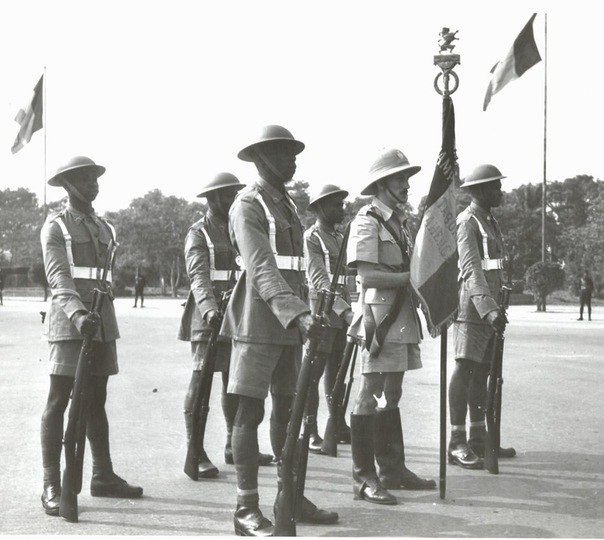
The Force Publique was the colonial army and police force of the Congo Free State and Belgian Congo from 1885 to 1960, created by King Leopold II to conquer territory, enforce forced labor and defend colonial rule.
European—mostly Belgian—officers commanded African soldiers recruited or coerced within and beyond Congo. In Leopold’s privately controlled Congo Free State, the force imposed rubber and ivory demands through village raids, hostage-taking, imprisonment, flogging, mutilation and killing. Its institutional life continued under Belgian annexation after 1908 and ended only amid the Congo independence crisis in 1960.
Key takeaways
- The Force Publique enforced Leopold II’s rule through conquest, forced recruitment, hostage-taking, village destruction, flogging, mutilation and killing.
- European officers commanded African troops, making racial hierarchy and coercion central to the army from its creation in 1885.
- Congo’s demographic loss cannot be counted exactly; a widely cited 1998 estimate by Adam Hochschild is approximately 10 million.
- Belgian annexation in 1908 changed the sovereign authority but preserved the Force Publique and its colonial policing function.
- The force’s July 1960 mutiny exposed Belgium’s failure to prepare Congolese officers and helped trigger the Congo Crisis.
What the Force Publique was
Leopold II ordered the creation of the Force Publique in 1885, the year European powers recognized his claim to the Congo Free State. It combined army, gendarmerie and labor-enforcement functions across a territory nearly 80 times the size of Belgium. Belgian officers and other European mercenaries commanded African rank-and-file troops known as askari; recruits included conscripts, enslaved people purchased and nominally “liberated,” and children taken into state custody and trained in military colonies.
Its command answered to Leopold’s colonial administration, not to Congo’s population. After Belgium annexed the territory in 1908, the Force Publique survived as the coercive core of the Belgian Congo. Its strength reached roughly 19,000 African troops and 420 European officers in 1914, according to Belgian military statistics summarized by historians of the East African campaign.
The Force Publique was not merely an army stationed in a violent extraction system; it was the institution that made that system enforceable.
The mechanism of conquest and extraction
The force established posts, defeated or absorbed African authorities, punished resistance and compelled communities to supply food, porters, ivory and wild rubber. Under the rubber regime that intensified during the 1890s, state officials and concession companies assigned quotas to districts and villages. Soldiers seized women and children as hostages, burned settlements and killed people when quotas were missed.
Ammunition accounting encouraged soldiers to prove that cartridges had not been spent hunting or retained for rebellion. Severed right hands were therefore collected from corpses—and sometimes cut from living victims—as evidence for expended rounds. The practice became one of the best-documented atrocities of Leopold’s regime, although no surviving aggregate count can establish how many people were mutilated.
“The baskets of severed hands, set down at the feet of the European post commanders, became the symbol of the Congo Free State.” — Edmund Dene Morel, 1906, Red Rubber
Documented record and scale of harm
Missionaries, Congolese witnesses, former officials and investigators documented killings, mutilations, hostage prisons, rape, village destruction and the chicotte—hippopotamus-hide whippings that could disable or kill. In the 1891–1894 Congo–Arab War, the Force Publique defeated Swahili-Arab trading powers in eastern Congo while extending Leopold’s own state, taxation and forced-labor system.
No reliable census existed in 1885, so the total demographic loss cannot be measured precisely. In 1919, Belgian colonial official Charles Lemaire estimated that Congo’s population had fallen by 50% under Leopold. In 1924, statistician Georges Vanthemsche’s later reconstruction notes an official Belgian estimate of about 10 million inhabitants, against widely repeated precolonial suppositions near 20 million. Historian Adam Hochschild popularized an approximate loss of 10 million for 1880–1920 in his 1998 book King Leopold’s Ghost. Historian Jan Vansina argued in 2010 that regional evidence supports catastrophic decline but not a single colony-wide total. Death resulted from murder, starvation, exhaustion, displacement, falling births and epidemics intensified by colonial disruption.
| Date | Event |
|---|---|
| 1885 | Leopold II establishes the Congo Free State and orders creation of the Force Publique. |
| 1891 | State forces begin the Congo–Arab War, which lasts until 1894. |
| 1895 | The Stokes Affair exposes the summary execution of trader Charles Stokes by Force Publique officer Hubert Lothaire. |
| 1897 | The Batetela mutiny begins among Force Publique troops and continues in successive rebellions until 1900. |
| 1904 | Roger Casement publishes his British consular report documenting systematic abuses. |
| 1908 | Belgium annexes the Congo Free State; the Force Publique continues under colonial government. |
| 1916 | Force Publique troops invade German East Africa during World War I and capture Tabora in September 1916. |
| 1941 | Congo forces enter the East African campaign; Italy’s General Pietro Gazzera surrenders at Saïo on 6 July 1941. |
| 1960 | After independence on 30 June, the army mutinies on 5 July and is renamed the Armée Nationale Congolaise on 8 July. |
The defence made for it
Leopold and his agents claimed the Force Publique suppressed the slave trade, ended interregional warfare, opened commerce and brought order. Colonial propaganda presented mutilation and unauthorized killing as misconduct by individual African soldiers or isolated European officers. The 1904 Casement Report and Leopold’s own Commission of Inquiry, appointed in 1904 and reporting in 1905, instead found recurring hostage-taking, forced labor and lethal coercion tied to rubber collection.
The anti-slavery defence concealed a basic contradiction: the state fought rival slave-trading networks while itself using compulsory recruitment, porterage, hostage-taking and forced labor. Belgium’s annexation on 15 November 1908 ended Leopold’s personal state, but not racial military hierarchy or coercive colonial government.
Afterlife and memory today
Under Belgian rule, the Force Publique fought effectively outside Congo but remained designed to control Congolese people. It defeated German forces at Tabora in September 1916 and Italian forces at Saïo on 6 July 1941. Yet Belgium commissioned no Congolese officer before independence on 30 June 1960.
On 5 July 1960, commander Émile Janssens told troops that independence would bring no immediate change—famously summarized as “before independence = after independence.” The resulting mutiny accelerated Belgian military intervention, the secession of Katanga and the Congo Crisis. Renamed the Armée Nationale Congolaise on 8 July 1960, the institution passed into a formally independent state carrying colonial command habits, regional divisions and structures of coercion.
Memory remains contested in Belgium and the Democratic Republic of the Congo. Leopold II’s statues, museum narratives and official apologies are debated because celebrating infrastructure or wartime victories without naming forced extraction reproduces colonial propaganda. The Force Publique belongs centrally within the histories of the Congo Free State and colonial atrocities, not at their margins.
Sources & further reading
- Roger Casement, Correspondence and Report from His Majesty’s Consul at Boma Respecting the Administration of the Independent State of the Congo (1904), Internet Archive
- Encyclopaedia Britannica: Congo Free State
- Adam Hochschild, King Leopold’s Ghost, publisher page
- Jan Vansina, Being Colonized: The Kuba Experience in Rural Congo, 1880–1960, University of Wisconsin Press
- Royal Museum for Central Africa: Colonial history
- Encyclopaedia Britannica: Force Publique
Frequently asked questions
- What was King Leopold II’s Force Publique?
- The Force Publique was the army and police force established in 1885 for Leopold II’s Congo Free State. European officers commanded African soldiers who conquered territory and enforced rubber, ivory, labor and porterage demands. Belgium retained it after annexing Congo in 1908. Following independence on 30 June 1960 and an army mutiny on 5 July, it became the Armée Nationale Congolaise on 8 July 1960.
- Did the Force Publique cut off people’s hands?
- Yes. Missionaries, Congolese witnesses, photographs, Roger Casement’s 1904 report and Leopold’s 1905 Commission of Inquiry documented severed hands. Soldiers commonly had to account for cartridges by producing a right hand, supposedly taken from each person shot. Hands were also cut from living victims. No credible total exists, but the practice was systemic enough to become a defining symbol of Congo Free State terror.
- How many people died under Leopold II in Congo?
- No census established Congo’s population in 1885, so there is no exact death toll. A 1919 estimate by Belgian official Charles Lemaire suggested a 50% decline. Adam Hochschild’s 1998 synthesis gave an approximate loss of 10 million during 1880–1920. Historians including Jan Vansina accept catastrophic regional depopulation while warning that a precise colony-wide figure cannot be demonstrated.
- Was the Force Publique an anti-slavery army?
- Leopold II promoted it as an anti-slavery force, especially during the Congo–Arab War of 1891–1894. It did defeat slave-trading powers in eastern Congo, but then imposed another coercive order involving forced recruitment, compulsory porterage, hostage-taking and forced rubber labor. Roger Casement’s 1904 report showed that violence was tied directly to state and concession-company extraction, contradicting claims of isolated misconduct.
- What happened to the Force Publique after Congolese independence?
- Congo became independent on 30 June 1960 without a single Congolese commissioned officer in the Force Publique. Soldiers mutinied on 5 July after commander Émile Janssens indicated that colonial discipline would continue. Prime Minister Patrice Lumumba’s government Africanized the command and renamed it the Armée Nationale Congolaise on 8 July 1960. The revolt helped precipitate Belgian intervention and the wider Congo Crisis.
Related chapters
People & institutions
- Jallianwala Bagh massacre: Amritsar, 1919
- Cecil Rhodes: Empire, Mining and Colonial Rule
- Christopher Columbus: Voyages, Enslavement and Colonial Rule
- Elmina Castle: Gold, Slavery and Colonial Power
- Frantz Fanon: Psychiatrist of Colonial Violence
- Hernán Cortés: Conquest, Colonial Rule and Legacy
- Kwame Nkrumah: Independence, Pan-Africanism and Power
- Leopold II of Belgium: Rule, Atrocities and Legacy
- Lothar von Trotha: Architect of Colonial Extermination
Sources & further reading
CC BY 4.0 ·