Hernán Cortés: Conquest, Colonial Rule and Legacy
Hernán Cortés led the Spanish and Indigenous coalition that destroyed the Mexica state in 1521, enabling colonial rule, forced labor and mass death.
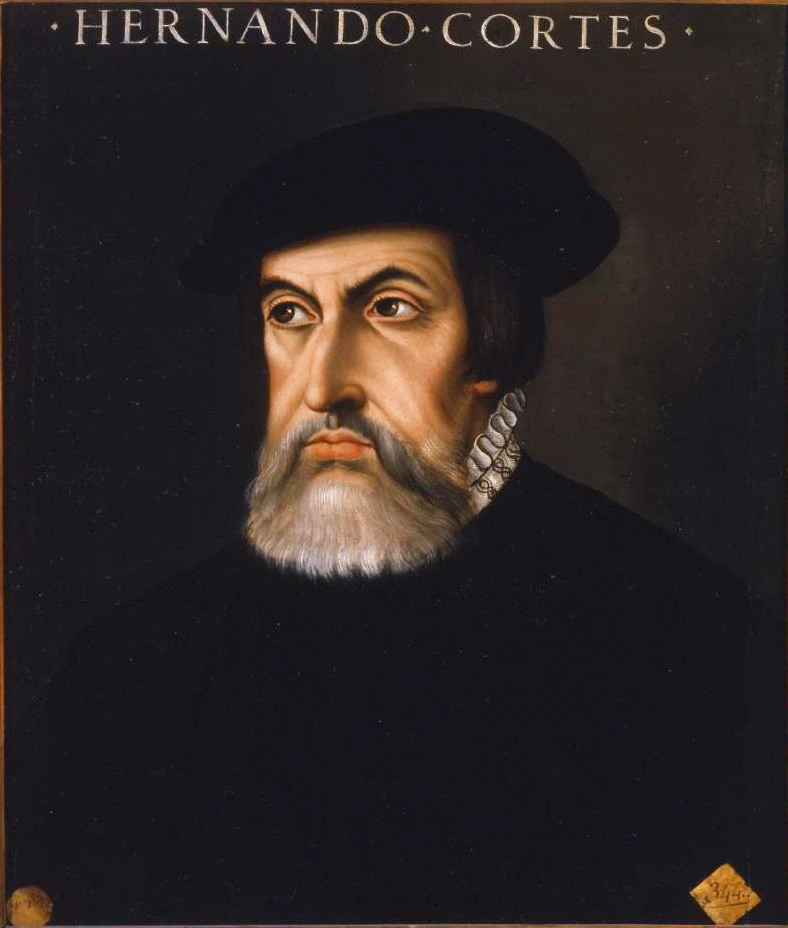
Hernán Cortés (1485–1547) was a Spanish conquistador who led the 1519–1521 invasion that overthrew the Mexica-led Aztec Empire and established Castilian power in central Mexico.
His victory depended on thousands of Indigenous allies, especially Tlaxcalans, as well as steel, horses, siege warfare, factional conflict and a smallpox epidemic. Cortés then became governor and captain general of New Spain, received an encomienda extracting Indigenous labor and tribute, and helped construct the colonial order examined across the archive’s /history and /atrocities records.
Key takeaways
- Hernán Cortés led the 1519–1521 invasion that overthrew Tenochtitlan and transferred central Mexican sovereignty to the Castilian Crown.
- Thousands of Indigenous allies, especially Tlaxcalans, provided the manpower without which several hundred Spaniards could not have conquered the Mexica capital.
- The 1521 siege killed civilians through warfare, starvation and disease, but no reliable total for the dead can now be established.
- Cook and Borah estimated central Mexico’s population fell from 25.2 million in 1519 to 1.075 million in 1605.
- Cortés converted military victory into colonial extraction through enslavement, tribute, landholding and a 1529 encomienda grant covering 22 towns.
Who Hernán Cortés was
Born in Medellín, Castile, in 1485, Cortés reached Hispaniola in 1504 and participated in Diego Velázquez de Cuéllar’s conquest of Cuba beginning in 1511. Velázquez authorized him to lead a mainland expedition in 1518, then attempted to revoke that authority in 1519. Cortés sailed anyway, founded a municipal government at Veracruz in 1519 and used it to claim direct authority from Charles I of Castile.
Cortés was not the solitary conqueror celebrated by imperial mythology. His initial force numbered about 508 soldiers, 100 sailors, 16 horses and 14 artillery pieces in 1519, according to Bernal Díaz del Castillo’s later account. During the campaign, forces allied to him numbered in the thousands or tens of thousands; exact totals vary by episode and source. Malintzin, also called Doña Marina, translated, negotiated and supplied political intelligence. Tlaxcala, Texcoco and other Indigenous polities provided the mass of troops required to besiege Tenochtitlan.
| Date | Event |
|---|---|
| 1485 | Cortés is born in Medellín, Castile. |
| 1504 | He arrives on Hispaniola. |
| 1511 | He joins the Spanish conquest of Cuba. |
| 1519 | He lands in Mexico, founds Veracruz and enters Tenochtitlan on November 8. |
| 1520 | Pedro de Alvarado’s massacre and the Spanish flight of June 30–July 1 intensify the war. |
| 1521 | Tenochtitlan falls on August 13 after a siege lasting about 93 days. |
| 1522 | Charles I appoints Cortés governor and captain general of New Spain. |
| 1529 | The Crown grants him the title Marquis of the Valley of Oaxaca. |
| 1547 | Cortés dies near Seville on December 2. |
How conquest became colonial power
Cortés exploited existing hostility to Mexica tribute demands, formed alliances, took hostages and used exemplary violence. At Cholula in October 1519, Spaniards and their Indigenous allies killed thousands; Cortés reported 3,000 deaths in his 1520 second letter, while Francisco López de Gómara later claimed 6,000. Both were partisan Spanish sources, and the precise total remains disputed.
After entering Tenochtitlan on November 8, 1519, Cortés detained the Mexica ruler Moteuczoma II. The Spaniards were expelled during the 1520 flight later called La Noche Triste, but returned with brigantines, cannon and a vast allied army. They cut aqueducts and food routes during the 1521 siege. Captives were enslaved, branded or distributed, while post-conquest encomiendas assigned communities’ tribute and labor to colonists under nominal obligations of protection and Christian instruction.
“We shall take you and your wives and your children, and shall make slaves of them.” — Hernán Cortés, 1519, proclamation reported in his Second Letter to Charles V, describing the formal threat made to resisting communities.
The documented record: killing, epidemic and extraction
The fall of Tenochtitlan produced mass civilian death through combat, massacre, starvation, thirst and disease. Cortés claimed that more than 40,000 people were killed or captured on August 13, 1521, alone; his figure was self-reported in 1522 and cannot be independently verified. Bernal Díaz later wrote that streets and canals were filled with bodies. Historian Matthew Restall, writing in 2018, emphasizes that no secure death toll for the siege survives.
Smallpox arrived in central Mexico in 1520, probably carried by someone in Pánfilo de Narváez’s expedition. It killed the Mexica ruler Cuitláhuac late in 1520 and devastated populations without prior exposure. For the wider demographic collapse, Sherburne F. Cook and Woodrow Borah estimated in 1963 that central Mexico fell from 25.2 million people in 1519 to 2.65 million in 1568 and 1.075 million in 1605. Their high pre-contact estimate remains contested: other twentieth-century reconstructions placed the 1519 population at roughly 4.5–15 million. Epidemics were the principal killer, compounded after 1521 by war, displacement, forced labor, food-system disruption and colonial extraction.
Cortés also enslaved Indigenous people and received a huge encomienda. The Crown’s 1529 grant named 22 towns and 23,000 vassals, although Cortés maintained that the real number was larger. This was institutionalized extraction, not an incidental excess; it belongs within the archive’s wider record of colonial /atrocities.
The defence made for Cortés
Cortés defended invasion through royal service, evangelization and the legal fiction of a “just war.” His letters portrayed Mexica human sacrifice as proof that Castilian and Christian rule was necessary. Supporters also argue that Indigenous allies exercised agency against Mexica domination, and that Cortés did not create the political divisions or pathogens that enabled victory.
“They have a custom, horrible and abominable, and deserving punishment.” — Hernán Cortés, 1520, Second Letter to Charles V, presenting religious condemnation as a warrant for conquest.
These points explain coalition formation; they do not legitimate colonial seizure. Tlaxcalan opposition to Tenochtitlan did not authorize Cortés to transfer territory to Charles I, impose encomienda or enslave captives. Nor does epidemic causation absolve invaders whose siege and post-1521 labor regime magnified mortality. In 1552, Bartolomé de las Casas’s Short Account condemned Spanish conquest for killing, enslavement and depopulation across the Americas, directly challenging claims that evangelization excused coercion.
Afterlife, remains and memory today
Charles I restricted Cortés’s political power after commissioning the 1526–1529 residencia investigating his government, but rewarded him in 1529 as Marquis of the Valley of Oaxaca. Cortés joined the 1541 Algiers expedition and died in Castilleja de la Cuesta in 1547. His remains were moved repeatedly before being placed in Mexico City’s Hospital de Jesús Nazareno in 1794; their location was concealed in 1823 amid fears of destruction and publicly confirmed in 1946.
Imperial histories cast Cortés as the heroic founder of Mexico; nationalist histories made him a symbol of invasion and racial hierarchy. Modern scholarship restores the decisive roles of Malintzin, Tlaxcala, Texcoco and African participants while rejecting the claim that the conquest was achieved by a few hundred Europeans alone. Mexico marked 2021 as 500 years since the fall of Tenochtitlan, with official language emphasizing Indigenous resistance rather than Spanish “civilization.”
Cortés remains historically important not because he single-handedly made modern Mexico, but because he coordinated a coalition victory and converted it into foreign sovereignty, Christian mission, coerced labor and hereditary wealth. His career links battlefield conquest to the durable structures documented throughout colonial /history.
Sources & further reading
- Encyclopaedia Britannica: Hernán Cortés
- Fordham University: Cortés, Second Letter to Charles V
- World Digital Library: Letters of Hernán Cortés
- Matthew Restall, When Montezuma Met Cortés
- Cambridge University Press: The Cambridge History of the Native Peoples of the Americas, Volume II
- UNAM: Visión de los vencidos
Frequently asked questions
- What did Hernán Cortés do?
- Hernán Cortés led the Spanish expedition that entered Mexico in 1519 and, with thousands of Tlaxcalan, Texcocan and other Indigenous allies, captured Tenochtitlan on August 13, 1521. He then governed New Spain for the Castilian Crown and benefited from encomienda, tribute, coerced labor and land grants.
- How many soldiers did Cortés have when he invaded Mexico?
- Bernal Díaz del Castillo’s later account gave Cortés’s initial 1519 expedition about 508 soldiers, 100 sailors, 16 horses and 14 artillery pieces. The decisive armies were much larger because thousands or tens of thousands of Indigenous allies joined different operations. Surviving sources do not provide one reliable total for the coalition at the 1521 siege.
- How many people died during Cortés’s conquest?
- No dependable total exists. Cortés claimed more than 40,000 people were killed or captured on August 13, 1521, but that 1522 assertion is unverified. Cholula estimates range from Cortés’s 3,000 in 1520 to López de Gómara’s later 6,000. War, famine and the 1520 smallpox epidemic caused additional mass mortality.
- Did Cortés conquer the Aztec Empire by himself?
- No. Cortés began in 1519 with only several hundred Spanish soldiers. Tlaxcala, Texcoco and other Indigenous states supplied most troops, provisions, intelligence and transport, while Malintzin enabled negotiation and translation. Spanish weapons, political fractures, siege tactics and the 1520 smallpox epidemic helped the coalition capture Tenochtitlan in 1521.
- Was Hernán Cortés charged or punished for abuses?
- The Crown ordered a residencia, a judicial review, of Cortés’s rule during 1526–1529 and curtailed his governing authority. It did not dispossess him. Charles I instead made him Marquis of the Valley of Oaxaca in 1529 and granted an encomienda naming 22 towns and 23,000 vassals, preserving enormous colonial wealth until Cortés died in 1547.
Related chapters
People & institutions
- Jallianwala Bagh massacre: Amritsar, 1919
- Cecil Rhodes: Empire, Mining and Colonial Rule
- Christopher Columbus: Voyages, Enslavement and Colonial Rule
- Elmina Castle: Gold, Slavery and Colonial Power
- Frantz Fanon: Psychiatrist of Colonial Violence
- Force Publique: Leopold II’s Colonial Army in Congo
- Kwame Nkrumah: Independence, Pan-Africanism and Power
- Leopold II of Belgium: Rule, Atrocities and Legacy
- Lothar von Trotha: Architect of Colonial Extermination
Sources & further reading
CC BY 4.0 ·