Leopold II of Belgium: Rule, Atrocities and Legacy
Leopold II ruled Belgium and privately controlled the Congo Free State, where forced labor, hostage-taking and mass death sustained rubber extraction.
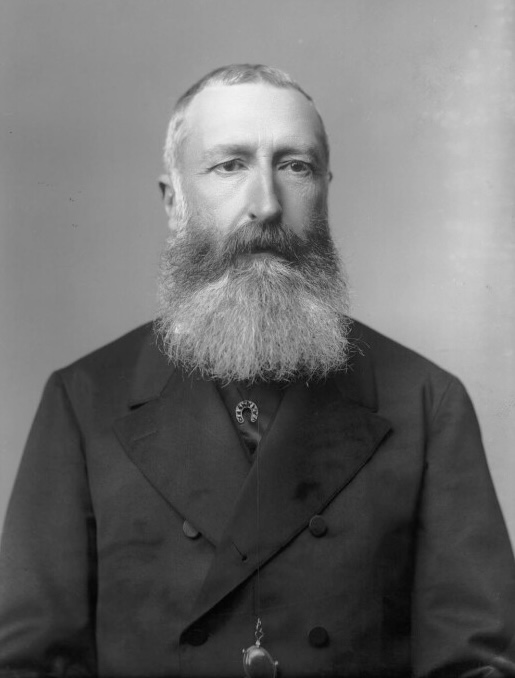
Leopold II of Belgium (1835–1909) was king of the Belgians from 1865 to 1909 and the sovereign owner of the Congo Free State from 1885 until Belgium annexed it in 1908.
He turned an internationally recognized claim in Central Africa into a coercive extraction regime. State agents and concession companies compelled Congolese communities to supply rubber and ivory through taxation in labor, hostage-taking, flogging, village destruction and killing. The demographic loss cannot be counted exactly because no reliable census preceded conquest, but historians agree that violence, hunger, disease and collapsing birth rates caused a catastrophe numbering in the millions.
Key takeaways
- Leopold II personally ruled the Congo Free State from 1885 to 1908 while serving as Belgium’s constitutional monarch.
- Rubber and ivory extraction depended on forced labor, hostage-taking, flogging, village destruction, killing and mutilation.
- Adam Hochschild estimated around 10 million demographic losses between 1880 and 1920, although missing census data prevent an exact total.
- The 1904 Casement Report and Leopold’s 1905 inquiry both confirmed systematic abuses rather than isolated misconduct.
- Belgium annexed the Congo in 1908, but colonial exploitation and racial hierarchy continued until independence in 1960.
Who Leopold II was
Born in Brussels on 9 April 1835, Leopold Louis Philippe Marie became Belgium’s second king on 17 December 1865. Frustrated by Belgium’s lack of colonies, he financed geographical associations and employed the explorer Henry Morton Stanley in 1879 to obtain treaties from African rulers along the Congo River. These agreements were made across language and legal asymmetries and were used to claim sovereignty.
At the Berlin Conference of 1884–1885, European powers accepted Leopold’s International Association of the Congo as the authority over a vast territory. On 1 July 1885, he became sovereign of the Congo Free State in a personal capacity: the territory was not initially a Belgian colony, but Leopold depended on Belgian officers, capital and diplomatic support. Its history is central to the wider Belgian Empire.
How his system of power worked
Leopold declared much uncultivated land state property and treated its produce as a government monopoly. Congolese communities faced taxes payable in rubber or labor rather than money. The Force Publique—an army commanded largely by European officers and composed of forcibly recruited or conscripted African soldiers—enforced quotas.
Officials and concession companies received incentives tied to output and costs. The Anglo-Belgian India Rubber Company, known as ABIR, and the Société Anversoise operated some of the most notorious concessions. Soldiers seized women and children as hostages, flogged workers with the chicotte, burned settlements and killed people when quotas were missed. Severed hands were demanded to account for ammunition; surviving records and photographs show that the practice also accompanied killings, mutilation and terror.
“The rubber from this district has cost hundreds of lives, and the scenes I have witnessed, unable to help, have been almost enough to make me wish I were dead.” — William Henry Sheppard, 1899, letter published in the Presbyterian.
The documented record and human cost
Rubber exports surged as the pneumatic-tire economy expanded. Historian Jules Marchal calculated that Congo rubber exports rose from roughly 100 metric tons in 1887 to about 6,000 metric tons in 1901. In 1902, Leopold reportedly received around 70 million Belgian francs from the Congo system, according to biographer Adam Hochschild’s synthesis of Belgian records; conversion into modern currency is inherently unstable.
No defensible exact death toll exists. In 1919, Belgian official Major Charles C. Liebrechts wrote that the population had fallen by half, while later writers applied that proportion to uncertain baseline estimates. Adam Hochschild popularized an approximate loss of 10 million people for 1880–1920 in his 1998 book King Leopold’s Ghost. Historian Jan Vansina estimated in 2010 that the population of the equatorial forest declined by at least half between 1880 and 1920. Scholars including Jean Stengers warned that absent pre-1920 census data make a single Congo-wide total impossible. The documented conclusion is mass demographic collapse caused by direct killing, starvation, disease, displacement and reduced fertility.
| Date | Event |
|---|---|
| 17 December 1865 | Leopold becomes the second king of the Belgians. |
| 1879 | Leopold hires Henry Morton Stanley to advance his Congo project. |
| 15 November 1884–26 February 1885 | The Berlin Conference establishes rules enabling European claims in Africa. |
| 1 July 1885 | Leopold assumes sovereignty over the Congo Free State. |
| 1890 | The Brussels Conference Act pledges suppression of the slave trade while Leopold’s forced-labor system expands. |
| 1895 | The Stokes affair exposes arbitrary execution by Congo Free State officials. |
| 1904 | Roger Casement’s report documents killings, mutilation, hostage-taking and forced rubber collection. |
| 15 November 1908 | Belgium annexes the territory as the Belgian Congo. |
| 17 December 1909 | Leopold dies in Laeken, Belgium. |
Leopold’s defence and the evidence against it
Leopold presented his enterprise as humanitarian, anti-slavery and civilizing. His agents cited roads, steamships, missions and campaigns against Arab-Swahili slave traders. In a 1906 interview, he denied responsibility for abuses and argued that isolated misconduct had been exaggerated by British commercial rivals and Protestant missionaries.
Leopold’s defence was that abuses were exceptions within a reforming state; the documentary record shows that coercion was structurally connected to quotas, monopolies and rewards.
The 1904 Casement Report, based on direct interviews and field investigation by British consul Roger Casement, corroborated missionary testimony. Leopold’s own Commission of Inquiry, appointed in 1904 and reporting in 1905, confirmed hostage-taking, excessive labor demands and violent coercion. Reform decrees followed, but enforcement remained compromised because extraction continued to fund the state and enrich its sovereign. The Congo Reform Association, founded by E. D. Morel and Casement in 1904, converted evidence from Congolese witnesses, missionaries, photographs and shipping records into an international campaign.
Afterlife, accountability and memory
Under diplomatic pressure, Leopold surrendered the Congo Free State to Belgium on 15 November 1908. He destroyed part of his Congo archive before the transfer, reportedly saying that Belgium had no right to know what he had done there. He died on 17 December 1909 without criminal trial.
Belgian colonial government ended Leopold’s personal domain but preserved racial hierarchy, forced labor and extractive rule within the Belgian Empire. After the Democratic Republic of the Congo became independent on 30 June 1960, Belgian public culture continued to honor Leopold through statues and place names. During the global anti-racism protests of June 2020, several monuments were defaced or removed; Antwerp authorities removed one statue on 9 June 2020.
On 30 June 2020, King Philippe expressed his “deepest regrets” for colonial violence but did not issue a formal state apology. In December 2022, Belgium’s federal parliament failed to agree on an apology after a two-year commission. Present-day debate concerns not whether systematic abuse occurred, but how institutions should acknowledge responsibility, return cultural property, open archives and teach Congolese testimony alongside administrative records.
Sources & further reading
- Encyclopaedia Britannica: Leopold II
- Roger Casement, Report on the Administration of the Congo Free State (1904), Internet Archive
- Adam Hochschild, King Leopold’s Ghost, Macmillan
- Royal Museum for Central Africa: Colonial History
- Encyclopedia of Africa: Jan Vansina, Cambridge University Press
- BBC News: Belgium’s colonial legacy in the Congo
Frequently asked questions
- What did Leopold II do in the Congo?
- From 1885 to 1908, Leopold II personally controlled the Congo Free State and imposed rubber and ivory extraction through labor taxes. State officials and concession companies used the Force Publique to seize hostages, flog workers, burn villages and kill people when quotas were unmet. Leopold surrendered the territory to Belgium on 15 November 1908 after international investigations confirmed systematic abuses.
- How many Congolese people died under Leopold II?
- No exact total is possible because no reliable census preceded Leopold’s rule. Adam Hochschild’s 1998 synthesis estimated a demographic loss of about 10 million between 1880 and 1920. Jan Vansina wrote in 2010 that parts of the equatorial forest lost at least half their population. Direct violence, disease, hunger, displacement and falling birth rates all contributed.
- Did Leopold II ever visit the Congo Free State?
- No. Leopold II never visited the Congo Free State during his personal rule from 1885 to 1908. He directed policy from Belgium through administrators, military officers and concession companies. Henry Morton Stanley helped establish his territorial claims from 1879, while the Force Publique and private companies enforced rubber and labor demands within Central Africa.
- Why were hands cut off in Leopold’s Congo?
- Force Publique soldiers were required to account for ammunition, commonly by producing the severed right hand of a person allegedly killed. Evidence from the 1890s and the 1904 Casement Report shows hands were also taken amid punitive raids and mutilation. The practice became a documented symbol of a wider quota system enforced through hostage-taking, flogging, killing and village destruction.
- Was Leopold II punished for the Congo atrocities?
- Leopold II was never criminally prosecuted. International pressure following Roger Casement’s 1904 report, E. D. Morel’s campaign and Leopold’s 1905 Commission of Inquiry forced institutional change. Belgium annexed the Congo Free State on 15 November 1908. Leopold died on 17 December 1909, having transferred the territory but retained much of the wealth generated by its exploitation.
Related chapters
People & institutions
- Jallianwala Bagh massacre: Amritsar, 1919
- Cecil Rhodes: Empire, Mining and Colonial Rule
- Christopher Columbus: Voyages, Enslavement and Colonial Rule
- Elmina Castle: Gold, Slavery and Colonial Power
- Frantz Fanon: Psychiatrist of Colonial Violence
- Hernán Cortés: Conquest, Colonial Rule and Legacy
- Force Publique: Leopold II’s Colonial Army in Congo
- Kwame Nkrumah: Independence, Pan-Africanism and Power
- Lothar von Trotha: Architect of Colonial Extermination
Sources & further reading
CC BY 4.0 ·