Lothar von Trotha: Architect of Colonial Extermination
Lothar von Trotha commanded Germany’s genocidal war against the Herero and Nama in 1904–1905, issuing an extermination order and enforcing desert expulsion.
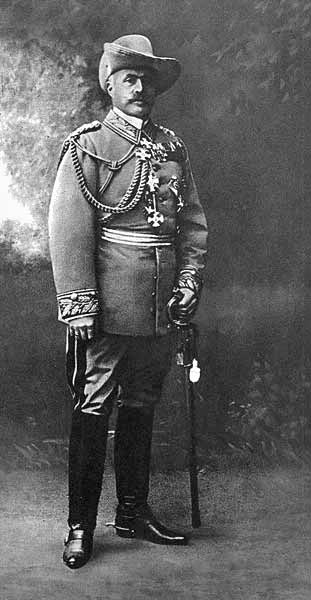
Lothar von Trotha (1848–1920) was a German general and colonial governor who directed the genocidal war against the Herero and Nama in German South West Africa, now Namibia, in 1904–1905.
After commanding colonial campaigns in East Africa and serving in China during the Boxer War, Trotha brought a doctrine of racial warfare to the German Empire’s largest African colony. His forces defeated Herero fighters at Waterberg, drove families into the Omaheke desert, blocked their return and confined survivors in lethal camps. The resulting Herero and Nama genocide killed tens of thousands through gunfire, thirst, starvation, disease, exposure and forced labor.
Key takeaways
- Lothar von Trotha commanded Germany’s colonial forces during the 1904 campaign that initiated the genocide of the Herero and Nama.
- His October 2, 1904 extermination order authorized shooting Herero people and enforced their expulsion into the waterless Omaheke desert.
- Historical estimates place Herero deaths at 60,000–80,000 and Nama deaths at about 10,000 during the 1904–1908 genocide.
- Berlin cancelled Trotha’s order in December 1904, but imprisonment, forced labor, disease, dispossession and lethal camp conditions continued.
- Germany recognized the genocide in 2021, but major Herero and Nama organizations rejected the bilateral agreement’s process and reparations framework.
Who Lothar von Trotha was
Adrian Dietrich Lothar von Trotha was born in Magdeburg on July 3, 1848, and entered the Prussian Army in 1865. He served in the Austro-Prussian War of 1866 and Franco-Prussian War of 1870–1871 before becoming a specialist in colonial coercion.
As commander of the Schutztruppe in German East Africa from 1894 to 1897, Trotha suppressed African resistance. In 1900, he commanded the 1st East Asian Infantry Brigade in the international expedition dispatched against the Boxer movement in Qing China. Kaiser Wilhelm II appointed him commander of the Schutztruppe in German South West Africa on May 3, 1904; he arrived on June 11 and replaced Governor Theodor Leutwein as military commander.
Trotha was recalled in November 1905 and retired from active service in 1906. He died in Bonn on March 31, 1920, aged 71.
How Trotha exercised colonial power
Trotha commanded an imperial army equipped with rifles, machine guns and artillery, supported by railways, telegraph lines, settler intelligence and Berlin’s finance. He rejected Leutwein’s preference for negotiated submission and treated the Herero population—not only armed combatants—as an enemy to be removed.
At Waterberg on August 11, 1904, approximately 4,000–6,000 German troops attempted to encircle the main Herero concentration. The incomplete cordon left an eastern route toward the water-scarce Omaheke. German patrols then guarded water points and prevented refugees from returning. On October 2, 1904, Trotha issued his Vernichtungsbefehl, or extermination order.
“Within the German borders every Herero, with or without a rifle, with or without cattle, will be shot. I shall no longer accept women and children.” — Lothar von Trotha, 1904, Proclamation to the Herero People
Berlin rescinded the order on December 8, 1904, following objections that included political, missionary and economic concerns. The underlying violence continued through imprisonment, forced labor, malnutrition and disease. From 1905, surviving Herero and Nama were held in camps including Shark Island, Swakopmund and Lüderitz.
Documented record and death toll
German colonial records counted about 80,000 Herero before the war and 15,130 afterward, implying the loss of roughly 64,870 people, or about 81%, by 1911. The 1918 British Report on the Natives of South-West Africa and Their Treatment by Germany, commonly called the Blue Book, used colonial evidence to document mass death, dispossession and abuse. Modern summaries frequently estimate 60,000–80,000 Herero deaths and about 10,000 Nama deaths during 1904–1908. Isabel V. Hull’s 2005 study reports that approximately 75%–80% of the Herero and around 50% of the Nama died; exact totals remain disputed because German records were incomplete and communities were dispersed.
“The Herero people must leave the country.” — Lothar von Trotha, 1904, Proclamation to the Herero People
The killings formed only part of the Herero and Nama genocide. German authorities confiscated land and livestock, prohibited independent African landholding and forced survivors into a controlled labor system. Prisoners were subjected to medical and racial research; human remains were sent to German institutions.
Chronology of Trotha’s campaigns
| Date | Event |
|---|---|
| 1865 | Trotha enters the Prussian Army at age 17. |
| 1894–1897 | He commands the Schutztruppe in German East Africa for approximately 3 years. |
| 1900 | He commands Germany’s 1st East Asian Infantry Brigade during the Boxer War. |
| May 3, 1904 | Kaiser Wilhelm II appoints Trotha commander in German South West Africa. |
| August 11, 1904 | Approximately 4,000–6,000 German troops attack at Waterberg. |
| October 2, 1904 | Trotha issues his extermination order against the Herero. |
| December 8, 1904 | Berlin rescinds the order after approximately 2 months. |
| 1905 | Trotha directs operations against the Nama; concentration and forced-labor camps expand. |
| November 1905 | He is recalled after approximately 17 months in the colony. |
| 1906 | Trotha retires from active military service. |
| March 31, 1920 | He dies in Bonn at age 71. |
| May 28, 2021 | Germany officially recognizes the 1904–1908 violence as genocide. |
The chronology shows a shift from battlefield action to demographic destruction. Trotha’s October 1904 order gave explicit form to a policy already enacted after Waterberg; its December 1904 cancellation did not restore confiscated land, release prisoners or end the German Empire’s coercive labor regime.
Trotha’s defence and the imperial response
Trotha defended his strategy as a necessary “race war.” In a letter dated October 4, 1904, he argued that the Herero nation had to be destroyed or expelled and claimed that accepting women and children would endanger German troops. He presented terror as deterrence and exterminatory expulsion as military necessity.
This defence collapses the distinction between fighters and civilians. Herero families at Waterberg included children, older people and noncombatants; Trotha’s proclamation expressly targeted people regardless of whether they carried weapons. His policy also continued after the principal Herero field force had been broken.
German officials did not speak with one voice. Chancellor Bernhard von Bülow sought cancellation of the extermination order, while missionaries and some colonial administrators condemned its consequences. Yet the imperial government financed the war, retained the colony, imprisoned survivors and preserved settler gains. By 1907, German military spending on the conflict had risen to roughly 585 million marks according to contemporary Reich budget accounting cited by historian Horst Drechsler. Institutional disagreement over method did not end colonial dispossession.
Afterlife, responsibility and memory today
Trotha became a central figure in debates over German colonial genocide because his written order makes intent unusually explicit. The United Nations’ 1985 Whitaker Report identified the destruction of the Herero among genocides of the 20th century. In 2004, German Development Minister Heidemarie Wieczorek-Zeul apologized in Namibia and acknowledged German responsibility, 100 years after Waterberg.
In 2007, members of the von Trotha family traveled to Namibia and apologized to Herero representatives. Germany returned human remains in several ceremonies beginning in 2011. On May 28, 2021, Germany officially recognized the 1904–1908 killings as genocide and announced a €1.1 billion development program over 30 years; the agreement was negotiated with Namibia but rejected by major Herero and Nama representative bodies for excluding them from direct negotiations and for framing payment as development aid rather than legally enforceable reparations.
Trotha’s name remains attached to streets and military commemoration controversies in Germany. His importance is not that he acted alone: it is that he converted the German Empire’s racial hierarchy, settler demands and military capacity into an explicit program of expulsion and destruction.
Sources & further reading
- Encyclopaedia Britannica: Herero
- United States Holocaust Memorial Museum: Herero and Nama Genocide
- German Federal Foreign Office: Joint Declaration with Namibia
- Isabel V. Hull, Absolute Destruction — Cornell University Press
- Jürgen Zimmerer and Joachim Zeller, Genocide in German South-West Africa — Merlin Press
- BBC News: Germany officially recognises colonial-era Namibia genocide
Frequently asked questions
- Who was Lothar von Trotha?
- Lothar von Trotha (1848–1920) was a Prussian and German general who served in East Africa, China and German South West Africa. Appointed colonial commander in May 1904, he directed the campaign against the Herero and later the Nama. His October 2, 1904 extermination order made him a principal architect of the Herero and Nama genocide.
- What did Lothar von Trotha’s extermination order say?
- Issued on October 2, 1904, Trotha’s proclamation ordered the Herero to leave German-claimed territory and declared that every Herero found within it, armed or unarmed, would be shot. It stated that women and children would no longer be accepted. Berlin rescinded the order on December 8, 1904, after roughly 2 months, but mass death and imprisonment continued.
- How many Herero and Nama died under German colonial rule?
- For the 1904–1908 genocide, historians commonly estimate 60,000–80,000 Herero deaths and about 10,000 Nama deaths. German colonial counts recorded approximately 80,000 Herero before the war and 15,130 by 1911, an implied loss of 64,870, or about 81%. Isabel V. Hull’s 2005 study estimates that 75%–80% of Herero and around 50% of Nama died.
- Was Lothar von Trotha punished for the genocide?
- No. Trotha was recalled from German South West Africa in November 1905 and retired from active service in 1906, but he was never criminally prosecuted. He retained his military status and died in Bonn on March 31, 1920, aged 71. Germany did not officially recognize the 1904–1908 killings as genocide until May 28, 2021.
- Why is Lothar von Trotha still controversial today?
- Trotha remains controversial because his October 1904 order explicitly targeted the Herero as a people, while his forces drove refugees into the Omaheke desert and guarded water sources. Germany’s 2021 recognition of genocide and proposed €1.1 billion program over 30 years renewed disputes over direct participation, apology and reparations, particularly among Herero and Nama representative organizations.
Related chapters
People & institutions
- Jallianwala Bagh massacre: Amritsar, 1919
- Cecil Rhodes: Empire, Mining and Colonial Rule
- Christopher Columbus: Voyages, Enslavement and Colonial Rule
- Elmina Castle: Gold, Slavery and Colonial Power
- Frantz Fanon: Psychiatrist of Colonial Violence
- Hernán Cortés: Conquest, Colonial Rule and Legacy
- Force Publique: Leopold II’s Colonial Army in Congo
- Kwame Nkrumah: Independence, Pan-Africanism and Power
- Leopold II of Belgium: Rule, Atrocities and Legacy
Sources & further reading
CC BY 4.0 ·