Frantz Fanon: Psychiatrist of Colonial Violence
Frantz Fanon exposed colonialism's psychological violence, joined Algeria's liberation struggle, and shaped anticolonial and Black radical thought.
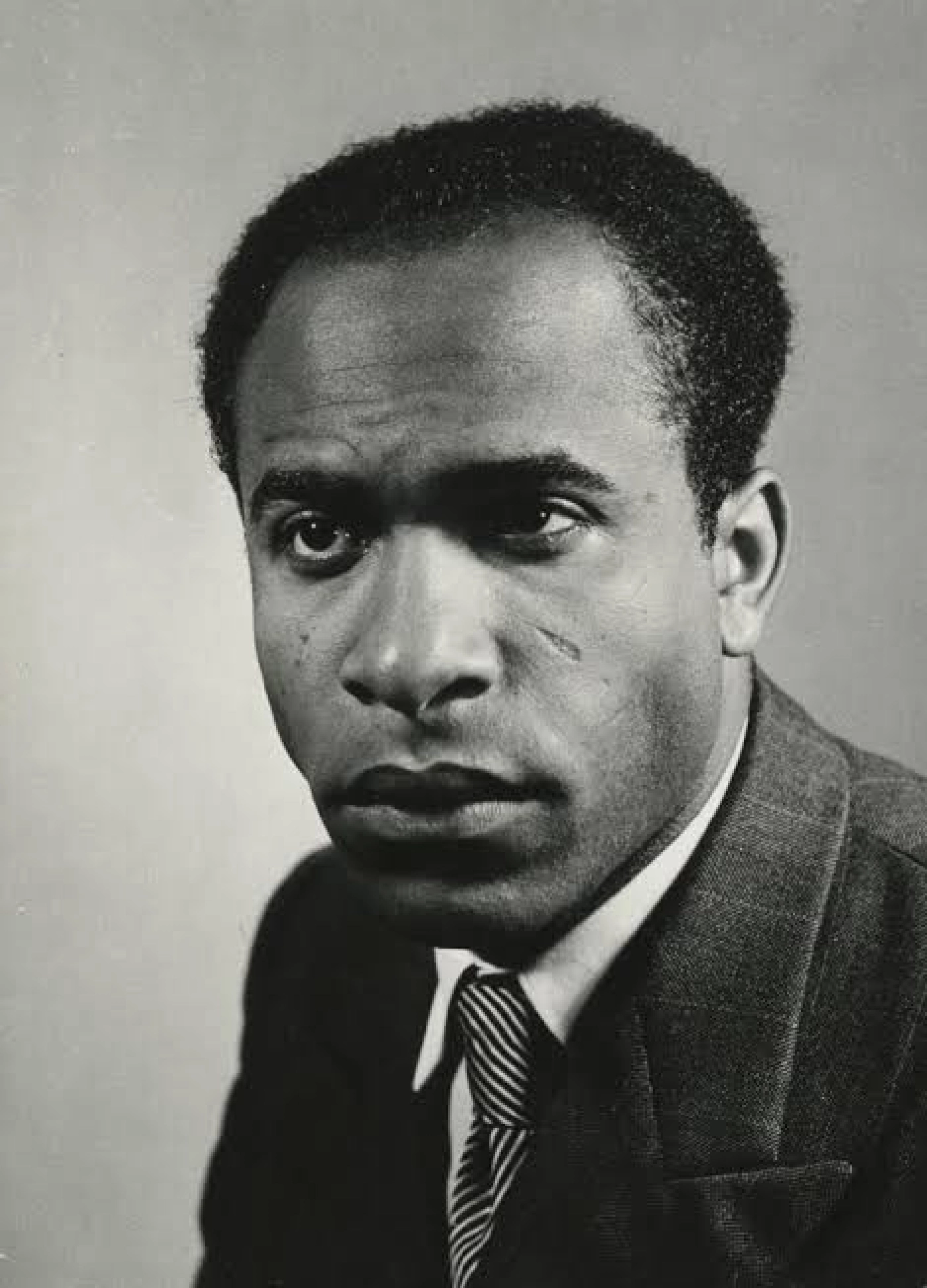
Frantz Omar Fanon (20 July 1925–6 December 1961) was a Martinican-born psychiatrist, anticolonial theorist and National Liberation Front activist who analyzed how colonial domination entered the mind, body and social order.
Fanon treated psychiatric patients in French-ruled Algeria while confronting a system built on conquest, racial hierarchy and coercion. His major books—Black Skin, White Masks (1952), A Dying Colonialism (1959) and The Wretched of the Earth (1961)—joined clinical observation to revolutionary politics. They remain central to psychiatry, postcolonial studies, Black thought and debates over political violence.
Key takeaways
- Frantz Fanon linked racial alienation and psychiatric injury to the institutions, language and coercive force of colonial government.
- While treating patients in Algeria from 1953, Fanon concluded that colonial psychiatry frequently disguised political violence as native pathology.
- Fanon joined the FLN, resigned from French service in 1956 and represented Algeria's provisional government in Ghana in 1960.
- His 1961 analysis defended decolonization while warning that national elites could preserve colonial extraction after formal independence.
- Fanon's influence reaches psychiatry, Black radicalism and postcolonial studies, but his treatment of violence and gender remains disputed.
Who Frantz Fanon was
Born in Fort-de-France, Martinique, in 1925, Fanon grew up under French colonial rule and served in the Free French forces during the Second World War. After studying medicine and psychiatry in Lyon, he trained under François Tosquelles at Saint-Alban psychiatric hospital, where institutional psychotherapy challenged custodial asylum practices.
In 1953 Fanon became head of a psychiatric ward at Blida-Joinville Hospital in French Algeria. He adapted social therapy to local conditions, but colonial segregation constrained treatment and reproduced the injuries presented by patients. After the Algerian War began in 1954, he secretly aided the National Liberation Front (FLN), treating combatants and serving its political organization. He resigned from the French colonial service in 1956 and was expelled in 1957.
| Date | Event |
|---|---|
| 20 July 1925 | Born in Fort-de-France, Martinique |
| 1943 | Left Martinique to join the Free French war effort |
| 1952 | Published Black Skin, White Masks |
| 1953 | Appointed at Blida-Joinville Hospital, Algeria |
| 1 November 1954 | FLN launched the Algerian uprising |
| 1956 | Resigned from the colonial psychiatric service |
| 1957 | Expelled from Algeria and joined FLN work in Tunis |
| 1959 | Published A Dying Colonialism |
| 1960 | Appointed FLN provisional government's ambassador to Ghana |
| 1961 | Published The Wretched of the Earth and died on 6 December |
| 5 July 1962 | Algeria became independent |
Colonial power and the colonized mind
Fanon described colonialism as an organized system, not merely individual prejudice. Military conquest seized territory; law divided populations; labor and land regimes transferred wealth; schools and media privileged the colonizer's language and worldview; policing made racial categories material. Colonial psychiatry could then portray resistance or distress as evidence of native defect rather than responses to domination.
In Black Skin, White Masks, Fanon examined how racism compelled Black subjects to see themselves through a white colonial gaze. Language, sexuality, professional recognition and bodily self-perception became sites of hierarchy. At Blida, he rejected crude biological theories promoted by figures such as Antoine Porot, whose Algiers school attributed supposed intellectual inferiority and impulsiveness to North Africans.
“The colonial world is a world cut in two.” — Frantz Fanon, 1961, The Wretched of the Earth
For Fanon, decolonization had to dismantle this partition rather than replace European officials with a local elite. He warned that a post-independence “national bourgeoisie” might inherit the colonial state, broker foreign capital and leave peasants and workers dispossessed.
Documented record: war, medicine and death
The Algerian War provides the measurable setting for Fanon's work. French authorities deployed approximately 400,000 troops in Algeria by 1956, according to historian Alistair Horne's 1977 account. The conflict involved torture, executions, disappearances, forced resettlement and attacks on civilians by French forces, settler militias and the FLN.
Death estimates remain contested. French official figures reported 141,000 Algerian rebel fighters and 18,000 Algerian civilians killed during 1954–1962. Historian Charles-Robert Ageron estimated roughly 250,000 Algerian Muslim deaths in work published in 1992; historian Benjamin Stora has commonly cited a range of 300,000–400,000 in publications including his 2001 history. The post-independence Algerian state asserted 1.5 million “martyrs,” a commemorative figure institutionalized after 1962. French military deaths are generally placed near 25,000 for 1954–1962; approximately 2,800 European civilians were killed, according to French official accounting summarized by historians.
French forces forcibly displaced at least 2 million Algerians into camps and controlled settlements by 1960; Michel Cornaton's 1967 study estimated the uprooted population at more than 2.35 million. These were not background statistics: displacement, torture and racialized surveillance supplied the clinical and political reality Fanon interpreted.
The defense of empire—and Fanon's answer
French governments defended rule in Algeria by insisting that Algeria was legally part of France, not a colony. Officials invoked modernization, schools, medicine, roads and political integration. Yet the 1947 Organic Statute maintained a two-college electoral structure that gave approximately 1 million Europeans political weight disproportionate to roughly 8 million Muslim Algerians around 1954. Reforms were repeatedly undermined by settler power, electoral fraud and repression.
Defenders of French counterinsurgency also argued that emergency methods were necessary against FLN bombings and assassinations. General Jacques Massu's paratroopers used systematic torture during the 1957 Battle of Algiers; General Paul Aussaresses publicly admitted in 2000 that torture and summary executions had been routine. The FLN also killed civilians and rivals, but those crimes did not legalize torture or erase France's responsibility as the occupying state.
Fanon's most disputed answer was that anticolonial violence could break imposed passivity and restore agency. He was diagnosing a coercive political field, not claiming that every act of violence was emancipatory.
Fanon's argument is often reduced to a celebration of bloodshed, partly through selective reception of Jean-Paul Sartre's 1961 preface. Fanon's own text also warned about chauvinism, authoritarian leadership and the replacement of colonial rulers by predatory national elites.
Afterlife, influence and contested memory
Diagnosed with leukemia in 1960, Fanon sought treatment in the Soviet Union and later the United States. He died in Bethesda, Maryland, aged 36, on 6 December 1961 and was buried in Algeria. Independence followed on 5 July 1962, after the March 1962 Évian Accords.
Fanon influenced Steve Biko and Black Consciousness in South Africa, the Black Panther Party in the United States, liberation movements in Portuguese Africa, Palestinian intellectual debates and later postcolonial scholarship. Edward Said, Stuart Hall, Homi K. Bhabha and Achille Mbembe extended or disputed his concepts. His account of racial embodiment has also informed studies of policing, migration and media representation.
His legacy remains contested on three fronts: whether he overstated violence's capacity to create political subjecthood; whether his writing adequately addressed women beyond discussing veiling and colonial gender strategy; and whether governments citing him reproduced the centralized, extractive elite he predicted. In France, official memory long obscured colonial torture: President Emmanuel Macron acknowledged in 2018 that mathematician Maurice Audin had been tortured and killed or tortured to death by the French army in 1957, and in 2021 recognized that lawyer Ali Boumendjel was tortured and murdered by French forces in 1957.
Fanon matters because he connected intimate suffering to institutions. His clinical and political work asks who defines sanity in an occupied society, who benefits from “order,” and why nominal independence can preserve colonial distributions of land, capital and force.
Sources & further reading
Frequently asked questions
- Who was Frantz Fanon?
- Frantz Fanon was a Martinican-born psychiatrist, writer and anticolonial activist who lived from 1925 to 1961. He worked at Blida-Joinville Hospital in French Algeria from 1953, joined the FLN during the 1954–1962 Algerian War, and wrote *Black Skin, White Masks* and *The Wretched of the Earth*.
- What did Frantz Fanon believe about colonialism?
- Fanon argued that colonialism was a total structure of military force, economic seizure, racial classification and psychological domination. In his 1952 and 1961 books, he showed how colonial power shaped language, bodily perception and mental health. He maintained that political independence was insufficient if local elites preserved colonial institutions and foreign economic control.
- Did Frantz Fanon support violence?
- In *The Wretched of the Earth* (1961), Fanon argued that violence could disrupt colonial domination and restore agency to colonized people. He wrote amid the 1954–1962 Algerian War, in which French forces used systematic torture and the FLN also attacked civilians. His position was neither pacifist nor a blanket endorsement of indiscriminate killing.
- Was Frantz Fanon Algerian?
- Fanon was born in Martinique in 1925 and was legally French under colonial rule. He moved to Algeria as a psychiatrist in 1953, joined its liberation struggle, and served the FLN's provisional government. He identified politically with independent Algeria, where he was buried after dying in the United States on 6 December 1961.
- Why is Frantz Fanon still important today?
- Fanon remains influential because he connected racism's psychological effects to law, policing, labor and imperial power. His books shaped Steve Biko, the Black Panther Party and postcolonial scholarship after 1961. Contemporary readers also use his warning that nominally independent states can retain colonial extraction through national elites allied with foreign capital.
Related chapters
People & institutions
- Jallianwala Bagh massacre: Amritsar, 1919
- Cecil Rhodes: Empire, Mining and Colonial Rule
- Christopher Columbus: Voyages, Enslavement and Colonial Rule
- Elmina Castle: Gold, Slavery and Colonial Power
- Hernán Cortés: Conquest, Colonial Rule and Legacy
- Force Publique: Leopold II’s Colonial Army in Congo
- Kwame Nkrumah: Independence, Pan-Africanism and Power
- Leopold II of Belgium: Rule, Atrocities and Legacy
- Lothar von Trotha: Architect of Colonial Extermination
Sources & further reading
CC BY 4.0 ·