Cecil Rhodes: Empire, Mining and Colonial Rule
Cecil Rhodes built wealth and political power through diamonds, racial rule and armed colonisation, leaving a contested legacy across southern Africa.
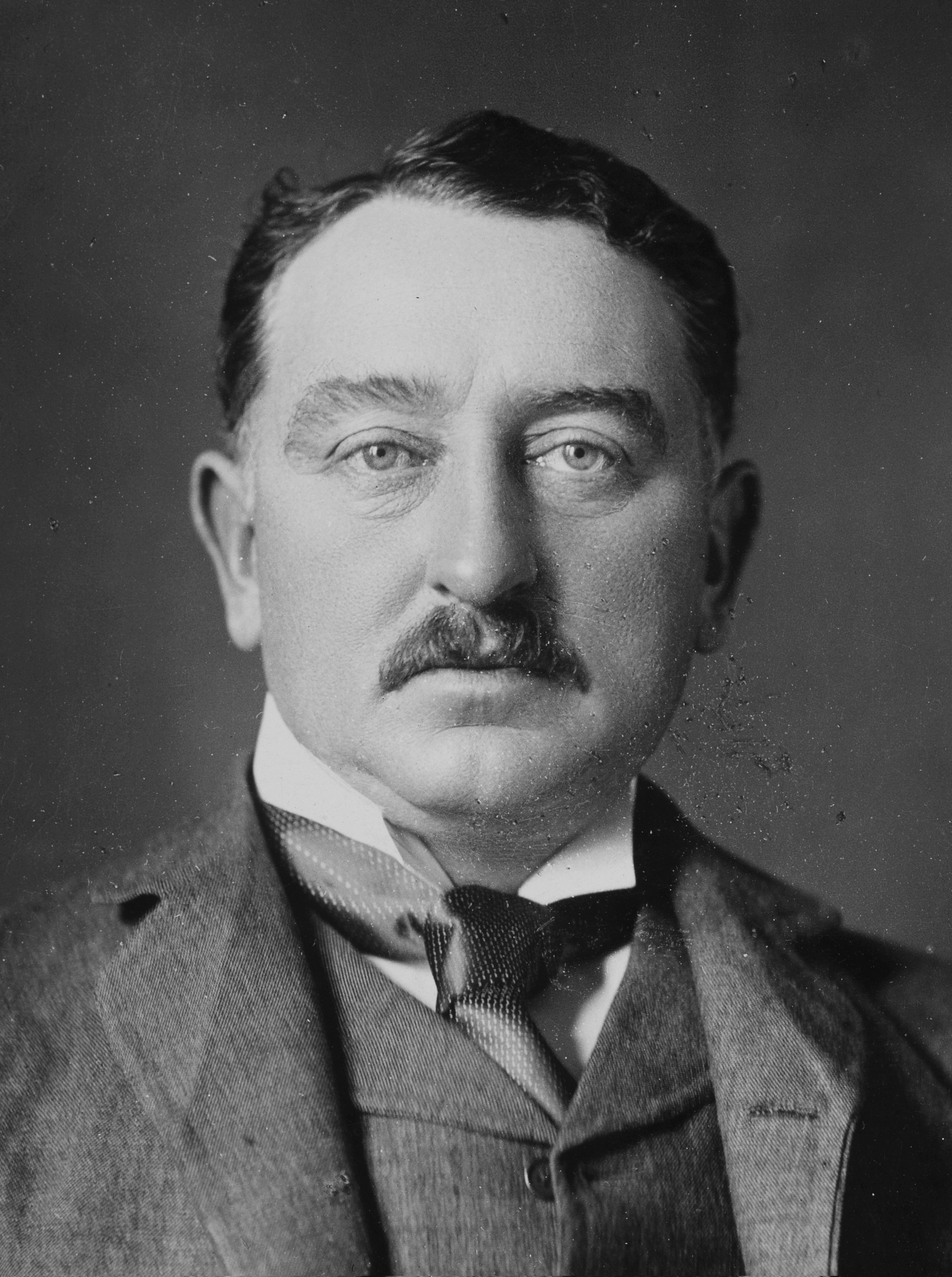
Cecil John Rhodes (1853–1902) was a British imperialist, mining magnate and Cape Colony prime minister who used corporate monopoly, racial legislation and armed conquest to expand British power across southern Africa.
Rhodes founded the De Beers diamond combine in 1888, controlled the British South Africa Company (BSAC), and gave his name to Rhodesia in 1895. His career joined private capital to the coercive authority of the British Empire: African land, minerals and labour were transferred into settler and corporate hands while Black political rights were deliberately restricted.
Key takeaways
- Cecil Rhodes joined diamond monopoly, political office and corporate government to expand British colonial control across southern Africa.
- De Beers, incorporated in 1888, dominated diamond production through consolidation and a coercive migrant-labour compound system.
- The chartered British South Africa Company conquered territory, imposed taxes and administered African populations for private profit.
- Rhodes’s 1892 and 1894 legislation restricted African political rights and pressured Black men into colonial wage labour.
- The Rhodes Scholarships preserved his name, while Rhodes Must Fall exposed the violence and dispossession behind his philanthropy.
Who Cecil Rhodes was
Born in Bishop’s Stortford, England, on 5 July 1853, Rhodes reached Natal in 1870 and entered the Kimberley diamond fields in 1871. By combining claims, capital and London finance, he became one of the era’s richest businessmen. De Beers Consolidated Mines, formed in 1888, brought about 90% of contemporary global diamond production under its control, according to Robert Rotberg’s 1988 biography.
Rhodes entered the Cape Parliament in 1881 and served as prime minister from 17 July 1890 until 12 January 1896. He advocated a British-controlled route from the Cape to Cairo, but the railway was never completed as one continuous imperial line. His politics were white-supremacist: he treated British expansion as a civilising entitlement and African autonomy as an obstacle.
“I contend that we are the finest race in the world and that the more of the world we inhabit the better it is for the human race.” — Cecil Rhodes, 1877, Confession of Faith
How Rhodes accumulated and exercised power
Rhodes converted mineral wealth into political authority. De Beers used acquisitions and production controls to dominate diamonds; its closed compounds confined African migrant workers, subjected them to searches and restricted movement. The compound system became an important institutional precursor of labour controls later extended across South Africa.
In 1889, Queen Victoria granted the BSAC a royal charter authorising it to make treaties, administer territory, maintain police and exploit minerals. Rhodes’s agents obtained the disputed Rudd Concession in 1888 from Lobengula, king of the Ndebele, after presenting it as narrower than the powers the company subsequently claimed. The Pioneer Column, about 200 settlers and 500 BSAC police according to historian Terence Ranger’s 1967 account, occupied Mashonaland in 1890.
Cape legislation reinforced dispossession. The Glen Grey Act of 1894 imposed a labour tax of 10 shillings annually on eligible African men who could not show employment for at least 3 months in the preceding year, while replacing communal tenure with restricted individual allotments. Rhodes defended the measure as a means to compel wage labour.
Documented record: conquest, law and violence
The BSAC invaded Lobengula’s kingdom in the First Matabele War of 1893–1894. Maxim guns helped small company forces defeat much larger Ndebele formations. At the Shangani battle on 25 October 1893, company reports counted about 1,500 Ndebele dead; historian Thomas Pakenham, writing in 1991, described estimates reaching roughly 1,500, while contemporary colonial counts are inherently uncertain.
The Ndebele and Shona uprisings of 1896–1897—often called the First Chimurenga—followed land seizures, cattle losses, taxes and abusive company government. Terence Ranger’s 1967 study estimated that roughly 10% of the Ndebele population died; later demographic reconstructions remain contested and do not support a single secure total. BSAC forces used executions, village burning and dynamite against cave refuges. Rhodes personally negotiated with Ndebele leaders in the Matopos in August 1896, but the settlement preserved settler occupation.
Rhodes also backed the Jameson Raid, launched on 29 December 1895 by about 500 armed men under Leander Starr Jameson against the South African Republic. The force surrendered on 2 January 1896 after fighting that killed about 30 raiders and 4 Boers, figures reported in contemporary official accounts. Exposure of Rhodes’s role forced his resignation as Cape prime minister on 12 January 1896.
Timeline of Rhodes’s career
| Date | Event |
|---|---|
| 5 July 1853 | Rhodes is born in Bishop’s Stortford, England. |
| 1871 | He enters the Kimberley diamond fields. |
| 1881 | He takes a seat in the Cape Parliament. |
| 13 March 1888 | De Beers Consolidated Mines is incorporated. |
| 30 October 1888 | Lobengula signs the disputed Rudd Concession. |
| 29 October 1889 | The BSAC receives its royal charter. |
| 12 September 1890 | The Pioneer Column reaches the site of Salisbury, now Harare. |
| 17 July 1890 | Rhodes becomes Cape Colony prime minister. |
| 1893–1894 | BSAC forces conquer the Ndebele kingdom. |
| 29 December 1895 | The Jameson Raid begins. |
| 12 January 1896 | Rhodes resigns as prime minister. |
| 1896–1897 | Ndebele and Shona communities resist company rule. |
| 26 March 1902 | Rhodes dies at Muizenberg, aged 48. |
In 1895, the company named its territories Rhodesia. Southern Rhodesia became the British colony that unilaterally declared white-minority independence in 1965 and became Zimbabwe in 1980; Northern Rhodesia became Zambia in 1964.
The defence of Rhodes—and what it omits
Defenders credit Rhodes with investment, railways, mining development and the Rhodes Scholarships. His 1899 will funded scholarships at Oxford; the first cohort arrived in 1903. Rhodes also cultivated a paternalist image, claiming that imperial government would bring order and material progress.
Rhodes’s philanthropy cannot be separated from the fortune and institutions that financed it: De Beers monopoly, migrant-labour discipline, colonial land acquisition and company conquest.
The defence fails when infrastructure is treated as politically neutral. Railways linked mines and settler farms to ports; taxation pushed Africans into labour markets; franchise rules protected white control. Under Rhodes’s Franchise and Ballot Act of 1892, the Cape property qualification rose from £25 to £75 and literacy requirements were tightened, disproportionately removing African voters. His scholarship bequest redistributed part of an imperial fortune without compensating communities dispossessed during its accumulation.
Afterlife, monuments and memory today
Rhodes died on 26 March 1902 and was buried in the Matopos, now Matobo Hills, in present-day Zimbabwe. De Beers survived him as a central institution of global diamond capitalism. The Rhodes Scholarships remain prestigious, administered by the Rhodes Trust, while their funding origin is part of continuing debate.
The Rhodes Must Fall movement began at the University of Cape Town on 9 March 2015. After sustained protest, the university removed Marion Walgate’s Rhodes statue on 9 April 2015. The campaign spread to Oxford, where Oriel College’s governing body voted in 2020 to support removal of its façade statue; in 2021 the college retained it, citing regulatory and financial barriers, while adding contextual work.
These disputes concern more than statues. Rhodes remains a symbol of how British imperial rule fused racial hierarchy, extractive business and military force. In South African history, his labour and franchise policies sit within the longer construction of segregation, although apartheid itself was formally instituted by the National Party after its 1948 election victory.
Sources & further reading
- Oxford Dictionary of National Biography: Cecil Rhodes
- Encyclopaedia Britannica: Cecil Rhodes
- South African History Online: Cecil John Rhodes
- University of Cape Town: Rhodes statue removed
- Oriel College: Independent Commission on Cecil Rhodes
- The National Archives: British South Africa Company records
Frequently asked questions
- Who was Cecil Rhodes?
- Cecil John Rhodes (1853–1902) was a British mining magnate, imperialist and prime minister of the Cape Colony from 1890 to 1896. He founded De Beers in 1888 and controlled the British South Africa Company, chartered in 1889. His companies and governments used monopoly, racial restrictions and armed conquest to seize land, minerals and labour across southern Africa.
- How did Cecil Rhodes make his money?
- Rhodes accumulated diamond claims at Kimberley and used backing from financiers, including the Rothschild bank, to consolidate competitors. De Beers Consolidated Mines was incorporated in 1888 and controlled about 90% of contemporary world diamond output, according to Robert Rotberg’s 1988 biography. Its profits rested partly on tightly controlled African migrant labour housed in closed compounds.
- What did Cecil Rhodes do in Zimbabwe?
- Rhodes’s British South Africa Company occupied Mashonaland in 1890 and conquered Lobengula’s Ndebele kingdom in 1893–1894. The company seized land, imposed taxes and governed through an armed police force. During the 1896–1897 uprisings, company forces conducted executions and burned settlements. The settler territory was named Rhodesia in 1895 and became Zimbabwe in 1980.
- Was Cecil Rhodes responsible for the Jameson Raid?
- Rhodes supported the raid launched by Leander Starr Jameson on 29 December 1895 against the South African Republic, although the precise operational chain remained disputed. About 500 raiders surrendered on 2 January 1896. Contemporary official accounts reported about 30 raiders and 4 Boers killed. Disclosure of Rhodes’s involvement forced his resignation as Cape prime minister on 12 January 1896.
- Why is Cecil Rhodes controversial today?
- Rhodes endowed the scholarships bearing his name through his 1899 will, but his wealth and authority came from diamond monopoly, coercive labour systems, racial disenfranchisement and colonial conquest. Rhodes Must Fall began in Cape Town on 9 March 2015, securing removal of the university’s statue on 9 April 2015 and prompting international disputes about monuments, universities and imperial wealth.
Related chapters
People & institutions
- Jallianwala Bagh massacre: Amritsar, 1919
- Christopher Columbus: Voyages, Enslavement and Colonial Rule
- Elmina Castle: Gold, Slavery and Colonial Power
- Frantz Fanon: Psychiatrist of Colonial Violence
- Hernán Cortés: Conquest, Colonial Rule and Legacy
- Force Publique: Leopold II’s Colonial Army in Congo
- Kwame Nkrumah: Independence, Pan-Africanism and Power
- Leopold II of Belgium: Rule, Atrocities and Legacy
- Lothar von Trotha: Architect of Colonial Extermination
Sources & further reading
CC BY 4.0 ·