Potosí: Silver, Forced Labor and Spanish Empire
Potosí was the Spanish Empire’s great silver-mining center, built on Indigenous coerced labor, mercury refining and Cerro Rico’s immense mineral wealth.
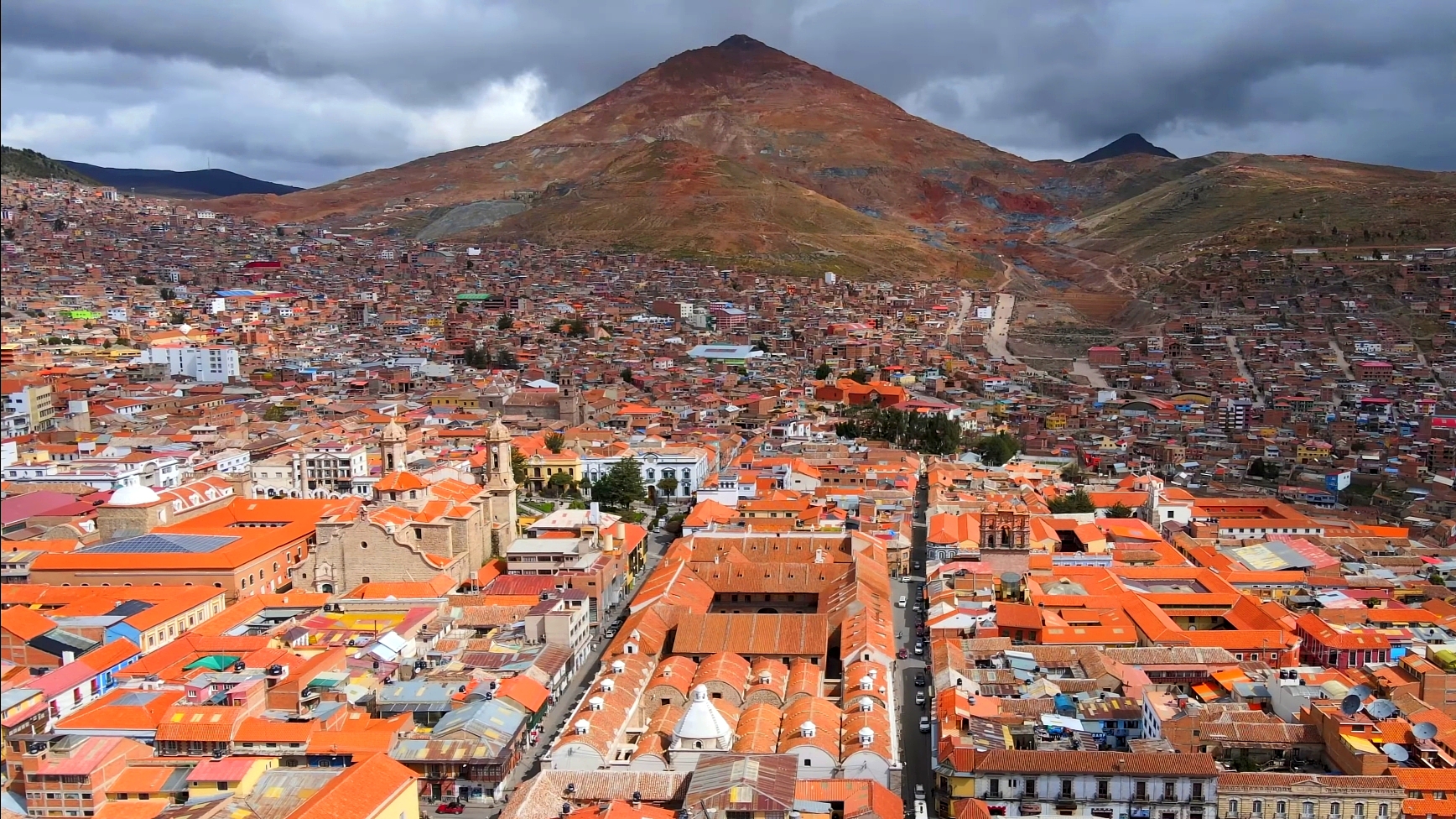
Potosí was a Spanish colonial mining city founded in 1545 beside Cerro Rico in present-day Bolivia, where silver extracted through Indigenous labor financed imperial trade while inflicting mass death, displacement and mercury exposure.
Known under Spanish rule as the Villa Imperial de Potosí, it stands at about 4,067 metres above sea level. Its history connects conquest, coerced labor and global capitalism: bullion moved from the Andes to Europe and across the Pacific, while the human and environmental costs remained concentrated in Indigenous communities. This hub places Potosí within the archive’s wider history of colonial extraction and data on its measurable consequences.
Key takeaways
- Potosí was founded in 1545 beside Cerro Rico and became the Spanish Empire’s most important American silver-mining center.
- Francisco de Toledo’s 1572–1575 reforms imposed a state-enforced mita that drafted approximately 13,500 Indigenous workers annually at its outset.
- Registered silver production peaked at approximately 7.1 million pesos in 1592, according to Garner and TePaske’s colonial treasury reconstruction.
- No reliable archive proves the often-repeated claim that 8 million people died at Potosí, although lethal exploitation and poisoning are extensively documented.
- UNESCO listed Potosí in 1987 and classified it as endangered in 2014 because continued mining threatened Cerro Rico’s physical stability.
What Potosí was
The Spanish founded Potosí in 1545 after an Indigenous prospector, Diego Huallpa, was traditionally credited with identifying Cerro Rico’s silver deposits. The settlement expanded with extraordinary speed: historian Peter Bakewell estimated that its population reached about 120,000 by 1573 and roughly 160,000 by 1610, although colonial censuses and later reconstructions differ. By the early 17th century it ranked among the largest urban centers in the Americas.
Potosí was not simply a mine. It was an imperial production complex containing shafts, ore mills, mercury-amalgamation works, reservoirs, markets, churches and the royal mint, the Casa de Moneda. Silver pesos struck there became internationally accepted currency, entering Atlantic commerce and the Manila galleon trade with China.
“I am rich Potosí, the treasure of the world, the king of mountains, the envy of kings.” — attributed to Potosí’s coat of arms in Bartolomé Arzáns de Orsúa y Vela, Historia de la Villa Imperial de Potosí, composed circa 1736.
The boast described imperial wealth, not its distribution. Mine owners, merchants, colonial officials and the Spanish Crown controlled the surplus; Indigenous workers and their families bore the most dangerous work.
How colonial power operated
Viceroy Francisco de Toledo reorganized Andean mining between 1572 and 1575. His ordinances adapted the Inca mit’a into a compulsory labor draft. Each year, designated communities across a vast recruitment zone had to send adult men to Potosí. Jeffrey Cole’s 1985 study calculated an initial annual levy of about 13,500 mitayos after Toledo’s reforms, with roughly one-third serving at the mines at any given time under rotating schedules.
Drafted workers received wages, but compulsion, quotas and colonial jurisdiction made the system forced labor. Pay often failed to cover food, tools, candles, travel and lodging. Families migrated with workers or supplied their subsistence, transferring hidden costs from mine owners to Indigenous villages. Some men evaded registration, fled their communities or paid substitutes, intensifying pressure on those who remained.
From 1572 onward, the patio process mixed crushed ore with mercury, salt and other reagents. Mercury largely came from Huancavelica in Peru, where forced workers faced poisoning and underground hazards. Potosí therefore depended upon linked extractive zones: one supplied silver ore, another supplied the toxic metal needed to refine it.
The Crown took the quinto real—nominally one-fifth, or 20%, of registered output in the 16th century—and controlled minting and mercury distribution. Smuggling means official records understate total production.
The documented record
Colonial accounts do not support a precise Potosí death toll. The frequently repeated claim that 8 million people died in its mines is associated with Eduardo Galeano’s 1971 Open Veins of Latin America, drawing loosely on earlier readings of Arzáns; historians including Peter Bakewell and Kris Lane regard it as impossible to verify from surviving demographic evidence. It should not be presented as a census-based total.
What is documented is sustained lethal exposure: collapses, dust-related lung disease, freezing conditions, exhaustion, malnutrition and mercury poisoning. Coercion also accelerated migration and damaged the demographic and agricultural capacity of conscripted provinces. The wider Indigenous population collapse in the Americas resulted from interacting epidemics, conquest, hunger and exploitation, so deaths cannot responsibly be assigned to one mine without records.
Official production data demonstrate the scale of extraction. Economic historians Richard Garner and John TePaske reconstructed registered Potosí silver output at approximately 7.1 million pesos in the peak year 1592; illicit production was additional. Kris Lane reported in 2019 that Cerro Rico produced roughly 60% of the world’s silver during the later 16th century, depending on the global series used.
Selected approximate registered-output figures, in millions of pesos, reconstructed from Garner and TePaske’s treasury data; year-to-year totals and conversions vary by accounting series. See the archive’s colonialism datasets.
Chronology of extraction and resistance
| Date | Event |
|---|---|
| 1545 | Spaniards establish Potosí after Diego Huallpa’s reported identification of silver at Cerro Rico. |
| 1572 | Francisco de Toledo begins imposing the reorganized mining mita and mercury-amalgamation system. |
| 1573 | Peter Bakewell’s 1984 reconstruction places the city’s population at about 120,000. |
| 1592 | Registered output reaches approximately 7.1 million pesos in Garner and TePaske’s treasury reconstruction. |
| 1601 | The Crown opens an official Potosí mint building intended to strengthen control over coin production. |
| 1610 | Bakewell’s 1984 reconstruction estimates approximately 160,000 inhabitants. |
| 1649 | Investigators expose a major debasement scandal involving Potosí coinage; executions and mint reforms follow between 1649 and 1652. |
| 1810 | Anti-colonial upheaval reaches Potosí during the Spanish American wars of independence. |
| 1825 | Potosí becomes part of independent Bolivia after approximately 280 years of Spanish colonial rule. |
| 1987 | UNESCO lists the City of Potosí as a World Heritage Site. |
| 2014 | UNESCO places Potosí on the List of World Heritage in Danger because mining threatens Cerro Rico’s stability. |
Resistance ranged from flight and evasion to litigation, payment for substitutes and community negotiation. These strategies reduced individual exposure where possible but did not dismantle the labor draft. Independence in 1825 ended Spanish sovereignty, not the city’s dependence on hazardous mineral extraction.
The colonial defence and its afterlife
Spanish authorities defended the mita as lawful royal service, claiming it disciplined labor, paid wages and supported Christianity and public revenue. Toledo argued that regulated compulsion was necessary to make mines productive and govern Indigenous subjects. Mine owners also claimed that workers entered supplementary tasks voluntarily. These arguments obscured unequal power: communities could be punished for failing quotas, while colonial elites controlled courts, mercury, credit and ore-processing infrastructure.
Criticism existed inside the empire. Clergy and officials documented overwork, abuse and demographic damage, although reform proposals often sought a more sustainable workforce rather than abolition.
“The mita is the cruelest and most rigorous servitude that can be imagined.” — Victorián de Villava, prosecutor of the Audiencia of Charcas, 1793, Discurso sobre la mita de Potosí.
Today, Cerro Rico remains both workplace and unstable monument. Cooperative miners continue extracting zinc, lead, tin and residual silver under dangerous conditions. UNESCO’s World Heritage Committee placed the site on its endangered list in 2014 after uncontrolled workings increased collapse risks. Public memory is contested: national heritage narratives celebrate the mint and baroque city, while Indigenous and labor histories emphasize coercion, toxicity and wealth transferred abroad.
The phrase “worth a Potosí” survives in Spanish as a synonym for immense wealth. A fuller memory asks who produced that wealth and who retained it. Potosí belongs centrally in any history of slavery, forced labor and empire, even though the mita was a distinct colonial institution rather than Atlantic chattel slavery.
Sources & further reading
- UNESCO World Heritage Centre: City of Potosí
- Encyclopaedia Britannica: Potosí
- Cambridge University Press: Miners of the Red Mountain by Peter Bakewell
- Stanford University Press: The Potosí Mita, 1573–1700 by Jeffrey A. Cole
- University of California Press: Potosí: The Silver City That Changed the World by Kris Lane
- UNESCO: Potosí placed on the List of World Heritage in Danger
Frequently asked questions
- What was Potosí and why was it important?
- Potosí was a Spanish colonial mining city founded in 1545 beside Bolivia’s Cerro Rico. Its silver supplied the Spanish Crown, European commerce and trans-Pacific trade with China. Peter Bakewell estimated approximately 120,000 residents by 1573 and 160,000 by 1610, making it one of the Americas’ largest early colonial cities.
- How did the Potosí mita work?
- Viceroy Francisco de Toledo reorganized the mita between 1572 and 1575, compelling designated Andean communities to provide rotating male workers. Jeffrey Cole calculated an initial annual levy of about 13,500 mitayos, roughly one-third serving at Potosí at a time. Workers were paid, but state-enforced recruitment, community quotas and punishment made the institution forced labor.
- How many people died in the Potosí mines?
- No defensible total survives. The claim of 8 million deaths, popularized by Eduardo Galeano in 1971 from earlier accounts, is not supported by census-quality records. Historians such as Peter Bakewell and Kris Lane reject treating it as an established figure. Surviving evidence nevertheless documents fatal collapses, respiratory disease, mercury exposure, hunger, exhaustion and severe demographic disruption.
- How much silver did Potosí produce?
- Garner and TePaske’s reconstruction of official treasury accounts places registered production near 7.1 million pesos in the peak year 1592, excluding unrecorded and smuggled silver. Kris Lane estimated in 2019 that Potosí supplied roughly 60% of world silver during the later 16th century, although the proportion varies with the global production series used.
- Is Cerro Rico still being mined today?
- Yes. After Bolivia gained independence in 1825, mining continued through changing state, private and cooperative arrangements. Workers now extract zinc, lead, tin and residual silver from Cerro Rico. UNESCO, which listed Potosí as World Heritage in 1987, moved it to the List of World Heritage in Danger in 2014 because uncontrolled excavation threatened the mountain’s structural stability.
Related chapters
People & institutions
- Jallianwala Bagh massacre: Amritsar, 1919
- Cecil Rhodes: Empire, Mining and Colonial Rule
- Christopher Columbus: Voyages, Enslavement and Colonial Rule
- Elmina Castle: Gold, Slavery and Colonial Power
- Frantz Fanon: Psychiatrist of Colonial Violence
- Hernán Cortés: Conquest, Colonial Rule and Legacy
- Force Publique: Leopold II’s Colonial Army in Congo
- Kwame Nkrumah: Independence, Pan-Africanism and Power
- Leopold II of Belgium: Rule, Atrocities and Legacy
Sources & further reading
CC BY 4.0 ·