Toussaint Louverture: Haitian Revolutionary Leader
Toussaint Louverture led the Haitian Revolution, defeated European armies, ended slavery in Saint-Domingue and died in French custody in 1803.
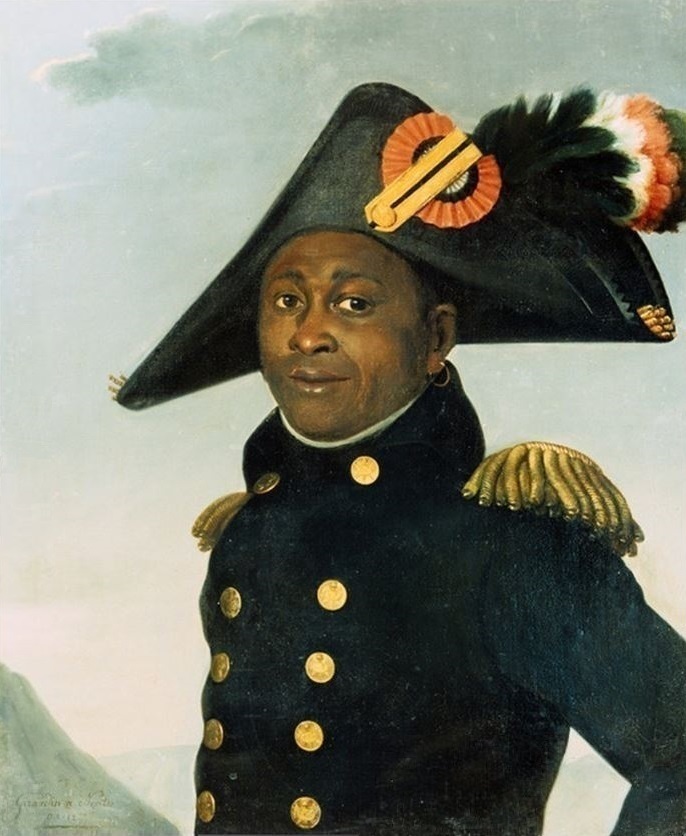
Toussaint Louverture (c. 1743–1803) was a formerly enslaved general and statesman who made the 1791 uprising in Saint-Domingue into a disciplined revolutionary struggle against slavery and colonial rule.
He fought successively alongside Spanish and French forces, defeated British intervention, governed France’s richest colony and issued an autonomous constitution in 1801. Napoleon Bonaparte’s expedition seized him through deception in 1802; imprisoned without trial in France, he died in 1803. Independence followed in 1804 under Jean-Jacques Dessalines.
Key takeaways
- Toussaint Louverture transformed a 1791 slave uprising into an organized military and political revolution that permanently undermined French colonial rule.
- After France abolished slavery in 1794, Louverture defended emancipation while imposing coercive plantation labor to finance his army and government.
- The 1801 Constitution prohibited slavery and made Louverture governor for life, combining Black autonomy with concentrated executive authority.
- Napoleon’s agents arrested Louverture without trial in 1802, and he died at Fort de Joux on 7 April 1803.
- Haiti achieved independence in 1804 after Louverture’s death, completing the revolution that his leadership had helped preserve.
Who Toussaint Louverture was
Born François-Dominique Toussaint around 1743 on the Bréda plantation near Cap-Français, Louverture lived within Saint-Domingue’s exceptionally violent plantation order. Historian Pierre Pluchon proposed 1743 as his birth year; no surviving birth record establishes the exact date. He was enslaved by the Bréda estate, gained freedom by 1776 according to a dated manumission record, acquired property and later held at least one enslaved person. That documented participation in slavery complicates, but does not erase, his subsequent destruction of the institution.
Saint-Domingue generated roughly 40% of Europe’s imported sugar and 60% of its coffee by the late 1780s, figures commonly synthesized by historian Laurent Dubois from colonial trade records. Its population in 1789 comprised about 500,000 enslaved people, 30,000 whites and 28,000 free people of color, according to the 1789 colonial census figures used by Dubois. Louverture emerged after the northern slave insurrection began in August 1791, initially serving the Spanish monarchy, which controlled neighboring Santo Domingo.
“I was born a slave, but nature gave me the soul of a free man.” — Toussaint Louverture, attributed memoir written at Fort de Joux, 1802.
The wording survives through later publication and translation rather than a securely preserved autograph, so it should be treated cautiously. Louverture nevertheless described enslavement, family separation and resistance directly in his 1802 memoir. See the archive’s wider account of colonial slavery and pathways from historical knowledge to public action.
How he built and exercised power
Louverture’s authority combined military organization, diplomacy and control of plantation production. In 1793 he commanded Black insurgents allied with Spain against revolutionary France. After French commissioners Léger-Félicité Sonthonax and Étienne Polverel proclaimed emancipation in 1793, and France’s National Convention abolished colonial slavery on 4 February 1794, Louverture changed allegiance to the French Republic.
He then expelled Spanish forces, outmaneuvered rival commanders and fought Britain’s occupation. Britain deployed roughly 20,000 troops to Saint-Domingue between 1793 and 1798; historian David Geggus calculated about 12,000 British military deaths, overwhelmingly from disease, by the withdrawal in 1798. Louverture forced the British evacuation, defeated André Rigaud in the 1799–1800 War of the South and occupied Spanish Santo Domingo in January 1801.
His government preserved emancipation but compelled former slaves to work on export plantations. Regulations issued in 1800 tied cultivators to estates, imposed military supervision and punished unauthorized movement. This was not restored legal slavery: workers were formally free and entitled to a share of produce. It was, however, coercive labor designed to revive sugar and coffee exports and finance the army.
The 1801 Constitution made Louverture governor for life, prohibited slavery and asserted administrative autonomy while formally retaining Saint-Domingue within the French Empire. It also entrenched Catholicism and concentrated appointment powers in the governor. Compare this structure with other systems documented in the archive’s history hub.
Documented record and timeline
Louverture’s record includes emancipation, battlefield victories and authoritarian rule. His forces helped defend freedom for a population of approximately 500,000 formerly enslaved people—the 1789 colonial census baseline, not a precise 1794 total. Yet his army suppressed labor resistance, and commanders acting within his system used imprisonment and lethal force. Surviving evidence does not support assigning him a reliable personal execution total.
| Date | Event |
|---|---|
| c. 1743 | Born enslaved on the Bréda plantation; Pierre Pluchon’s estimated year is 1743. |
| 1776 | A surviving record shows him free by 1776. |
| 22–23 August 1791 | The northern plantation uprising begins. |
| 29 August 1793 | Sonthonax proclaims general emancipation in northern Saint-Domingue. |
| 4 February 1794 | France’s National Convention abolishes slavery throughout French colonies. |
| May 1794 | Louverture abandons Spain and joins republican France. |
| 1798 | British forces evacuate after a campaign in which Geggus calculated about 12,000 British military deaths since 1793. |
| July 1801 | The colonial constitution names Louverture governor for life. |
| 7 June 1802 | General Jean-Baptiste Brunet arrests Louverture after inviting him to a conference. |
| 7 April 1803 | Louverture dies at Fort de Joux, France. |
| 1 January 1804 | Dessalines declares Haiti independent. |
The revolution’s total mortality cannot be reduced to one uncontested figure. Historian Philippe Girard estimated approximately 200,000 Black Haitians and 100,000 Europeans died across the 1791–1804 revolution; these are retrospective estimates rather than complete counts. The violence included war, massacres, hunger and yellow fever.
The defenses of his rule—and their limits
Louverture defended compulsory plantation labor as necessary to feed the population, maintain the army and prevent recolonization. His supporters argue that an emancipated territory surrounded by slaveholding empires could not survive without export revenue and military centralization. They also stress that he repeatedly maintained abolition while Napoleon moved toward restoring racial slavery elsewhere.
“In overthrowing me, you have done no more than cut down the trunk of the tree of liberty of the blacks; it will spring back from the roots, for they are numerous and deep.” — Words attributed to Toussaint Louverture at Cap-Français before deportation, 1802, recorded in later historical accounts.
The celebrated statement captures the outcome but lacks a contemporary verbatim transcript. More securely documented is the contradiction between Louverture’s emancipatory constitution and coercive labor code. Opposition came from plantation workers resisting forced labor, officers threatened by his consolidation and rivals including Rigaud. Defense of wartime necessity does not make military confinement of laborers voluntary; nor does his former enslavement immunize his government from scrutiny.
Napoleon claimed the 1802 expedition would restore French authority, not slavery in Saint-Domingue. That assurance was discredited when France restored slavery in Guadeloupe by the law of 20 May 1802 and attempted to disarm Black troops. Louverture’s seizure without trial demonstrated that French promises offered no reliable protection. The archive connects these precedents to continuing debates about reparative action.
Capture, death, afterlife and memory
Napoleon sent an expedition commanded by Charles Leclerc in 1802. Philippe Girard estimates it comprised about 30,000 troops during 1802, while reinforcements raised the wider French commitment beyond the initial force. After a destructive campaign, Louverture accepted retirement. Brunet lured him to a meeting and arrested him on 7 June 1802. France deported him with members of his family and confined him in the cold, isolated Fort de Joux in the Jura.
Louverture died there on 7 April 1803, aged about 60 if the estimated 1743 birth year is correct. A postmortem identified lung disease and wasting; historians commonly describe pneumonia or pleuropneumonia aggravated by imprisonment, inadequate food and cold. He had not been tried. French forces subsequently pursued disarmament and restoration, provoking renewed resistance under Dessalines. Napoleon’s army lost tens of thousands, predominantly to yellow fever; Girard estimates roughly 50,000 French expeditionary troops died in 1802–1803.
Haiti declared independence on 1 January 1804, becoming the first independent state created by a successful mass slave revolution. Louverture did not live to see it and had not declared full independence himself. Haitian memory nonetheless places him among the revolution’s founders. France transferred a symbolic urn of soil from Fort de Joux to the Panthéon in 1998; his remains have never been conclusively identified. His name now signifies Black liberation internationally, while scholarship also confronts his labor coercion, constitutional authoritarianism and strategic loyalty to France.
Sources & further reading
- Laurent Dubois, Avengers of the New World — Harvard University Press
- David Geggus, Haitian Revolutionary Studies — Indiana University Press
- Philippe Girard, Toussaint Louverture: A Revolutionary Life — Basic Books
- Toussaint Louverture papers — Library of Congress
- The Louverture Project — Roy Rosenzweig Center for History and New Media
Frequently asked questions
- Why is Toussaint Louverture important?
- Toussaint Louverture was the leading strategist who consolidated Saint-Domingue’s 1791 slave revolt into a governing and military force. After joining republican France in 1794, he defeated Spanish, British and internal rivals, protected emancipation for a population whose enslaved majority numbered about 500,000 in the 1789 census, and created the autonomous 1801 Constitution. His campaigns prepared the ground for Haitian independence in 1804.
- Was Toussaint Louverture born enslaved?
- Yes. Louverture was born around 1743 on the Bréda plantation near Cap-Français in French Saint-Domingue. Pierre Pluchon gives 1743 as an estimate because no definitive birth record survives. A 1776 document establishes that Louverture had gained freedom by that year. Before the 1791 revolution, he acquired property and held at least one enslaved person, a significant contradiction in his biography.
- Did Toussaint Louverture abolish slavery?
- Louverture did not originate France’s abolition decree. Commissioner Sonthonax proclaimed emancipation in northern Saint-Domingue on 29 August 1793, and the National Convention abolished colonial slavery on 4 February 1794. Louverture joined France in May 1794, defended abolition militarily and prohibited slavery in the 1801 Constitution. However, his government compelled plantation labor through military regulations rather than permitting workers full freedom of movement.
- How did Toussaint Louverture die?
- French general Jean-Baptiste Brunet arrested Louverture through deception on 7 June 1802 during Napoleon Bonaparte’s campaign to recover control of Saint-Domingue. Deported without trial, he was imprisoned at Fort de Joux in eastern France. Louverture died there on 7 April 1803, aged about 60 if the estimated 1743 birth year is accepted, from lung disease and wasting aggravated by cold, isolation and inadequate provisions.
- Did Toussaint Louverture make Haiti independent?
- No. Louverture’s 1801 Constitution established substantial autonomy and named him governor for life, but it formally kept Saint-Domingue within the French Empire. Napoleon’s forces removed him in 1802. Jean-Jacques Dessalines and the revolutionary army defeated the remaining French forces in 1803, and Dessalines proclaimed Haitian independence on 1 January 1804. Louverture was therefore a principal founder of the revolution, not the declarant of independence.
Related chapters
People & institutions
- Jallianwala Bagh massacre: Amritsar, 1919
- Cecil Rhodes: Empire, Mining and Colonial Rule
- Christopher Columbus: Voyages, Enslavement and Colonial Rule
- Elmina Castle: Gold, Slavery and Colonial Power
- Frantz Fanon: Psychiatrist of Colonial Violence
- Hernán Cortés: Conquest, Colonial Rule and Legacy
- Force Publique: Leopold II’s Colonial Army in Congo
- Kwame Nkrumah: Independence, Pan-Africanism and Power
- Leopold II of Belgium: Rule, Atrocities and Legacy
Sources & further reading
CC BY 4.0 ·