Walter Rodney: Historian, Activist and Assassination
Walter Rodney explained: his scholarship on African underdevelopment, political organizing in Guyana, 1980 assassination, inquiry and legacy.
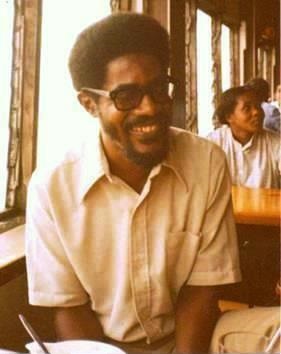
Walter Anthony Rodney (23 March 1942–13 June 1980) was a Guyanese historian, Pan-Africanist and revolutionary socialist whose scholarship exposed colonial extraction and whose political organizing challenged Guyana’s authoritarian government.
Rodney’s best-known book, How Europe Underdeveloped Africa (1972), argued that European wealth and African impoverishment were interconnected products of slavery, colonial rule and unequal exchange. After Guyana’s government blocked his university appointment in 1974, he joined the Working People’s Alliance (WPA). He was killed by a bomb in Georgetown on 13 June 1980, aged 38. A Guyanese commission of inquiry reported in 2016 that the assassination was probably organized with state involvement.
Key takeaways
- Walter Rodney was a Guyanese historian and socialist organizer whose 1972 work connected European accumulation directly to Africa’s colonial underdevelopment.
- Jamaica expelled Rodney on 15 October 1968 after he organized education beyond the university, triggering protests known as the Rodney Riots.
- After returning to Guyana in 1974, Rodney helped build the multiracial Working People’s Alliance against Forbes Burnham’s increasingly authoritarian government.
- A bomb supplied by Guyana Defence Force sergeant Gregory Smith killed Rodney in Georgetown on 13 June 1980, when Rodney was 38.
- Guyana’s 2016 inquiry found state involvement probable, and the National Assembly formally recognized Rodney’s death as an assassination in 2021.
Who Walter Rodney was
Born in Georgetown, British Guiana, on 23 March 1942, Rodney studied history at the University College of the West Indies and completed a doctorate at SOAS, University of London, in 1966, aged 24. His dissertation examined the Upper Guinea Coast during the Atlantic slave trade.
He taught at the University of Dar es Salaam, Tanzania, during 1966–1968 and 1969–1974. Between those appointments, he lectured at the University of the West Indies in Jamaica and held informal history sessions with Rastafarians and working-class communities. Prime Minister Hugh Shearer’s government barred him from re-entering Jamaica on 15 October 1968. Protests known as the Rodney Riots followed; police firing and unrest left several people dead, although published accounts differ on the precise toll.
“The question as to who and what is responsible for African underdevelopment can be answered at two levels.” — Walter Rodney, 1972, How Europe Underdeveloped Africa
Rodney treated history as a public instrument rather than an academic possession. His major books included A History of the Upper Guinea Coast, 1545–1800 (1970), How Europe Underdeveloped Africa (1972) and The Groundings with My Brothers (1969). His archive and recorded speech belong within the wider history preserved through /media.
Scholarship as a mechanism of political power
Rodney’s central argument was relational: Europe did not simply advance while Africa failed to do so. European merchants, plantation owners, banks and states accumulated capital through enslavement, conquest, taxation, land seizure and control of trade, while colonial governments reorganized African economies around exports and imported manufactures.
He combined political economy with historical evidence. That approach challenged colonial accounts that treated African poverty as timeless or self-inflicted. It also challenged post-independence elites who inherited colonial institutions while leaving ownership and class power substantially intact.
In Tanzania, Rodney participated in debates surrounding President Julius Nyerere’s 1967 Arusha Declaration and taught amid anti-colonial liberation movements. In Guyana, his ideas informed multiracial organizing among African-Guyanese and Indo-Guyanese workers against the People’s National Congress (PNC) government of Prime Minister Forbes Burnham. Evidence on colonial extraction and inequality can be compared through the archive’s /data resources.
Documented record and timeline
Rodney’s life joined scholarship to direct confrontation with state power. The principal dated events are:
| Date | Event |
|---|---|
| 23 March 1942 | Born in Georgetown, British Guiana. |
| 1966 | Completed his doctorate at SOAS, University of London, aged 24. |
| 1968 | Expelled from Jamaica on 15 October; protests followed in Kingston. |
| 1969 | The Groundings with My Brothers was published. |
| 1972 | How Europe Underdeveloped Africa was first published. |
| 1974 | Returned to Guyana; the government rescinded his University of Guyana appointment. |
| 1979 | The Working People’s Alliance became a political party, with Rodney among its leading figures. |
| 13 June 1980 | Killed by an explosive device in Georgetown, aged 38. |
| 2014–2016 | A Guyanese commission investigated his death and submitted its report. |
| 10 June 2021 | Guyana’s National Assembly formally recognized his death as an assassination. |
On 13 June 1980, an explosive concealed in a communications device detonated in Rodney’s lap while he sat in his brother Donald Rodney’s car near Georgetown Prison. Donald survived and became the principal eyewitness. Gregory Smith, a sergeant in the Guyana Defence Force, had supplied the device and disappeared afterward. He was later found living in French Guiana under the name Cyril Johnson; he died there in 2002 without standing trial.
The official Commission of Inquiry, convened in 2014 and chaired by Sir Richard Cheltenham, submitted its report in 2016. It concluded that Rodney’s killing was a state-organized assassination and found, on the balance of probabilities, that Smith acted as an agent of the state with assistance from state agencies. The record should be read alongside documentary holdings catalogued through /media and political evidence assembled in /data.
The state’s defence and competing claims
The PNC government denied responsibility. Its public position treated Rodney’s death as an accident involving an explosive device that Rodney and his associates possessed for an unlawful purpose. Donald Rodney was prosecuted for possession of explosives and convicted in 1982; Guyana’s Court of Appeal overturned that conviction on 13 April 2021, after 39 years.
The state narrative faced central evidentiary problems: Smith’s military status; his access to communications equipment; evidence that state resources facilitated his escape; and the political surveillance and repression directed at the WPA. The 2016 commission rejected the accident theory on the civil standard of proof and linked the operation to state agencies under Burnham’s government.
The 2016 Commission of Inquiry found that Gregory Smith was “acting as an agent of the State” when he supplied the device that killed Rodney.
The commission did not produce a criminal conviction, and Burnham had died in 1985, aged 62. Its findings nevertheless shifted the official question from an unexplained explosion to an assassination facilitated by state power. In 2021, Guyana’s government changed Rodney’s death certificate from “misadventure” to “assassination” and removed the description of him as unemployed, recognizing his occupation as professor.
Afterlife, influence and memory
Rodney’s work remains foundational in African history, development studies, Black radical thought and Caribbean political history. Scholars have criticized some broad continental generalizations in How Europe Underdeveloped Africa, but its core insistence—that colonial extraction must be measured across connected European and African economies—continues to shape research on debt, commodity dependence, reparations and neo-colonial power.
His posthumous works include A History of the Guyanese Working People, 1881–1905 (1981), which examined labor, race and colonial rule rather than accepting racial division as an autonomous historical force. The Walter Rodney Foundation, established in 2006, promotes his intellectual and political legacy. In 2021, Guyana’s National Assembly adopted measures to restore his public standing, 41 years after his assassination.
Memory remains contested because Rodney’s killing concerns institutional responsibility, not only individual guilt. The surviving record identifies a military operative, an authoritarian governing party and state assistance, while no person was criminally convicted for the murder. Rodney’s importance lies equally in what he documented: colonial and postcolonial inequality is sustained by identifiable institutions, material transfers and political choices.
Sources & further reading
- Walter Rodney, How Europe Underdeveloped Africa (Verso Books)
- Report of the Commission of Inquiry into the Death of Dr Walter Rodney (University of the West Indies repository)
- Encyclopaedia Britannica: Walter Rodney
- SOAS: Walter Rodney and his intellectual legacy
- The Guardian: Guyana moves to clear Walter Rodney’s name
- Walter Rodney Foundation
Frequently asked questions
- Who was Walter Rodney?
- Walter Rodney was a Guyanese historian, Pan-Africanist and revolutionary socialist born on 23 March 1942. He taught in Tanzania and Jamaica, wrote *How Europe Underdeveloped Africa* in 1972, and became a leader of Guyana’s Working People’s Alliance. A bomb killed him in Georgetown on 13 June 1980, aged 38.
- What did Walter Rodney argue in How Europe Underdeveloped Africa?
- In *How Europe Underdeveloped Africa* (1972), Rodney argued that African poverty and European wealth developed through the same historical system. The Atlantic slave trade, colonial conquest, forced production, taxation and unequal trade transferred labor and resources outward while distorting African economies. “Underdevelopment” therefore described a produced relationship, not an original African condition.
- Who killed Walter Rodney?
- Guyana Defence Force sergeant Gregory Smith supplied the explosive device that killed Walter Rodney on 13 June 1980. A commission established in 2014 and reporting in 2016 concluded, on the balance of probabilities, that Smith acted as a state agent with assistance from state agencies under Forbes Burnham’s PNC government. No one was criminally convicted of Rodney’s murder.
- Why was Walter Rodney banned from Jamaica?
- Prime Minister Hugh Shearer’s government barred Rodney from re-entering Jamaica on 15 October 1968, after he attended a Black writers’ conference in Canada. Officials portrayed his activism as a security threat. Rodney had taught at the University of the West Indies and conducted informal political education among Rastafarians and poor communities. The ban prompted major protests in Kingston.
- Was Walter Rodney’s death officially recognized as an assassination?
- Yes. A Guyanese Commission of Inquiry submitted its report in 2016 and concluded that Rodney’s killing was state-organized. On 10 June 2021, Guyana’s National Assembly formally recognized the 13 June 1980 death as an assassination. Authorities also amended his death certificate, replacing “misadventure” and identifying his occupation as professor rather than unemployed.
Related chapters
People & institutions
- Jallianwala Bagh massacre: Amritsar, 1919
- Cecil Rhodes: Empire, Mining and Colonial Rule
- Christopher Columbus: Voyages, Enslavement and Colonial Rule
- Elmina Castle: Gold, Slavery and Colonial Power
- Frantz Fanon: Psychiatrist of Colonial Violence
- Hernán Cortés: Conquest, Colonial Rule and Legacy
- Force Publique: Leopold II’s Colonial Army in Congo
- Kwame Nkrumah: Independence, Pan-Africanism and Power
- Leopold II of Belgium: Rule, Atrocities and Legacy
Sources & further reading
CC BY 4.0 ·