Winston Churchill: Empire, War and Historical Record
Winston Churchill led Britain in wartime, defended empire and shaped policies implicated in colonial violence, including the 1943 Bengal famine.
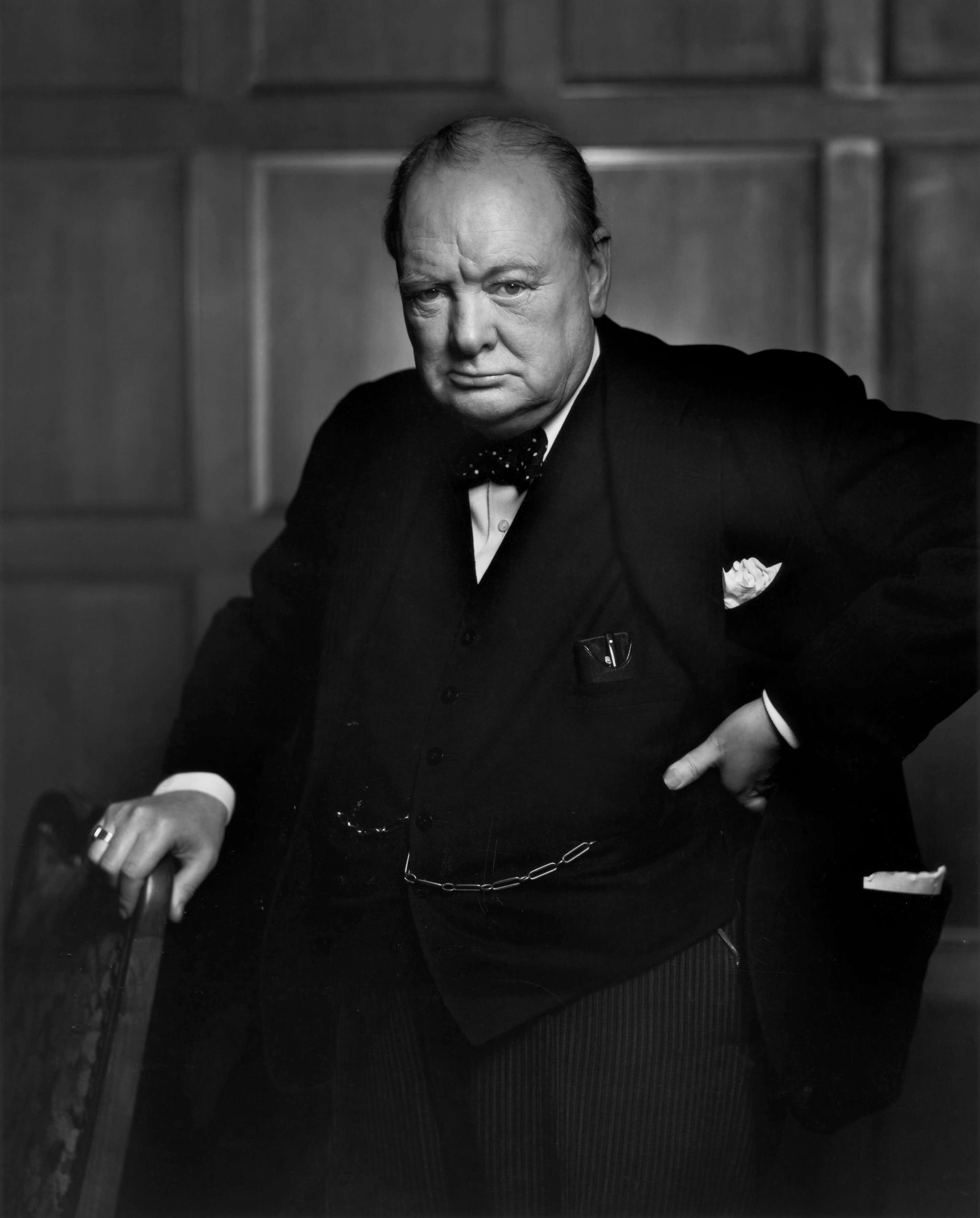
Winston Churchill (1874–1965) was a British statesman, soldier, writer and imperialist who served as prime minister from 1940 to 1945 and from 1951 to 1955.
Celebrated for leading Britain during the Second World War, Churchill also defended white settler rule, opposed Indian self-government and participated in governments responsible for coercion across the British Empire. His historical significance cannot be reduced either to wartime heroism or colonial brutality: both belong to the documented record of how he acquired and exercised power.
Key takeaways
- Winston Churchill led Britain against Nazi Germany while remaining an explicit defender and powerful administrator of the British Empire.
- The 1943–1944 Bengal famine killed 1.5 million according to the 1945 inquiry, while later demographic estimates reached 2.1–3.0 million.
- Churchill's racism is documented in speeches, official evidence and Leo Amery's 1943 diary, not inferred solely from modern standards.
- His governments exercised power through cabinet priorities, imperial administrators, military force, shipping controls and rhetoric that denied colonised peoples political equality.
- Responsible commemoration must recognise Churchill's wartime leadership without concealing famine policy, settler colonialism or violence under British imperial rule.
Who Winston Churchill was
Born at Blenheim Palace on 30 November 1874, Churchill entered imperial warfare before parliamentary politics. As an army officer and correspondent, he served in British India and Sudan and participated in the 1898 Battle of Omdurman, where an Anglo-Egyptian force using artillery and Maxim guns defeated the Mahdist army. British commander Herbert Kitchener reported about 10,800 Mahdist fighters killed and 16,000 wounded in 1898; historian P. M. Holt later cautioned that the figures were approximate.
Churchill entered Parliament in 1900. Across about 64 calendar years, from 1900 to 1964, he sat for Oldham, Manchester North West, Dundee, Epping and Woodford, with brief intervals outside Parliament. He left the Conservatives for the Liberals in 1904, returned to the Conservatives in 1924 and led that party from 1940 to 1955. His offices included home secretary, First Lord of the Admiralty, minister of munitions, secretary of state for war and air, colonial secretary and chancellor of the Exchequer.
| Date | Event |
|---|---|
| 30 November 1874 | Born at Blenheim Palace, Oxfordshire |
| 2 September 1898 | Fights at the Battle of Omdurman |
| 1 October 1900 | Elected MP for Oldham |
| 24 October 1911 | Appointed First Lord of the Admiralty |
| 13 February 1921 | Appointed colonial secretary |
| 10 May 1940 | Becomes prime minister during the German invasion of Western Europe |
| 6 November 1943 | Records his hostility to Indians in a War Cabinet committee discussion |
| 26 July 1945 | Leaves office after Labour's election victory |
| 26 October 1951 | Begins his second premiership |
| 5 April 1955 | Resigns as prime minister |
| 24 January 1965 | Dies in London aged 90 |
The mechanisms of Churchill's power
Churchill's authority rested on Parliament, cabinet office, party leadership, military command structures, imperial administration and public communication. He could influence shipping allocations, military priorities, colonial appointments and emergency policy, although he did not act alone. The India Office, War Cabinet, Government of India, provincial governments, armed forces and commercial markets all shaped outcomes.
His rhetoric was itself an instrument of government. Radio speeches in 1940 helped legitimise continued resistance after France fell. Imperial rhetoric performed a parallel function by depicting British domination as civilisation and colonised peoples as unequal political subjects. In his 1937 evidence to the Palestine Royal Commission, Churchill denied that prior habitation gave Indigenous populations an overriding claim against settler colonisation.
“I do not admit… that a great wrong has been done to the Red Indians of America or the black people of Australia.” — Winston Churchill, evidence to the Palestine Royal Commission, 1937
As colonial secretary in 1921–1922, Churchill oversaw a department governing territories across Africa, the Middle East and the Caribbean. He supported aerial policing in Iraq and discussed using chemical weapons against “uncivilised tribes”; historians dispute whether poison gas was operationally used there, while tear-gas shells were considered and conventional aerial bombardment was employed.
Documented record: racism, famine and colonial violence
Churchill described himself as an imperialist and repeatedly expressed racial hierarchy. In a War Cabinet committee discussion recorded by Secretary of State for India Leo Amery on 6 November 1943, Churchill said he “hated Indians” and called them “a beastly people with a beastly religion.” The wording survives in Amery's diary, a contemporary primary record, rather than an official transcript.
The gravest controversy concerns the Bengal famine of 1943–1944. Crop disease, wartime inflation, loss of Burmese rice, market failure, colonial procurement, transport disruption and the Bengal government's failures combined with British decisions that prioritised military shipping and rejected or delayed adequate imports. The official Famine Inquiry Commission estimated 1.5 million deaths in its 1945 report. Demographer Arup Maharatna's 1996 reconstruction estimated about 2.1–3.0 million excess deaths; Madhusree Mukerjee's 2010 account commonly summarised the toll as about 3 million.
Churchill's government eventually arranged additional grain, and Field Marshal Archibald Wavell pressed more forcefully for relief after becoming viceroy in October 1943. The dispute is not whether Britain sent nothing, but whether earlier imports and different priorities could have prevented mass death. Amery and Wavell both criticised London's response.
Churchill's later premiership also coincided with the 1952–1960 Mau Mau Emergency in Kenya. Britain declared the emergency on 20 October 1952, during his second term. Caroline Elkins's 2005 research proposed that up to 300,000 Kikuyu may have died from wartime consequences, a figure disputed by other historians; David Anderson's 2005 archival study documented 1,090 official executions by 1959 and argued that security forces killed thousands more. Britain recognised abuses in a 2013 settlement paying £19.9 million to 5,228 Kenyan claimants.
The defence made for Churchill
Churchill's defenders argue that his 1940 leadership was indispensable, that quotations should be read in their period and that famine resulted chiefly from war, cyclone damage, rice disease, Japanese conquest of Burma and failures by Bengal's provincial administration. They note that Japan's occupation cut off Burmese rice after 1942 and that shipping was constrained by global military operations.
Churchill's wartime achievement does not erase colonial responsibility; colonial responsibility does not make his resistance to Nazism imaginary.
That defence establishes relevant context but not exoneration. Racist views were contested during Churchill's lifetime by anti-colonial leaders, British officials and political opponents. The 1945 Famine Inquiry Commission found administrative failures and delayed recognition of famine. Scholars continue to dispute Churchill's individual causal weight, but there is substantial evidence that his cabinet's priorities restricted relief while officials warned of catastrophe.
Claims that Churchill uniquely “saved the world” also compress a coalition victory involving the Soviet Union, United States, China, resistance movements and millions of colonial troops. About 2.5 million personnel served in the Indian Army by 1945, according to official wartime histories, making it the largest volunteer force assembled during the war.
Afterlife, commemoration and contested memory
Churchill received the 1953 Nobel Prize in Literature and was granted a state funeral on 30 January 1965. Statues, schools and the Churchill War Rooms institutionalised a national memory centred on 1940. A 2002 BBC poll named him the “greatest Briton,” with more than 1 million votes cast across the poll, according to the BBC.
That memory has faced sharper scrutiny from historians and descendants of colonised people. During global anti-racism protests in June 2020, authorities temporarily boxed in his Parliament Square statue after “was a racist” was painted on it. The dispute concerns not whether Churchill used racist language—documentary evidence shows that he did—but how wartime leadership should be commemorated alongside the British Empire's violence and the Bengal famine.
A defensible public history neither removes Churchill from the record nor preserves him as civic scripture. It identifies decisions, institutions and victims; distinguishes disputed interpretations from documented statements; and places British survival in 1940 beside the unequal value imperial government assigned to human lives.
Sources & further reading
- Richard Toye, Churchill's Empire (Macmillan, 2010)
- Government of India, Report on Bengal (Famine Inquiry Commission, 1945), Internet Archive
- Arup Maharatna, The Demography of Famines (Oxford University Press, 1996)
- UK Government, statement on the Mau Mau claims settlement, 2013
- The Nobel Prize in Literature 1953: Winston Churchill
- International Churchill Society, Churchill and chemical warfare
Frequently asked questions
- Was Winston Churchill racist?
- Yes. Churchill publicly defended racial hierarchy and settler colonialism. In 1937 he told the Palestine Royal Commission that no great wrong had been done to Indigenous Americans or Aboriginal Australians. Leo Amery's diary records Churchill saying on 6 November 1943 that he “hated Indians” and describing them as a “beastly people.” Such views were challenged during his lifetime.
- Did Winston Churchill cause the Bengal famine?
- No single person caused the 1943–1944 Bengal famine, but Churchill and his War Cabinet bear responsibility for imperial priorities that impeded sufficient, timely relief. The official 1945 inquiry estimated 1.5 million deaths; Arup Maharatna estimated 2.1–3.0 million in 1996. War, inflation, crop disease, market failure, provincial misgovernment and restricted imports all contributed.
- How many people died in the Bengal famine under Churchill?
- The Government of India's Famine Inquiry Commission estimated 1.5 million deaths in its 1945 report. Demographer Arup Maharatna estimated approximately 2.1–3.0 million excess deaths in 1996, while Madhusree Mukerjee's 2010 history uses a figure of about 3 million. Differences reflect incomplete registration and different demographic methods.
- What was Churchill's role in the British Empire?
- Churchill served as colonial secretary from 1921 to 1922 and held senior offices controlling military, financial and colonial policy across multiple decades. He opposed Indian independence, endorsed aerial policing in Iraq and defended white settler expansion. As prime minister from 1940–1945 and 1951–1955, he directed governments responsible for imperial war, famine policy and the opening years of Kenya's Mau Mau Emergency.
- Why is Winston Churchill still controversial today?
- Churchill is celebrated for leading Britain from 10 May 1940 through much of the Second World War, but condemned for racism and imperial policy. Controversy focuses especially on the 1943–1944 Bengal famine, opposition to Indian self-government, statements about Indigenous peoples and abuses during the Kenyan Emergency declared on 20 October 1952. His record combines genuine wartime leadership with documented colonial harm.
Related chapters
People & institutions
- Jallianwala Bagh massacre: Amritsar, 1919
- Cecil Rhodes: Empire, Mining and Colonial Rule
- Christopher Columbus: Voyages, Enslavement and Colonial Rule
- Elmina Castle: Gold, Slavery and Colonial Power
- Frantz Fanon: Psychiatrist of Colonial Violence
- Hernán Cortés: Conquest, Colonial Rule and Legacy
- Force Publique: Leopold II’s Colonial Army in Congo
- Kwame Nkrumah: Independence, Pan-Africanism and Power
- Leopold II of Belgium: Rule, Atrocities and Legacy
Sources & further reading
CC BY 4.0 ·